In the first half of this year, the Valencian Institute of Modern Art. IVAM presented in its rooms the project “A media lumbre”, curated by its director Blanca de la Torre, which highlights the possibilities of opening contemporary art towards techniques and materials linked to tradition and the land and considered subordinate until a few decades ago, such as ceramics, clay, wool, textiles, embroidery, esparto grass, palm, wicker and other natural fibers. Also the sounds and silences, orality as a vehicle of memory associated with those philandones, the nightly meetings around the llar, those manual labors around the fire.
These crafts and knowledge, whether material or immaterial, come from a non-hegemonic culture open to the popular and the affective and, therefore, projects like this one can be enriched with diverse readings depending on the scenario where they travel. Until next October, “A media lumbre” will host Mallorcan spaces (Es Baluard Museu, Sa Refinadora and Casal Solleric) and later, between October and December, the CDAN of Huesca and the Museu Terra de L´Espluga de Francolí, in Tarragona; In each case, a portion of the participants will come from or work in one region or another.
Again under the curatorship of De la Torre, and within the framework of the so-called Biennial B, this exhibition invites us to approach craftsmanship without nostalgia: rather adopting a critical and unprejudiced perspective that allows us to contemplate it as a source of knowledge connected both with the natural materials themselves and with time and the human body; Wool, clay, glass or palm are not simply supports or expressive means, but rather elements that carry meaning and history.
Es Baluard Museu offers works by Ricardo Calero, Andrea Canepa, Tonina Crespí, Julie C. Fortier, Teresa Lanceta, Lucía Loren – who deploys specific interventions on its terraces -, Teresa Matas, Lara Ordóñez, Nuria Riaza, Belén Rodríguez and Cecilia Vicuña, in many cases relating to ways of life embedded in land and water and indigenous or manual labor. In their creations they emphasize that the materials and ways of doing things, as well as the orally transmitted knowledge that has preserved them, are heritage, a living one and inseparable from the geographies from which it emanates. Thus, the aforementioned wool speaks of transhumance and care; plant fibers allude to fragile ecosystems and sustainability strategies; and ceramics evoke its primary function of containing and accompanying daily life. The initially utilitarian materials have now added poetic function to their function.
In addition to Loren’s, other interventions site specific They are presented by Teresa Matas at Sa Refinadora, in Marratxí. His concerns usually range between the intimate and the public or political spheres: he designs installations built with textiles to which he grants introspective echoes; For this author, they can speak to us about memory, loss and repair. Her pieces, developed as a result of long and meditative processes, turn the gesture of sewing into a form of thought and a critical tool capable of bringing to mind experiences of pain and vulnerability from a lyrical and material dimension.
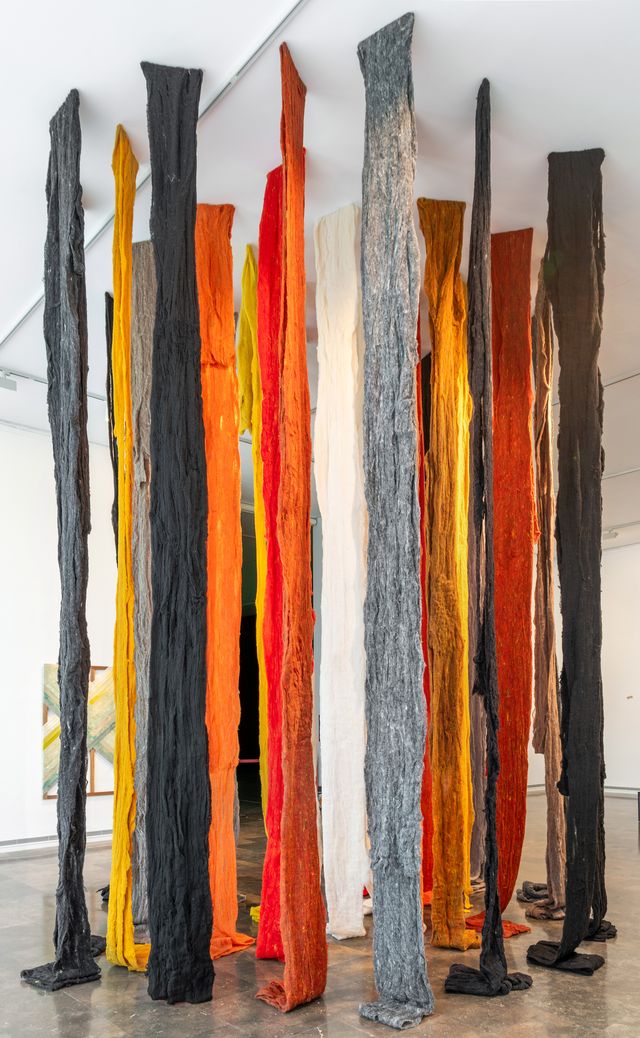
Cecilia Vicuña. Burnt Quipu2018. Valencian Institute of Modern Art. IVAM
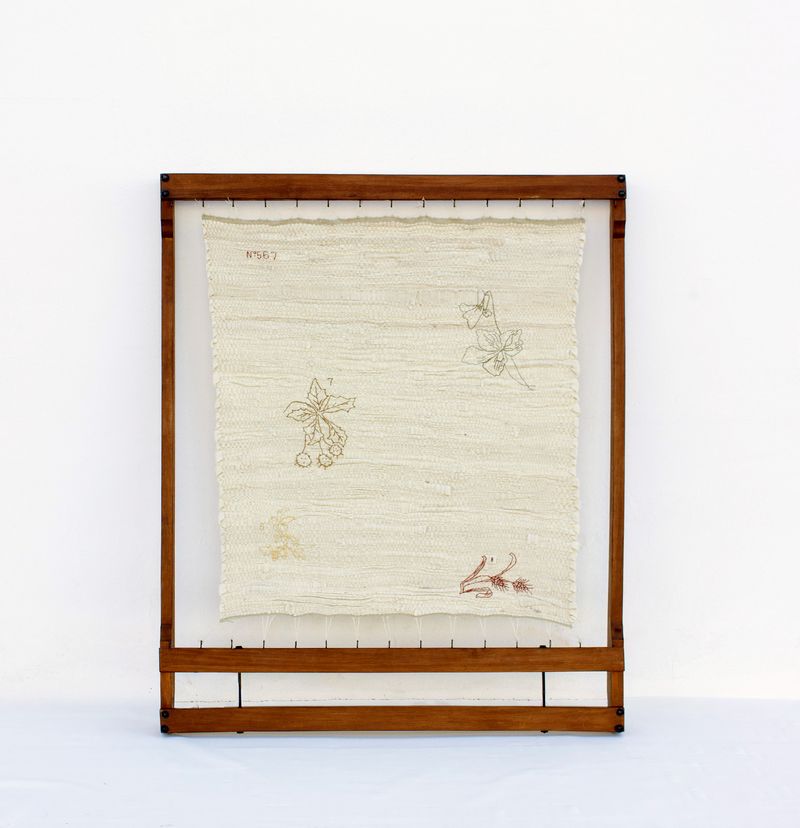
Lara Ordóñez. The embroidery consultant no. 5672025. Courtesy of the artist and Vangar
Casal Solleric’s exhibition is the largest in number of works, with compositions by Pilar Albarracín, Javier Bravo de Rueda, Susana Cámara Leret, Carolina Caycedo, Olga Diego, Ana Esteve Llorens, Antonio Fernández Alvira, Marta Font, Gloria Godínez, Cara Holmes, Noemi Iglesias Barros, Cecilia Jurado Chueca, Teresa Lanceta, Glenda León, Sandra Mar, Laura Mema, Adriana Meunié, Asunción Molinos Gordo, Xavier Monsalvatje, Sonia Navarro, Carla Nicolás, Albert Pinya and Joan Pere Català Roig, Gema Polanco, Alex Reynolds, Laura Segura, Isabel Servera, Ona Trepat Rubirola, Sarah Viguer Cebriá and Concha Ybarra. Once again, they invite us to look far beyond customs and folklore to the ancient and to understand as a valuable form of reciprocity taking from the earth what is needed and returning it to it with applied utility and a harmonious aesthetic.
We can highlight the work of Ana Laura Aláez, who has recalled the ancient use of esparto grass as a protective fiber for soils in the face of long droughts, and therefore as a humble, resistant and domestic material, in Row of betrayals; by Pilar Albarracín, who in her embroidery Pretty it makes that adornment no longer an ornament but an interpellation; or Javier Bravo de Rueda, whose Floor activates an archeology of ceramic waste based on two and a half hundred tiles found in the Royal Earthenware and Porcelain Factory of the Count of Aranda, in Castellón.
Saskia Calderón has integrated musical compositions inspired by the Amazonian communities of Ecuador, her country, into a sound installation; Ricardo Calero has explored the flexibility and humility of wicker, esparto grass, clay and plaster; Susana Cámara has turned the remains of hop cultivation into a matter of memory; Ana Esteve Llorens has delved into the emotions and rhythms inherent to knitting; and Fernández Alvira exhibits Shape memorya constellation of clay and metal pieces born from a collaboration process with the last potter in a long family saga from a town in Huesca.
Marta Font displays ceramic pieces related to nature and the landscapes of the Sierra de Tramuntana, where she grew up; Julie C. Fortier has worked with smell as a sculptural material that can activate memories; Josefina Guilisasti has collaborated with Chilean artisans for her installation made with butterflies, cocoons and caterpillars created with horsehair; Noemi Iglesias Barrios has manually made porcelain flowers, a common craft in European manufactures in past centuries; Mónica Jover paints and weaves spaces in green, moving from paint to thread; and Cecilia Jurado invites us to know the usutaspre-Inca sandals.
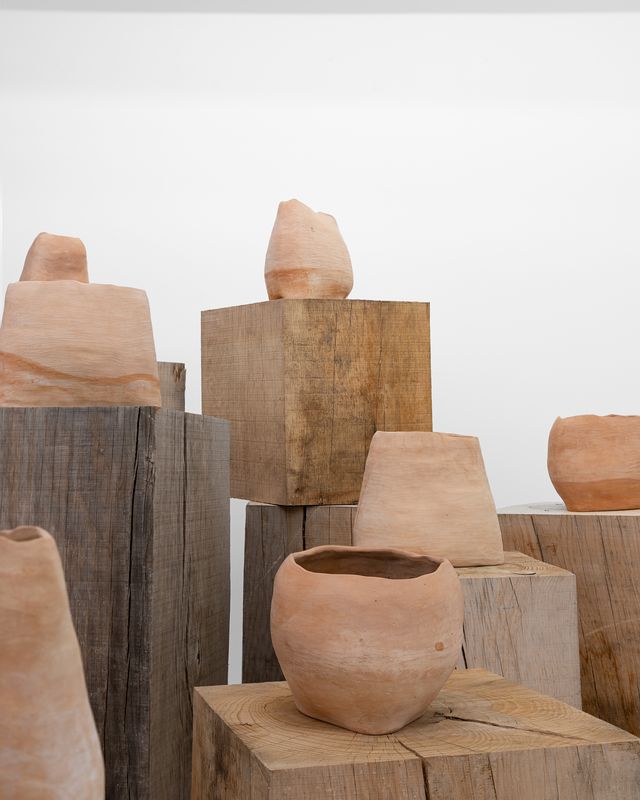
Marta Font. Yōki Series2023. Courtesy of the artist and Kaplan Projects
In addition, Glenda León has used the gold records of the missions Voyager —phonographs launched into space in 1977 with sounds and images intended for possible extraterrestrials— to recover what, paradoxically, we send out of the solar system but do not attend nearby; Sandra Mar treats clay as an interlocutor, as a material that resists and then gives way and transforms to the rhythm of the body that works with it; Adriana Meunié has delved into tapestry techniques in the Majorcan town of Campos; Sonia Navarro, as we know, vindicates the use of esparto grass through works that involve women who keep this activity alive in Blanca, Murcia; and Lara Ordóñez wants to capture intimate flavors linked to the home in her embroidery.
For its part, in Trousseau of Cerro TristeNuria Riaza reinterprets the trousseau of a family from Montealegre del Castillo; Belén Rodríguez works with materials from her home environment in Cantabria, where she collects leaves, bark and plant remains with which she prepares natural dyes; Laura Segura also unites natural materials, such as braided sisal, to the idea of origin; Isabel Servera has done the same with the braided palmetto characteristic of the Levante; Laurita Siles exhibits a huge txapela woven by Basques who emigrated to the United States in wool; Jessica Stockholder deploys an installation that recovers plant fibers, nets and braids inseparable from the daily life of fishing communities; Sarah Viguer combines the textile, the ceramic and the organic in her sculptures; and Concha Ybarra models plants and gardens, accentuating the artisanal dimension of the gesture.
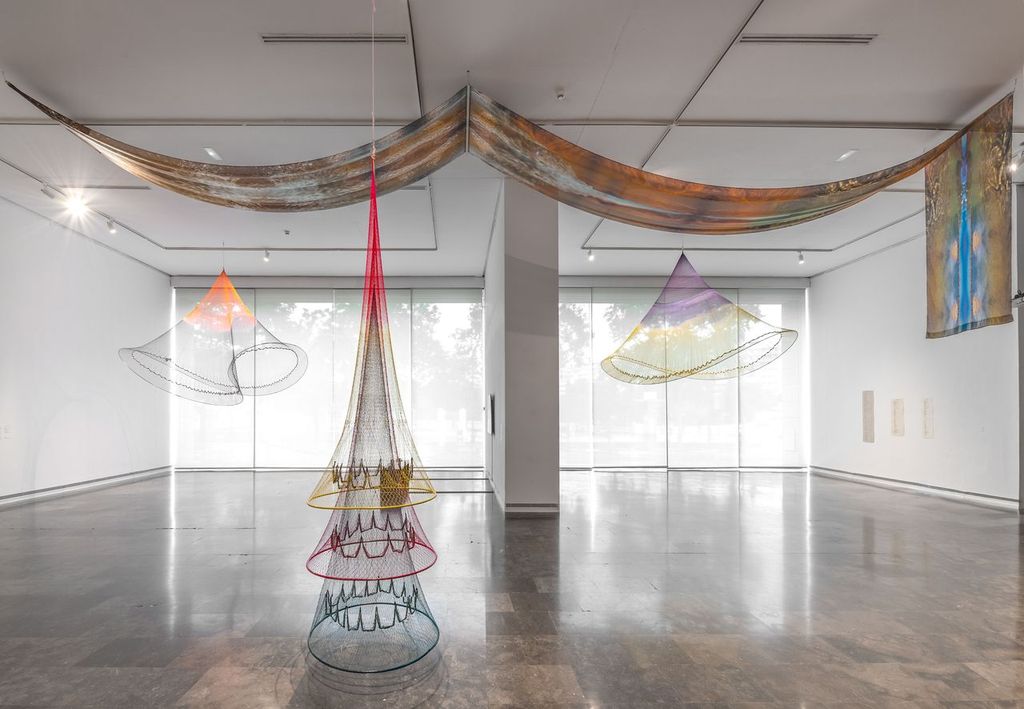
Carolina Caycedo. The sea in the sky2024. Valencian Institute of Modern Art. IVAM
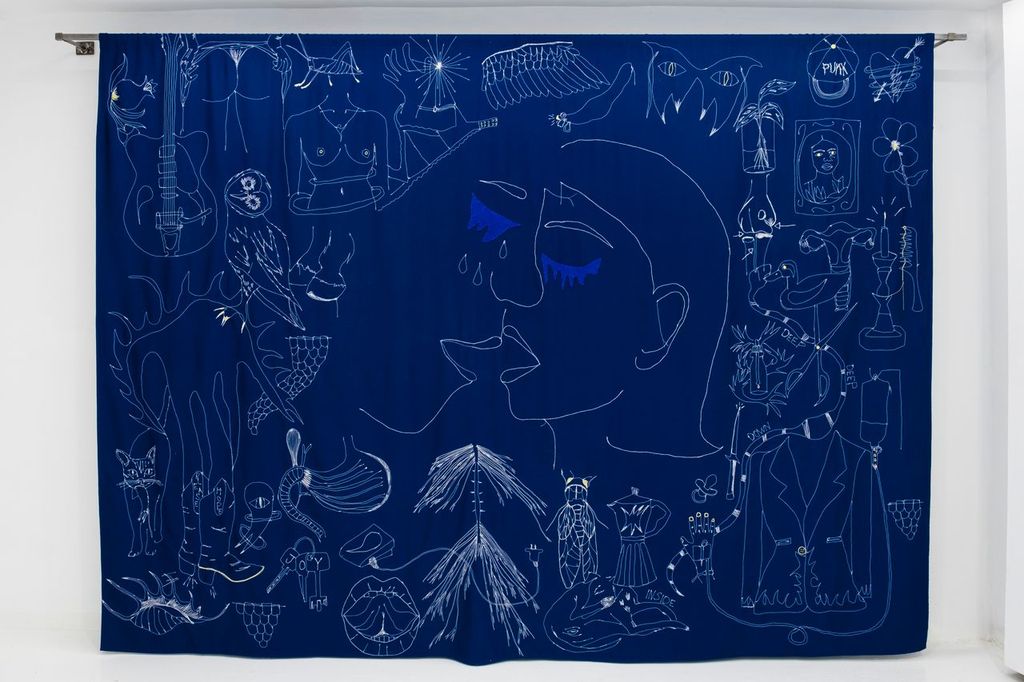
Gema Polanco. My private pool of emotions2024. Valencian Institute of Modern Art. IVAM
«In half light»
From July 24 to October 18, 2026
ES BALUARD MUSEUM
Plaça Porta Santa Catalina, 10
Palm
CASAL SOLLERIC
Passeig des Born, 27
Palm