A few weeks after the arrival of the Bayeux Tapestry on English soil, Yusuf Ali Osman, blind, inquired at the British Museum about the planned visit arrangements. The museum had taught him that audio description (audio guide which orally translates the visual information of a work for blind or visually impaired people) was not offered to discover embroidery, a response that the visitor experienced as discrimination, and which is at the origin of the dispute.
According to Osman’s lawyer, Kate Egerton of the British law firm Leigh Day, the museum would have, in doing so, breached certain obligations of the Equality Act 2010 : section 4 notably includes disability among the grounds on which a person cannot be discriminated against. “The Equality Act imposes obligations on service providers to anticipate the needs of disabled people and take reasonable steps to avoid substantial disadvantage”specifies the lawyer, who sent the British Museum on September 24 a formal notice to pay damages to her client, to formulate a declaration recognizing that he was the victim of discrimination, to modify its policies on inclusion and accessibility, and to train its staff on these issues.
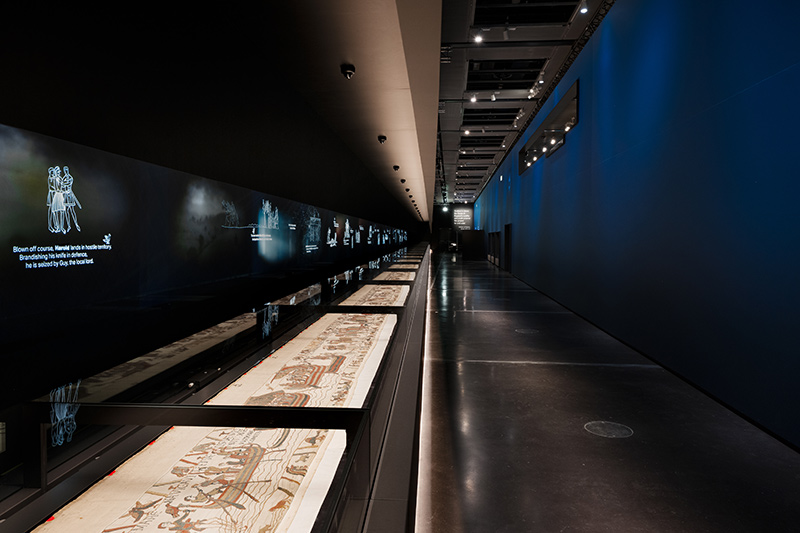
3D projection of the scenography imagined by Opera Amsterdam for the presentation of the Bayeux tapestry at the British Museum.
© Trustees of The British Museum
The British Museum had explained that only self-guided tours had been set up due to the strict conservation rules imposed on 11th century embroidery. Since it cannot be exposed to light for too long, the tapestry requires some adjustments. Visitors have only 40 minutes to view the work and are required to move forward continuously to maintain a steady flow, which the museum said guided tours would have been likely to slow down.
While denying discriminatory behavior, a spokesperson for the British Museum told the BBC that the establishment will commit in the future to making the Bayeux Tapestry as accessible as possible, and plans to develop tours with audio description in person, as well as the addition of an audio-described tour in the audio guide of the application dedicated to the work. The museum also said it worked with accessibility specialists to design the exhibit.