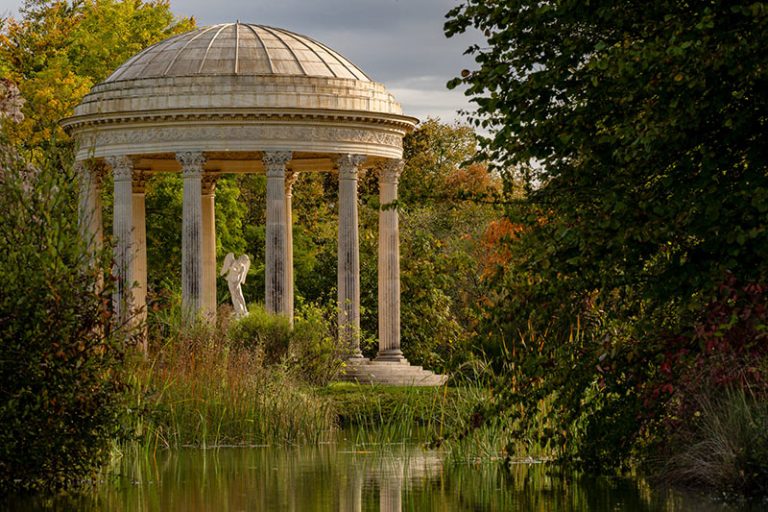
Born when the end of World War II was finally in sight, in March 1945, Anselm Kiefer is, along with Georg Baselitz, Gerhard Richter, Sigmar Polke and Jörg Immendorff, one of the fundamental names of the renaissance of German painting in the seventies, when Neo-Expressionism dominated the scene.
From the very beginning, he made the history and myths of his country his creative source, delving into the ancient past when reflection on the most immediate yesterday was still unapproachable and Adorno’s statement that poetry was not possible after Auschwitz weighed. For Kiefer, history has its roots in legend and its basis in a diffuse ideology that derives from distant worlds in space and time: he did not trust records, documents or witnesses, but he did allow himself to be fascinated by the irrational. The capacity for empathy (despite the current manipulation of the term) has been essential when examining previous eras, a will constantly present in his production.
Another of the starting points of its creation has been nature. In his latest proposals he has very often started from the observation of dry vegetation with yellow stems and withered thistles whose ocher tones delighted him. Due to their beauty on the verge of decomposition, they remind him of old representations about love, death and the transience of life, but above all the poems and love songs of Walther von der Vogelweide, closely linked to the author’s own life.
to that one minnesinger (poet of lyrical love), who lived between the 12th and 13th centuries and whose seminal texts Kiefer has been analyzing since the seventies, dedicated the project to him Für Walther von der Vogelweidefocusing on what is surely his most widespread poem, Under the lindenabout the romantic union in a natural environment of two lovers from different social classes. Literature has always been essential for him… and also language: I live in language (…). It is the language that dominates me. I hear it. Much of it remains obscure to me, but I carry the words with me and suddenly form relationships from what it tells me.
Both the experience of nature that shines through in that medieval poem and the broken leaves of grass and the flowers described in it appear again and again in his recent paintings; In fact, the vegetal has only gained presence in his work since the initial series Für Paul Celan, Die Ungeborenen and Morgenthau Plan. Bent and tangled stems, born from the gestural application of thick brush strokes, can break the pictorial space and seem to approach the viewer moved by invisible forces, while its flowers contain per se a memento morisimultaneously alive and already withered.
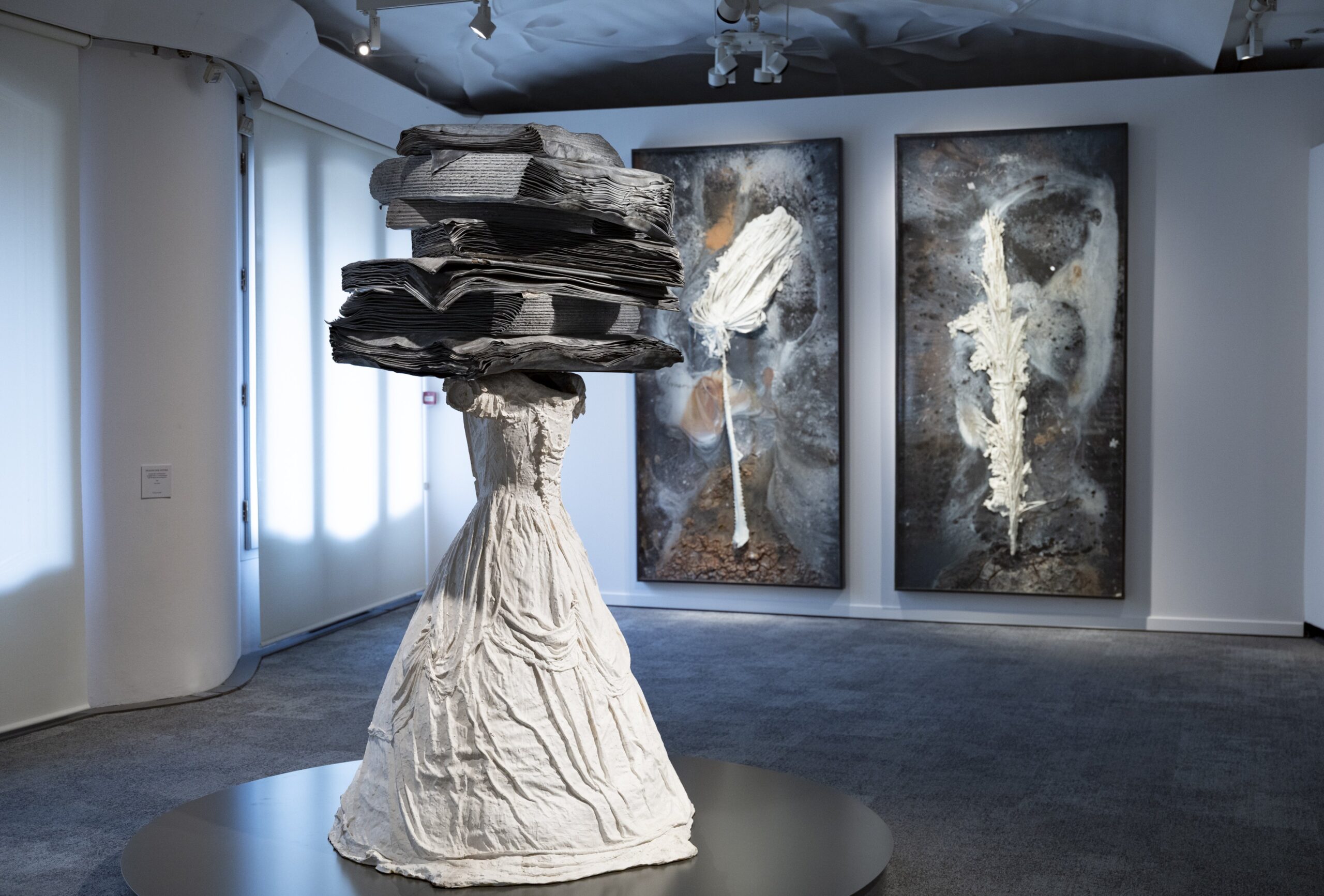
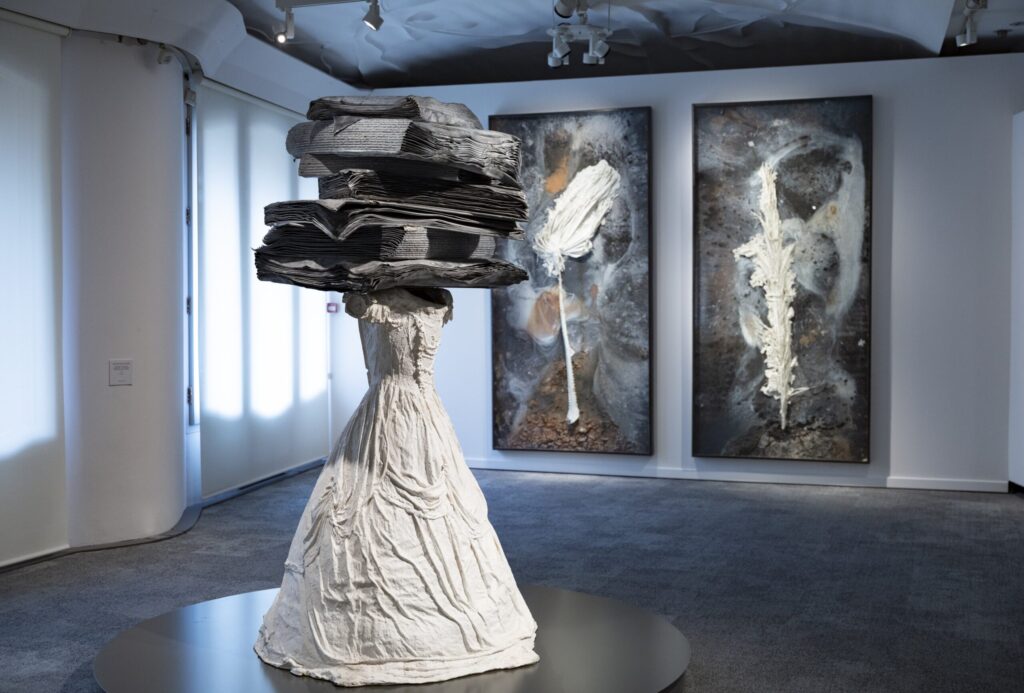
The secret life of plants. Anselm Kiefer in the Grothe Collection. Fundació Catalunya La Pedrera
That aspect of his career is the germ of the exhibition that the Fundació Catalunya La Pedrera dedicates to him from today and which is his first individual in Barcelona: open until next January, it is titled “The Secret Life of Plants” and consists of forty works from the collection of Hans Grothe, one of the essential when studying German contemporaneity – a quarter of a century ago he starred in an exhibition at the Reina Sofía – and some more on loan from other funds private.
In this exhibition, Kiefer’s recurring plants serve as a starting point to highlight the usefulness of the micro when investigating the macro, the links – the infinite and deep connections – between the tiny forms of life and the dynamics that determine the cosmos and history itself. Mentioned at this point are the theories of the British intellectual Robert Fludd, who as early as the 17th century tried to explain the world as an interdependent totality, three centuries before the theorists of globalization and the climate emergency referred to interspecies relationships.
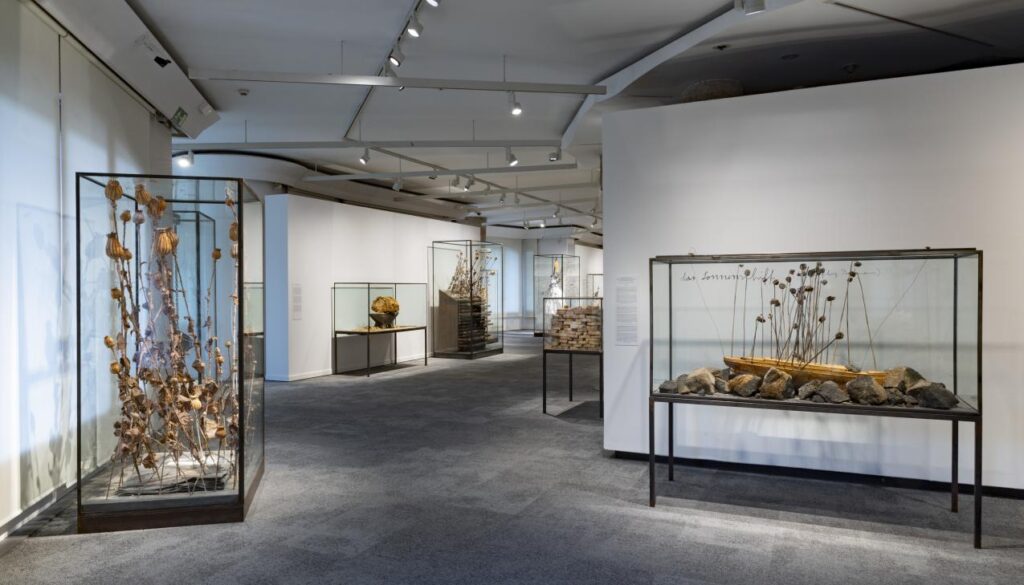
The secret life of plants. Anselm Kiefer in the Grothe Collection. Fundació Catalunya La Pedrera
The entire exhibition has been conceived as a work in itself in which memory, matter and present knowledge intersect in many forms and supports: we are talking about display cases, paintings and books that are not structured along the route in isolated areas, but rather, as in Kiefer’s own career and in his vision of the world, they generate a relational system and an open story in whose interpretation the public is invited to participate.
He will have an open field to do it, because his materials – earth, straw, cloth, ash, lead or sand, sometimes marked, burned, torn or violated – are usually full of meanings that we will have to read like those cryptic books that Kiefer has also used. Perhaps we cannot always access them rationally: they are full of shades and grays, where the definition of motives breaks down.
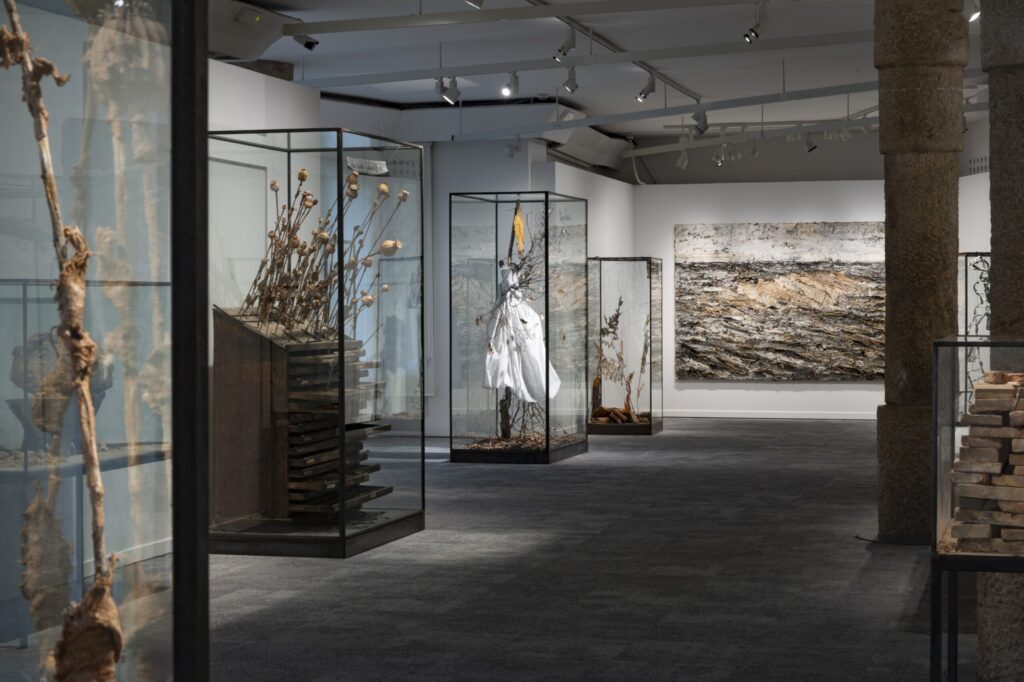
The secret life of plants. Anselm Kiefer in the Grothe Collection. Fundació Catalunya La Pedrera
«The secret life of plants. Anselm Kiefer in the Grothe Collection»
CATALUNYA LA PEDRERA FOUNDATION
C/Provença, 261
Barcelona
From October 2, 2026 to January 24, 2027