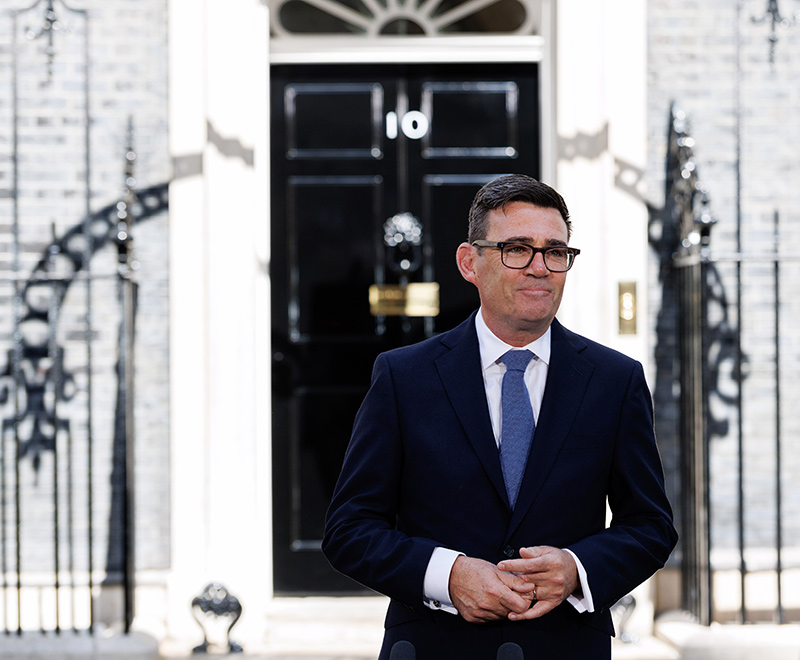
On July 20, Andy Burnham moved into 10 Downing Street. Former MP for Leigh from 2001 to 2017, Andy Burnham returned to the House of Commons on June 18, winning the Makerfield by-election. Mayor of Greater Manchester since May 2017, he left this position the day after his election. A few days after his election as leader of the Labor Party, Andy Burnham became the first former culture minister to head the British government.
In his first speech delivered in front of 10 Downing Street, after his appointment by Charles III, the new “PM” recalled the immediate priorities of his “10-year plan” of which the cultural sector is not, however, part. Reform of the education system, social housing, many subjects are on his program, but Culture is discreet in the speeches of the man who was the minister from 2008 to 2009.
Beyond embodying the Prime Minister’s very strong attachment to the North of England, where he comes from, the opening, on July 24, of “No 10 North”, a branch of the Prime Minister’s office temporarily installed in Manchester, was to give substance to his decentralization policy.
A few clues, however, have led some to speculate about the place that culture will occupy in the new government’s agenda. First, the retention of Lisa Nandy at the Ministry of Digital, Culture, Media and Sports. Close to Andy Burnham, Lisa Nandy has promoted, since her arrival at the ministry in 2024, a policy based on the idea that the decentralization of cultural industries is a driver of regional development. In 2025, the MP for Wigan (Greater Manchester) launched the national summit on the growth of the creative industries in Gateshead, in the north of England – not London. Another notable element, Andy Burnham appointed James Purnell, his predecessor at the Ministry of Culture, as chief of staff.
If the Minister of Culture receives some criticism attributing to her a lack of initiative, the non-profit organization Creative UK views her renewal favorably and anticipates a favorable framework for the development of the creative industries. Likewise, the organization welcomed the Burnham government’s decision to expand the portfolio of the Ministry of Culture by adding the field of digital competence, interpreting it as a way of strengthening the links between creative content and marketing. This enlargement follows the dissolution of the Ministry of Science, Innovation and Technology, a large part of which is absorbed by the new Ministry of Business, Innovation, Science and Commerce.
According to British news site Arts Professional, Andy Burnham’s connection to Manchester is a bellwether for the future of the cultural sector under his tenure. During his years as mayor of Greater Manchester, he was seen as a “promoter of culture” in the area. His support for Factory International and Aviva Studios, a £240 million cultural facility intended to strengthen Manchester’s international influence and develop creative employment, had constituted one of the most visible aspects of his cultural policy.