Grasse (Alpes-Maritimes). The Jean-Honoré-Fragonard Museum was interested in a theme little explored in the work of “its” artist. The painter of Locka painting in which the contemporary eye perceives a scene of rape, is shown in a more tender light. As a compass for the journey of “Fragonard. The darling child of Grasse”, the ambition of the curator, Carole Blumenfeld, is to “deconstruct preconceived ideas” on the painter, in whom she detects a “proto-feminist” sensitivity at the origin of his paintings on childhood.
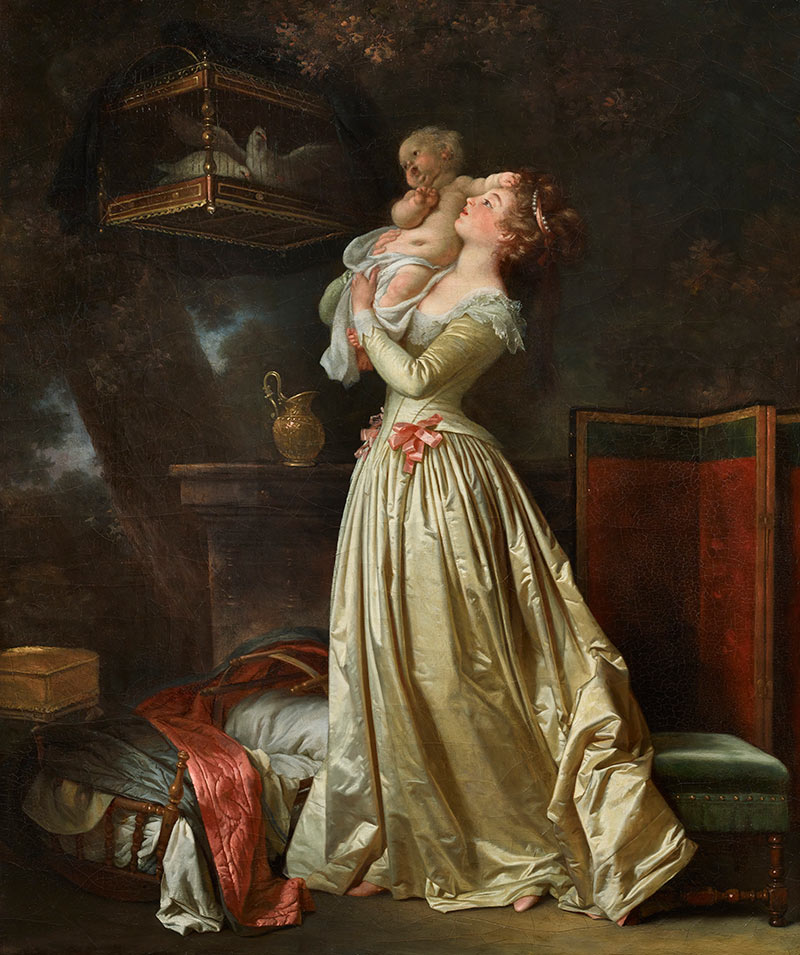
The exhibition displays a vision of emotional parenthood which echoes the philosophy of the Enlightenment, and offers a new variation of it. For Fragonard (1732-1806), early childhood is inseparable from the feminine presence. Whether or not she is the mother of the Child Jesus, the mother is painted with the same admiring look. When she hoists her child above her face to look at him from below, the balance of the intimate and the sacred is crystallized in this gesture which says something essential about motherhood. The maternal figure is neither the dramatic passion of a Greuze nor the circumspection that Chardin attributes to it. THE Cradle represents, in a beautiful diagonal, young women in adoration in front of a baby.
It was unusual, in the 18th century, to represent school education for women: for the commissioner, The Little Girl reading her alphabet (around 1776-1778) reflects a strong affirmation on the part of the painter who, after the death of his daughter in 1788, abandoned color. Paintings in gray and ocher tones punctuate the route with morose notes.
The selection brings together around thirty paintings from institutional loans or private collections, some of which are previously unpublished. Highest point of the route, the whole rediscovered by the curator, composed of The Darling Bird (around 1785, [voir ill.]) and its counterpart, painted in collaboration with Marguerite Gérard, sister-in-law and student of Fragonard.