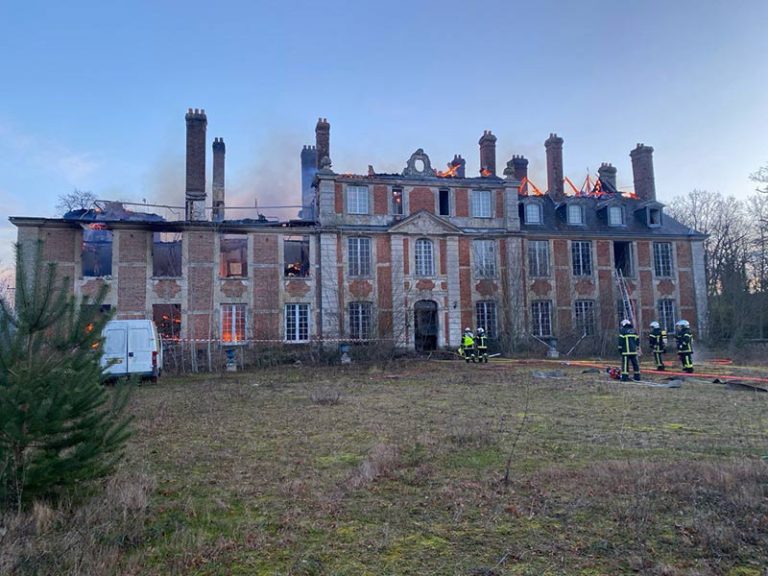
France. The Bern mission and the collection of donations for Notre-Dame placed the heritage foundation on a much higher orbit than when it was launched in 1995. Its resources have been multiplied by three since 2017 and its field of action has widened, in particular to natural heritage. With this dynamic, Alexandre Giuglaris (see Ill.), Its managing director would now like to measure the efforts to be made to restore the heritage that requires it.
In recent years, the Ministry of Culture has been carrying out a sanitary assessment of the 44,000 historic monuments. The previous campaign, dated 2013-2018 and made public in 2020, had assessed that almost a quarter of these monuments was either in danger or in poor condition. An observation undoubtedly undervalued because it is based on simple visual observations and on extrapolation (all monuments not been evaluated). The next assessment must soon arrive on the office of the Director General of Heritage.
But protected monuments represent only 15 % of the monumental heritage. Thanks to the inventory (entrusted to the regions), a large part of this heritage is now known, but not its state. The Heritage Foundation has decided to set up an unprotected heritage observatory and proceeding by survey to assess its health condition. The results of the first survey should soon be communicated.
On the other hand, the ministry’s assessment and the foundation survey do not say how much it would be necessary to spend to restore them. It is, it is true, almost impossible to assess except to use approximate ratios. What is less understandable is the total absence of consolidated figures on what France spends each year to restore its buildings as the Court of Auditors pointed out in 2022. It estimated, however, that the State and local communities had spent 1.3 billion euros in 2019 (and € 2 billion in 2021 thanks to the recovery plan).
Fort Boyard.
But it is not necessary to wait for these assessments to perceive the extent of the efforts to be made. Mayors who are on the front line know this when it is necessary to restore a church or an old house. The 1,000 volunteers of the Foundation are in regular contact with these elected officials who share their dismay. However, these volunteers have acquired in the campaigns of location of sites to be protected and files to be set up for collections, an increasingly fine expertise on what to do. Why not put this know-how at the service of elected officials? This is exactly what Alexandre Giuglaris has in mind with three aims: “We want to help elected officials who feel alone when it comes to restoring unprotected heritage, lowering construction costs and motivating our volunteers with new missions”, he explains.
But is it not one of the tracks envisaged by the Minister when she mentioned a “national French trust”? It seems unthinkable from an economic point of view that this “national trust” takes in management of small sites (with what money?) As the British organization does. As it seems unrealistic that this new French agency succeeds in making millions of members join (with what counterparts?). On the other hand, she could advise private owners and elected officials. This is precisely what the Heritage Foundation plans to do, especially since it already has 75,000 donor members. “We are perplexed on the practical modalities of the project project”let go of a bit disillusioned Alexandre Giuglaris.