Colombia (landscape, society, history) and his own homosexuality are the two axes of the career of Miguel Ángel Rojas, who has had a lot of searching for identity over five decades. Widely represented in collections in his country – he was born in Bogotá eighty years ago – and also internationally, in recent years he has been gaining popularity in our country after recently joining the artists represented by the Cometa gallery and following the announcement of the anthology that the Reina Sofía Museum is already dedicating to him, under the curator of María Wills Londoño.
It has a hundred works, several unpublished and all representative of the issues that it has not stopped addressing in the last half century – drugs, miscegenation, violence, education, migration, decolonization or the exploitation of natural resources. They are accompanied by texts related to specific pieces that the author himself has written, given that his own biography is important when contextualizing them.
Rojas’ production operates at the same time in the field of aesthetics and in that of politics and ethics, and both are completely intertwined: this exhibition is called “The Night” because darkness populates his creations, referring both to the darkness that dominated the cinemas where, at a certain time, homosexuals could hold clandestine meetings and to the black coal extracted from the Amazonian landscape.
Time and again, the artist contrasts the popular and rural values of Colombia – which he intends to recover – with the representation of the violence that drug trafficking entails; This is a constant in his career that we already appreciated in Grainan installation from 1980 in which he used land he obtained from the Tolima region to allude to the environment where his grandparents lived and the fractures derived from the migration from the countryside to the city; It consists of tiles made with colored soil brought from the countryside, similar to the pavement of her grandparents’ home. Also in The short path (2012), where he has once again alluded to the drug market using coca leaves, dollars and names of figures related to consumption, and from a pop style; or in the series David (2004), his portraits of a soldier mutilated by a mine, one among many (José Antonio Ramos), with whom, as in the case of all his models, he established a personal relationship. Against the privileged classes, he embodies those who could not escape the war and suffered its effects in the flesh and not in the archives.

Miguel Ángel Rojas. Grain (detail), 1981. Photograph: Museo Nacional Centro de Arte Reina Sofía Archive, 2026
The human body is another continuous motif in his projects, linked to pain, desire, inequality or conflict. Open the route on your own and in shadow: Self-portrait with moonlight (1968) is a photograph taken with a Kodak 1A that Rojas himself understands as a foundational work in his career. Rojas appears in profile, illuminated by a beam of light and converted into a mirror of a collective reality linked to mourning and a continuous night. It also acquires the role of a symbolic self-portrait. The Harvest (2012), a sculptural installation composed of 147 small pre-Columbian heads from the Tumaco culture executed in corn, lime and cement, in which the Bogota native is related to those people, while in the night (1980) applied cocaine to a photograph and covered it with resin, thus declaring the end of his addiction at that time.
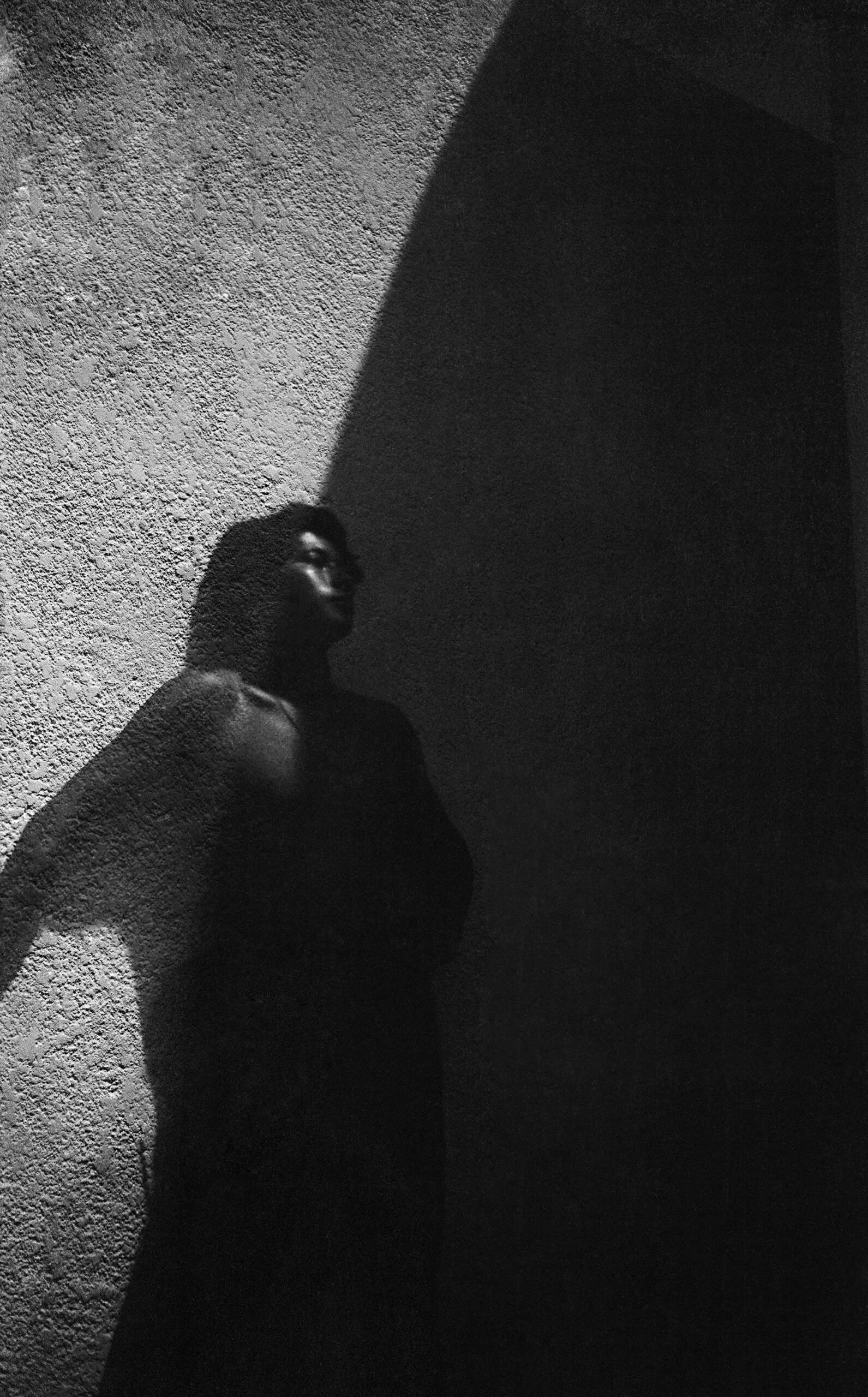
Miguel Ángel Rojas. Self-portrait with moonlight1964. Photograph: Artist Archive
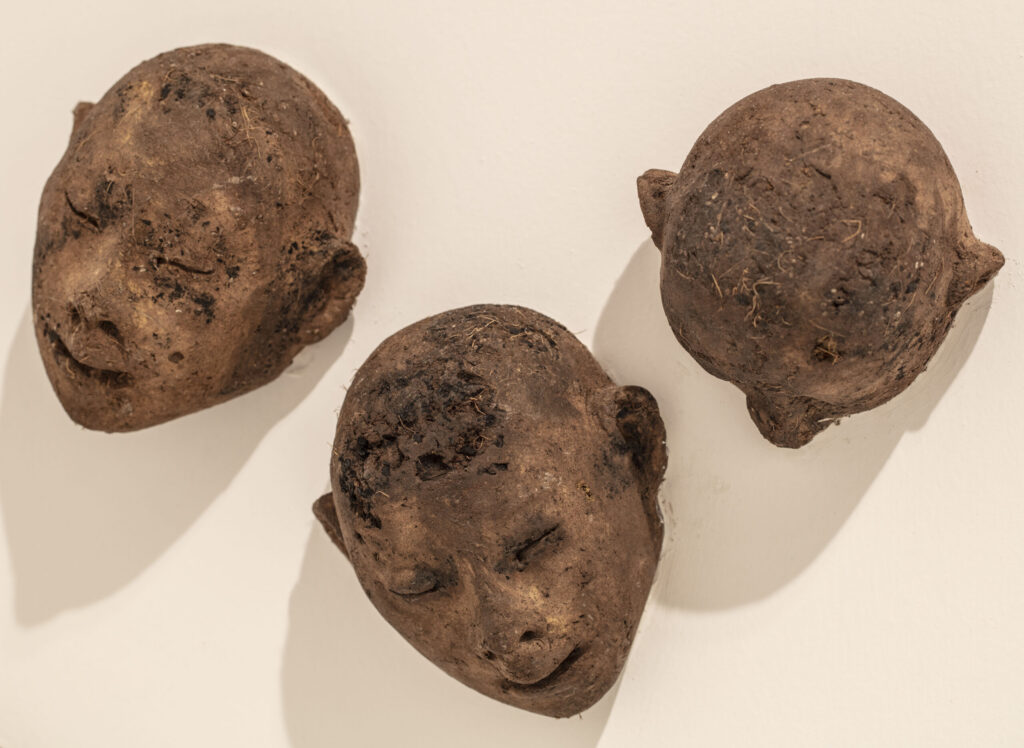
Miguel Ángel Rojas. The harvest (detail), 2012. Collection of the artist. © Miguel Angel Rojas, Photography: Reina Sofía National Art Center Museum Archive, 2026
In the next works, his attention moves to the landscape and the consequences of extractivism in it: in The new Gold (2012), the pixelated line of the Amazon River built in gold is integrated into a green landscape made with coca leaves powder, clay and natural pigments, while in the very recent charcoal charcoalwhich had never before been shown to the public, charcoal frottage evokes an eroded territory in which living species are metaphorically made of gold.
Speaking of gold, Rojas does not shy away from discussing in Madrid the issue of the Quimbaya Treasure, which has been the subject of debate for months. In the video Restitution (2009) questions the validity of donations of cultural heritage, highlights the symbolic value of these pieces for the country from which they came and vindicates the creations of indigenous peoples; The artist defends the return to his country of these works found in the Coffee Region of Colombia in 1891 and donated, two years later, to the regent María Cristina by President Holguín Mallarino. Today it is guarded by the Museum of America.
The pieces, for their part, refer to the historically continuous desire for gold extraction. Thirst (2015) and The Tables of the Law (2018). For the latter, he constructed the phrases with copper and gold plating. In gold we trusta reinterpretation of the famous phrase printed on dollars, and It Is Better to Be Rich Than Poora comment from the boxer Pambelé, Colombian like him.
His creations in clay, braided plant fibers and, again, coca leaves respond to his mestizo roots and his family’s ties with nature. Buritaca (1992) remembers the sacred nature that this plant had by displaying it next to the poporo, a ceremonial object used by the communities of the Sierra Nevada de Santa Marta. Today, merchandise that enriches criminals, wants to suggest its possible interpretation as an ancestral vehicle of thought and collective dialogue. We will find coca leaves again in broadway (1996-2012), where a path of ants carrying them becomes a metaphor for drug trafficking.
Another claim of central indigenous Colombia Scraper dreams (2007): Rojas collaborated with a linguist from the Nasa community to compile native words and concepts without translation into Spanish, positioning himself against the growing cultural homogenization. And it also elevates traditional ceramics and native grass weaving. Stipa ichu to the rank of artistic discipline, while demanding remuneration for its makers.
While defending the revaluation of indigenous languages and crafts, Rojas criticizes exacerbated consumerism and the desire to ascend socially. With dollar bills and coca leaves he has drawn, in The short pathnames of famous drug victims and the aliases of those who became rich at their expense.
This exhibition advances by showing us its insinuations of what darkness requires to develop: it is sought by those who do not experience belonging for reasons of ethnicity or sexual orientation, the latter protected by the poor luminosity of cinemas and theaters in the second half of the seventies. There Rojas was able to work adjusting his focus with a hidden flashlight, imagining frames and mentally counting the exposure time. Nor were their development procedures conventional. These images thus become, in substance and manner, an act of resistance.
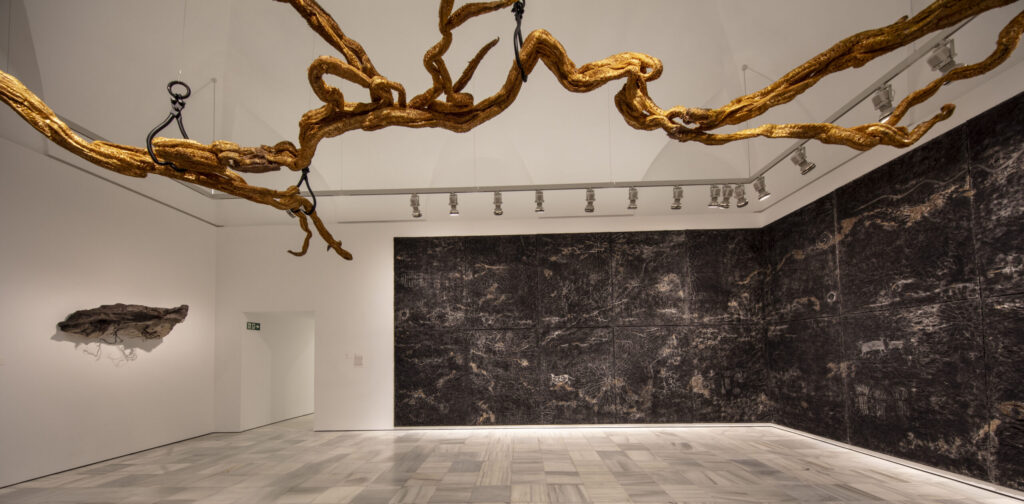
View of the exhibition room «Miguel Miguel Ángel Rojas. “The night.” Photographic archive of the Museo Nacional Centro de Arte Reina Sofía, 2026
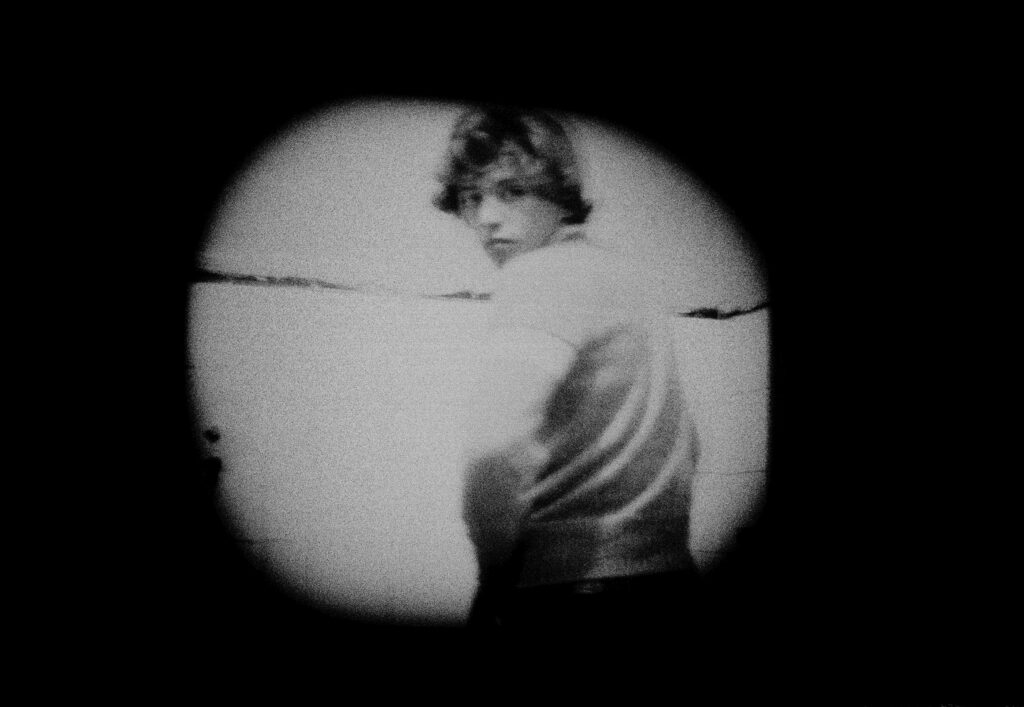
Miguel Ángel Rojas. The Freddy1979-2008. Artist’s collection. © Miguel Ángel Rojas. Photography: Artist Archive
«Miguel Ángel Rojas. The night»
NATIONAL MUSEUM REINA SOFÍA ART CENTER. MNCARS
C/ Santa Isabel, 52
Madrid
From November 11, 2026 to March 15, 2027