It was 1978 when the then director of the Amon Carter Museum in Texas, Mitchell A. Wilder, came across a portrait that Richard Avedon had made of a ranch foreman (his name was Wilbur Powell) and proposed to this photographer, who by then had made other very original portraits of Truman Capote, Arthur Miller, Humphrey Bogart and Marilyn Monroe, to continue that work by focusing on people from the western United States. Once the project was completed, it was to be shown in 1985 in that center in Fort Worth, in whose archive the original negatives and a set of prints would be kept, and then touring other North American venues.
Wilder died the following year, in 1979, but the museum team had enough sense not to bury the idea; Thanks to them, Avedon dedicated several summers to photographing invisible individuals in parking lots, corrals, or fairs who, as the artist himself pointed out, raised the country with their work. He immortalized more than seven hundred people, who in the last publication were reduced to one hundred and twenty-four, in front of white backgrounds (paper fixed to a wall): his light is not from a study, it is that of the west. We also know that the author was not seeing the image at the time of taking: he was not looking through the lens, but into the eyes of the model, with his hand on the shutter release.
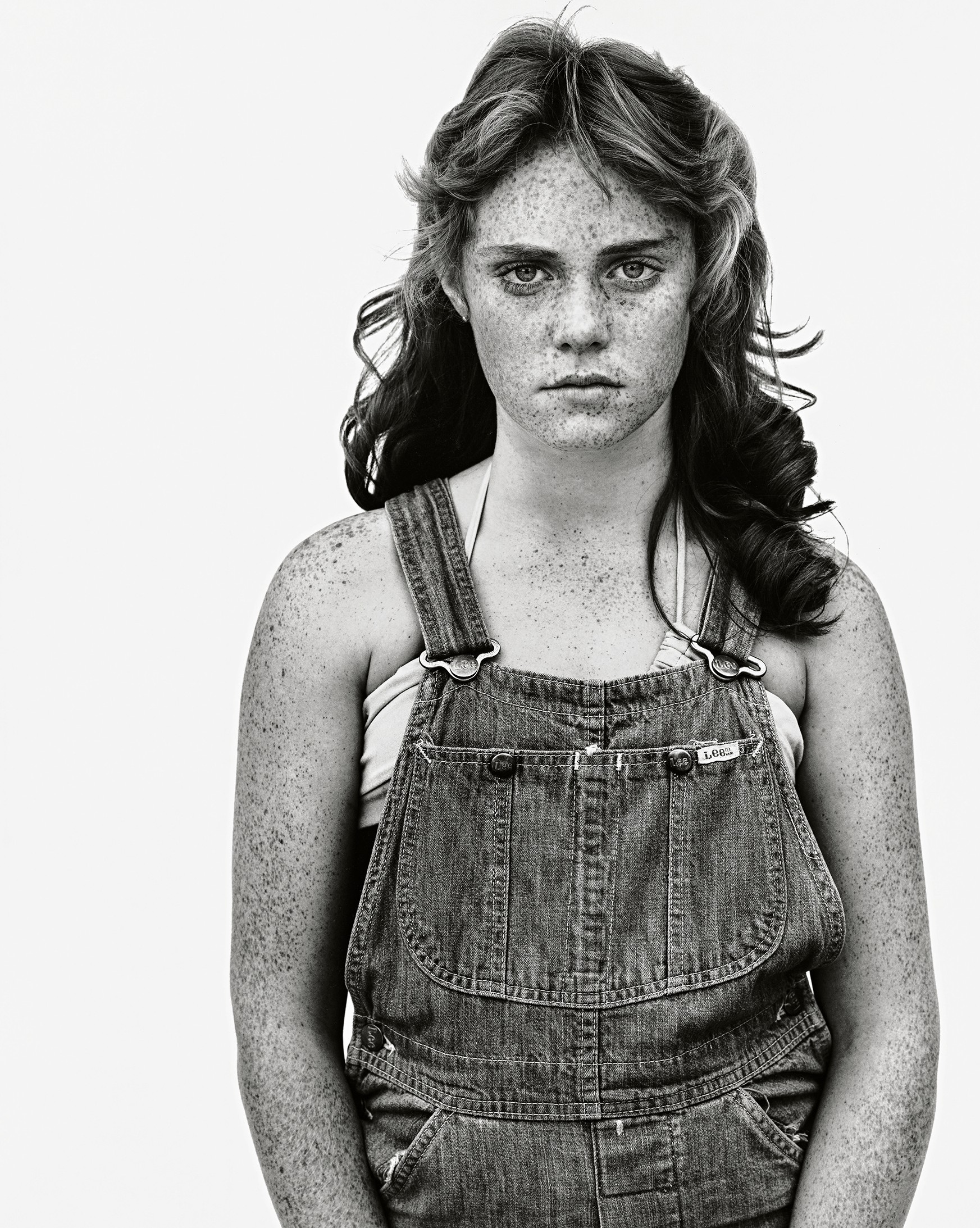
Richard Avedon. Ronald Fischer, beekeeper, Davis, California, May 91981. The Richard Avedon Foundation
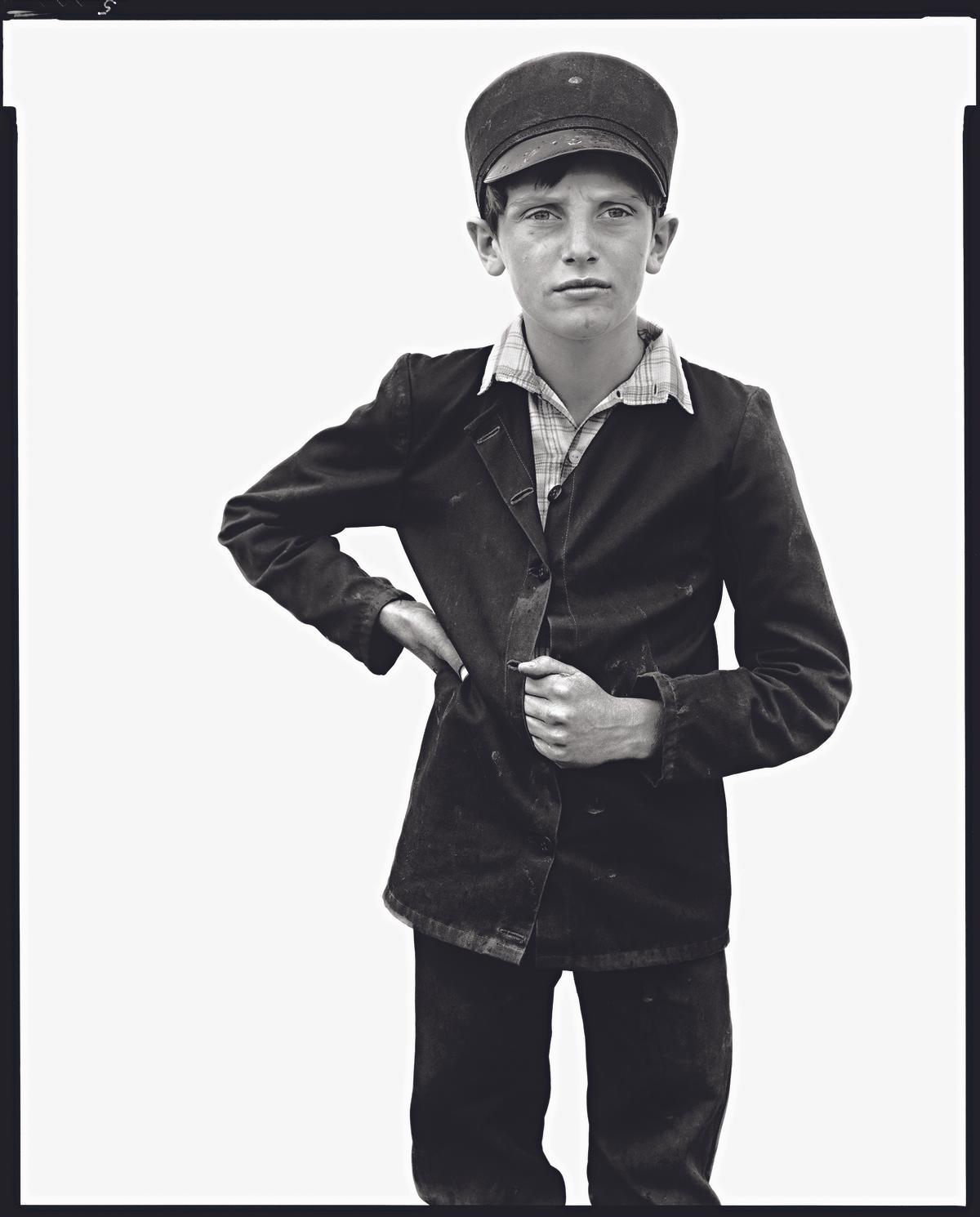
Richard Avedon. Jesse Kleinsasser, pig man, Hutterite colony, Harlowton, Montana, June 231983. © The Richard Avedon Foundation
From common and very diverse occupations, and in some cases without any but with dignified jackets, they look at the camera naturally (more or less distrustful, more or less comfortable) and between them, who did not know each other at all, the viewer will be able to establish physical or psychological relationships, which will emerge from the images organically. They will be paradoxical links, because both will not have the same concerns regarding the photos, which are in turn different from those of the photographer; Avedon noted: Surely the sitter’s need to defend his cause is as intense as I have to defend mine, but I am the one who controls the situation.
He also controlled the selection of his models, even if he had help: he chose those photographed subjectively, always among unknown individuals, never prepared for the occasion and on whose faces smiles are rare; They inhabit sparsely populated places throughout twenty states and, with all certainty, many would be being portrayed for the first time.
Faced with their collaborations in the field of fashion for Newsweek either Count Nastthese creations very obviously represent a departure from his known territory: Avedon goes to the west out of personal impulse, perhaps seeking to renew himself, but perhaps also from a desire for authenticity; It is possible that, for him, mud was a necessity. Committed to civil rights and anti-discrimination, it was probably a natural path for him to focus on the first victims of the oil crisis and deindustrialization, the reverse of Dynasty and Dallas. When the writer Rebecca Solnit saw these works for the first time, in 1986, she confessed to experiencing a shock linked to rejection, because they seemed cruel, but she immediately became aware that their faces could be those of many she passed on the street.
Thematic aside, it is true that Avedon was progressively, and increasingly, attracted to modest images (frontality, neutral light, light background) and was convinced that their expressiveness depended on the photographer’s gaze and not on the camera and the details. This does not mean that its preparation was quick; sometimes even requiring second sessions: simplicity does not equate to the absence of sophistication. The staging – except in very specific cases, such as the beekeeper covered in bees – seems to be diluted, but it has been constructed, although it is almost invisible.
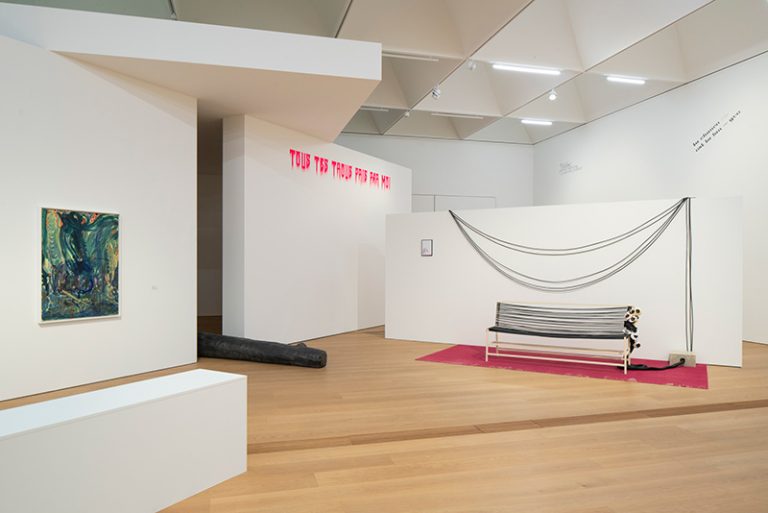
At the proposal of the Fondation Henri Cartier-Bresson in Paris (and giving a certain twist to an exhibition program based on retrospectives), the Mapfre Foundation is now exhibiting this project in Madrid, which would give rise to one of the essential photobooks of the last century, along the lines of those also dedicated to the American population by Walker Evans (American Photographs) and Robert Frank (The Americansnow exhibited at the Telefónica Foundation), at different historical moments. Avedon was surely more aware than his predecessors of how fiction photography was, a tool for precision but not for truth.
It is the first time that this series about people who seem to wear the West on their face and to whom this author approached with closeness, respect and a certain admiration that has much of a political statement is exposed in its entirety in Europe.
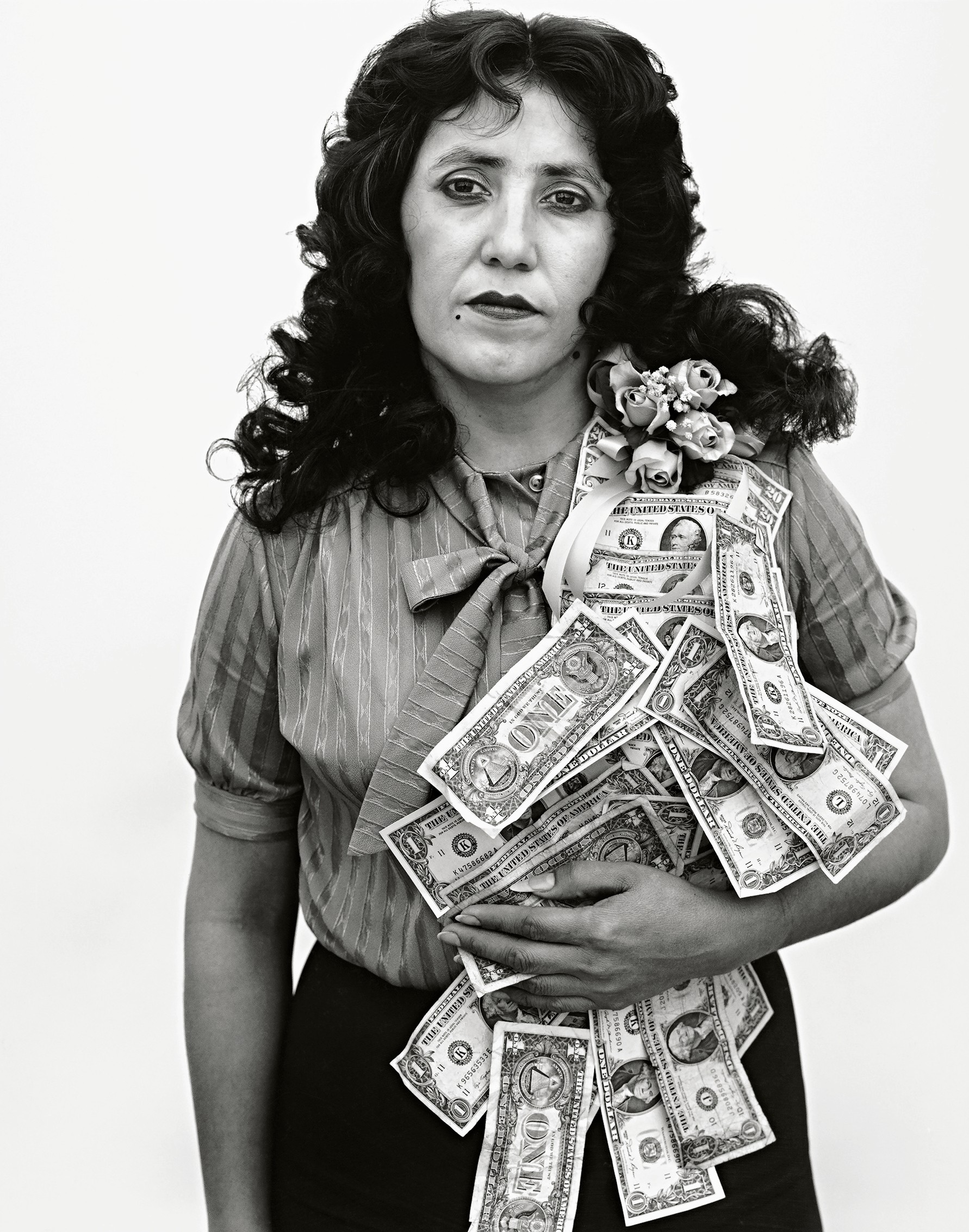
Richard Avedon. Petra Alvarado, factory worker, on her birthday, El Paso, Texas, April 221982. The Richard Avedon Foundation
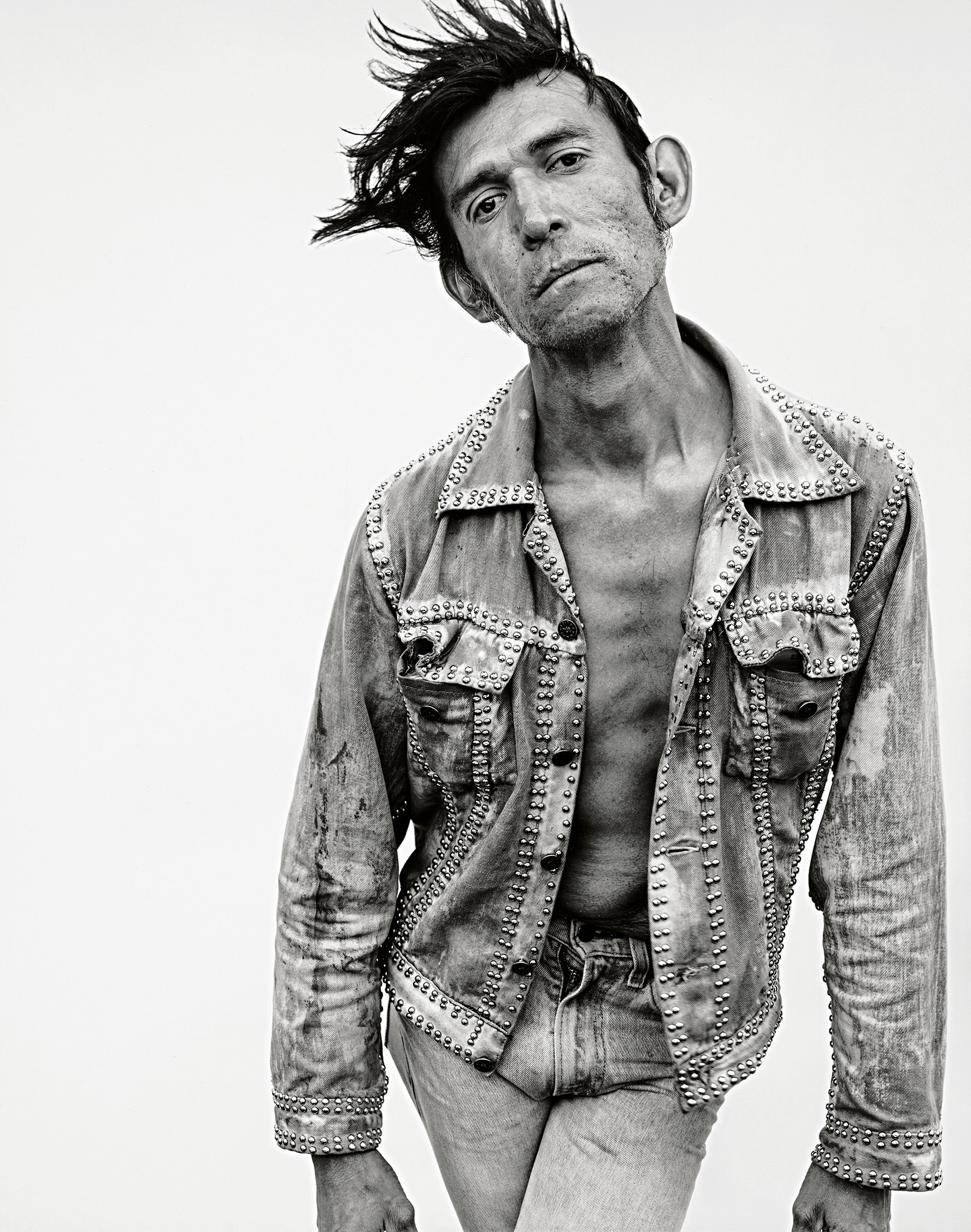
Richard Avedon. David Beason, shipping clerk, Denver, Colorado, July 251981. The Richard Avedon Foundation
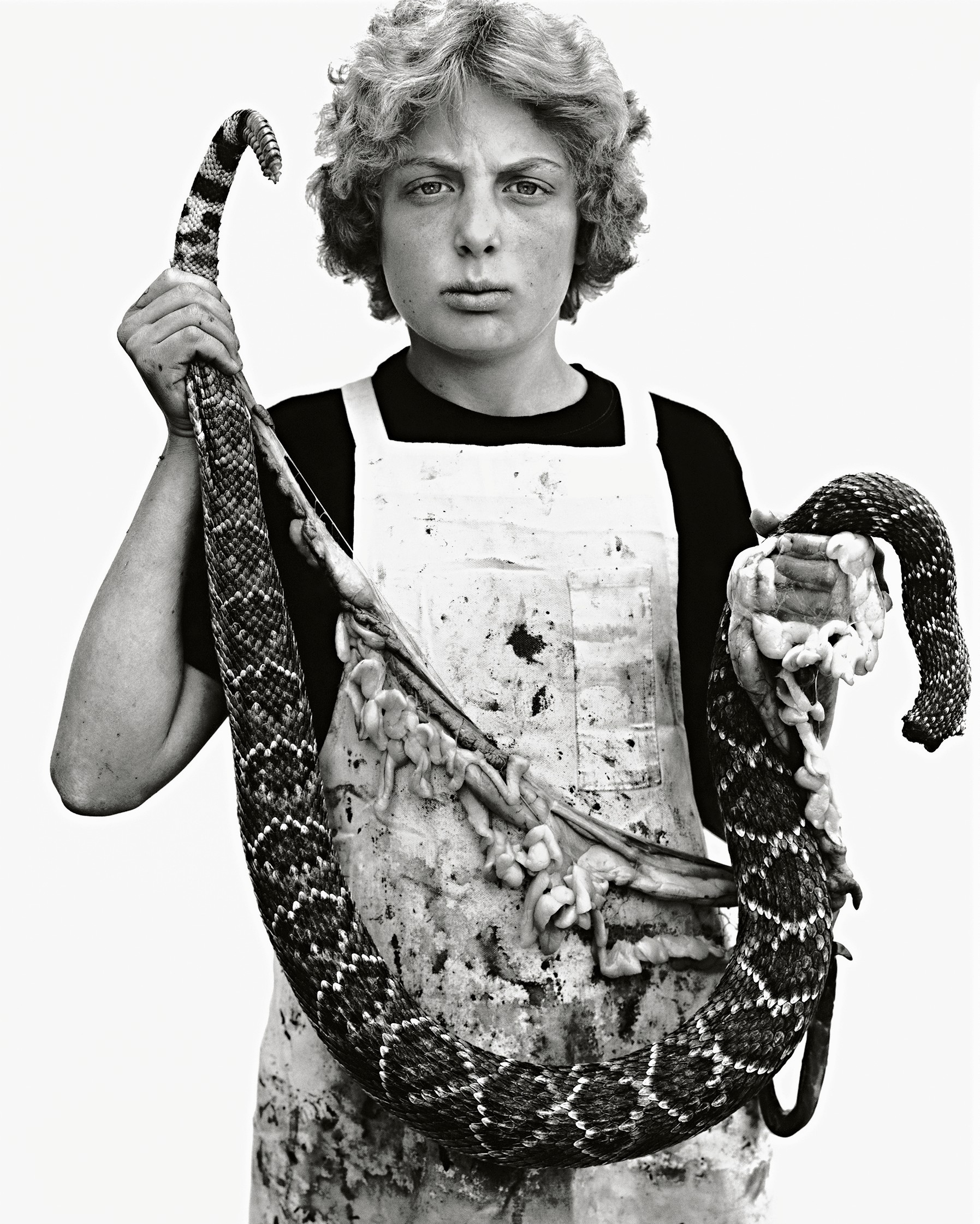
Richard Avedon. Boyd Fortin, thirteen-year-old, Sweetwater, Texas, March 101979
«Richard Avedon- In the American West, 1979-1984»
MAPFRE FOUNDATION
Paseo de Recoletos, 23
Madrid
From June 4 to August 30, 2026