France. Long associated with the French Cancan and the singers of Montmartre, the French cabaret sector is experiencing a revival. The Ministry of Culture’s plan supports all forms of cabaret, placing emphasis on creation and heritage. Aid for artistic residencies, training of Drac teams in the regions, Cabaret Season events in fall 2026, highlighting the know-how of artisans: the Cabaret Plan seems to be making up for institutional delays. The ministry has in fact long neglected this sector, poorly identified by the services of the Directorate of Artistic Creation, as recalled by Laurent Vinauger, Dance and Cabaret delegate at the Ministry of Culture. The very definition of cabaret has evolved to designate today a type of show more than a place. Gold, “The cabaret involves a show with conviviality, and a catering offer”he explains.
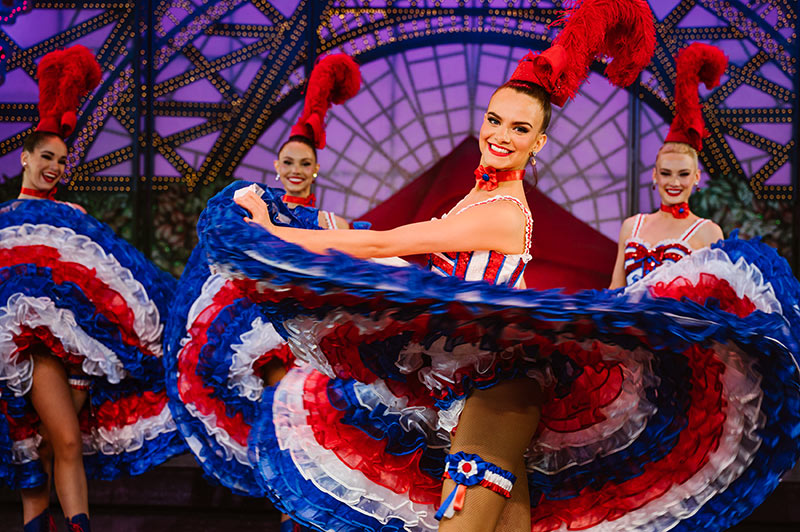
At the Moulin Rouge, spectators can dine in the room before the 9 p.m. show, and most cabarets serve drinks during the shows, unlike theaters. New forms of cabaret now present shows in theaters, on an itinerant basis, like La Bouche Cabaret which benefited from a residency in Berlin as part of the ministerial plan: interaction with the public still exists, minus the old-fashioned conviviality.
Maxime Fontanier from Mine Verges dressing a dancer from the Moulin Rouge.
© Estelle Poulalion
If the tradition continues, the cabaret heritage is not always highlighted. Large establishments such as the Moulin Rouge or the Crazy Horse regularly lend their archives for museum exhibitions, but most cabarets rely more on a repertoire of songs or choreographies to highlight their heritage, due to a lack of historical documents. At Madame Arthur, in Pigalle, the shows include numerous covers of famous songs, including repertoire from the 1950s and 1960s, according to its director Fabrice Laffon. This transformist cabaret, created at the end of the 19th century, changed its identity several times before being taken over in 2015 by Fabrice Laffon, who gave it a new program of “piano songs and transvestite shows” true to its origins. At Crazy Horse, heritage is displayed on the walls with photographs from the 1960s showing “the links with Op Art and Pop Art from the creation of the cabaret in 1951”according to Andrée Deissenberg, artistic director of the place. This also emphasizes the proximity of Crazy Horse with artists (Paco Rabanne, Dalí, César, etc.). The Moulin Rouge archives are also visible in the rooms and corridors, notably at the entrance, in the Toulouse Lautrec lounge where customers can admire a selection of original posters by the painter. According to general director Jean-Victor Clerico, the establishment plans to create an exhibition space to better promote this heritage. The Moulin Rouge is also part of the Cabaret Arts Association which is preparing the inclusion of the French Cancan in the national intangible cultural heritage on behalf of the Ministry of Culture.
This heritage is also embodied in the arts and crafts, costume makers, shoemakers, embroiderers and feather workers. Because if cabaret costumes often resemble haute couture, they must nevertheless “resist wear and tear, being worn by dancers every night”indicates Maxime Fontanier, head of the Mine Vergès workshop, bought by the Moulin Rouge and become a subsidiary. Cabarets have a long tradition of handcrafted costumes. In fact, the Cabaret Plan aims to safeguard these ancient know-how (Lunéville crochet embroidery) while integrating these trades into “a general reflection on artistic professions in France and their recognition”explains Laurent Vinauger.
Sequins, Swarovski crystals, embroidery, feather headdresses, high-heeled shoes and even embroidered thongs are assembled and repaired by hand. “The dancers’ thong sometimes has to support metal frames, so there is an important technical aspect”thus points out Maxime Fontanier, not without malice. Although its dancers are almost naked, Crazy Horse also emphasizes the importance of the materials used for underwear and accessories. At Madame Arthur, the director has created an in-house costume workshop with two costume designers, and is considering collaborations with other specialized Parisian workshops. The purchase by the Moulin Rouge of several workshops remains the exception, but ultimately meets the goal of the ministerial plan, “save and transmit know-how” linked to cabaret, according to Jean-Victor Clerico.