The Ministry of Culture announced this morning that Pilar Albarracín is the artist awarded the National Prize for Plastic Arts for 2026. The award is worth 30,000 euros.
A jury chaired by Ángeles Albert, general director of Cultural Heritage and Fine Arts, and by Jesús Carrillo, deputy general director of Visual Arts and Contemporary Creation, and composed of Armengol Jiménez, director of the Center d’Art La Capella; Semíramis González, director of LABoral. Center for Art and Industrial Creation; Gilberto González, deputy artistic director of the CAAC of Seville and the C3A of Córdoba; Teresa Grandas, exhibition curator at the MACBA in Barcelona; María López-Fanjul, managing director of the Museum of Fine Arts of Asturias; Pedro de Llano Neira, professor of Art History at the University of Santiago de Compostela; and Elena Jiménez Moreno, artist, has highlighted the artist for “her construction of one of the most unique and recognizable trajectories of contemporary Spanish art” and because “through performance, photography, video and installation she has critically reviewed the Spanish cultural imaginaries, addressing issues linked to gender, tradition, folklore, collective identity and power structures.”
Albarracín, who takes over as recipient of this award from Fina Miralles, Teresa Lanceta, Rogelio López Cuenca, Dora García, José María Yturralde, Àngels Ribé, Ángel Bados, Ángela de la Cruz and Juan Hidalgo, has been resorting, fundamentally, to performative actions and installations to dissect the stereotypes associated with the idea of “Spanishness.” Following a feminist and open approach, she handles her creations with irony, theatricality and a normally sharp social criticism.
She herself usually becomes the protagonist of many of her actions, presenting her work in the first person, both from the image and from experience, and has delved deeper, from everyday or playful perspectives, never pretentious, into topics that, beyond vulgar considerations, do not always lend themselves to humor: gender violence, the harshness of life in certain rural areas, the supremacist visions of the urban world towards the countryside, towards flamenco, or the picturesqueness that is still alive in certain perspectives. to our country from abroad. She believes in a desacralized art, in liberated religious and popular customs and in the need for individual and collective commitment to feminine social advancement (there are her handkerchiefs for crying from 1997: because you feel pain, for the loss of freedom, to cry in solitude, because you can’t find words, to cry out of boredom or to cry purple).
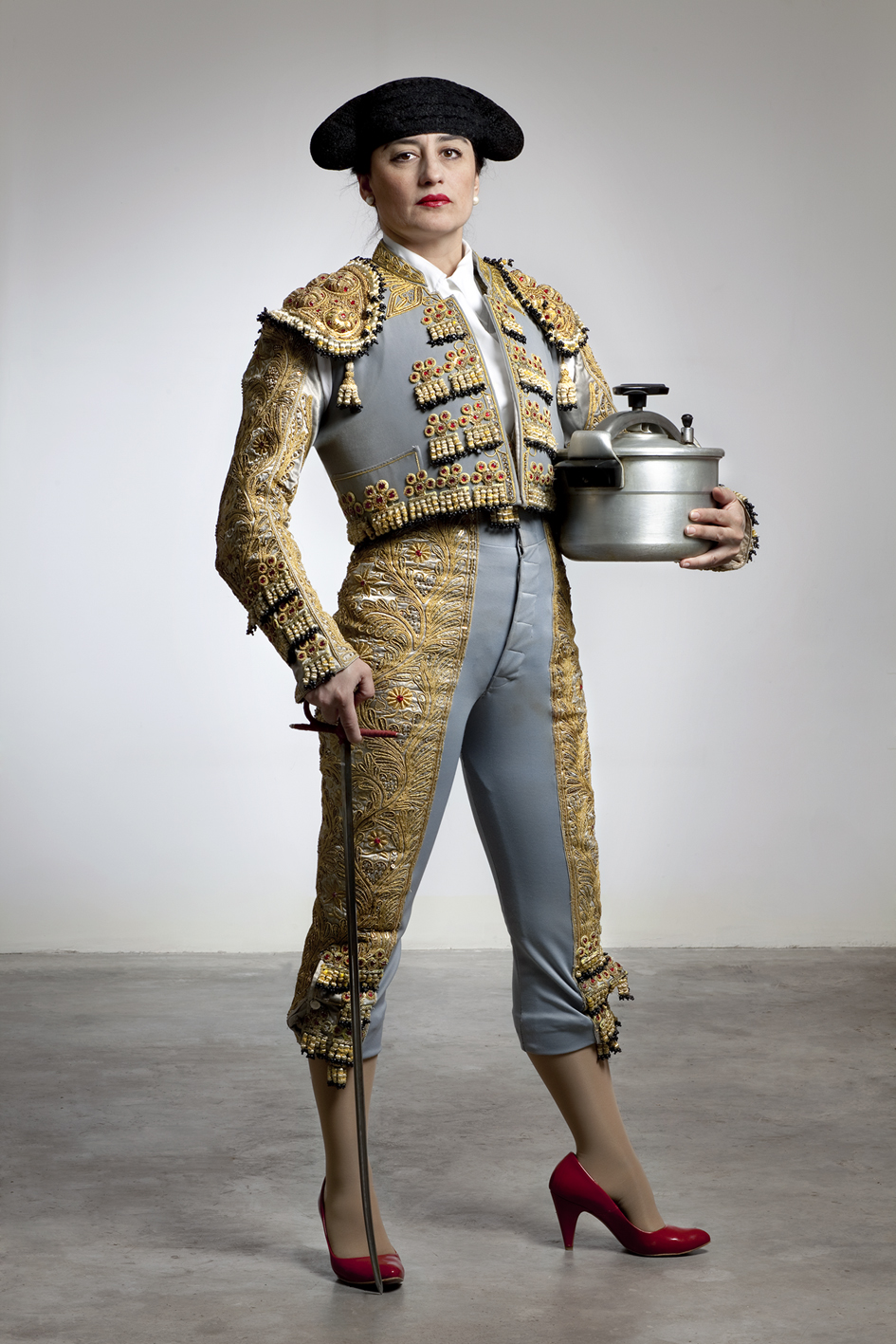
Pilar Albarracín. Bullfighter2009
Among his most celebrated proposals we can mention Long live Spaina performance in which Albarracín herself crossed the streets of Madrid harassed by a musical band that performed that song; I will dance on your gravea choreography around the fight of the sexes, on all fours; and which is one of his most emblematic works: Polka dotsin which the artist appears in a white Sevillanas dress that turns red as it is pricked with pins.
They are evidence of how working from the archetype helps him confront, from within and with irony, clichés, and at the same time delimit his borders with old traditions and healthy folklore. His own body is, until now, his most common instrument when it comes to referring to rituals and trances, to pillory the usual narratives.
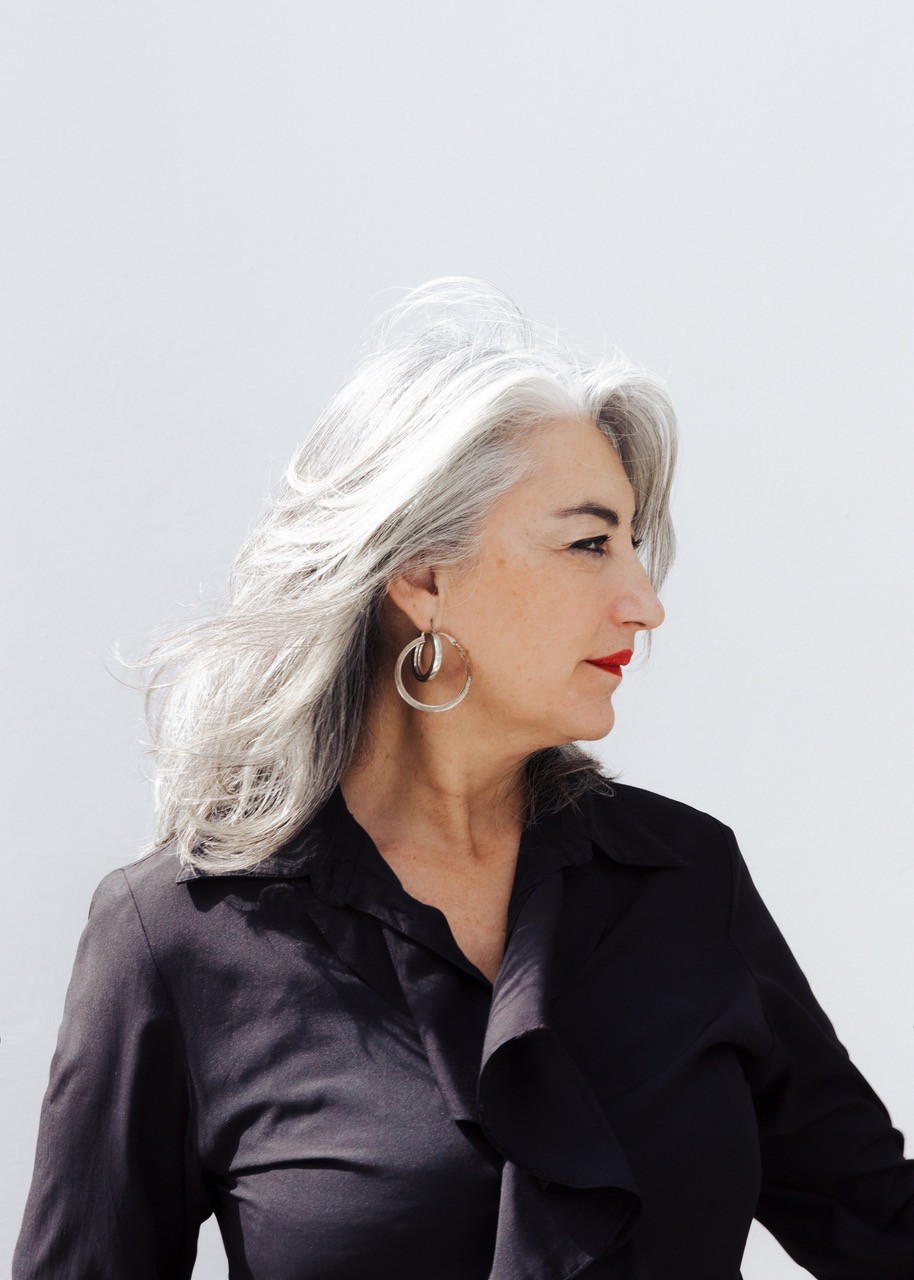
Pilar Albarracín, National Prize for Plastic Arts 2026