San Sebastian,
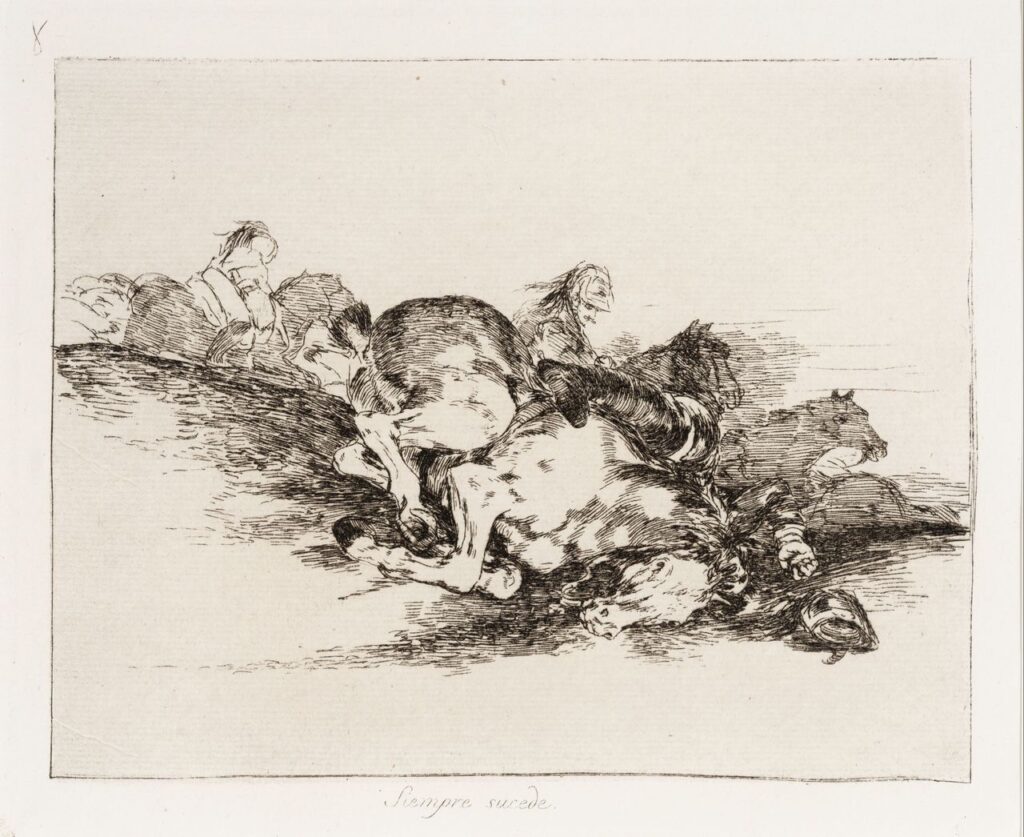
Among the latest acquisitions of the San Telmo Museum in San Sebastián, one of the editions of the series stands out The disasters of war by Goya, dated between 1810 and 1823, made up of eighty prints and dedicated, as is known, to as many crude episodes left by Napoleon’s invasion of Spain.
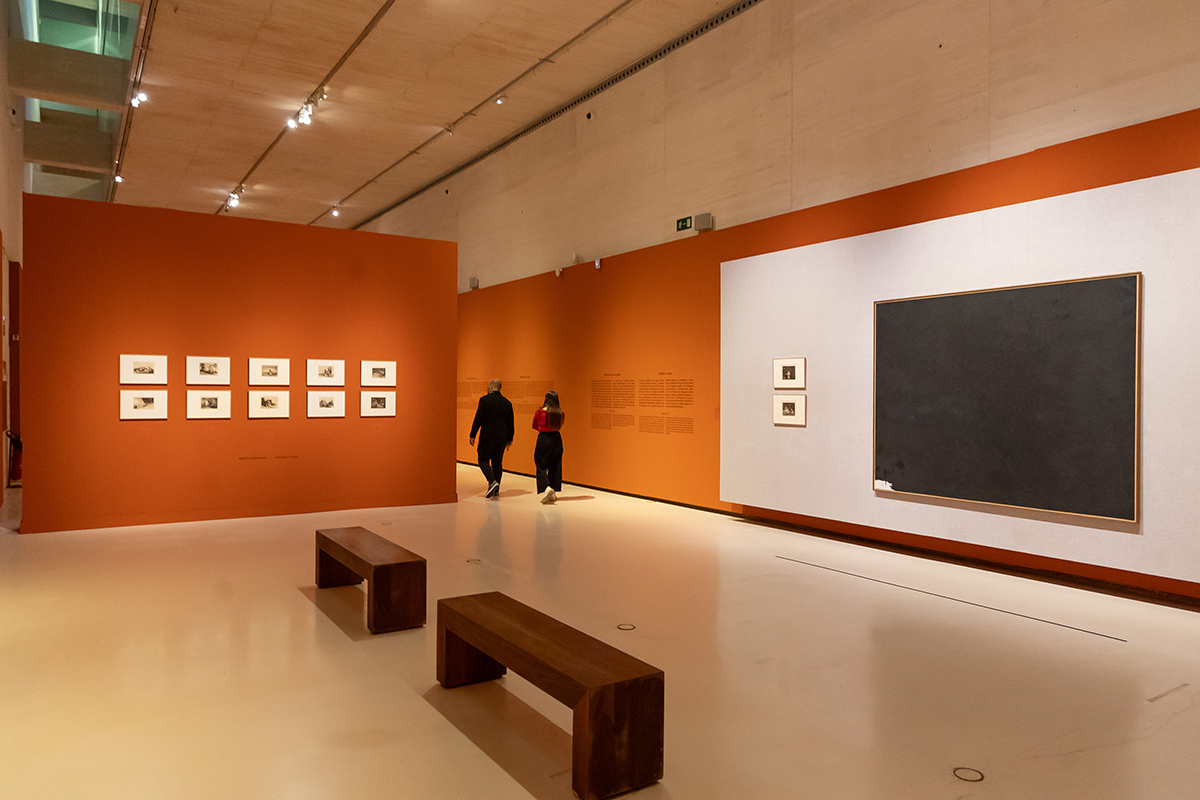
As the decades passed, these compositions would transcend their first value as a document to become an emblem of human suffering and violence caused by wars, also by the closest ones, which is why this San Sebastian center wanted to exhibit for the first time this group, so representative of Goya’s free and critical outlook, pairing it with the work of Robert Motherwell. Iberiawho has traveled for the occasion from the Guggenheim Bilbao.
This American author had barely reached his twenties when the Spanish Civil War broke out, but the news he had access to in relation to the war left its mark on him and, starting in 1948, only seven years after beginning his career as an artist, he dedicated one of his most famous series to this subject: Elegies to the Spanish Republic. The work Iberia It is ten years later and was made after his first visit to Spain, that same year of 1958 and together with Helen Frankenthaler: he dives into the darkness and gloomy atmospheres that he perceived then; In fact, that tone, black, is the base of this piece, only nuanced by a small white surface at one end that, in the background, accentuates the dense sobriety of the rest of the fabric.
This work gives rise to a feeling of impenetrability and almost suffocation, although Motherwell took great care of the treatment of the pictorial surface, seeking to ensure that the weight of darkness was achieved through numerous brushstrokes that converge and separate; even invoking, at times, chaos. In short, the American took a thorny issue into the realm of formal daring.
While working at Iberiawe know that Motherwell received the impact of the black paints: He chose, from his abstract language, to evoke the emotions generated by the war even when it was a memory. In terms of style, this image evidently offers a counterpoint to Goya’s; As for its expressive intensity, it was intended not to be like that.
The route of this exhibition – which also has documentation: photographs, audiovisuals, a volume of the Encyclopédie and the exhibition catalog “The New American Painting”, which could be seen at the Museum of Modern Art in Madrid precisely in 1958 – proposes, therefore, a possible study on the influence of the Disasters in contemporary art and has been curated by María Bolaños. It takes us from shouting to silence and from the black of ink to that of oil.
ALL THESE THINGS HAPPENED
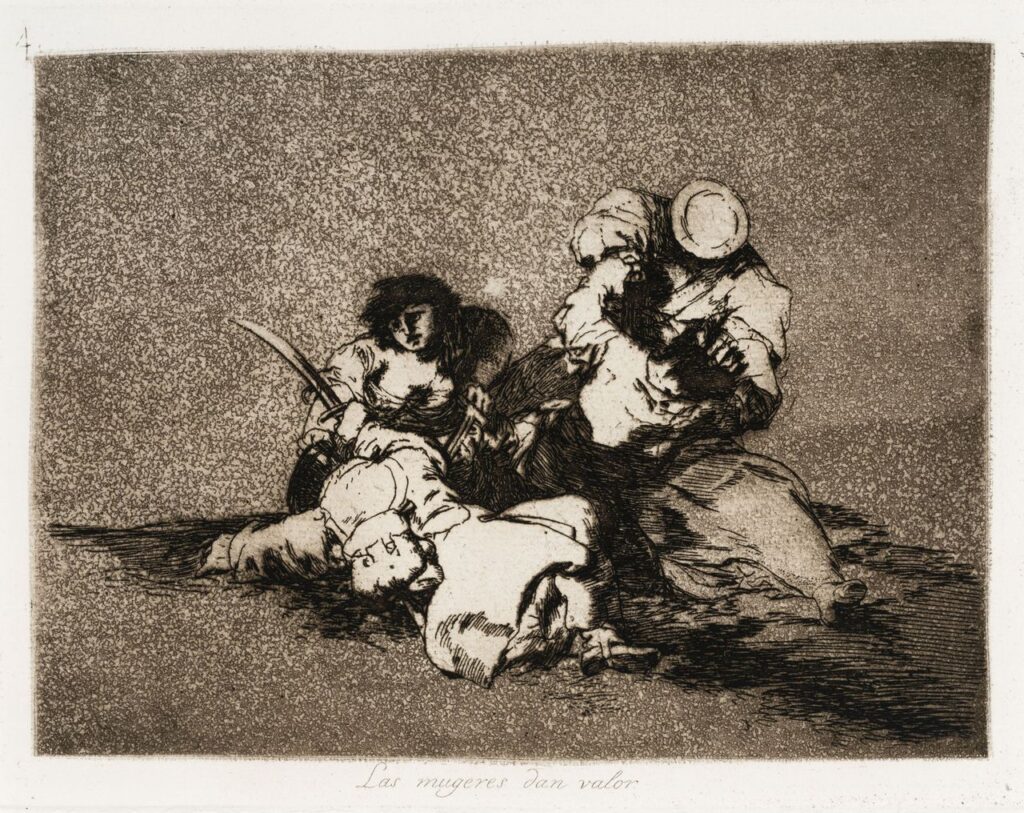
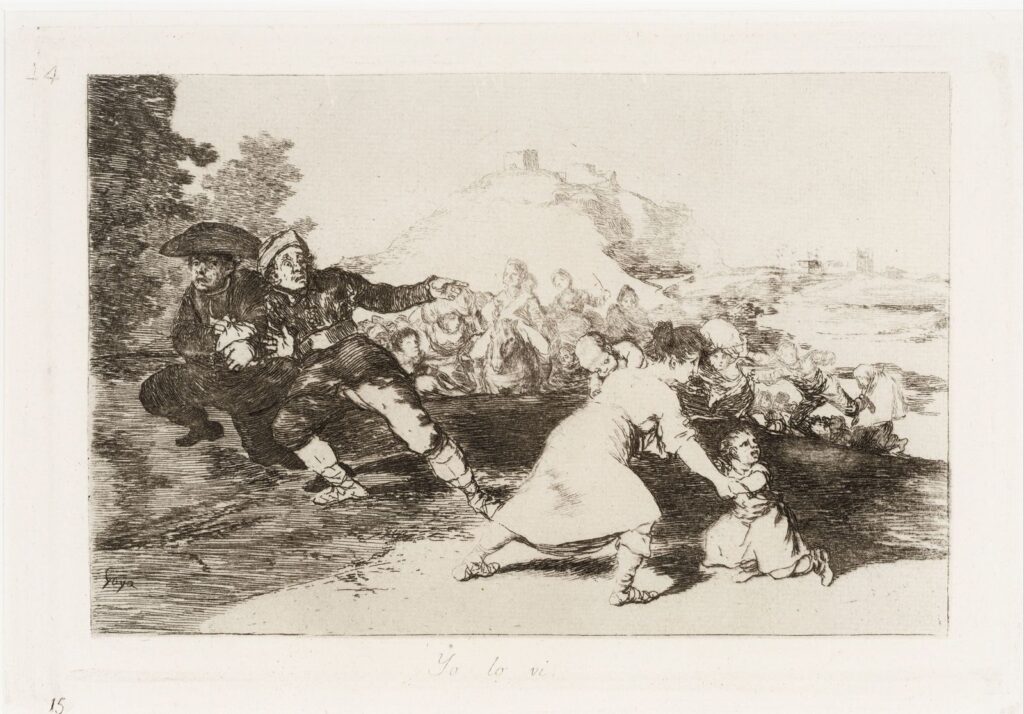
The exhibition begins by showing us the Goya series, which the man from Fuendetodos carried out in a difficult personal moment, of illness and bitterness. He chose not to pay attention to heroes or battles, but to the infinite forms of cruelty that, until that moment, had been seen in wars, but not in art, and that essentially the anonymous suffer. Aware of the dangers that his coming to light could entail, Goya did not publish The disasters of warwhich were only released after his death, in 1863.
He himself guaranteed the veracity of what was represented (I saw ithe wrote) and, indeed, we know that he saw one of his students dying of hunger or young people dragging corpses of French soldiers on their way to Zaragoza. Another disturbing aspect of these compositions is found in the groups of individuals who neither intervene nor look away, an uncomfortable place indirectly related to the one the viewer occupies today.
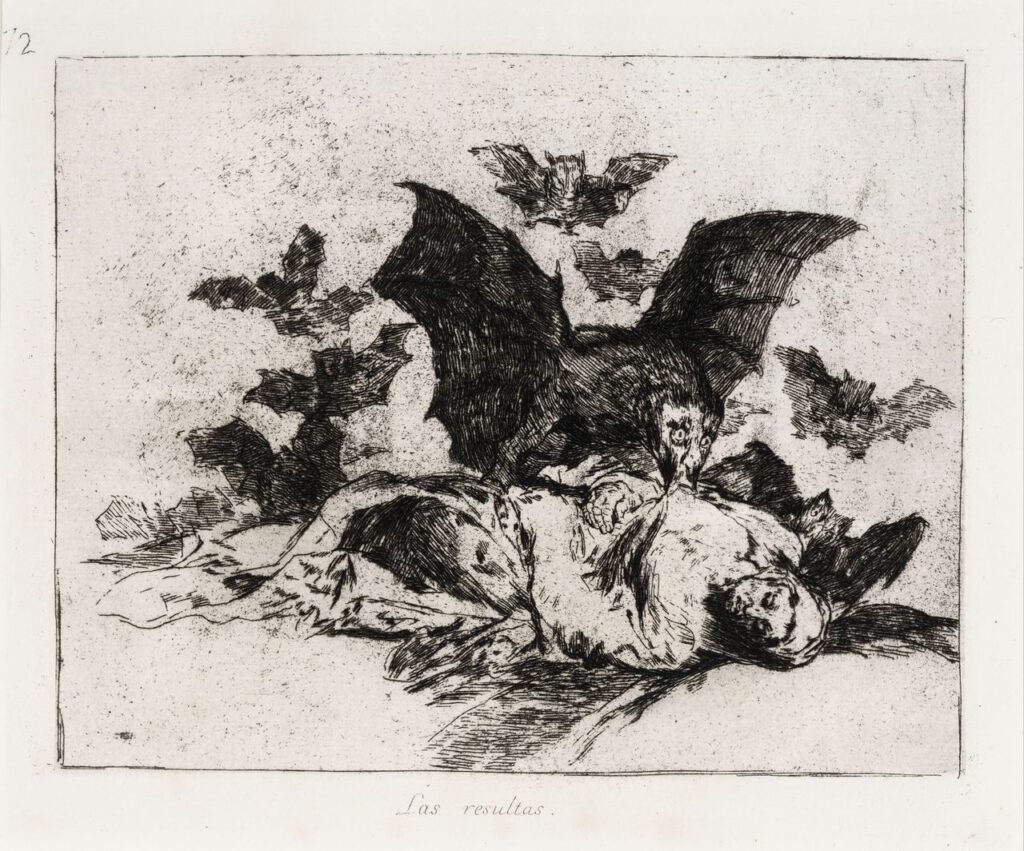
If we stick to the details of the representation, we will not be able to stop looking at bodies that are barely bodies anymore: dismembered figures suspended from trees, amputated limbs, desecrated or impaled corpses, fires, castrations, seriously injured people painfully cared for or women being raped and desperately defending themselves. Art had not addressed this issue with that degree of crudeness before and it will not do so many times later.
The violence of these scenes has its clear technical translation, in the form of energetic strokes, zigzags or scratches. The trauma represented has its echo in artistic violence.
In contrast to Goya’s wild engravings, in Motherwell we will find a black desert not devoid of accidents in the form of textures: brushstrokes, calligraphic lines or splashes, pasted or diluted, which sometimes become glazes, transparencies and mists. Iberia It is a composition presented as a large field of color, of solemn gravity and intended to promote meditation without distractions, perhaps in a ritual space, such as a tomb or a temple.
Both compositions are tinted or immersed in blackness; In the case of Goya, it comes from what has been recreated and from his own ghosts and, in that of Motherwell, from the observation of another historical time and, perhaps, from a metaphysical pessimism.
Also part of this exhibition in San Telmo are some enigmatic Spanish engravings titled Emphatic whimswhich we can consider allegories of Spanish society in times of liberal persecution. The individuals become animalistic and sometimes peck at their victims; In one of these scenes we read a quote taken from a then-famous Italian satirical poem: Miserable humanity / it’s your fault.
“Black Goya, black Motherwell. Eighty disasters and an abyss”
SAN TELMO MUSEUM
Plaza Zuloaga, 1
San Sebastian
From May 16 to September 27, 2026