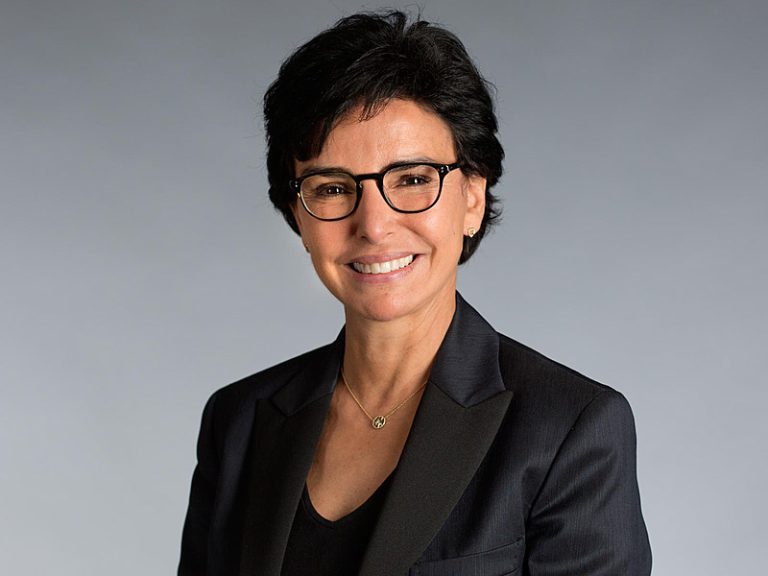
Before his return to Lebanon to manage the press group The Orient-The DayRima Abdul Malak will chair the jury for one of the Prizes of the Planches Contact festival, scheduled in Deauville from October 18 to January 4, 2026.
Why did you agree to chair the jury for the Young Photographic Creation Prize at the Planches Contact festival?
Firstly because Philippe Augier, the mayor of Deauville, has an extremely strong cultural policy. We talk a lot about the disengagement of communities from culture. So when mayors commit to such ambition, it deserves to be supported and valued. Also, the duo of new directors, Lionel Charrier and Jonas Tebib, are fantastic. It seemed important to me to support this new dynamic. And above all, this festival holds a special place in the French landscape, for its support for young creation and its long-term residencies. In an era of constant zapping of images that saturate attention, we need a festival of this quality to relearn how to look at the world.
What are you looking for in a festival?
The discovery. The time of the festival allows you to escape from your daily routine and be immersed. This atmosphere creates sensitivity, listening, curiosity, generates reflections, emotions and encounters. Obviously, when I was Minister (of Culture, May 2022-Jan. 2024), the protocol made the agenda less conducive to this state of openness. However, I managed to take the time to look at the works at my own pace, to interact with the artists. These moments were always inspiring.
What is a festival for?
A festival is a catalyst. The event dimension creates a mix of audiences who come from everywhere. It’s a collective emulation, for festival-goers, artists and professionals alike. It is a cultural, poetic and human force that re-enchants a city, but let’s not forget that it is also an economic force, with very significant benefits for an entire region: hotels, restaurants, shops, direct and indirect jobs…
I don’t know if we should impose a quota on them with percentages – I think the issue is sufficiently shared – but we must indeed be concerned about this representation, knowing that when we say “French scene” – Martin Bethenod makes this clear in his report – we are talking about all artists who reside in France, not just those who have French nationality. France’s strength has always been to welcome artists from all over the world and to showcase foreign creation. We cannot give up this permanent dialogue between creators from here and elsewhere. But a rebalancing is necessary so that artists living in France are not in the minority in certain programming.
The fact remains that the visibility given to the French scene internationally, particularly in the United States, is very low…
Great efforts have been made and have borne fruit. When I was cultural attaché in New York (from 2014 to 2018), I relaunched the Givens fund which Martin Bethenod cites in his report as a “example of efficiency”. The fund is structured around three axes: 1/ long residences (later expanded with the Villa Albertine); 2/ trips by American exhibition curators to France; 3/ support for exhibitions. I remember, for example, a curator from Dallas who discovered the work of Anne Le Troter at the Salon de Montrouge where she was taken: Anne Le Troter was then able to do a residency in Dallas which led a year later to an exhibition at the Nasher Sculpture Center (Dallas, Texas). The three levers of the Étavings fund (for contemporary art) had been activated. So I agree with Martin Bethenod’s analysis of the need to scatter less and to make strategic choices by maintaining them over time. But the artists themselves must also have this desire to spend time in another country. In the United States, a very vast territory which remains the epicenter of the art market, you need long immersions, to be able to rub shoulders with the country’s artistic scene, and to create lasting links. Artists who have made their mark in the United States, such as Pierre Huyghe, Philippe Parreno or Guillaume Bresson, have chosen to spend time there.
On November 10, you will take over the management of the L’Orient-Le Jour press group. These new responsibilities, very different from those held until now, bring you back to Lebanon, which you left at the age of 10 with your parents because of the war. Why this choice?
I was not expecting this proposal, but I accepted it with enthusiasm because it is at the crossroads of all my commitments. It’s also a return to my roots, even if I will continue to come to France regularly. The press is in crisis all over the world, fake news (false information) is spreading ever faster and the Middle East is on fire. But it is precisely now that the fight for information is so important to wage. Without information, no cause can advance, neither science, nor health, nor peace, nor justice, nor any human progress. I have always defended the need to preserve reliable, free, pluralistic information. It is this same commitment that continues through a newspaper (L’Orient-Le Jour) which has 100 years of history, 1.5 million readers around the world, independence and an editorial line to which I completely adhere, unique in the region.