This year, 2026, Toledo commemorates the eighth centenary of the beginning of the construction of its Gothic Cathedral, under the reign of Ferdinand III the Saint and the first influence of French models. It previously held as a Catholic temple, and continues to symbolically hold it today, the title of Primate of Spain for being the seat of the first diocese of the old Kingdom and for its hierarchical superiority; Thus, “Primada” is also called the exhibition that celebrates the anniversary and can be visited until October.
Curated by Benito Navarrete and Javier Martínez de Aguirre, it traces its history through the European artists called to participate in its design and decoration and the purchases, gifts and offerings that make the Cathedral’s heritage an overwhelming collection of artistic, historical and devotional interest.
The exhibition is displayed in spaces, sometimes rarely open to the public, and also includes works hitherto not shown or recently attributed. It is divided into two sections: a first, which we will access from the upper part of the cloister, which covers the period between the 13th and 15th centuries, the personalities of the successive archbishops at that time and the commissions or treasures received; and a second, already in the temple itself, which studies the period between the 16th and 19th centuries, with Cisneros as the axis of that division. In these centuries the cult of relics developed extraordinarily (and, therefore, a very high refinement in the reliquaries and increasing pilgrimages to Toledo); However, those of Saint Ildefonso could not be recovered, so the stone of descent would be especially venerated, where the Virgin would have imposed her chasuble on him.
Visigothic Basilica and Mosque before the Cathedral, as the remains and plans from the start of the exhibition recall, the one in Toledo had Bishop Jiménez de Rada as its promoter. This city was one of the four metropolitan seats existing in that year of 1226 in which construction of the Gothic temple began, along with Tarragona, Braga and Santiago de Compostela (there were three other exempt seats, directly dependent on the pope: Burgos, León, Oviedo); that recognition of primate It had a lot to do with its cultural wealth to come.
Its bishops, generally cultured and well-connected as the didactic texts on the tour explain very well, usually ensured this magnificence while generally playing political and warlike roles. We will contemplate a portrait of Cardinal Mendoza surrounded by bishops by Juan Rodríguez de Segovia, also called Master of the Moon; the very rich cross of Carrillo; the funerary trousseau of Jiménez de Rada; or a selection of wax seals validating documents that included the heraldic emblems of those bishops. We do not preserve, however, hardly any portraits of him, which is why the funerary ones stand out, such as that of the praying statue of Sancho de Rojas sculpted for the Cathedral of Palencia, where he was prelate before Toledo.
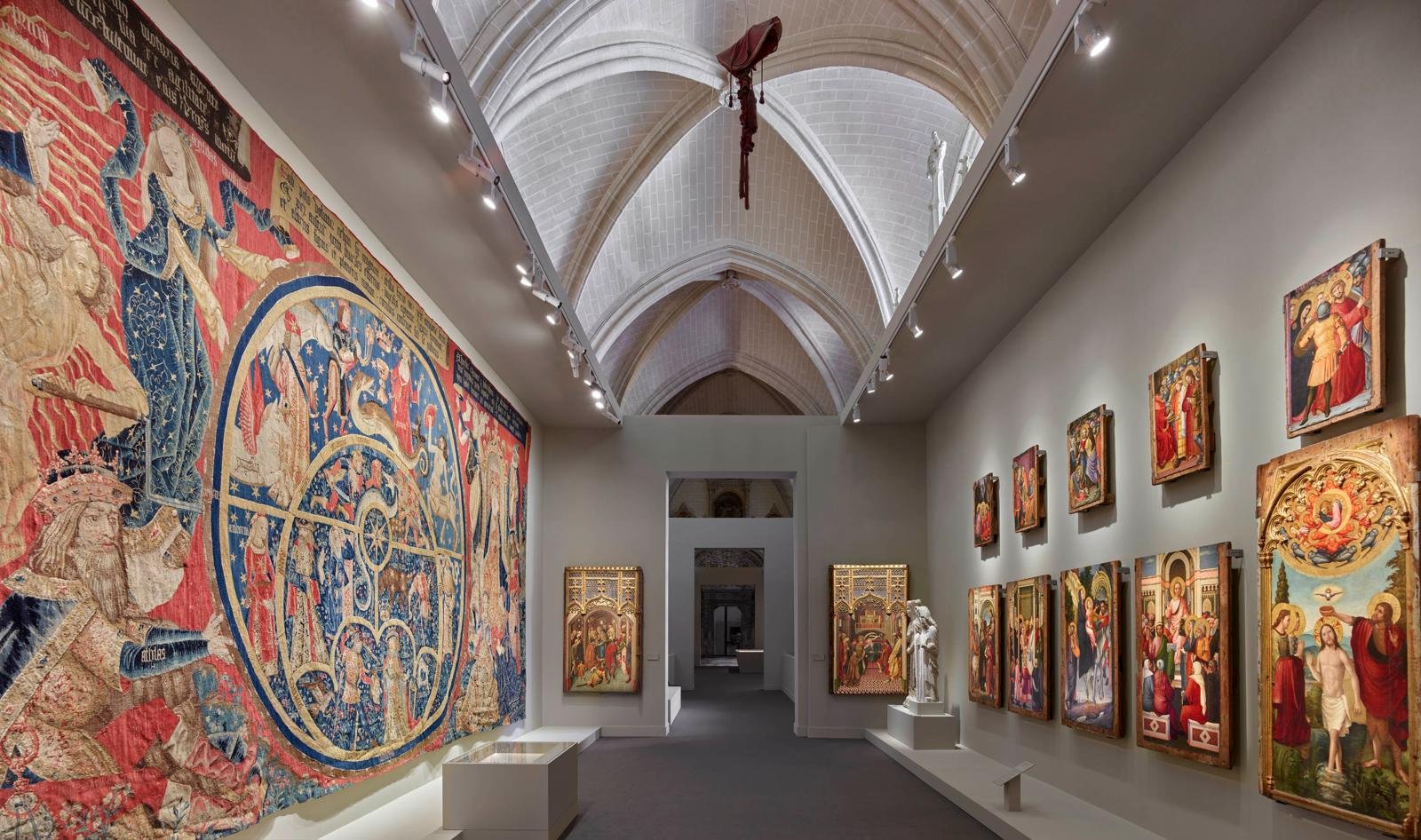
Primate. Toledo Cathedral, 2026. Photography: masdearte
Since the Cathedral was always dedicated to the Virgin, one of the first chapters of this exhibition is for the Marian images, sometimes majestic and other times less solemn and more focused on the embodiment of a tender relationship between Mary and Jesus. The White Virgin, located since the 13th century in the canons’ choir, later replicated in Palencia, received special fervor, while the Virgin with Child from the Collegiate Church of Talavera here represents the quality carvings of the time in the diocese as a whole.
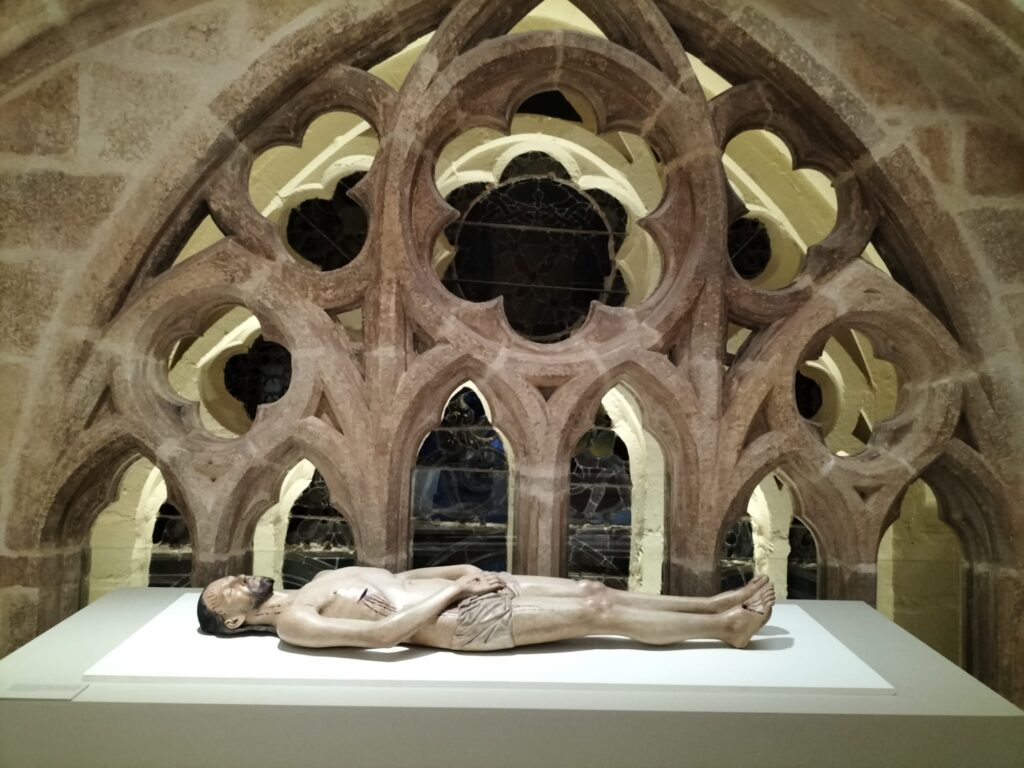
The different currents of religiosity in the Late Middle Ages, such as Christocentrism or the internalization of faith characteristic of the modern devotioninfluenced the new images generated. The Passion used to be shown crudely to promote meditation, the scale of the figures was real and the gazes were intensified: these are evident features in Caudilla’s tondo, the statue of Veronica or the recumbent christ by Egas Cueman arrived from the Monastery of Guadalupe. Images of saints also proliferated.
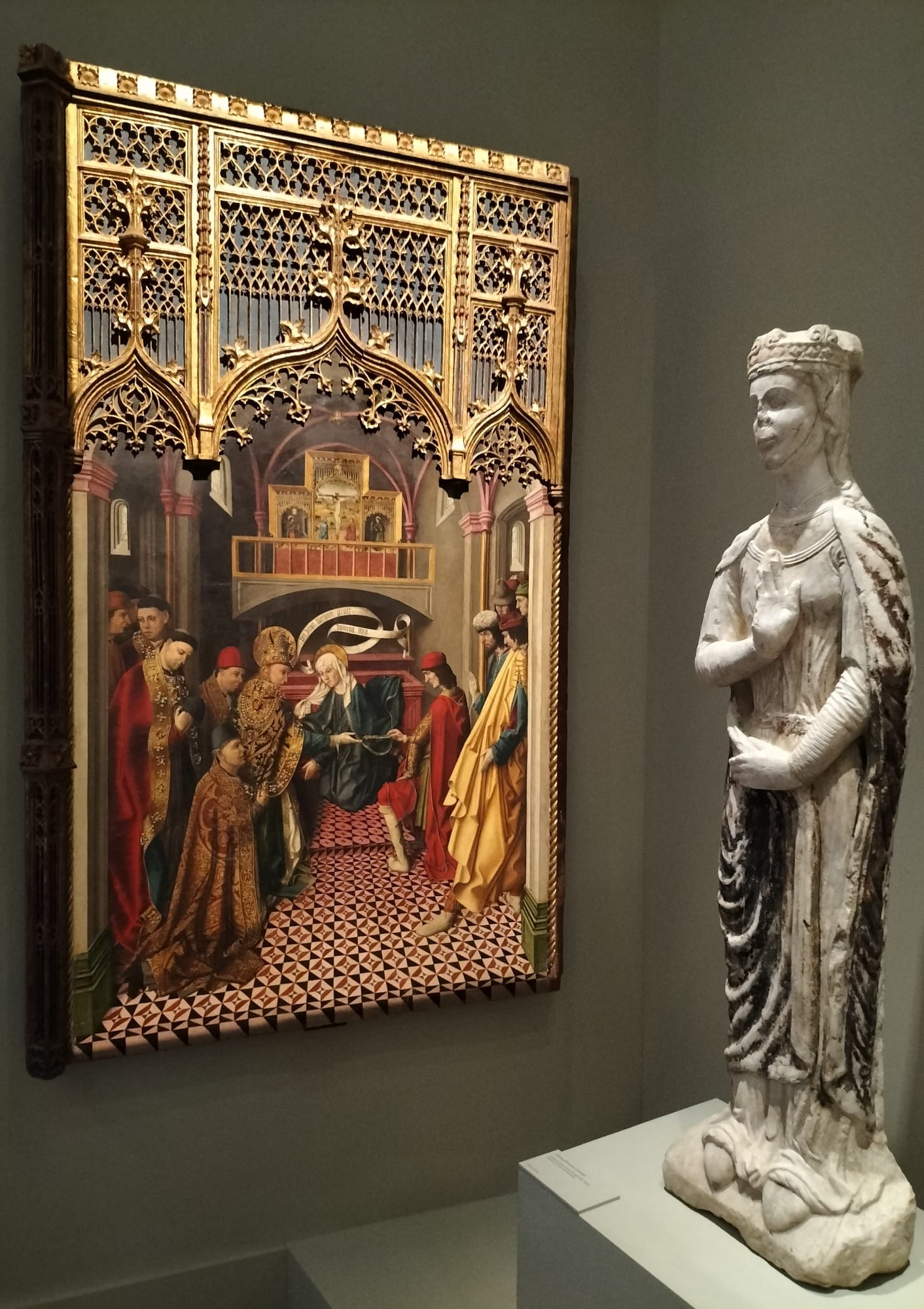
Primate. Toledo Cathedral, 2026. Photography: masdearte
In the field of manuscripts and reliquaries that housed, respectively, the divine texts and the relics of Christ and the saints, all expenditure was considered justified in Toledo and that cost reached millions of maravedíes. We will see the exceptional Saint Louis Biblecommissioned by Blanca de Castilla for Louis IX, which later passed into the hands of Alfonso Polyglot Bible in which Cisneros himself invested 50,000 gold escudos. And we will also contemplate eleven manuscripts that are part of the Cathedral Library, richly illustrated and of varied chronology, corresponding to the two systems of the medieval liturgy: the sacramental and the divine office.
If we talk about reliquaries, we have to mention the ark of Saint Eugene, decorated with scenes from his life, and ships that reproduce marine elements, jugs, boxes and glasses made of evidently rich materials and equally virtuous craftsmen.
As for Saint Eugene, “Primada” shows us a quarter of the panels of his altarpiece, originating from the old main altarpiece of the Cathedral, the work of Juan de Borgoña y de Starnina, the painter of whom in the current exhibition at the Prado Museum, “In the manner of Italy”, we have learned that, coming from the Florentine context, he was refined in Spain – also under the Italian seal – to later return to his country. In these compositions we can see the imprint of Agnolo Gaddi, Antonio Veneziano and, before them, Taddeo Gaddi.
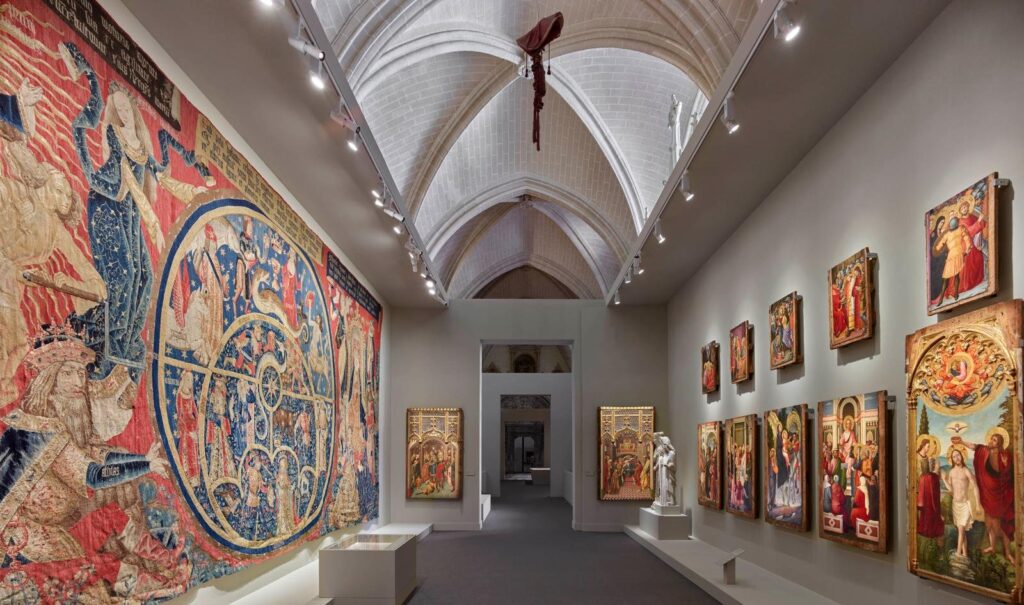
Primate. Toledo Cathedral, 2026. Photography: Benito Navarrete (social networks)
Entering the second chapter of the exhibition, we will review the testimonies of war triumphs that were displayed in the Cathedral in gratitude for the divine intercession that was considered to have mediated the victories and also the process of construction of the Ochavo, with the sponsorship of Cardinal Gaspar de Quiroga, also archbishop. It was a large reliquary (Sacrarium), made in the 17th century, which was to house the remains of Saint Eugene and Saint Leocadia and which, in turn, was the origin of the dedication of the Virgin of the Tabernacle. Its construction was eventful and Nicolás de Vergara el Mozo, Juan Bautista Monegro, Toribio González, Jorge Manuel Theotocópuli, son of El Greco, and Lázaro Goiti were involved in its design. Its original paintings were by Francisco Rizi and Juan Carreño de Miranda, until they were replaced by frescoes by Mariano Salvador Maella, who was chamber painter to Charles III.
They also tell us about the prestige of the Cathedral already in the 16th century, a feather miter that arrived then from Mexico, which is related to the workshop that Bishop Vasco de Quiroga promoted in Michoacán, and that could end up in Toledo through donations, or sculptural models from the Sansovino workshop.
Another great promoter of the Toledo Cathedral was Albert of Austria, son of Maximilian II, nephew of Philip II and later, also, the latter’s son-in-law when he married his daughter Isabel Clara Eugenia. He relieved Gaspar de Quiroga as archbishop, for a short time, until his appointment as governor general of the Netherlands; The portrait that Pourbus dedicated to him and which is preserved in the Descalzas Reales dates from that moment. He always favored Toledo with important donations, such as the altar frontal that bears his shield or the relic of the thorn of Christ guarded by an angel cast in silver and enriched with precious stones and enamels. Meanwhile, Bernardo de Sandoval y Rojas, archbishop in the early years of the 17th century, donated an expressive sculpture of Saint John the Baptist by Martínez Montañés.
The montage highlights the majesty, under the stained glass windows of the Cathedral, of The miraculous image of Our Lady of the Tabernacle on his ancient throne by Francisco Rizi, of which until recently there was only documentary evidence and which has been identified by Eduardo Lamas. Commissioned by the inquisitor Diego de Arce y Reinoso, Rizi carried it out as the temple’s official painter and is preserved in the Descalzas de San Ildefonso.
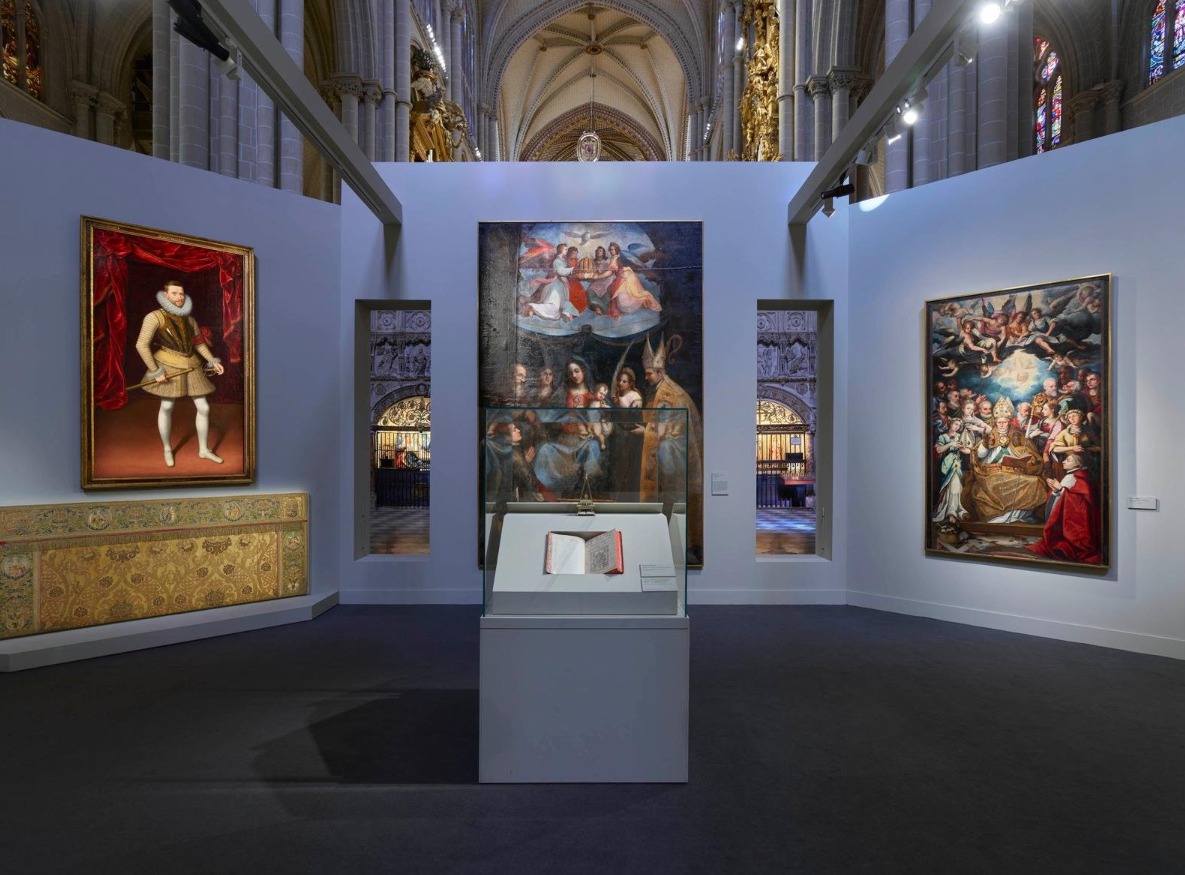
Primate. Toledo Cathedral, 2026. Photography: Benito Navarrete (social networks)
Other news: for “Primada” the Assumption of the Virgin and the Ascension of Christboth by Francesco Albani, surely commissioned in Rome by the aforementioned Sandoval y Rojas. The first was unveiled at the Prado in 1970; the second has recently been attributed to Albani by Lorenzo Pericolo. And an image of Saint Marina that Sandoval himself requested for his funeral chapel.
A very notable set in the exhibition is the one that proves the updating of the iconography of the imposition of the chasuble by the Virgin on Saint Ildefonso from the renewal of the cult of this saint promoted by the Cathedral itself. We will see major pieces by Velázquez, Zurbarán and El Greco, the latter sculpted; and the portrait of the brief archbishop Gaspar de Borja y Velasco, clearly realistic, also comes from the Sevillian’s entourage.
He was succeeded by Moscoso Sandoval, and by Pascual de Aragón, who gave the Cathedral a Baptism of Christ by Lucas Jordán, the Burial of Christ by Giovanni Bellini, a copy of Raphael’s Madonna and Child or a King David now awarded to Domenico Fetti, in addition to garlands by Daniel Seghers, vases by Mario dei Fiori or excellent coppers by Pietro del Po.
His successor was Fernández Portocarrero, in turn State Councilor during the time of Charles II and regent after the monarch died. His figure was controversial (he prohibited the procession of a rich monstrance of gold and silver at Corpus Christi), but under his mandate Lucas Jordán completed the ceiling of the main sacristy with another fundamental composition of the Baroque in Castile: the imposition of the chasuble on Saint Ildefonso. The Salzburg Museum has lent a sketch of this painting never before exhibited for the occasion.
“Primada” does not lack the group of chiseled silver pieces dedicated to the four continents then known by Lorenzo Vaccaro, donated by Mariana de Neoburgo, or the Mystical betrothal of Saint Luciaby Agustín González, a composition whose theme has now been identified by Alejandro Martínez. Nor the sketches that Bayeu and Maella painted for the lower cloister of the Cathedral, commissioned by Archbishop Lorenzana; We are talking about a cycle linked to Toledo’s links with holiness and its successive archbishops.
It puts the finishing touch to the exhibition – very complete, well narrated and functionally and discreetly mounted, as we would always like to expect from the exhibitions at these venues. The arrest of Christ by Goya, a living tribute to The plunder of El Greco and the luminosity of Rembrandt, which also belongs to the Cathedral.
(Unrelated practical issues: a ticket office is missing where you can purchase tickets without resorting to QR codes and indications that mark the way to the second part of the route). “Primada” is an exceptional exhibition.
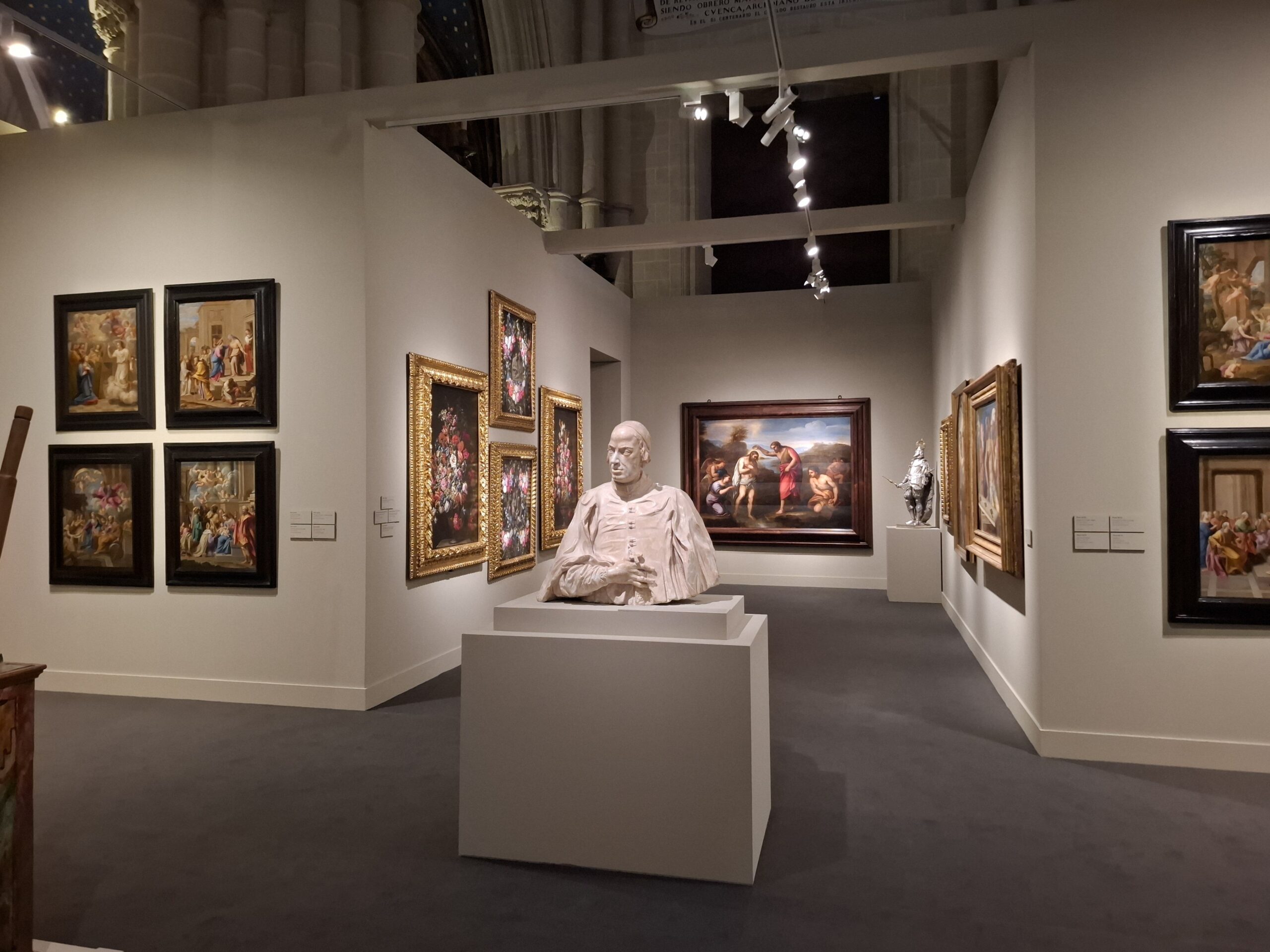
Primate. Toledo Cathedral, 2026. Photography: Benito Navarrete (social networks)
«Primate. VIII Centenary of the Cathedral of Toledo»
TOLEDO CATHEDRAL
Mollete Gate
C/ Arco del Palacio
Toledo
From May 25 to October 14, 2026