Of Dominican origin, as a teenager Alejandro Cartagena moved to live in Monterrey just when the extension of the North American Free Trade Agreement to Mexico came into force. Its consequences were not only economic, but also social and sentimental, according to the author: the growing influence of American culture in that country was reflected in the housing market and in an urban growth that overwhelmed what until then were small nuclei, in whose peripheries humble accommodations, almost survival homes, proliferated.
That is the human context in which this photographer began his career; As for the technician, as he was born at the end of the seventies, he has gone through three major transformations that have necessarily had an impact on his production: the transition from analog to digital; the emergence of the Internet, which implied challenges in the control of images; and, more recently, the advent of the generated image, which is not even part of the real.
On both layers, form and content, rests his first extensive retrospective, which can be seen until August at the Mapfre Foundation and which has been curated by Shana Lopes, one of the heads of the photography department at the SF MoMA. Under the title “Ground Rules”, it is structured in series because Cartagena himself has structured his work since he took his images: his basic procedures are accumulation, repetition and variation and the meaning of his snapshots lies in the whole and not in the autonomous piece.
He has also been captivated, from his early stage, by the photobook as a format, due to the freedom of decision it gives him compared to the exhibition presentation when choosing sequences, texts or type of paper and, as a consequence, for the possibility it grants him to articulate new meanings: The basic principle that attracts me to the idea of publishing photo books is to create alternative stories to better show a place, a town or an identity (…). The book has a power: by uniting the images through a proposal, it gives me another way of thinking about the world where I live..
A selection of his own photobooks and those of others that have influenced him can therefore be seen in the exhibition.
Alejandro Cartagena. Fragmented Cities, Escobedofrom the series Mexican Suburbia2005-2010. Courtesy of the artist © Alejandro Cartagena
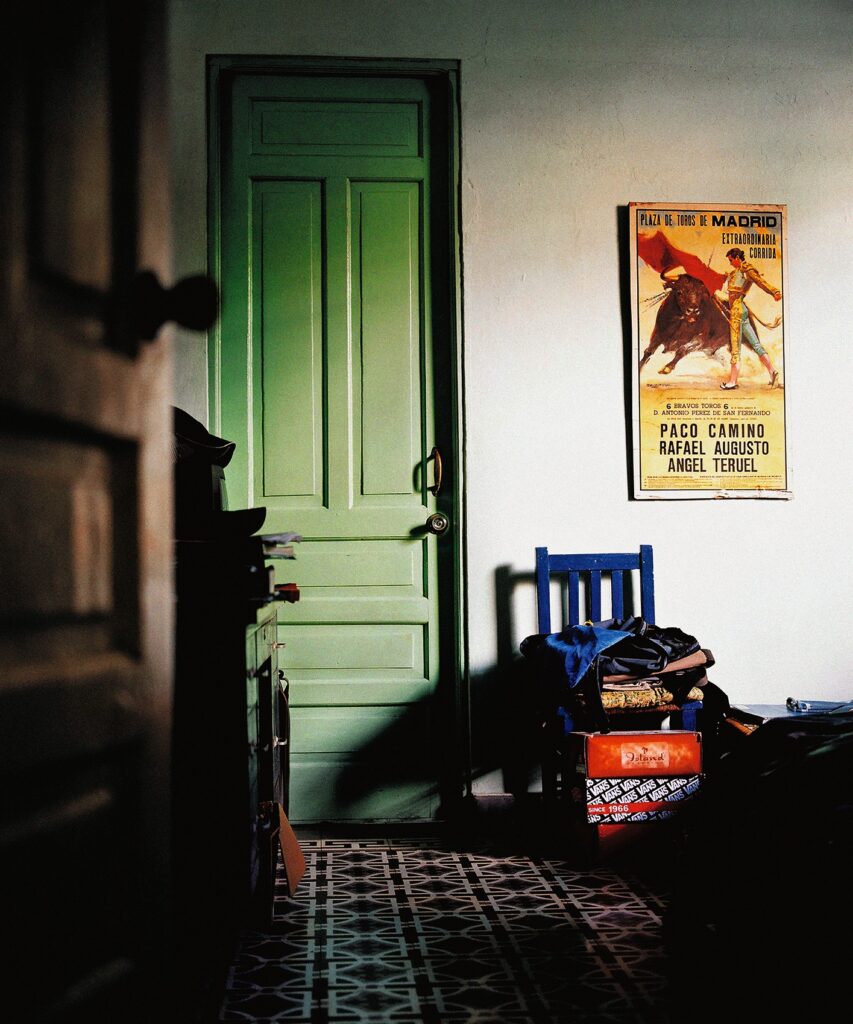
Alejandro Cartagena. Living spaces #1from the series Living spaces, 2005-2006. Courtesy of the artist © Alejandro Cartagena
Interested both in landscapes and territories and in the use that powers and citizens make of them, Cartagena has not followed the path of ecology so much as that of the deficiencies suffered by those who live in the most vulnerable areas: the series Mexican Suburbia, Carpoolers either Suburban Bus They enter suburbs that have grown uncontrollably without adequate infrastructure support; The photographer has focused especially on those of his city, Monterrey, a megalopolis that for a quarter of a century has expanded its modular houses beyond what is sustainable and existing services. Today many of those houses have been left uninhabited in the middle of desert landscapes, like ruins of unplanned development.
Highlights the originality of Carpoolers: Cartagena took this series from a pedestrian walkway on a highway, looking for those who occupied the backs of vans on the way to work, due to the lack of adequate public transportation. When this appears, in the form of a bus that he himself used to take when he worked in a family restaurant, it also suggests cloistering given the overcrowding.
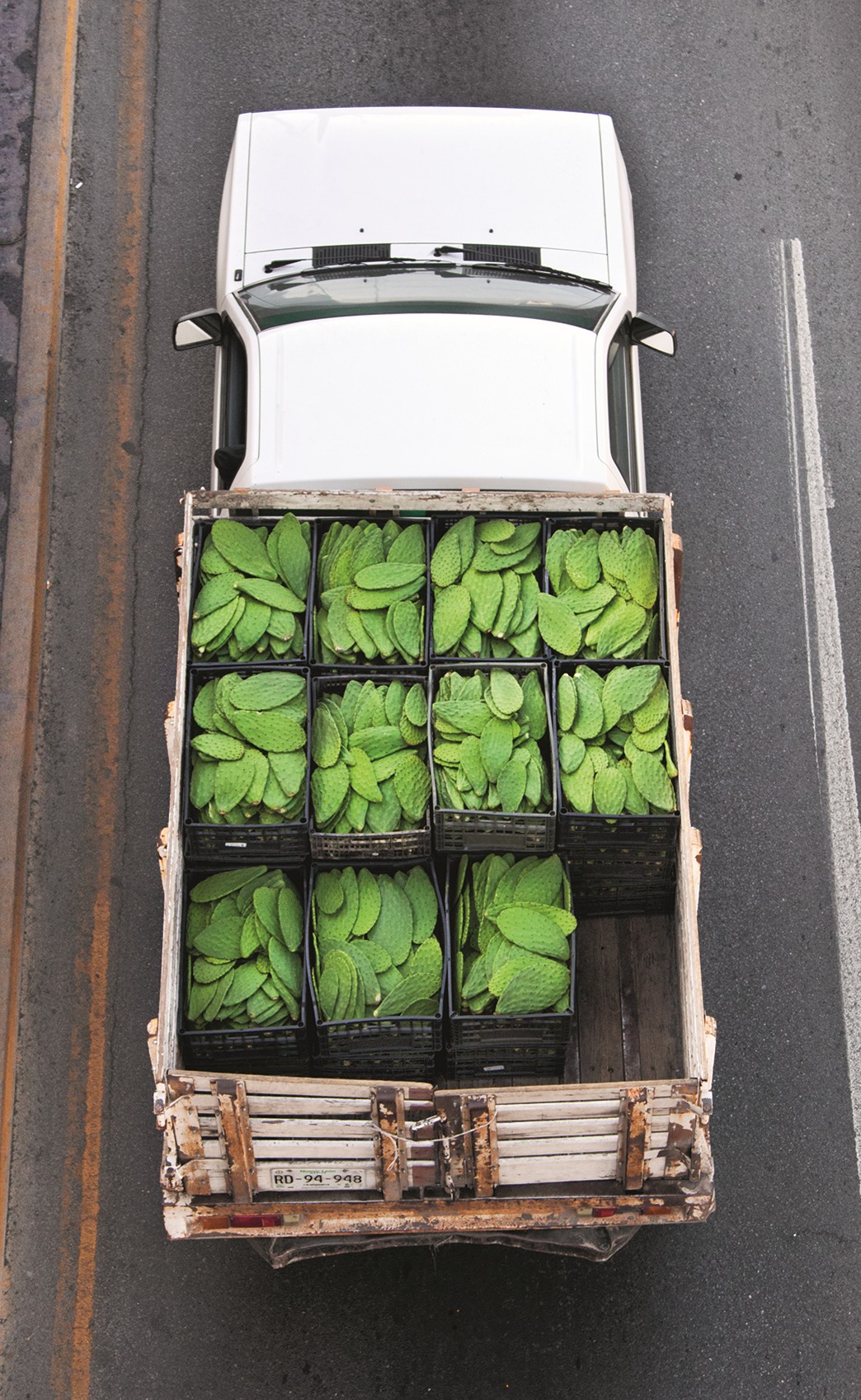
Alejandro Cartagena. Urban Transportation #1from the series Carpoolers2011- 2012. Courtesy of the artist © Alejandro Cartagena
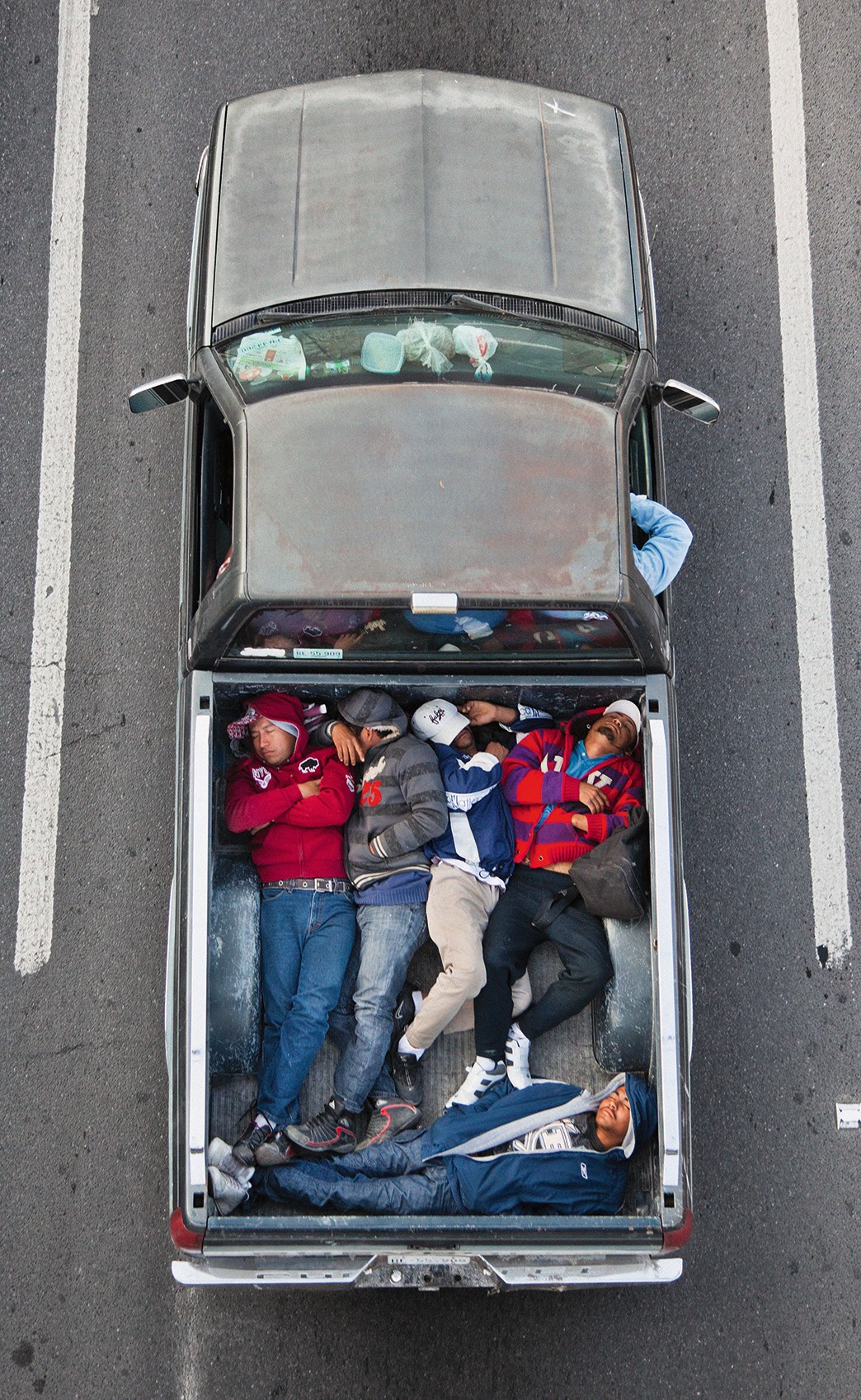
Alejandro Cartagena. Carpoolers #21from the series Carpoolers2011- 2012. Courtesy of the artist © Alejandro Cartagena
The image has served Cartagena, not only to bear witness to the dynamics of recent economies, but also to understand what lies behind them. The registration task soon became short: I was a little disappointed by the possibilities—socially, and perhaps even ethically—that documentary photography offered in terms of documenting the truth, establishing a direct understanding of what historical events and moments are.
From that disappointment, other techniques and developments arose in his career: collage, the found image, NFTs, the video generated with artificial intelligence… In each of his works he imposes himself on adopting unique themes and techniques, hence the title of this anthology – “Ground Rules” – which in November will travel to San Sebastián, to the Kutxa Foundation.
In one of his earliest series, present in the exhibition and made together with Rubén Marcos, Cartagena was influenced by Richard Avedon and his “In the American West”, also now in this institution: it is about Nuevo León Identityhundreds of portraits of the inhabitants of that region captured in churches, shopping centers and squares.
On the same dates, he portrayed different walls of Monterrey in images with a clean aesthetic and as homogeneous as the peripheries. Nothing is out of place here, but everything is disturbing. From a more personal approach, he took self-portraits, took photos of his childhood home in the Dominican Republic and others with a webcam on the border between the United States and Mexico.
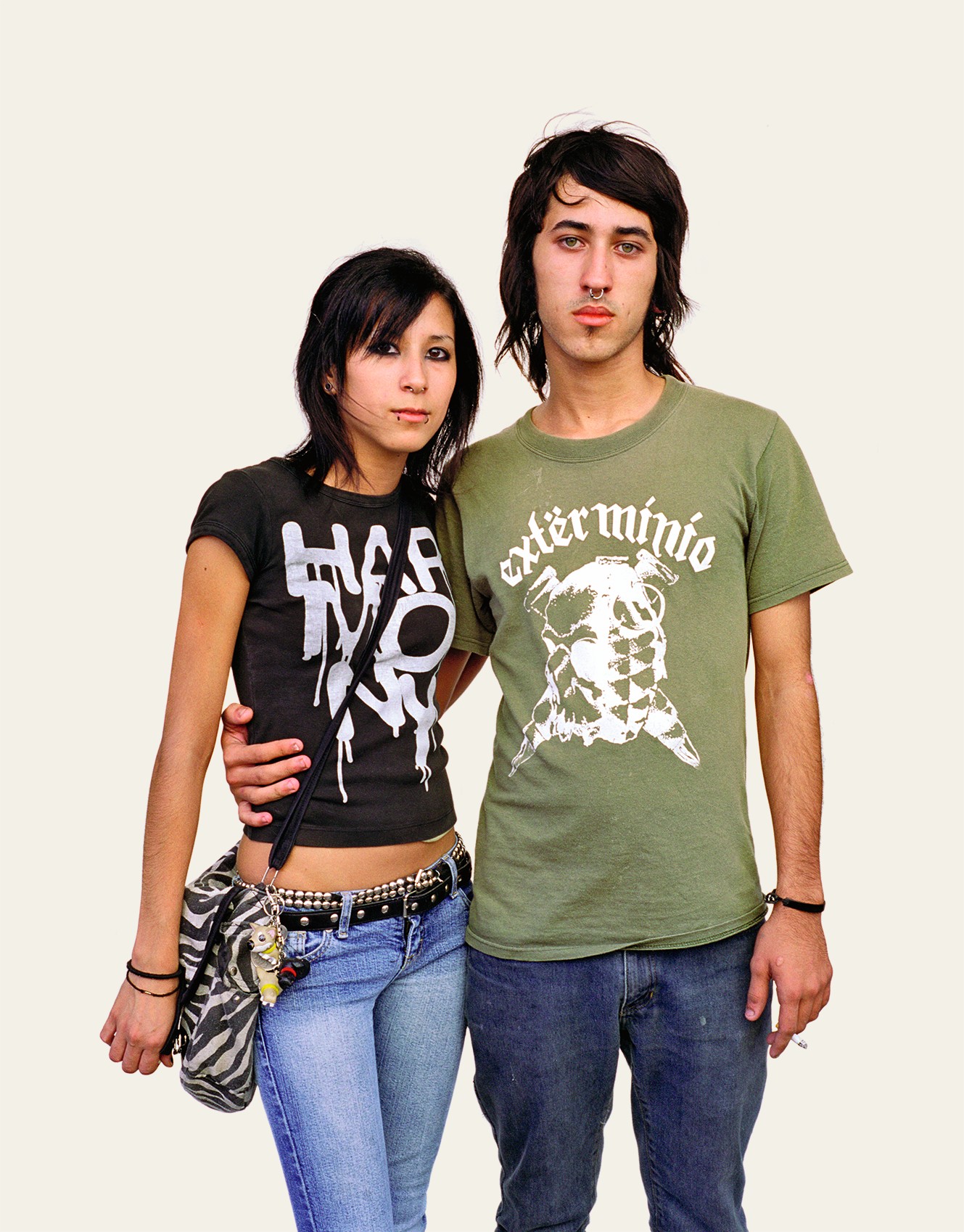
Alejandro Cartagena and Rubén Marcos. Nuevo León Identity #41from the series Nuevo León Identity2005-2006. Courtesy of the artist © Alejandro Cartagena
Throughout the 2010s, he examined this division from both a physical and symbolic perspective: rather than paying attention to the hackneyed debates around migration – a phenomenon that he, as a migrant, knows first-hand – he sought to get closer to who crosses, who does not, and what fractures this border really implies (to which the Mapfre Foundation already provided a recent exhibition, that of Felipe Romero Beltrán). Cartagena focused on the inhabitants of División del Norte, a Mexican community next to the Rio Grande, who do not aspire to the American dream; in Americans who have chosen to live in Mexico and in armored walls around which family gatherings are sometimes held.
Approximately a decade ago, the feeling settled in Cartagena that the scenarios he had photographed could be idealized when his desire was the opposite. He tried to break with that trend by using scissors: he cut out previous compositions to assemble them into the imaginary landscapes that make up Accumulations (2018) and appropriated media images edited in Santa Barbara Return Jobs Back to US (2016), Photo Structure / Photo Structure (2018-2029) or Masking (2025), in addition to resorting to artificial intelligence and animation in Photographic Structures GAN and We Sell Houses GANboth works from last year.
This photographer has intended that his work beats at the same pace as the society of his adopted country, hence his constant transformation and that which will continue.
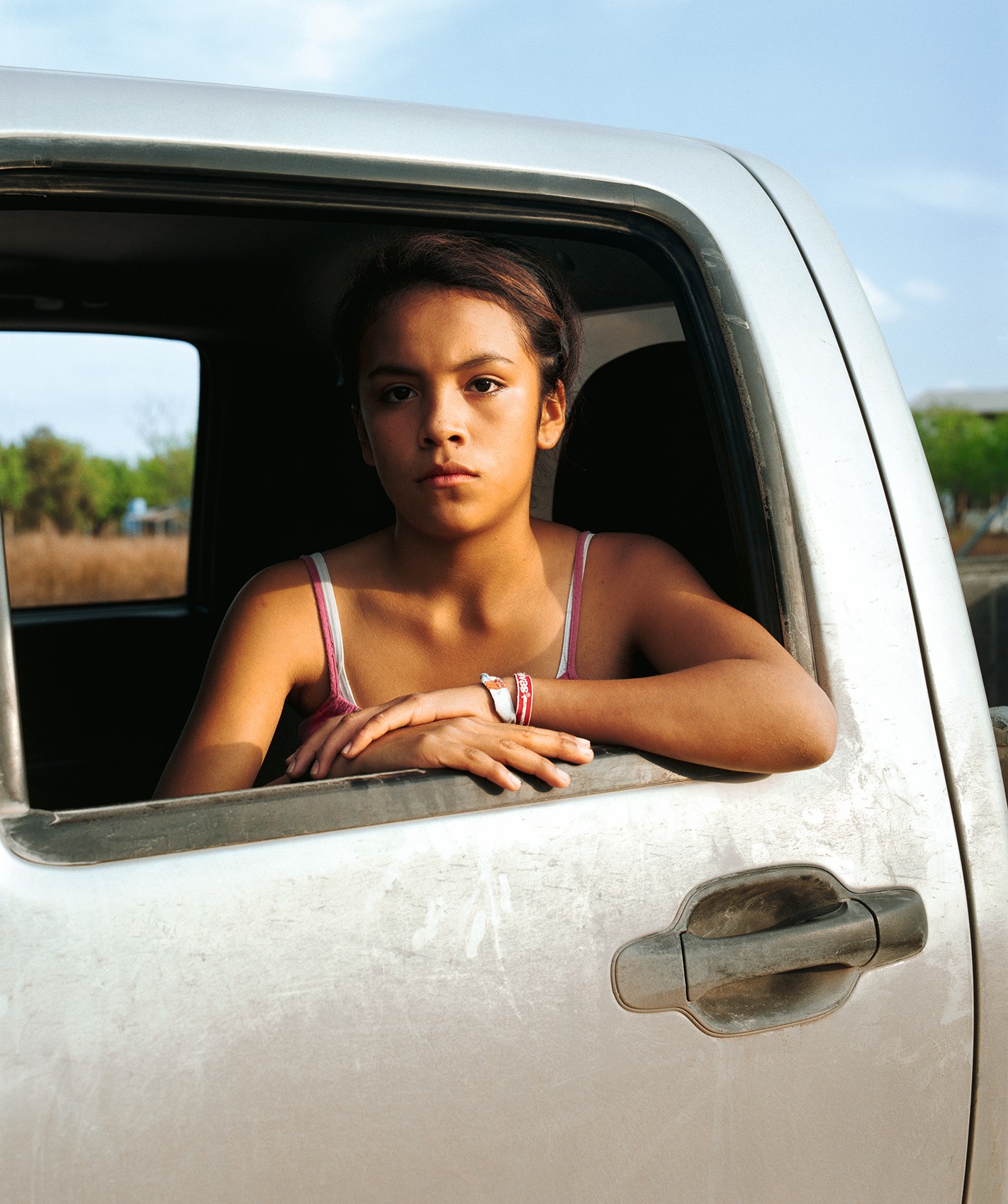
Alejandro Cartagena. between Borders #2from the series Between Borders2009-2010. Courtesy of the artist © Alejandro Cartagena
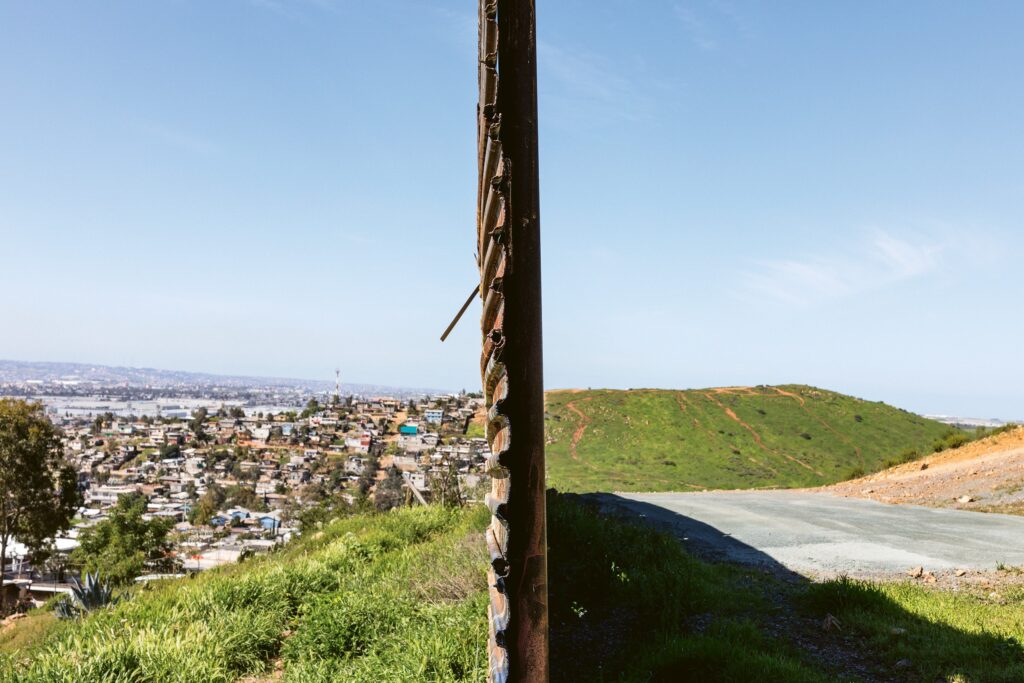
Alejandro Cartagena. Invisible Line #4from the series Without Walls2017. Courtesy of the artist © Alejandro Cartagena
«Alejandro Cartagena: Ground Rules»
MAPFRE FOUNDATION
Paseo de Recoletos, 23
Madrid
From June 6 to August 30, 2026