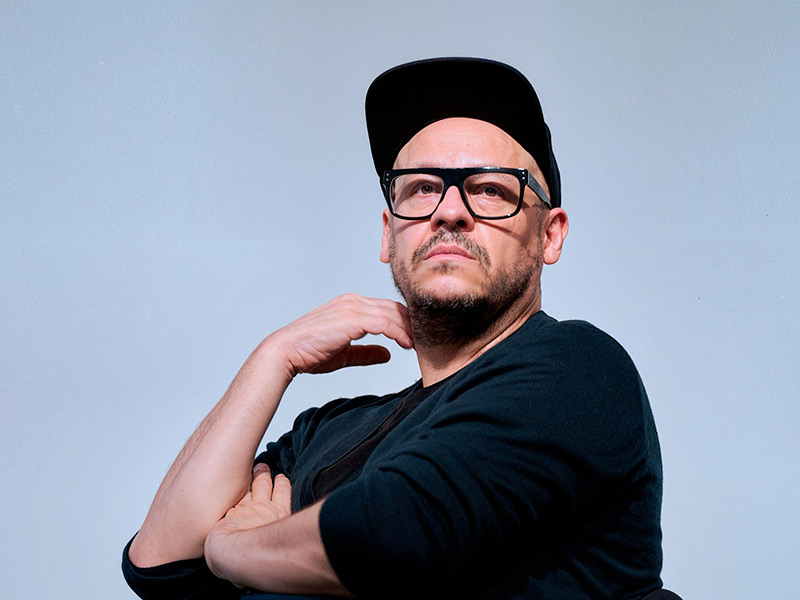
Barcelona. Valentín Roma takes over from Elvira Dyangani Ose, the first woman to direct the institution, who left her position in April, the museum having deemed her mandate incompatible with that of artistic director of the Abu Dhabi Public Art Biennale. The new director was appointed for five years, renewable once for three additional years, with a gross annual salary of 115,000 euros. His application stood out among twenty-one applications, of which only four had been selected for the final interviews, all male and of different nationalities.
This appointment looks very much like a reparation. Valentín Roma knows Macba better than anyone, having worked there before becoming its chief curator between 2013 and 2015, under Bartomeu Marí. His departure had been brutal: it occurred at the time of the crisis triggered by the sculpture The Beast and the Rulerdepicting King Emeritus Juan Carlos in a sexual posture with an indigenous figure. The work caused such a scandal that it cost Bartomeu Marí their jobs as well as the museum’s program manager, philosopher and exhibition curator Paul B. Preciado. Eleven years later, the institution that he had taken to court, and which had to pay him compensation of 50,537 euros, today entrusted him with management in a pivotal period, marked in particular by a project to expand the building on Place dels Àngels.
Macba extension project on Plaça des Angels.
© Harquitectes and Christ & Gantenbein
A recognized professional
A doctor in philosophy from the British University of Southampton and a graduate in art history at the Universitat Autònoma de Barcelona, Valentín Roma has been directing La Virreina Center de la Imatge for almost ten years, a municipal center dedicated to images, located on the Rambla. He made it one of the most active places on the Barcelona scene, giving their first Spanish exposure to artists then invited abroad. Some compare its contribution to that of the Fundació Tàpies in the 1990s, under Manuel Borja-Villel, future director of the Reina Sofía in Madrid.
Curator of numerous exhibitions, from the Picasso Museum in Barcelona to the National Art Museum of Catalonia, including the CaixaForum cultural centers, he is also the author of several works, including Lenin’s Nurse (“The prisoner of Lenin”2017) and, more recently, The Triplets (“Los trillizos”). He was also the curator of the first Catalan pavilion, presented at the Venice Biennale.
The announcement was well received by the sector. It was, however, preceded, the day before, by a joint press release from several associations of critics, artists and professionals of Catalan culture, denouncing a selection process considered not very transparent. A criticism of the procedure which will not, it seems, have prevented a broad consensus around its result.