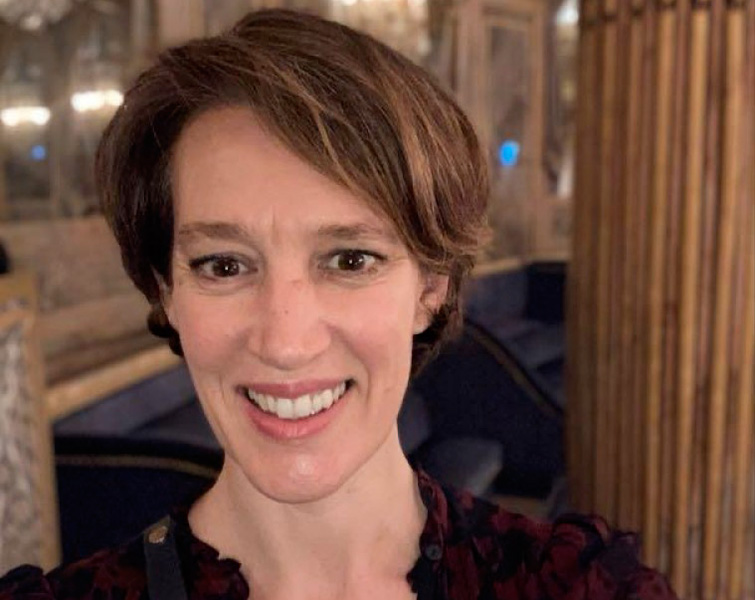
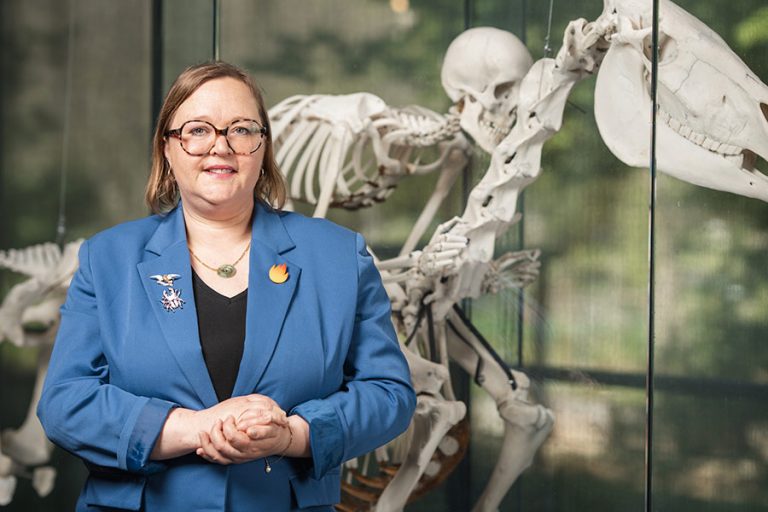
Khaled Ahmed El-Enany Ali Ezz (born March 14, 1971 in Giza), renowned Egyptologist and former Minister of Tourism and Antiquities, is the new designated director general of UNESCO. On October 6, 2025, the Executive Council elected him by 55 votes to 2 against Édouard Firmin Matoko (Republic of Congo), the United States having abstained. Final ratification by the General Conference, which is to be held at the beginning of November in Samarkand, is a priori acquired.
Born into a family combining engineering (his father) and teaching French (his mother), El-Enany grew up in a bilingual and cultured environment. He obtained his scientific baccalaureate in 1988 in a French-speaking high school in Cairo, before entering the University of Helwan, where he obtained a degree in tourism in 1992.
Very early on, he turned to archeology and Egyptology, continuing his studies in France at the Paul-Valéry Montpellier III University: he obtained a diploma of advanced studies (DEA) in Egyptology (1998) then a doctorate in 2001.
Returning to Egypt, he joined Helwan University as a teacher, first in the tourist guide department, then in the faculty of tourism and hospitality, reaching the rank of professor in 2011. He is a corresponding member of the German Archaeological Institute (Berlin) and linked to the French Institute of Oriental Archeology (IFAO).
He was appointed governor (general director) of the National Museum of Egyptian Civilization (NMEC) in 2014, then director of the Cairo Museum in 2015-2016. On March 23, 2016, he entered the government as Minister of Antiquities, succeeding Mamdouh Eldamaty. In December 2019, in a reshuffle, the Ministry of Tourism and the Ministry of Antiquities were merged and El-Enany became Minister of Tourism and Antiquities, a position he held until August 2022.
During his ministerial years, he carried out projects with high public visibility: the Pharaohs’ Golden Paradefor the ceremonial transfer of 22 royal mummies to the NMEC (2021); the reopening of the Avenue of the Sphinxes in Luxor; the acceleration of the construction of the Grand Egyptian Museum.
He will therefore succeed Audrey Azoulay who during her two mandates (2017-2025) launched an ambition for “strategic transformation” of UNESCO, aiming to modernize its management, strengthen its coherence and invest in new fields (digital, inclusion, ethics). She adopted the recommendation on the ethics of artificial intelligence, now one of the intergovernmental reference texts in this area. However, it was under his mandate that the American decision to withdraw fell, announced in July 2025, which will take effect at the end of 2026.
The election of El-Enany opens a new chapter for the NGO. It must be adapted to new budgetary balances. His detailed knowledge of material heritage (museums, sites, excavations) gives him a legitimate base. Its dual scientific and diplomatic credibility could play a central role in internal arbitrations. On the political level, it benefits from a capital of trust: support from the African Union, the Arab League, several European states (including France).