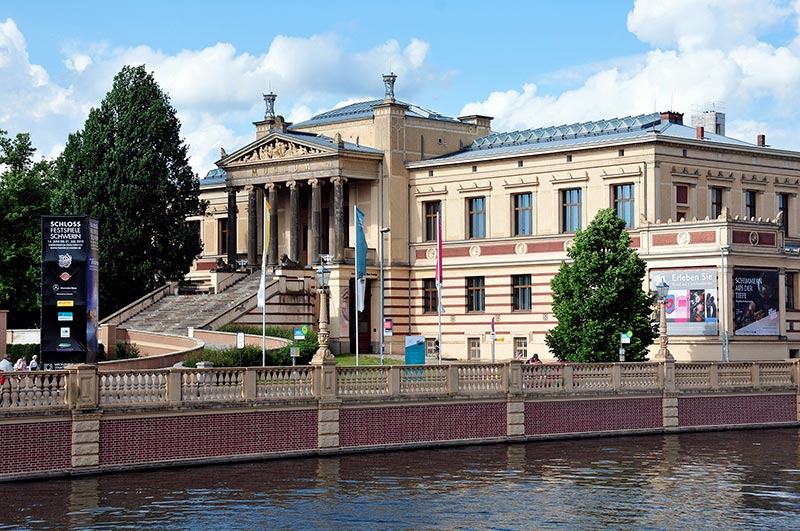
Built in 1882 by the architect Hermann Willebrand, this neo-Renaissance building is one of the cultural symbols of Mecklenburg-Western Pomerania. The renovation made it possible to restore the brilliance of the original decor: painted ceilings, woodwork, parquet floors and facades were carefully cleaned, consolidated and restored. At the same time, all of the technical installations – electricity, security, climate control – have been completely redesigned in order to meet current standards for the conservation of works.
The project also aimed to adapt the museum to contemporary expectations. The architects streamlined circulation, removed accessibility obstacles and transformed several storage spaces into additional exhibition rooms, offering nearly 400 square meters of new space. A discreet extension in glass and light concrete completes the building. This contemporary intervention, deliberately sober, highlights the historic character of the building without altering it.
The total cost of the work amounts to around 11 million euros, partly financed by sponsorship. Access to the museum will be free for the first four years following the reopening, a rare measure in the German museum landscape.
The Staatliches Museum Schwerin houses a collection established in the 18th century by the Dukes of Mecklenburg. It is particularly renowned for its collection of Flemish and Dutch paintings from the 17th century, to which are added modern and contemporary works. The reopening inaugurates a renewed journey, entitled “Licht und Raum”, bringing old masters and current creations into dialogue.