Kortrijk (Belgium). Since the closure of the Broelmuseum in 2015, the city of Courtrai has no longer had an exhibition space to present in particular the municipal collection which brings together the most important collection of ceramics in Flanders, paintings of ancient and modern masters as well as an eclectic mixture of interior objects, archaeological discoveries and popular art. Installed in the buildings of the old Groeninghe abbey, the new museum is intended to be an institution inscribed in its time, open and plural.
The first decision was to do without a permanent collection. A selection of works, from the municipal collection, now incorporates exhibitions in dialogue with works of contemporary art loaned. Throughout his exhibitions, Abby Kortrijk is responsible for exploring how art and heritage can reflect, question and build the identity of each and of each.
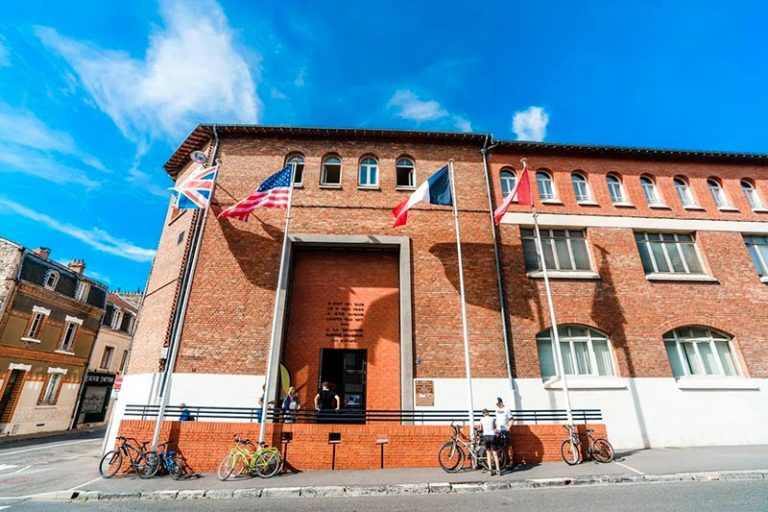
The Barozzi-Veiga and Tab Architects architectural offices have chosen to keep old buildings by adding a contemporary pavilion to them by which the entrance is. The two new rooms were dug in the basement. The entrance is done by a coffee-dining coffee in the walls of a deep red with a bar turned to the audience and a long table reminiscent of the common table of the Clarisses. On the ceiling hangs a beautiful black lace from Élodie Antoine (born in 1978) which pays homage to the activities of reception and care of the sisters.
The museum’s desire to open up in space baptized “Salon”. The first of the artists to invest it is Rinus van de Velde (born in 1983) with an installation entirely made up of cardboard furniture and accessories where the public can sit and where various activities are organized. In a vitrin wall, he selected different objects from the city collection-plates, objects, old paintings or rocking horse-completed by a manuscript text with thick black letters.
The inaugural exhibition “F ** Klore. Reinventing Tradition “brings together artists from yesterday and today around rites and practices that shape the identity of a population: food with the speculoos of Ignace Cami or the horse that Patrick Van Caeckenbergh assembled from the kitchen, table, vegetables in jar, covered, plates. Maarten Vanden Eynde (born in 1977) tries his hand to lace, but to weave atomic bombs, Jef Geys (1934-2018) traces the beginnings of a bad luck cycling of village. In a curious video work, Filip Van Dingenen (born in 1975) and David Shongo (born in 1994) were interested in the traditional Pinson song competitions where, in front of empty cages, spectators are invited to listen to and note the recordings of bird songs such as coughs and ambient noises in the room. In the second room, the canvases of the daily life of Gus de Smet (1877-1943), Jean Brusselsmans (1884-1953) or Edgar Tydgat (1879-1957) dialogue with the works of contemporary Belgian artists.
Without a flashy, but with a sense of space and reception, the old abbey seems to have succeeded in his passage from silence and introspection to the sharing of culture.