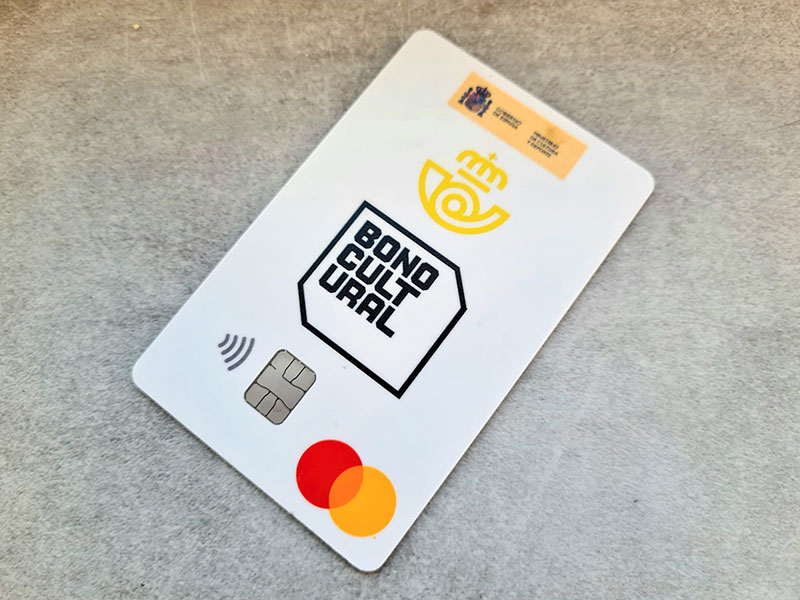
Madrid. Born in 2022 in the wake of the Covid-19 pandemic, the “Bono Cultural Joven” is an initiative of the government of Pedro Sánchez intended to simultaneously support youth and a cultural sector devastated by two years of closure of cultural places. Spain then joined a European movement: Italy launched its own “Bonus Cultura” in 2016, France its Culture Pass in 2021 after an experiment started in 2019. But unlike its predecessors, Spain immediately structures the system in partitioned envelopes: 200 euros for performing arts, cultural heritage and audiovisual, 100 euros for physical goods and 100 euros for digital goods.
Four years later, the program was shifted towards a more practical and participatory approach to culture. Culture Minister Ernest Urtasun sums up the change this way: “Until now, young people could use the voucher to go to a concert. Now they can use it to buy a guitar. » The decree allows either the maintenance of the current scheme by category, or the allocation of the 400 euros to the payment of courses, such as the purchase of musical instruments or artistic creation software, which was not authorized until now.
Cinema, then concerts
But while France has halved the amount of the Culture Pass for young people aged 18 – it went from 300 to 150 euros –, removed all credit for 15-16 year olds, and created a new envelope of 50 euros for those aged 17, Spain maintains the envelope of 400 euros. The Spanish Bono is financed by funds from the Ministry of Culture. The allocation, renewed since 2023 for lack of a budget approved by Parliament, increased from 210 million euros in 2022-2024 to 170 million in 2025 and 2026.
Its operational management is entrusted to two public entities: the National Mint and Stamp Factory ensures the technical management of the program, the Spanish Post Office manages the means of payment, for a respective total cost of 16.9 million euros and 8 million euros over the period 2026-2029.
According to official statistics from the Ministry of Culture for the 2022 edition, the only ones published to date, performing arts, heritage and audiovisual concentrated 51.7% of total spending. The ministry has not yet published consolidated data by category for subsequent editions. The partial data available for 2023, obtained through the transparency law by Libertad Digital, nevertheless gives some indications: 23.6 million euros were spent on physical products, 18.4 million on digital. Cinema remains the leading expenditure item in the performing arts, heritage and audiovisual category, followed by concerts and exhibitions.
Application of Bono Cultural Joven.
© Spanish Ministry of Culture
Several abuses from providers
In the digital bracket, beneficiaries spent 4.35 million euros on Netflix between 2022 and 2024. Netflix was one of the few authorized streaming platforms, HBO Max, Spotify and Amazon Prime Video being excluded. Furthermore, according to a survey by the online newspaper The Objective dated May 2026, which claims to be based on official sources, no less than 122 brands have been excluded from the program or sanctioned for irregular use, including the Spanish department store El Corte Inglés, Mediamarkt, Kinépolis, Yelmo Films, Odeon, Fever, Game. The total sums embezzled in 2022 and 2023 would amount to nearly 500,000 euros. The ministry refuses to detail the irregularities by brand, citing ongoing reimbursement procedures. The symbol of these abuses remains a viral video broadcast in February 2026: the owner of a Madrid nightclub explained that his customers could pay for their tickets with Bono. “Pedro Sánchez will pay for your next party here!” »he assured.
In 2025, 363,054 young people who turned 18 during the year benefited from Bono, or 68.5% of a cohort of 534,809 eligible people according to the National Institute of Statistics. A misleading figure: the request, entirely dematerialized and conditional on the prior obtaining of an identity certificate online, excludes the most precarious. To remedy this, the 2026 reform provides support through associations.
The question that neither Madrid nor Paris have really resolved is that of the real democratization brought by the use of the past tense. In France, the Court of Auditors considers that the Culture Pass has not reduced the gaps between different social categories in access to culture; only 68% of young people from working classes have activated their Pass, compared to 90% for children of graduates. There is nothing to confirm that Bono escapes the same pitfall.
Money is not enough to make people love what they have not learned to love. This is precisely what the Spanish reform of 2026 implicitly recognizes: by financing the purchase of a guitar or the payment of a lesson, it renounces directing young people towards an established cultural offer and chooses to give them the means to build their own practice. An admission of failure and the beginning of a solution.