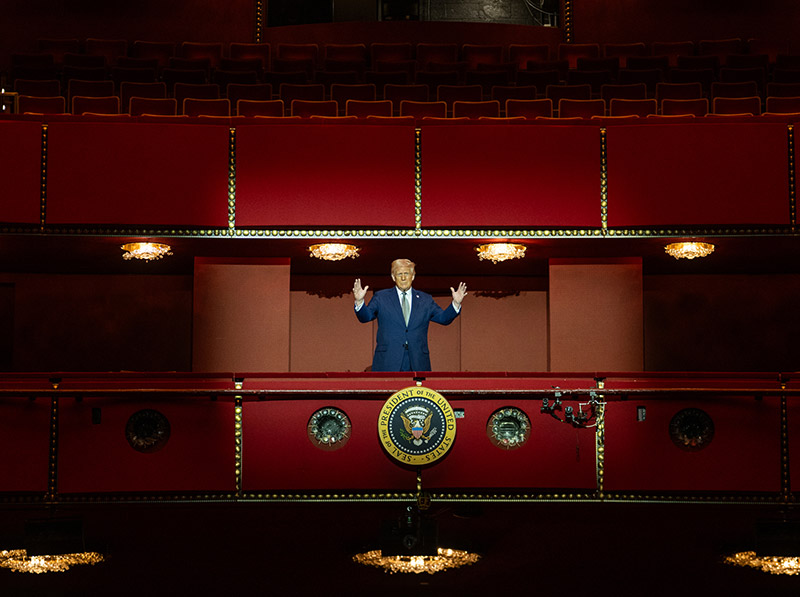
Washington, DC. Donald Trump’s takeover of the Kennedy Center has suffered a serious legal setback. On May 29, Federal Judge Christopher Cooper ordered the John F. Kennedy Center for the Performing Arts to remove the name of the current U.S. president from the building’s facade, communications materials, signage and official documents. Created by act of Congress in 1958, dedicated in 1971, this famous performing arts center is legally named for President John F. Kennedy. According to the judge, neither Donald Trump nor the board of directors can substitute the name “Trump Kennedy Center” for that established by the legislator.
This decision comes after several months of upheaval. In February 2025, Donald Trump ousted part of the board of directors of the Kennedy Center to install some of his relatives there and took over the presidency of the institution himself. The new management quickly made its mark, not without causing uproar: change of name, claimed political reorientation, departures of artists, cancellations of shows and tensions with part of the American cultural world.
Donald Trump’s name inscribed on the Kennedy Center.
The judge also suspended the two-year closure of the institution that its new board had approved to begin major work. According to the decision, a measure of such magnitude could not be adopted under the conditions retained by the new governance, without a sufficiently supported procedure and when its outcome seemed already decided. Justice does not block the principle of work but obliges the institution to resume the file according to more solid legal bases. For Donald Trump, who presented this transformation as an emblematic project in Washington, the decision greatly reduces its symbolic significance.
The Kennedy Center said it is complying with the order while reviewing its legal options. According to the Reuters agency, an internal memo set June 12 as the deadline for implementing this injunction. Donald Trump contented himself with a message of spite on his social network, evoking a transfer of control of the establishment to Congress.
Another legal setback was added to this decision. On June 4, the Superior Court of the District of Columbia rejected the Kennedy Center’s complaint against Chuck Redd, a jazz musician who had canceled a Christmas concert to protest the takeover of the institution.
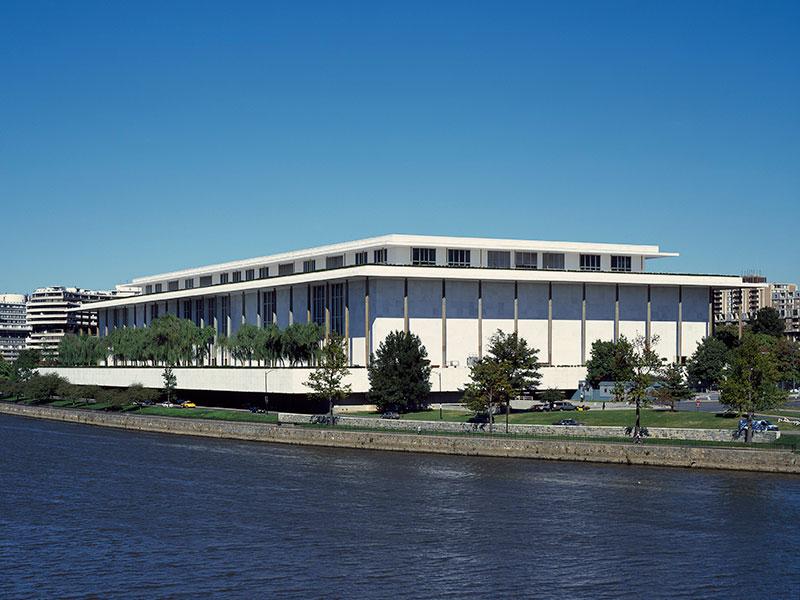
The Kennedy Center in Washington DC