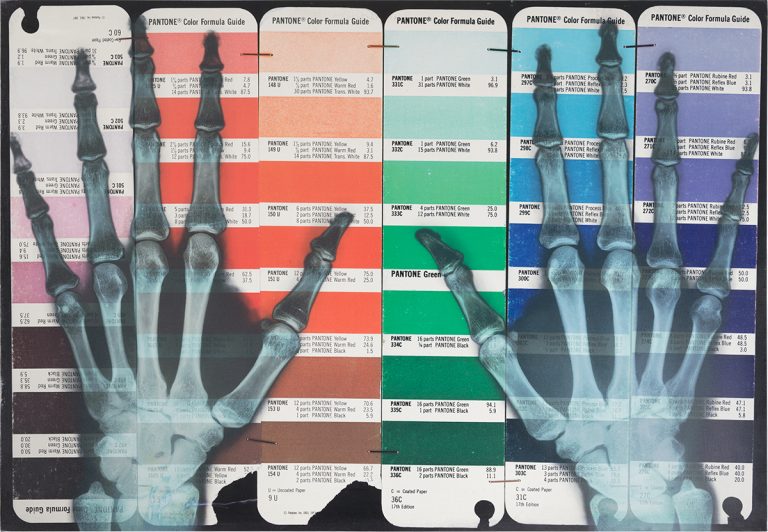
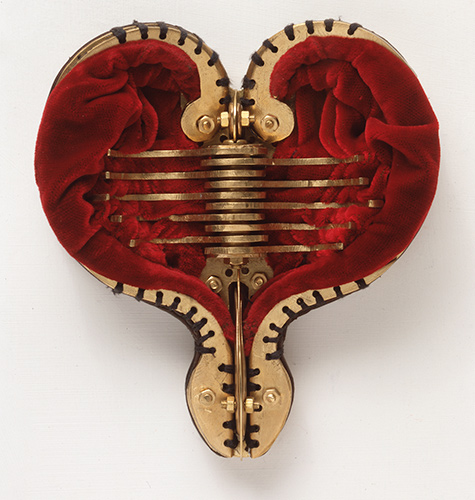
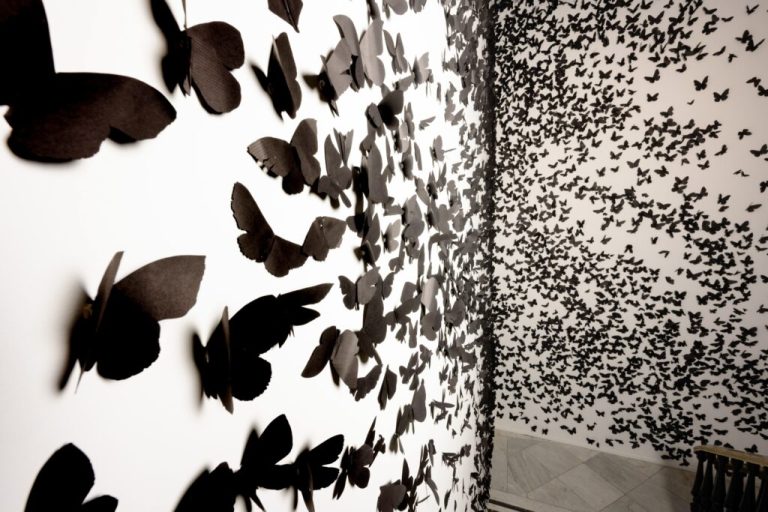
This summer there are two exhibitions that, at Casa de México, attract the viewer to what lives in each image without necessarily becoming evident in them: “Espectros. Enigmas of the gaze”, within the framework of PHotoESPAÑA, has photographs by seven Mexican authors who demonstrate that the camera can also suggest what was and is no longer there, while “Latencia”, which focuses on the pictorial field, brings together works that refer to memory, in a material, conceptual sense or linking both.
This latest exhibition once again brings together artists from that country and from different generations – Knut Pani, Perla Krauze, Cristóbal Ascencio, Andrea Bores and Flor Pandal – who invite us to place ourselves with their pieces in the gaps between the desire to remember and the memory itself, between the experience and the ambiguous and never complete trace that we preserve of it over time.
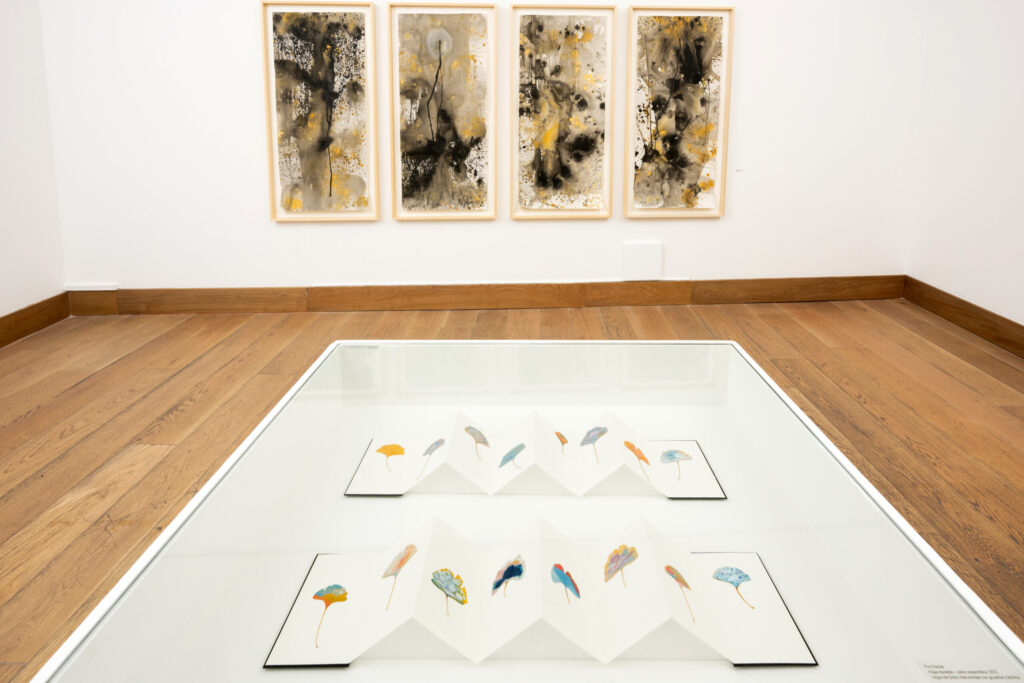
The tour opens with Knut Pani, who was a collaborator of Mathias Goeritz and founded the workshop in the nineties The fickle fishdedicated to teaching drawing and graphics and still active. He has developed his work, always abstract, in very diverse techniques, from the artist’s book to monumental sculpture through engraving, and in this exhibition he participates with fabrics that do not adapt rigidly to their frames and that are built from color and gesture in the form of a stroke, stain or drip: from pigment alive and in dynamic action.
His landscapes are mental because his compositions always arise from intuition and the chances that occur in working with materials, which this author has explained on some occasion guide him more than the other way around.
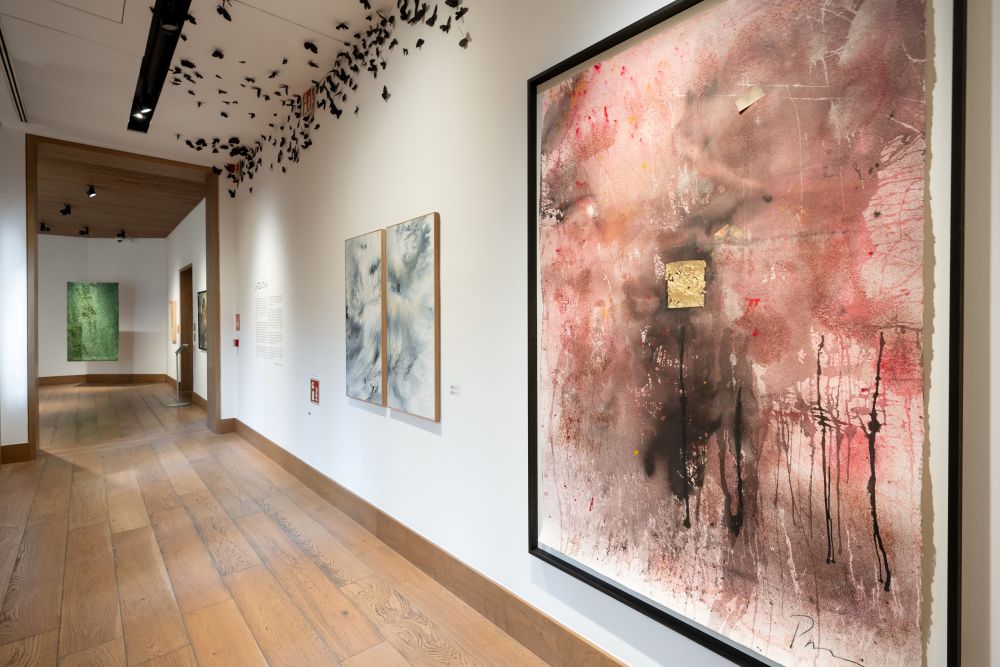
Latency. Casa de México Foundation. Madrid, 2026
Latency. Casa de México Foundation. Madrid, 2026
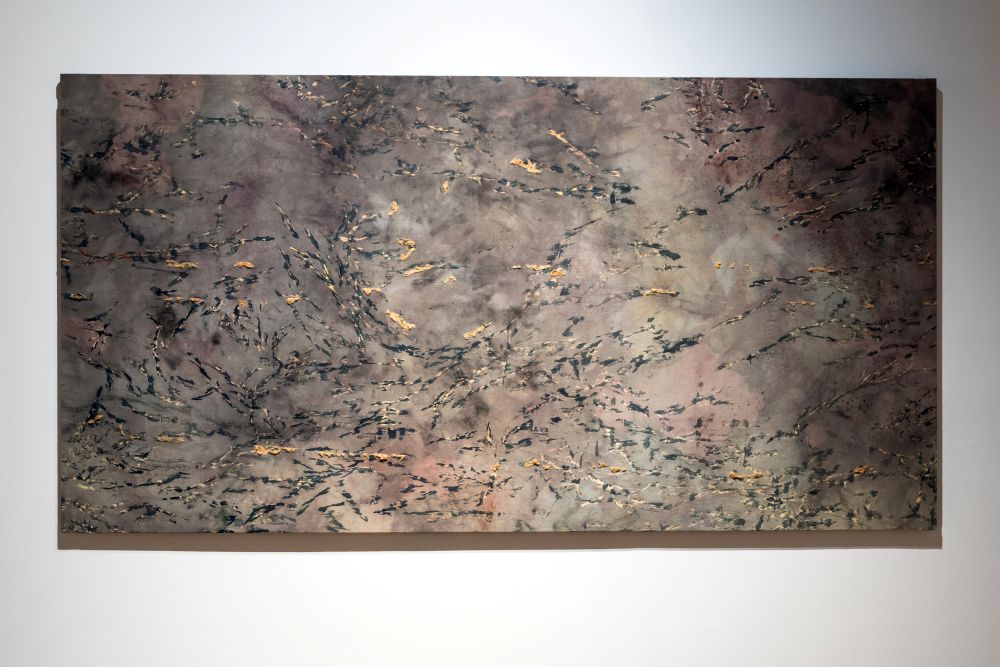
At her side we will learn about the work of the young Andrea Bores, who works in layers and with glazes in reference to the ways in which both memory itself and nature operate when sedimenting materials, those grains of sand that can contain more geological information than a mountain, as the artist recognizes in her statement: I sense that the secret of gestation of the mountains is found in the rocks and I encourage them to reveal their code.
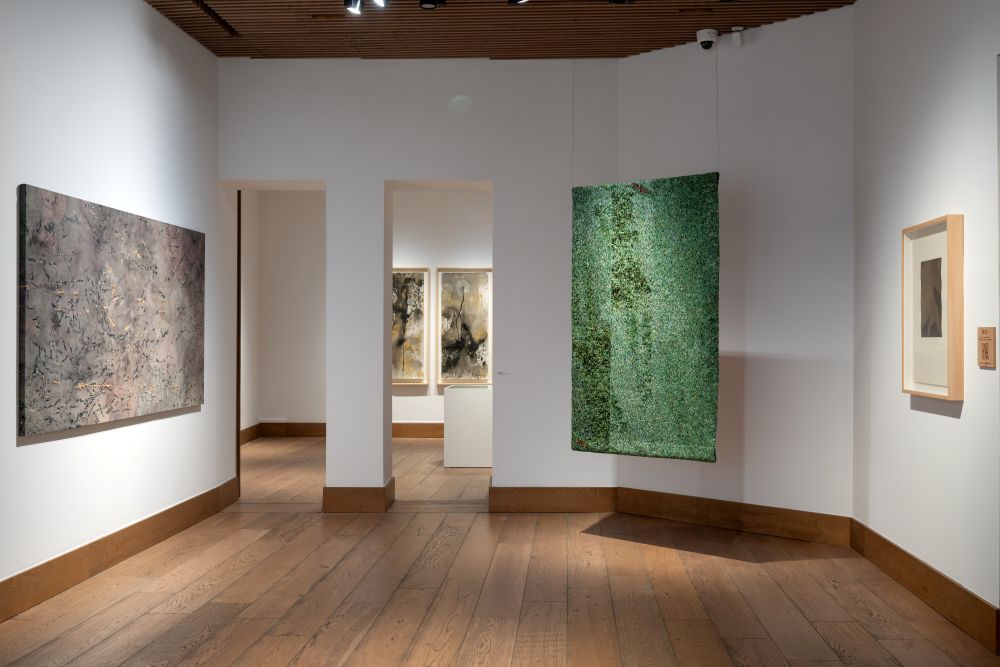
Its textures refer to the organic ones and its stains in different densities, to the grammar of the landscape and its cadences. The edge of the seahis first composition at Casa de México, is part of an eminently experimental series dedicated to turbulence: he stops his work processes, also open to chance, when considered, so that the pigments offer nuanced tones depending on their degree of contact with water and their drying. In this case, the memory of an ancestral and geological past seems to spring from the matter.
He has also used aniline in that piece, a chemical compound used to dye fabrics blue; It is, as an anecdote, the only non-natural dye that we will see in this exhibition. In his second work in Madrid, also based on coloring, additions and eliminations, he resorted to wild cotton inlays.
Latency. Casa de México Foundation. Madrid, 2026
Latency. Casa de México Foundation. Madrid, 2026
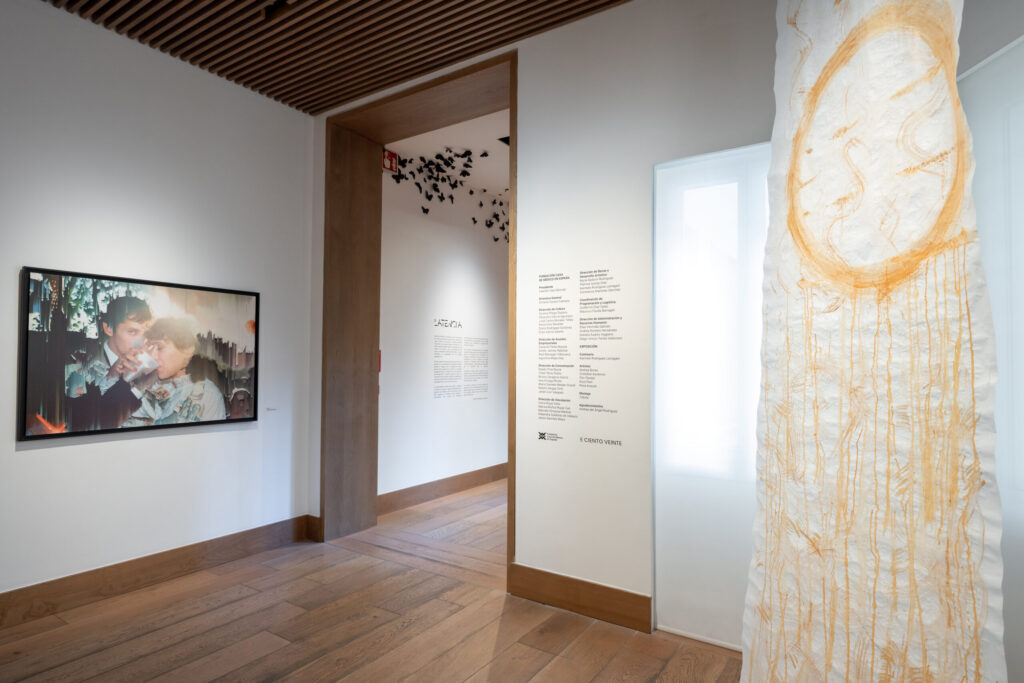
Bores shares a generation with Cristóbal Ascencio, who has recently joined our recruits. His treatment of memory is born from very personal premises and here he shows us an intervened photograph and a textile piece.
This artist explained to us to what extent his production is based on his search for roots and, unintentionally, why it could not be missing from this exhibition: The turning point in my work came when I discovered that my father had not died of natural causes, as I had always been told, but had committed suicide. That somehow changed everything. Suddenly I had to deal with this information, with the memory, and with a new grief in a completely different way. I guess I started working on such personal topics because it was simply what I had in my head at that moment, and photography became the tool to process all that (…). I am very interested in how we form our identity from what we remember, or rather, from what we think we remember. Memory is not something static or reliable; Every time we recover a memory we are rewriting it and contaminating it with the present. I work with the idea that photographs are fragile containers, not of absolute truths, but of mutable versions of what was.
Now show the most significant scene of your series Flowers die twicewhich is based on an image of his parents’ wedding and in which he uses plants as symbols of life cycles and personal transformation, and one of his tapestries from the series Palimpsestwhich evokes both Greek mythology and his father’s job as a gardener: “Palimpsest” is based on the myth of Penelope, who wove by day and unweaved by night waiting for Ulysses. I photograph the island of Ithaca, deliberately delete the images and try to recover them with data recovery software. These corrupted images are embedded with fragments of the Odyssey in its source code and eventually woven into tapestries using Jacquard looms, the first programmable machines. It is a reflection on memory as an active process of distortion and reinterpretation.
Latency. Casa de México Foundation. Madrid, 2026
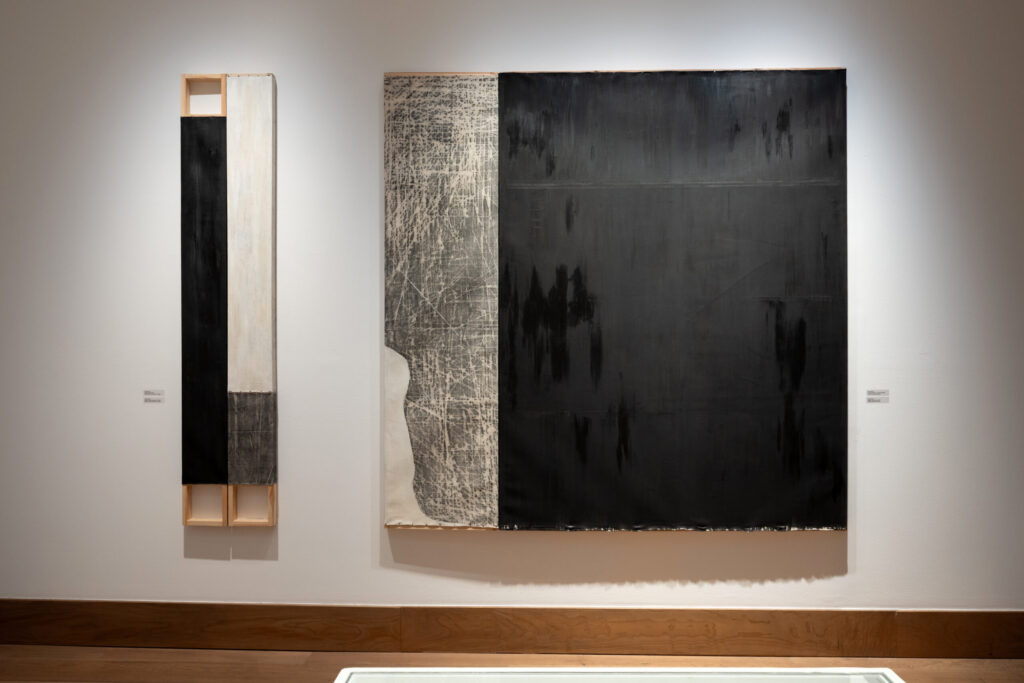
From Perla Krauze, one of the artists with the longest career in the exhibition, we will contemplate works in which urban memory becomes an “imprint”: frottages charcoal from the pavement marks arranged on stone cutting sheets and then treated with oil.
Krauze is interested in studying his options for making the ephemeral permanent and giving prominence to the normally invisible; He uses an austere palette and usually takes advantage of the possibilities of the lushness of the Mexican landscape.
And the last artist in “Latencia”, a project curated by Karmele Rodríguez Larragain, is Flor Pandal, whose creations are the fruit of introspective processes: in her case, the intimate content of her meditations is transformed into color with leaves as a support, arranged in artist books.
Latency. Casa de México Foundation. Madrid, 2026
«Latency»
CASA DE MEXICO FOUNDATION
C/ Alberto Aguilera, 20
Madrid
From June 18 to August 30, 2026