
Almeria,
We have had the opportunity to get closer to his work in two recent editions of PHotoESPAÑA, and last year at the Fundación Mediterráneo in Valencia, but Jurgen Schadeberg, who is considered the father of South African photography and died in 2020, is not a very popular author in Spain. Even so, it would be strange if we have never come across an image of him: he portrayed Nelson Mandela almost throughout his entire career and his is a famous snapshot in which he captured him, in 1994, during his visit to the Robben Island cell where he had been imprisoned.
Armed with a Leica and convinced that the camera’s mission was show humanity to humanity -what is the most complicated thing in this worldin his words, was born in 1931 in Berlin and died in our country. The destruction of World War II and the uncertainty of the following years led him to leave Germany in 1950 to seek his personal paradise in Cape Town; There he soon realized that he had found other forms of violence.
Still, this time he left only when it became inevitable; He became graphic editor and artistic director of the magazine Drum and he decided to work from commitment, letting it permeate his methods: the techniques, machines and objectives (that he associated with his own eyes) he put at the service of witnessing the cultural wealth of the black minority. He walked the streets of Soweto, spent hours in the bars where the best jazz was heard and photographed the singer and activist Miriam Makeba (Mama Africa) or the musician Hugh Masekela.
Investigating and photographing the treatment given by the Boers to the black population was when he met Mandela, the protagonist, as we said, of much of his production. The same year in which this politician was imprisoned, and after the reporter Henry Nxumalo, his collaborator, was murdered, he decided to escape from South Africa with his negatives and travel halfway around the world. When he returned decades later, Mandela had already been released.
Schadeberg’s last resting place was La Drova, but before that he had time to photograph in Spain, especially in Malaga, bullfights, beach pictures or the Verdiales Festival, in which an ancestral fandango is performed on the day of the Holy Innocents. He especially observed jobs and customs that were disappearing, including ways of looking and being that were on the verge of extinction.
With the support of the Valenciaphoto festival, the Ibáñez Cosentino Foundation exhibits, until September at the Pérez Siquier Center in Olula del Río (Almería), a selection of its photographs, representative of its seven decades of experience. We will see works focused on the lives of ordinary South Africans under apartheid; portraits of Mandela, Dr. Moroka, Walter Sisulu, Yusuf Dadoo and Bishop Huddleston; and pictures of important events in the recent history of that country: the so-called Defiance Campaign of 1952, the treason trial of 1958, the Sophiatown evictions or the Sharpeville funerals in 1960. We will also see photos of musicians or cultural figures, such as Dolly Rathebe, Makeba, Hugh Masekela and Kippie Moeketsi.
Beyond the still image, Schadeberg created the company with his wife The Schadeberg Movie to produce fifteen documentaries on South African society, history and politics, including Voices from Robben Island 1994in collaboration with the BBC.
It is his wife, Claudia, who currently manages his archive and promotes his exhibitions – this curatorship, together with Vilma Dobilaité and Nicolás Llorens -; To know more about him, we can go to his autobiography The Way I See It.
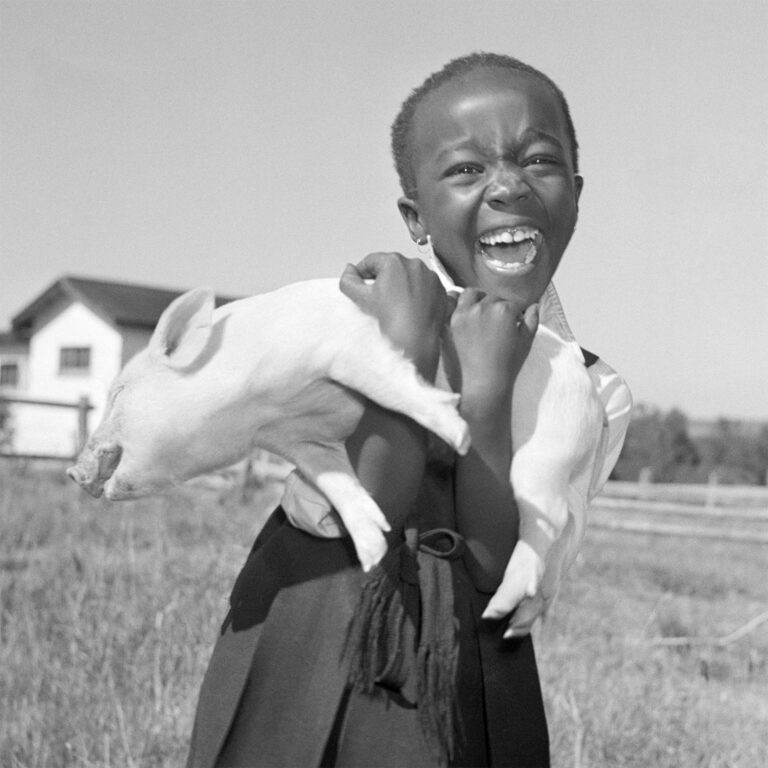
Jürgen Schadeberg. “The long road”
PÉREZ EVEN ENTER
C/Museum, 7
Olula del Río, Almeria
From April 30 to September 13, 2026


