Santillana del Mar,
Lin Calle, an artist who will be familiar with the regular to the Madrid Memoria Gallery and was born in China in the mid -nineties, has so far turned the notions of the landscape and the void. The first, who wishes to approach new perspectives and nuances in each of his projects, understands as a starting point, as a meeting place and as imitation of lifewhile through the second he gives relevance to his supports. Leaving them in raw or applying little matter, seeks this author that is established in her pieces, as she told us when she joined our signs, A resonance or empathic connection with the spectator.
Next to the painting, the techniques in which until now they have worked are engraving and ink and paper; It uses them from intuition and freedom, resorting to creation on the ground, looking at the changes raised by the position of the body or in the use of the two faces of their fabrics: I start extending the fabric on the ground and any stain, record or wrinkle triggers a series of gestures on the fabric. Painting on the ground means greater freedom and amplitude of movements, allowing a more abstract conception of space; Left, right, up and down can constantly change with just changing the position of your body. Sometimes, you also work the fabric on both sides: paint permeates and generates a new space for doubt, allowing progress.
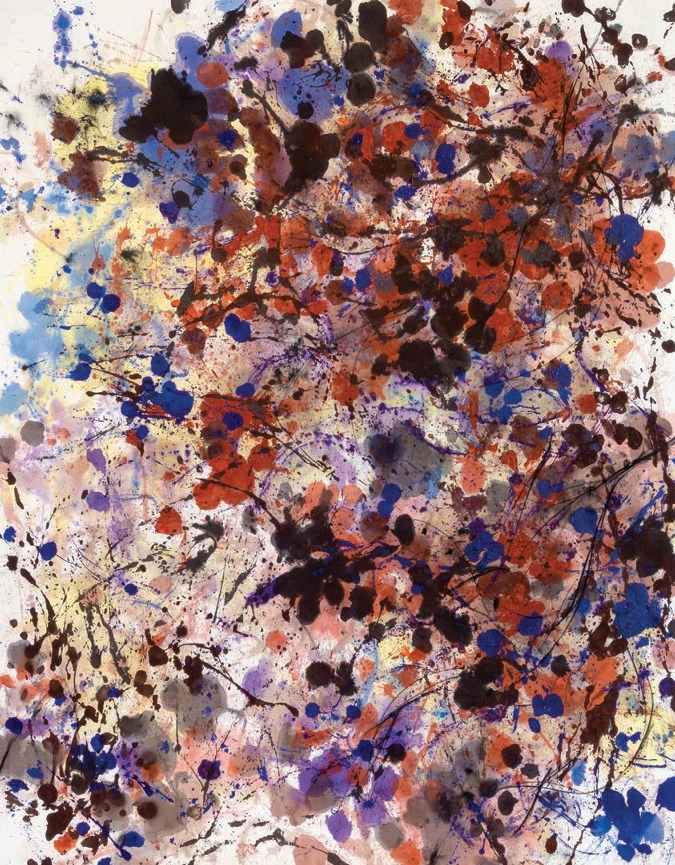
After obtaining the artisantander exposure/ Museum of Altamira last year, Calle offers until September 28 in that center a specific project and based on the reinterpretation of prehistoric art from contemporary parameters. Necessarily, his approach has gone through nature and has decided to focus on the small: pollen grains that, from its tiny size, can contain abundant information and that, in the creations of this artist, are part of drops of water or branches that acquire brown, orange or ocher shades associated with the predominant chromatic range itself in Altamira.
Together with that reference, another present in these works, as in the rest of his work, is the Oriental: the pictorial tradition linked to Taoism, which does not conceive the landscape as a resource from which to obtain benefit but as a living being with which to live with, is related to Lin with the understanding of the environment that those who in the Paleolithic populated this area, whose life would be marked by the natural rhythms. His only stimuli.

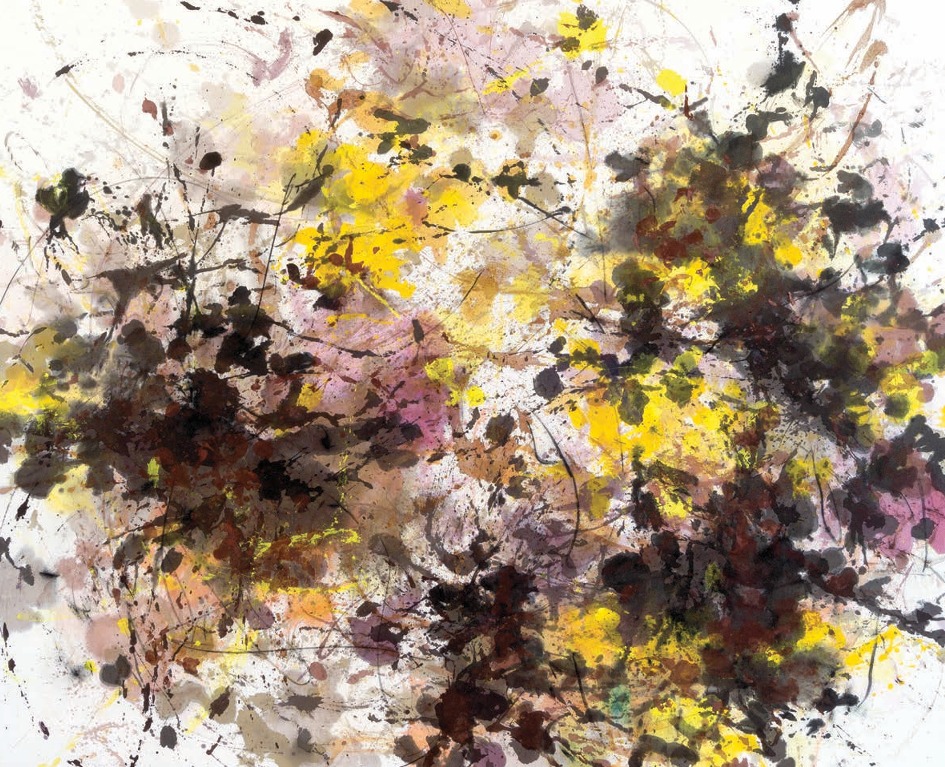
The author has been interested in the discipline called Paleopalinology, consisting of the analysis of pollen and the spores that are sedimented in different strata to analyze and rebuild the evolution of certain plant species, the effect of the climatic changes of the past and also of cultural transformations. Two layers integrate the cover of the pollen grains: one internal and another external, the intine and the exina; From the latter, morphological and opening changes are derived in some botanic varieties. When the grains are carried by the animals or the wind to pollinate other specimens, the exina opens; Others, however, fall to the ground and begin their transformation into microfossils: these are those that have been studied.
He has also paid attention to language: Altamira refers to an elevated enclave from which the environment glimpses; landscape It is the part of a territory that can be observed from a specific place; and Fengjingliterally Wind-skewis the Chinese term that alludes to the landscape as an entity in continuous change that cannot be covered entirely from a single point of view. The painting supposes, for her, another language capable of compressing time and evoking in those who observe it strokes, signs and reliefs that were made thousands of years ago.
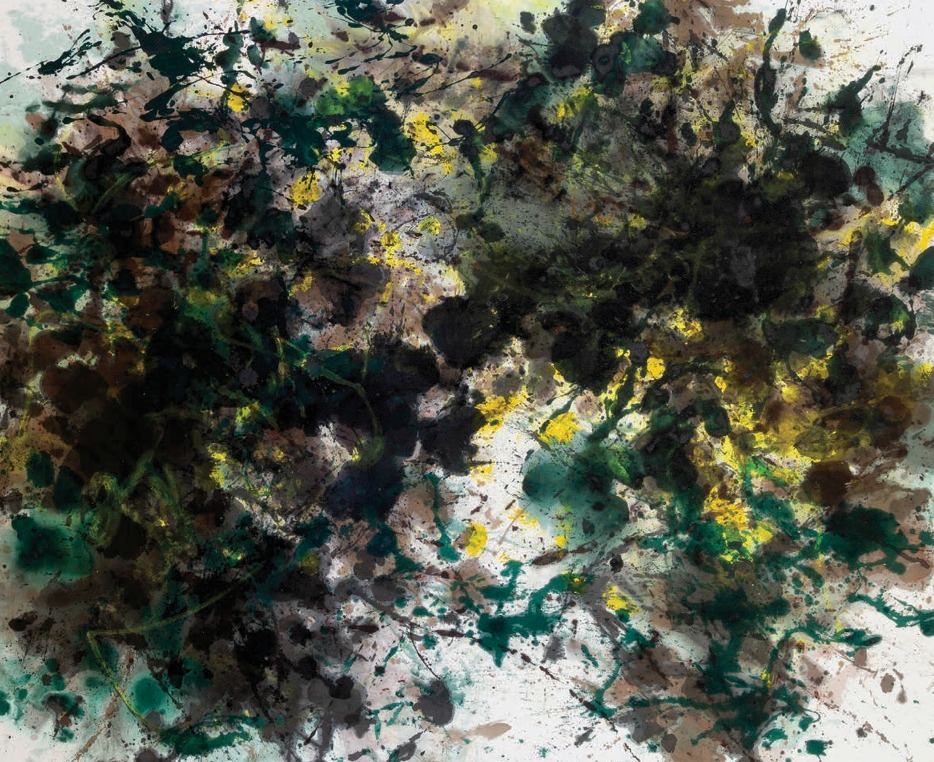
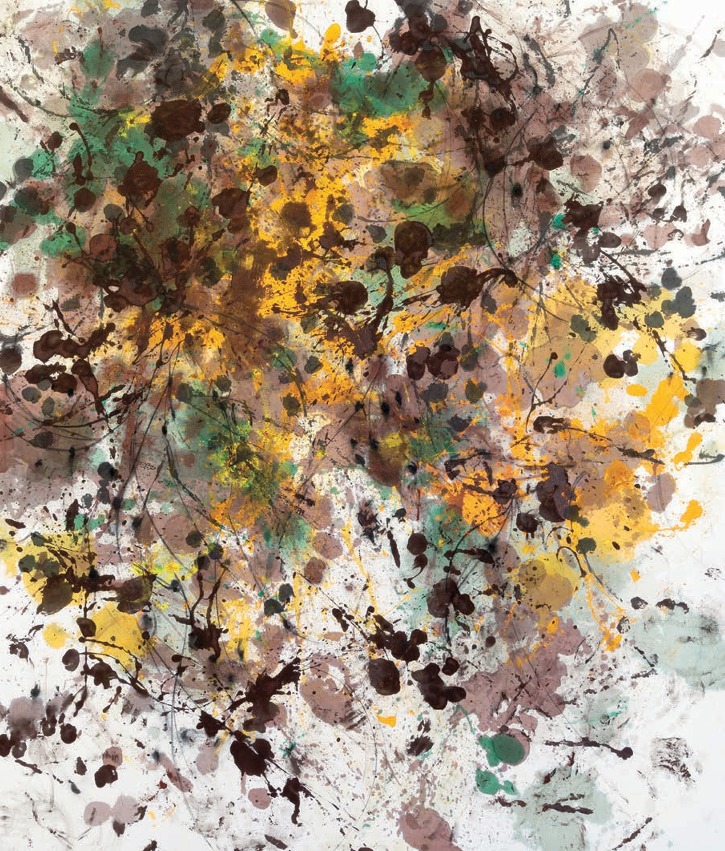
When preparing their pieces in Santillana del Mar, Calle has extended the canvases on the ground, applied to the yellow and orange colors in reddish and ocher, imagining replicating The route that pollen grains make until their destination, the coal lines of the large ceiling, the touch of pigments when painting with the hands …
Sometimes he has the vertical works to observe them better and then knock them down again, returning to the Aguadas: (Des) Drawing branches, abstract shapes, leaves that are sedimenting. I observe again: at times the scene is emerging and at times it seems that it is about to disappear. Their compositions want to be as little static as the nature from which they start.
Lin Calle
National Museum and Research Center of Altamira
C/ Marcelino Sanz de Sautuola, s/ n
Santillana del Mar
From July 8 to September 28, 2025