The next municipal elections are in five months, and the elected officials who are representing themselves are keen that the projects they supported during their mandate are completed before this deadline. Thus in Toulouse, the Musée des Augustins and the Château d’Eau will reopen their doors on November 22 and December 19, 2025, after several years of work. The total cost amounts to 14.3 million and 4.2 million euros respectively, financed in part by the City and the State.
The Musée des Augustins underwent the longest and most complex construction site. Closed partially then completely between 2017 and 2019 for the renovation of the glass roofs, it briefly reopened before closing again in 2019 for major work. The main objective was to create a new entrance, more visible and adapted to an annual attendance of around 170,000 visitors. The accessibility of the site has also been redesigned. Archaeological excavations were carried out during the work, while the cloister has been undergoing restoration since 2024.
Architect’s view of the future reception pavilion of the Musée des Augustins in Toulouse.
© Aires Mateus Architects
The work on the Water Tower, lasting a year and a half, was more limited. They aimed to correct the dilapidated condition of the building, improve accessibility and optimize spaces. An extension was built under the Pont-Neuf arch to transfer offices and reserves there, thus freeing up space for exhibitions. The museography and scenography have been redesigned, and the installation of elevators now allows full access, particularly to the previously inaccessible basement.
Built at the beginning of the 19th century and transformed into a photographic exhibition gallery in 1974 by Jean Dieuzaide, the Château d’Eau is one of the first galleries of this type in France. It maintains a documentary collection of 15,000 books and 6,000 magazines.
The Toulouse Museum of Fine Arts, installed in a former Augustinian convent from the 14th and 15th centuries, was transformed into a museum during the Revolution. Its collections bring together works from revolutionary seizures, from the Royal Academy of Fine Arts and even religious buildings.
The museum construction site encountered several obstacles, starting with the discovery of remains of a Renaissance chapel at the location planned for the new entrance. This vestige was finally moved after consultation with the Regional Directorate of Cultural Affairs. Furthermore, the state of degradation of the large cloister required additional restorations, integrated into the project so as not to prolong the closure of the museum. In 2022, Laure Dalon took over the management of the establishment and is preparing a new scientific project for the reopening.

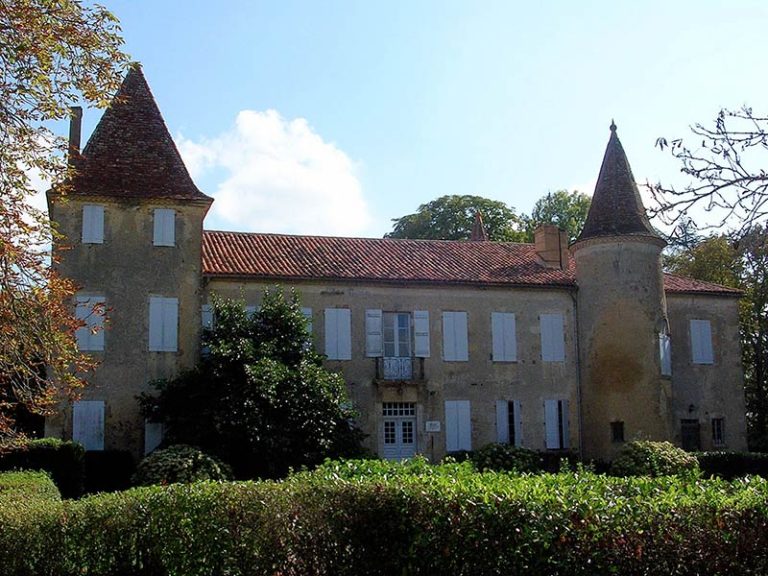
The Augustins Museum in Toulouse.