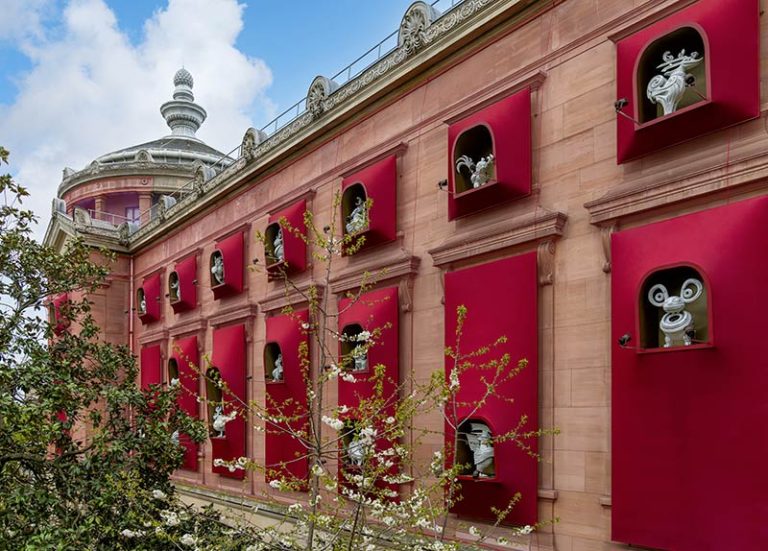
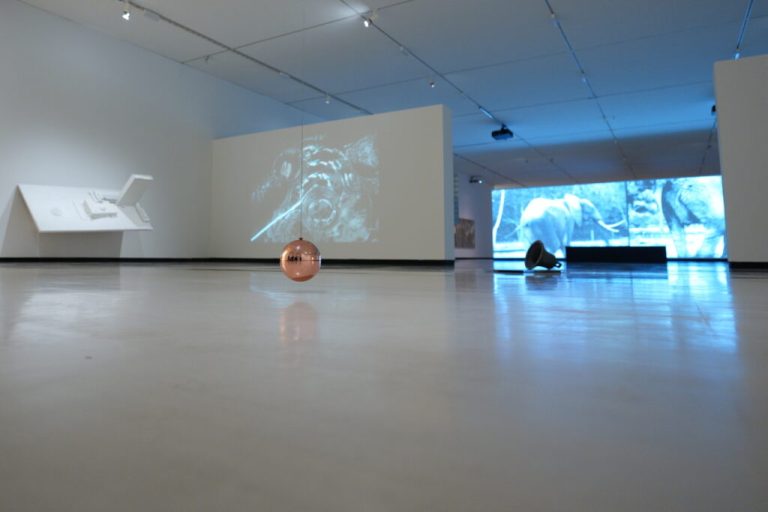
Seven years after Joana Vasconcelos presented a retrospective at the Guggenheim Museum Bilbao, “I am your mirror”, which she then described as the most important of her career, and only a few months after her close coexistence with the rooms of the Liria Palace, this Portuguese artist displays another large exhibition in Spain, in this case in a space that gives her pieces very different connotations from the neutral ones that Frank O. Gehry’s Basque building could give them. and the 18th-century ones from the Alba residence: the Picasso Museum of Malaga, in the Buenavista Palace. It must be emphasized that, although works of art can decisively modify our perception of the environment in which they are displayed, the reverse situation, less highlighted, also usually occurs.
Her installations refer both to the baroque aesthetics and the popular culture of her country, to the characteristic debates of recent art – especially those related to the viewer’s participation in the interpretation of the works – and to burning social issues, especially to the situation of women at different moments in history: she uses materials taken from everyday life, such as appliances, tiles, fabrics, medicines, urinals, pots or plastic cutlery, influencing the narrative and emotional charge that they already have. or that, in certain contexts, they can provoke. It is also common for Vasconcelos to accompany these creations, almost always on a large scale and with a forceful palette, with movement, lights and sound: they are his tools to capture those who contemplate, but they also incorporate an ironic character to his work, unprejudiced and exuberant.
Joana Vasconcelos. Flamboyant. Picasso Museum Malaga
PRIVACY FILES
In this new introduction by Vasconcelos in a historic palace (she has already visited Versailles, the Uffizi or the Ajuda Palace in Lisbon, as well as Liria), sculptures and installations dating from the nineties and linked to the notion of transfiguration have been selected, under the curator of Miguel López-Remiro, and linked to the notion of transfiguration, stripped of its religious meaning to allude to the artist’s ability to transform everyday objects – in her case, textiles, ceramics or Portuguese seal tiles – in visual experiences and also in symbols of a cultural memory that is not hidden when this transformation occurs.
In the case of Vasconcelos, this projection of the popular heritage in settings that rarely host it extends to creative techniques: he brings the procedures of crochet or embroidery to these areas of sculpture and installation, composing with them – and with his collaborators – enveloping structures that necessarily invite the viewer to a different approach to the rooms they occupy. When the artisanal and homemade are turned into large formats and institutional environments, we are urged to review our concept of the familiar and the monumental and to what extent we could exchange them.
They are not lacking in Malaga Betty Boop (PA)her enormous Marilyn sandals made with cooking pots and their lids, banal and shiny instruments whose sum makes up dancing shoes similar to the ones Monroe took to Vietnam to cheer on the American troops. The spheres of fantasy and desire (public) and the domestic space (closed to the voyeur), apparently contradictory, converge in the collective imagination of the feminine and in this footwear made into a metaphor.
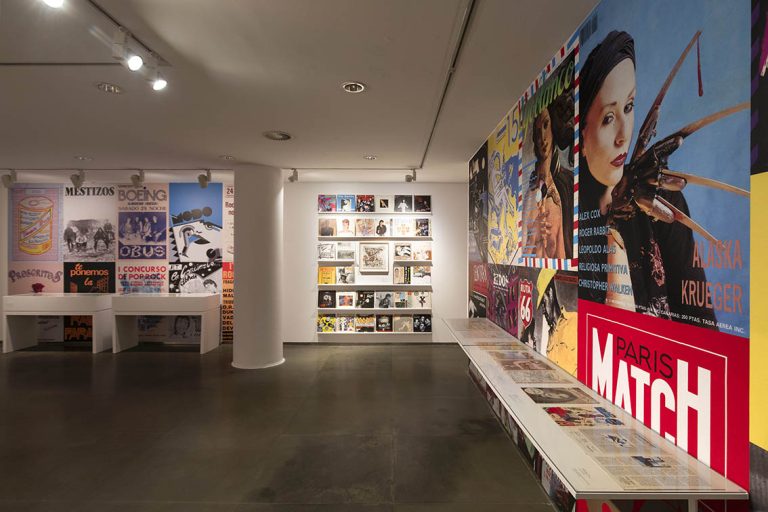
Neither do the walls of the facility Loftwhich display secrets and intimacies, sometimes bordering on obscenity, as if it were a public archive of private life with which we can all identify. Vasconcelos wants to prove that spaces in the house can be reorganized in the museum.
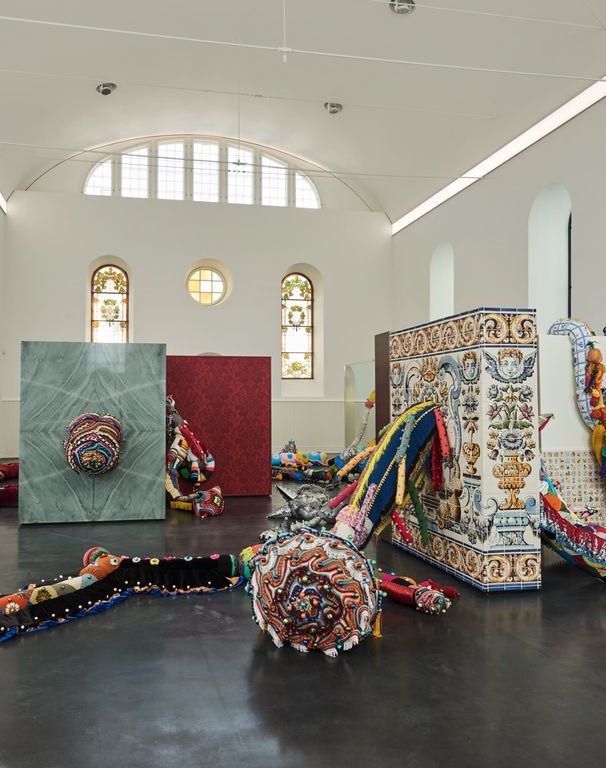
Joana Vasconcelos. Loft2010-2017- Collection of the artist
www.fatimashop.com It brings together devotion, commerce and consumption with that Portuguese sanctuary as a starting point. The artist shared the trip with the pilgrims and participated in the experience, also tourist and economic, generated around the temple, which led her to investigate the border between image and merchandise. And the gigantic bow J´adore Miss Diormade up of one and a half thousand bottles of the perfume of the same name that change color thanks to LED lights, embodies the confluence between the manual and traditional character, which implies the elaboration of that motif, that of the bow, and contemporaneity. It also makes us think about the evocative power of perfume in the face of its invisible presence and the suggestive capacity of the small object when its accumulation is resorted to. The ornamental, the artist warns, can stop being a complement and become sculptural material.
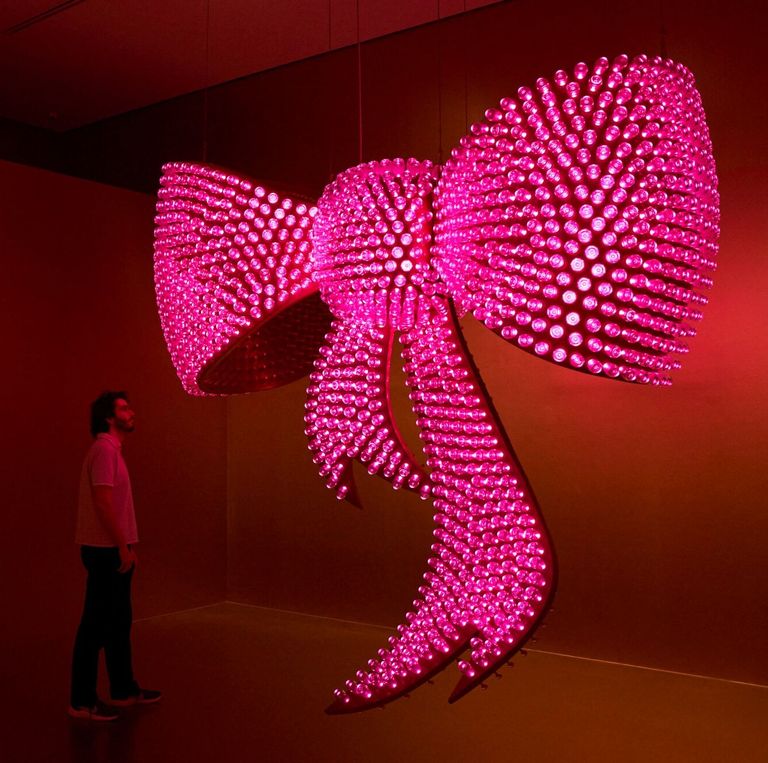
Joana Vasconcelos. J´Adore Miss Dior (PA)2017. Collection of the artist. Work produced with the sponsorship of Dior, Paris
Gestaltfor its part, constitutes an abstract and overflowing landscape, whose format is pictorial (canvas, frame, frontality), but nothing else is (textile and crochet shapes grow towards space). Its parts, individually, do not make a work: only the whole dilutes labels.
Finally, Valkyrie Marina Rinaldi It refers to those strong and supernatural feminine presences from the textile and the air, from the solid and the fragile, in reference to the two aspects of the human experience. The Valkyries decided, without physically intervening, the fate of the fighting heroes; From their softness and their suspension, these also determine our view of the rooms of the Picasso Museum: more than being housed by the architecture, they conquer it.
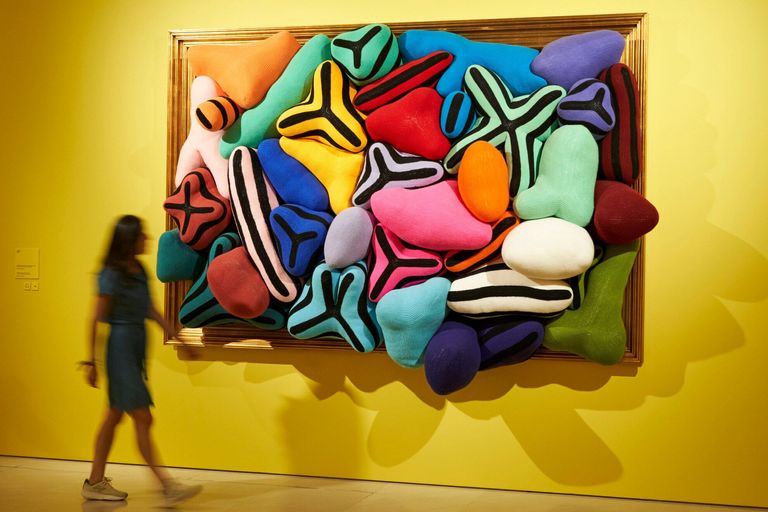
Joana Vasconcelos. Gestalt2017. Collection of the artist
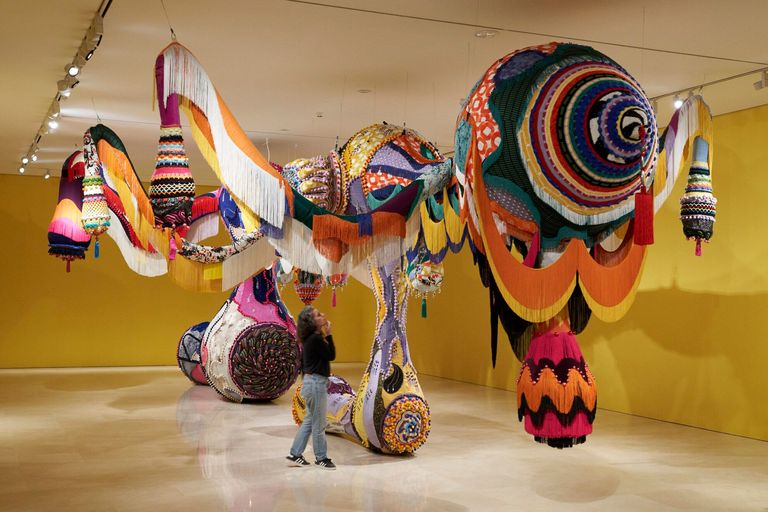
Joana Vasconcelos. Valkyrie Marina Rinaldi2014. Collection of the artist. Work carried out with the sponsorship of Marina Rinaldi
Joana Vasconcelos. “Transfiguration”
PICASSO MUSEUM MALAGA
C/ San Agustín, 8
Malaga
From May 29 to September 27, 2026