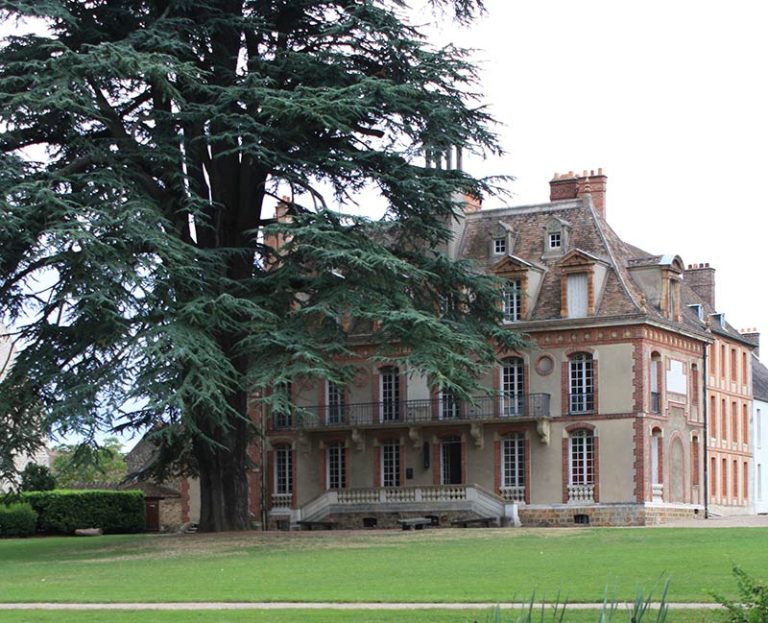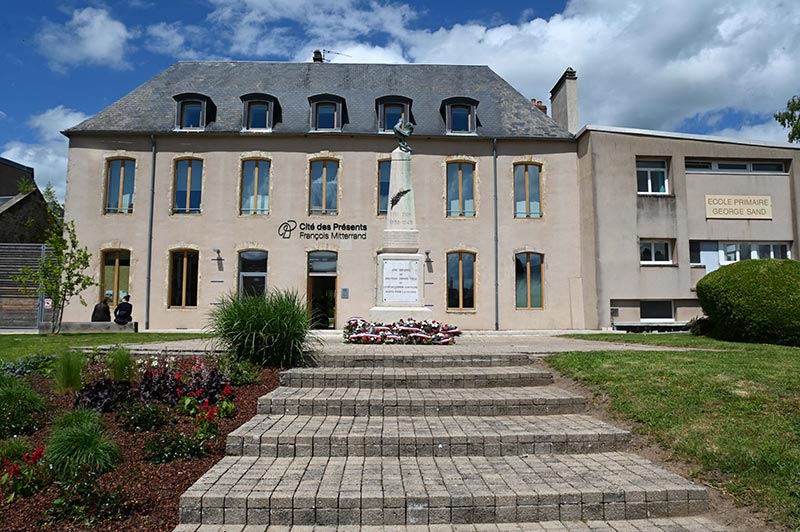
Château-Chinon (Nièvre). Golden palm trees, monumental vases, a packet of tea, a hat to keep a boiled egg warm… It is an eclectic collection to say the least brought together by the small town of Château-Chinon: that of diplomatic gifts and those more personal offered to François Mitterrand during his presidency (1981-1995). If these objects from the four corners of the world are always displayed in the same museum space, it is with a renewed presentation and discourse. Above all, after seven years of closure, the Musée du Septennat is reborn under a new name: the “City of Presents”, which includes not only the presidential collection but also that of the Costume Museum (renamed the Fashion Museum), installed in a former private mansion located right next door. “ The architectural project consisted of bringing together these two museum spaces through a central pavilion, which is intended to be a link between the two collections, but also between the museums and the town center. explains Thibaud Richard, head of the Cité des presents.
It is precisely this quest for visibility, this ambition to attract a wider audience that has fueled the project from its inception. Over time, museum attendance has gradually eroded, oscillating between 6,000 and 8,000 visitors per year. From the 2000s, the idea of bringing them together in the same center of cultural activity gained ground. Between the two collections, the link is tenuous, of course, but present. While François Mitterrand himself inaugurated the Musée du Septennat, bequeathing a large part of the gifts he had received to the city of which he was mayor for a long time, the Costume Museum took shape when he decided, during his municipal mandate, to acquire the rich collection of clothing and accessories from the collector Jules Dardy (1911-1992).
The new glass extension which connects the Cité des presents and the Fashion Museum in Château-Chinon.
© Department of Nièvre
Create bridges between collections
In 2014, under the leadership of the departmental council, an architectural competition was finally launched to renovate the old buildings and bring together the two museums, a competition won by the architect Patrick Mauger. Five years later, the start of this 17.5 million euro project, mainly financed by the Department (11.7 million), was given. First objective: make the entrance more visible. The visitor now goes through a shared reception with the Tourist Office, before crossing a redeveloped garden which leads to the new pavilion. Serving as a junction point between the two museums, this glass construction (see ill.) also houses a new 138m² space, intended for temporary exhibitions, which will only open from 2027. “Our goal is to be able to build bridges between the two collections. The presidential collection is very plural, which offers multiple possibilities to make the link with the fashion part. Every year, we will be able to present new pieces with another discourse, another look,” rejoices Thibaud Richard.
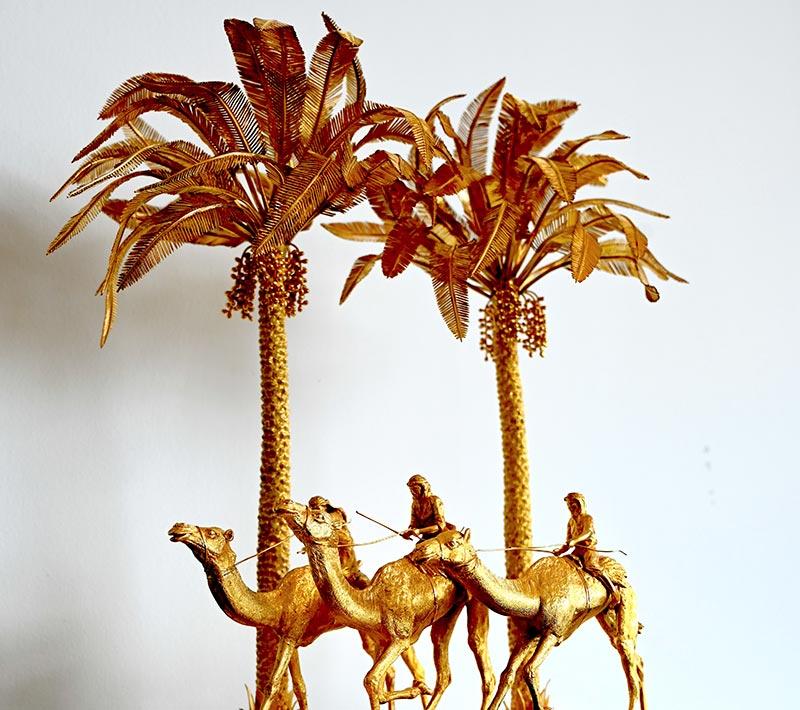
Oasis scene in vermeil, malachite and alabaster, object offered by the King of Saudi Arabia, September 26, 1981.
© Department of Nièvre / City of Presents – François Mitterrand
In terms of permanent collections, if the journey is not fundamentally changed, the museography is. In a much more refined scenography, we wander among the windows which display diplomatic presents offered by foreign heads of state, gifts given by French dignitaries, those sent by artists or anonymous people. Their selection is narrower – 300 pieces out of the 4,800 in the collection, compared to 500 in the old route – but their presentation is more contextualized.“The aim of this new display is to present the symbolic value of these objects, to dissect the context of these donations, to understand what they can represent or what they can tell us about the donor more than about François Mitterrand himself”specifies Thibaud Richard.
For the Fashion Museum, on the other hand, the choice was made not to put the pieces in a showcase. A black background, blocked windows and controlled intensity lighting highlight the pieces while respecting the fragility of the textiles. “Before, the presentation was more traditional, it was more themed “period rooms”. We wanted a sober, modern museography, which best presents the clothes and which would not be completely obsolete in five or ten years”indicates Thibaud Richard. This new positioning first involves a change of name: the name “Costume Museum” has been abandoned in order to avoid any confusion over its content. Unlike the National Costume and Stage Center (CNCS) located in Moulins, about a hundred kilometers away, the Château-Chinonais museum brings together not a collection of costumes but a rich collection of clothing, worn between the end of the 17th century and the 21st century. Vernacular clothing, women’s underwear, accessories, hats, shoes… the fragility of the medium implies frequent rotation, the hanging will be renewed each year around a new theme. For this year of reopening, the main focus is on formal clothing: 150 pieces highlight the evolution of the female silhouette, from the French dress of the 18th century to haute couture pieces by Christian Dior or Yves Saint Laurent.