In 1984, the Tránsito bar opened its doors in Huesca, a place that during its six years of opening was the meeting point for musicians and artists who stirred up the cultural life of the city and which came to give space to the new sounds and forms of expression that were already making their way. His activity completed the musical programming of the recreational clubs, especially the one still in force Laurentina Joy and his Jai Alaia headquarters that hosted countless concerts in those eighties, although they were times of general proliferation of groups, rehearsal venues, bars, parties, DJs and fanzines.
That bar, with a short life and a long memory, gives the title to the exhibition “Huesca in transit”, which now houses the Exhibition Hall of its Provincial Council and which, with more of a spirit of celebration than of nostalgia, travels back in time to the decade between the mid-seventies and mid-eighties, when, as in almost all Spanish cities, nightclubs and nightclubs increased there almost exponentially and the celebration of festivals and popular festivals gained in intensity and, above all, in the accompaniment of pop and rock, hallmarks of a generation determined to look to the future.
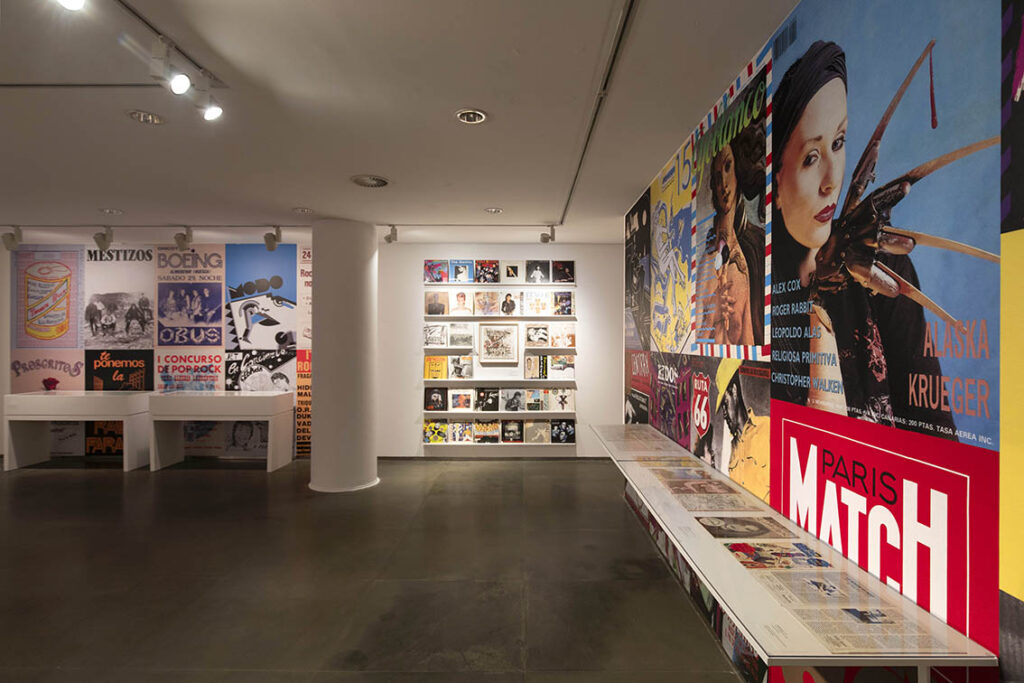
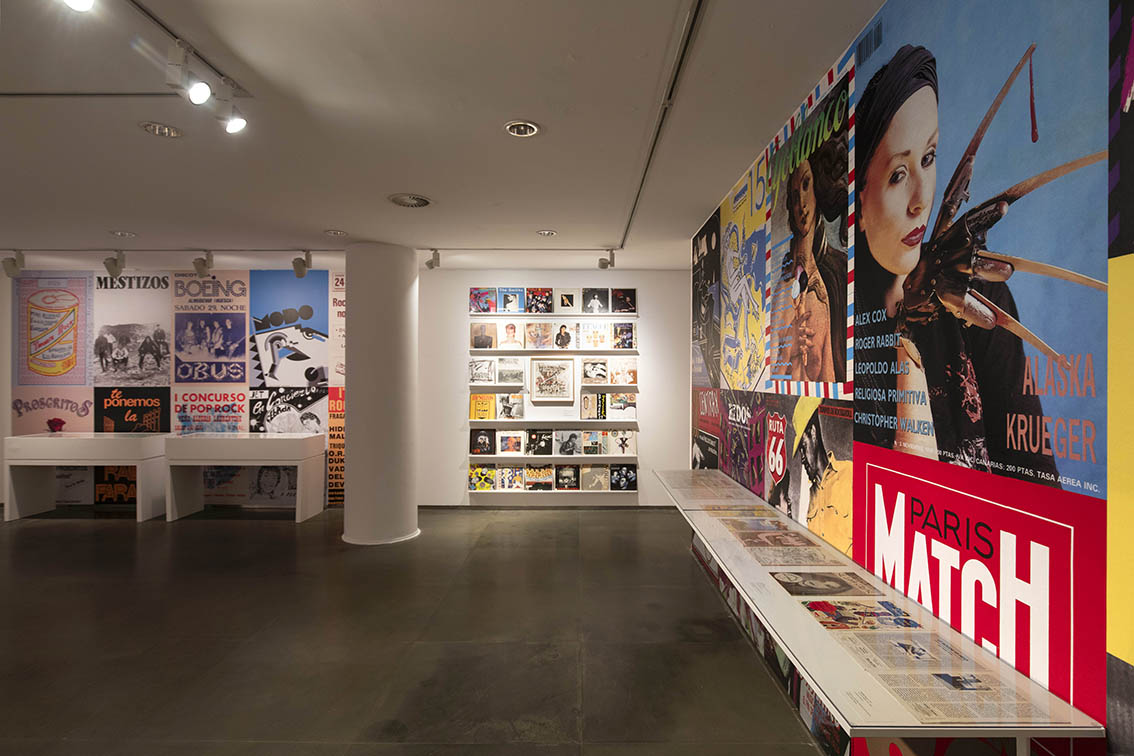
Huesca in transit. Exhibition hall of the Provincial Council of Huesca. Photography: Javier Broto Hernando
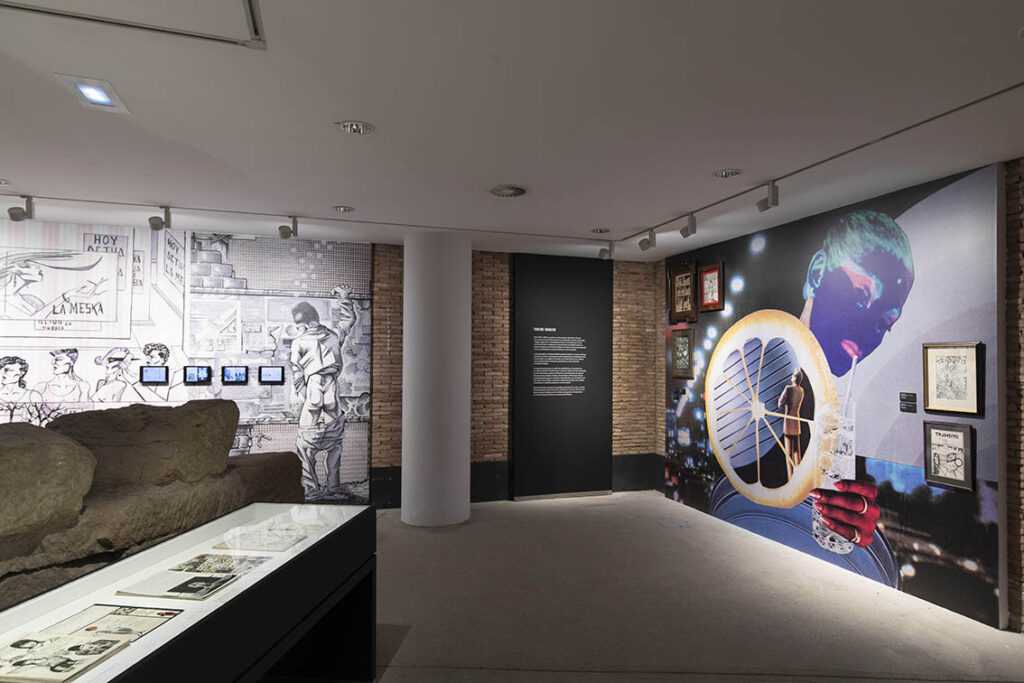
Huesca in transit. Exhibition hall of the Provincial Council of Huesca. Photography: Javier Broto Hernando
Alberto Gabarre, José Ignacio Callén and Jesús Bosque would curate an exhibition made up of posters, photographs, records, publications and other objects and testimonies of the time – memories made material for many Huesca residents – and documentation linked to that Tránsito bar. Although its vitality did not remain constant in those years, in general many of these pieces will refer to the good times of the social movements (ecologists, pacifists, feminists and antinuclear), which replaced past forms of militancy, or to festive associations and clubs that made public spaces their own from a lesser ideologization. Faced with both groups, another position that did not experience any weakness was that of young people who were skeptical or tired of convulsions: that of those disenchanted or prone to individualism.
Remember this project that, although there are many clichés associated with the transition and all the moves urban, Huesca was not just one and cultural, social, economic and ideological layers coexisted there, as close physically in daily life as they were distant in their mutual relationships.
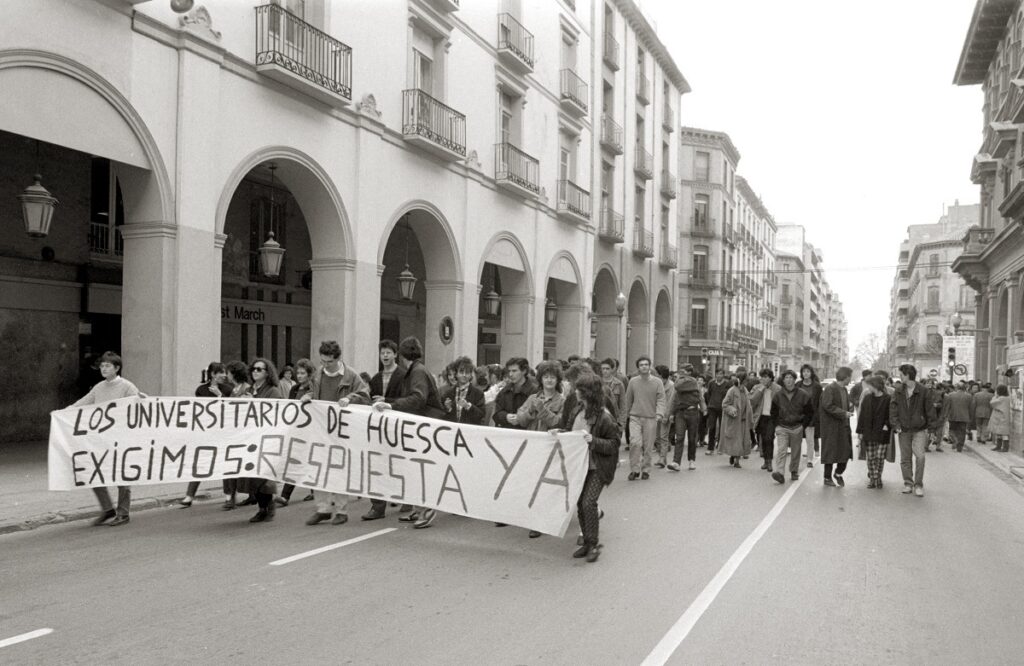
Fernando Alvira Lizano. Demonstration of university students1983. Family archive of Fernando Alvira Lizano
The journey of “Huesca in transit” begins in the audiovisual field. The Ciudad de Huesca International Short Film Contest was created and consolidated, a precursor to the International Film Festival still in progress, and Eugenio Monesma began to lead a generation of authors dedicated to ethnographic cinema or advocates of the super-8; His work would relaunch that of Alberto Turmo, Jesús Genérelo, Sombras de Murnau and others. If we talk about photography, this province had a long tradition in the discipline, in relation to its landscapes, but at this stage new artistic and more experimental paths would be studied, with the help of associations such as Colectivo Imagen, which held contests, exhibitions and other activities.
One of his most memorable exhibitions came a little later, in 1990: it was titled “7 × 7” and compiled landscapes, portraits and elusive genre pieces by Pilar Albajar and Antonio Atarriba, Carlos Bandrés, Guillermo Farina, Miguel López Apellániz, Fernando M. Mallén, Miguel Ortega and Pablo Segura.
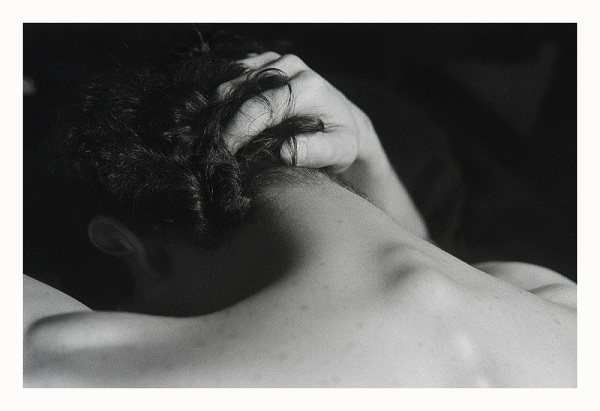
Mercedes Gabarre. Untitled, circa 1984-1987. Artist’s collection
In the field of plastic arts, the panorama was not encouraging in advance – the Huesca Biennial or the Museum of Contemporary Art disappeared – but galleries such as S’Art and Ligeti carried out fundamental work in promoting recent creation and also hosted exhibitions at Melindres, La Habana, Café Universal or Tránsito.
Precariousness and experimentation marked the years in which this proposal includes compositions by Enrique Torrijos, Marcelino Sesé, Jesús Benito, Chema Durán, Vicente Badenes, Eduardo Cajal or Alberto Carrera or by authors closely linked to the Tránsito bar itself, such as Javier Romera, Alfredo Cabañuz, José Ángel Enciso, Patricia Albajar, Luis Sanchón, Piter Saura, Javier Gracia Operé or Chus Torrens.
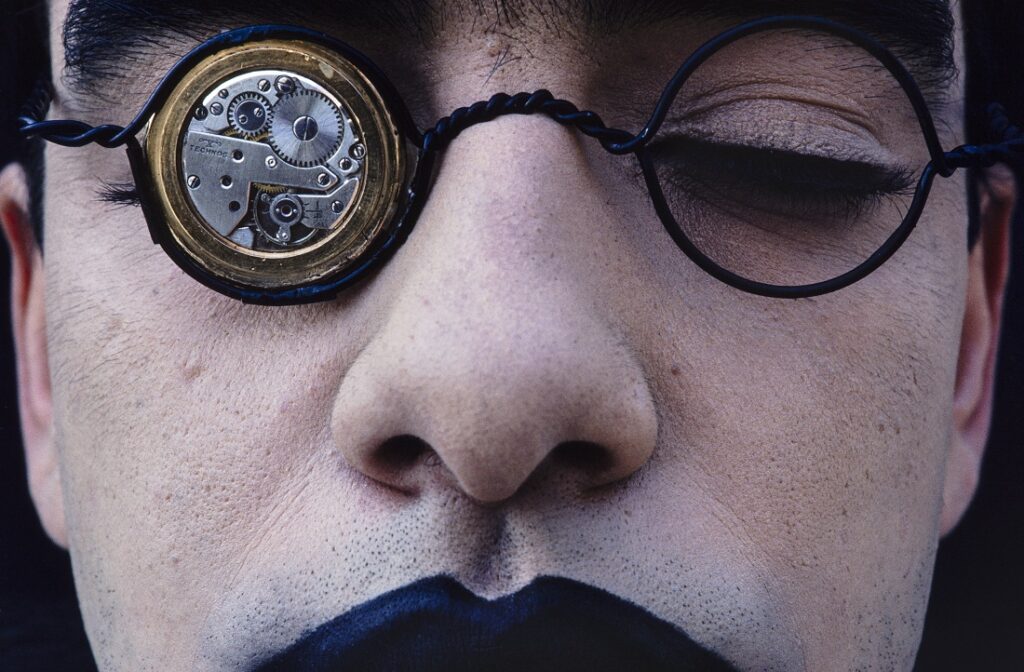
Eme Eme. Untitled, circa 1990
In music, hybridization won: Javier Losilla spoke about joteros who dreamed of electric guitars. In any case, the different styles that were then fruitful – urban rock, heavy, punk, the so-called hooliganrockthe brown wave or experimental proposals – became identifying marks. The first group from Huesca to record an album during Movida was called, coincidentally, Mestizos; Later Escoria or Vade Retro would arrive and all of them were photographed by Rafa Gobantes and heard in bars, pubs and small discos.
These establishments, as we know, had their less luminous side: complaints about noise, traffic accidents or drug addiction, in general insecurity, anticipated opening hours restrictions and the closure of a time in which freedom seemed unlimited.
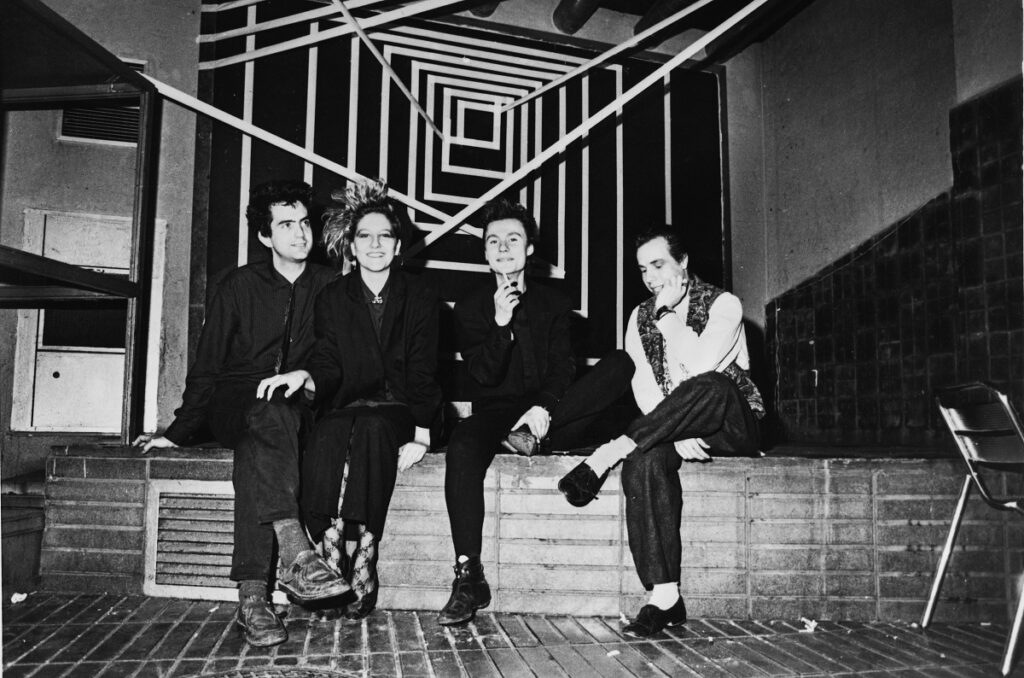
Tránsito Team (Alberto Gabarre, Marisa Olmos, Manel Palou and Antonio Sarasa), around 1984-1990
It has its own chapters in the exhibition, as expected, the brief but influential bar Tránsito, whose name was the idea of the Barcelona artist Ernest Sales and which was born with a bold purpose: to become a stage for creativity, new music and provocation on multiple fronts, maintaining contact with similar spaces in Madrid or Barcelona. Its design also responded to these intentions, which referred to the aesthetics of the cold art.
Founded by Alberto Gabarre and Manel Palou, its team included the model Lira, Paco “Porteta” and his wife, and the artist Javier Romera, who designed its posters and decorations, and musicians, designers, athletes and photographers served behind its bar. Thematic parties dedicated to world music, African music, reggae, hip hop, post-industrial music, Mediterranean sounds, acid house, hardcore, punk, all with adhoc sets, were organized there.
Tránsito also had its fanzine, with the same name, of which seven issues were published: the first were handmade and improvised, made with cuttings, photocopies, collages, glue, cyclostil and underground spirit; and the latter were more technically sophisticated, whose covers were works of graphic art.
And this exhibition closes with fashion, converted into a language and form of expression that went beyond the aesthetic, in part thanks to the acceptance of Do It Yourself and the possibility of provoking. In Huesca, designers such as Antonio Sarasa, Pilar Oliván, Sebi and Enrique Moreigne stood out, in addition to the boutique Graffiti; the first one founded the firm, very free, The New Directionand later created, together with Oliván, the label Sensationsbeing influenced by Mugler, Gaultier or Yamamoto. Ambiguity still had its place.
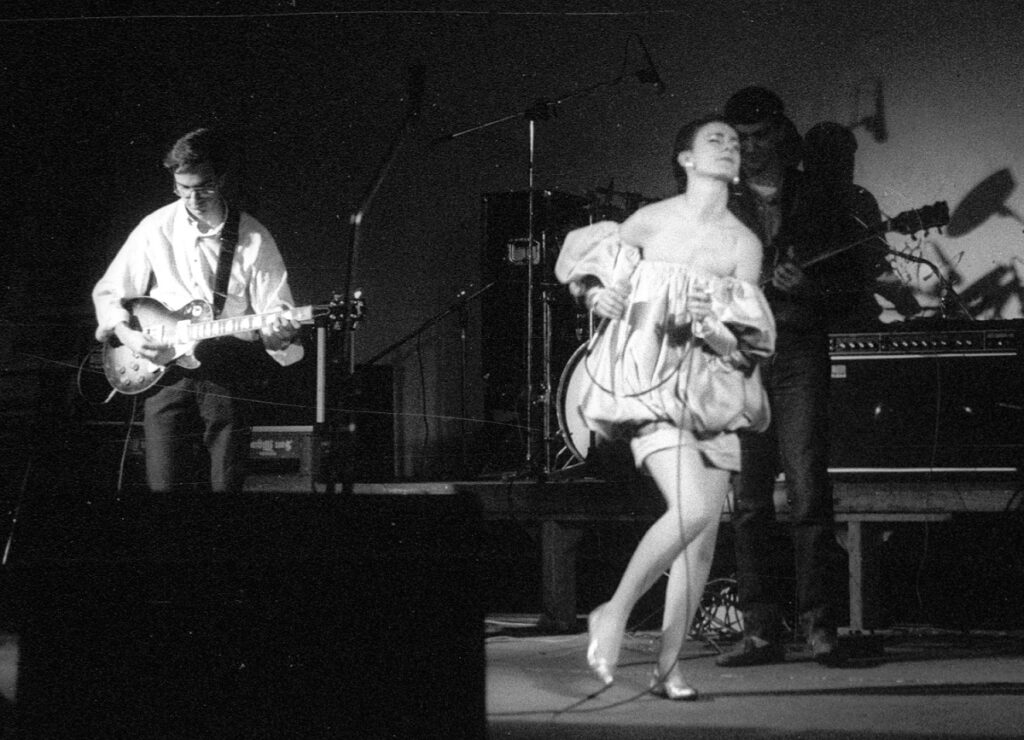
Rafael Gobantes. Art Decade. Pop Rock Days at Jai Alai1987. © Rafael Gobantes
«Huesca in Transit. Sentimental chronicle of a decade»
EXHIBITION ROOM. HUESCA DEPUTATION
C/ Porches de Galicia, 4
Huesca
From September 18 to November 15, 2026