For Katharina Grosse, a painting is simply a screen between the artist and the viewer in which both can observe thought processes from different angles and moments. She usually makes them in situ wherever she exhibits, spraying color directly onto architectures, interiors and landscapes and embracing the events and incidents that arise while she carries them out, seeking to open surfaces and spaces to the greatest possible number of perceptual experiences. Furthermore, by using a gun instead of a brush, it distances the artistic act from the hand and affects the role of the gesture.
Born in Freiberg im Breisgau in the early sixties, Grosse began painting at an early age, attentive to the way in which color and light could be consolidated as derivations of the mind. In his works on canvas from the nineties, he juxtaposed tones of various densities and ranges, repeating vertical and transparent brushstrokes; His next step would be to work directly on the wall, covering hallways and stairs with sublime fields of artificial color. He made his first work using this technique, a monochrome, at the Kunsthalle Bern in Switzerland in 1998, spray painting the upper corner of a room a deep green that he partially extended across two adjacent partitions and up to the ceiling.
In that same period and in the early 2000s, Grosse combined the interlocking veins of earlier works with the cloud-like shapes and mists that the spray gun allowed him to deploy. These specific compositions increased in scale as the artist explored the fluidity and wide reach of the medium: in 2004, at the Museum of Contemporary Art Houston, she sprayed paint on the interior of the gallery, as well as clothing, papers, eggs, and coins scattered on the floor; and in 2005, at the Palais de Tokyo in Paris, he hung two huge canvases on the wall: one already painted and the other blank. He painted the latter in situ, as well as the wall where it hung, and then took down the canvas and rested it against the wall on the floor, leaving a blank rectangle.
In Grosse’s head, there are no distinctions between painting, sculpture and architecture: everything is painting. In addition to working on canvas and found materials, buildings and trees, he has also created large sculptures of polyurethane, expanded polystyrene and molten metal that act as abstract frameworks for his paintings.
In his most recent exhibitions, always planned specifically for the place where they are displayed, he has incorporated painted fabrics that hang from the ceiling and extend to the floor, thus adding new dimensions to his already immersive creations.
Katharina Grosse. Arrels2026. Courtesy of Es Baluard Museu. Photography: Bruno Daureo. © of the work, Katharina Grosse, VEGAP, Illes Balears, 2026
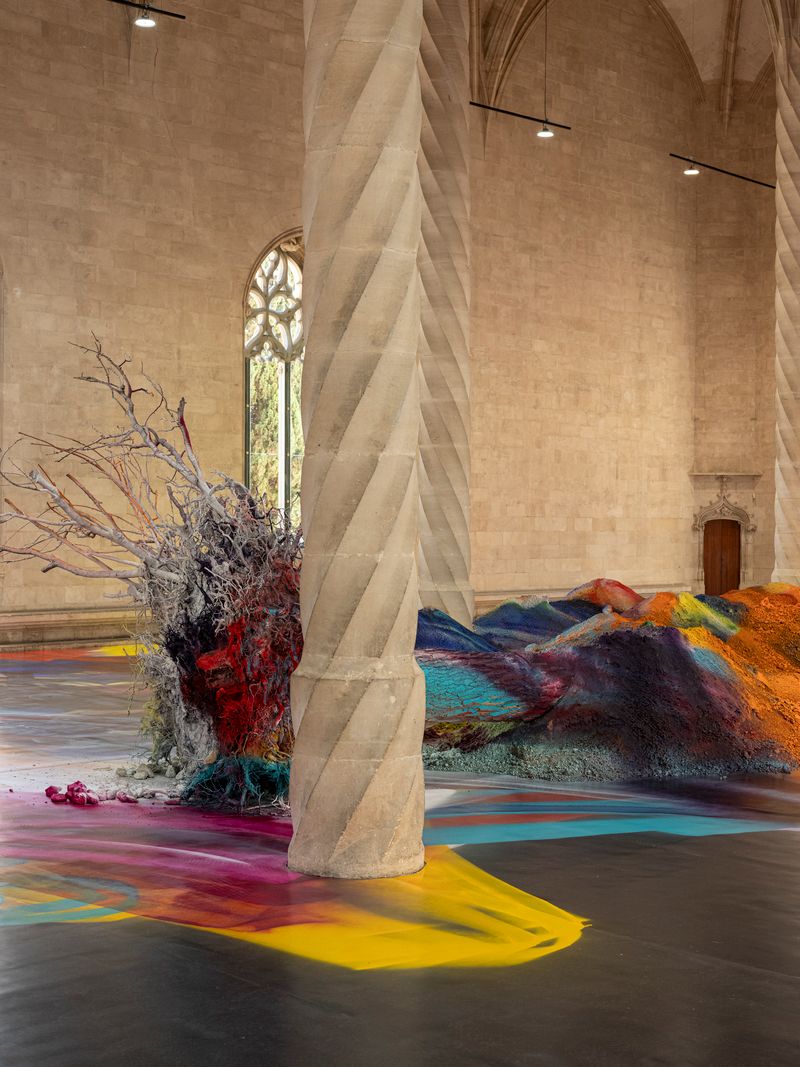
Katharina Grosse. Arrels2026. Courtesy of Es Baluard Museu. Photography: Bruno Daureo. © of the work, Katharina Grosse, VEGAP, Illes Balears, 2026
A Gothic, Balearic, 15th century building is the headquarters of the latest of his experiments: the Llotja de Palma now hosts “Arrels”, a project curated by David Barro, current director of Es Baluard Museu, in which in addition to breaking down the barriers between creative disciplines, those that separate interiors and exteriors, floors and walls, volumes and smooth surfaces are diluted.
To paraphrase Grosse, everything is paint. Since this center, for heritage reasons, cannot be physically intervened, she has decided to turn it into a landscape: she has arranged mounds of earth and a large uprooted, partially buried tree, whose roots, manipulated to extend in space, suggest drama. The whole thing, the earth, the tree and the covered ground, has been painted, so that here nature becomes pigment and the paint becomes a kind of domesticated nature.
Precisely the fact that the Mallorcan Llotja cannot be modified in its structures, and its original function as a place of commercial exchange, permeable and open, allow it to Arrels establishes a particularly different relationship with its architecture from that which can be seen in the white cube of contemporary art museums. For the German, in Mallorca The container and the work are completely one and the same, accessible from all sides. It’s almost like something is inside something inside something. This unfolding is interesting to me. I don’t think I have ever shown it so clearly.
In addition to activating the building from within, and without touching it, his proposal delves into the elements that are the root of the painting itself: color, scale and composition.
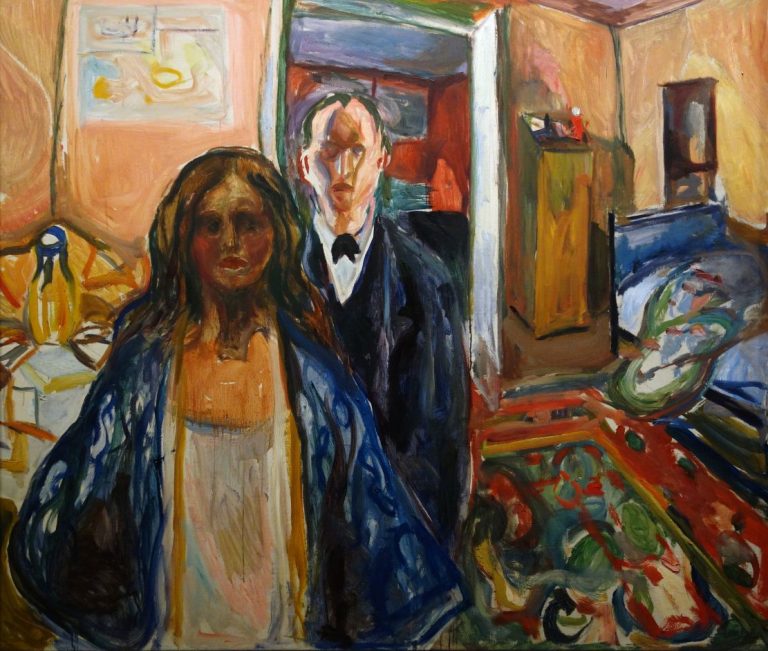
Grosse’s next steps will take her to Oslo: in September, she will inaugurate “Black Bed” at her Munch Museum, a reinterpretation of one of her first important works – Das Bett (2004), in which he spray-painted his bedroom in Düsseldorf – and a compendium of the pieces he has worked on recently, precisely in the Norwegian capital.
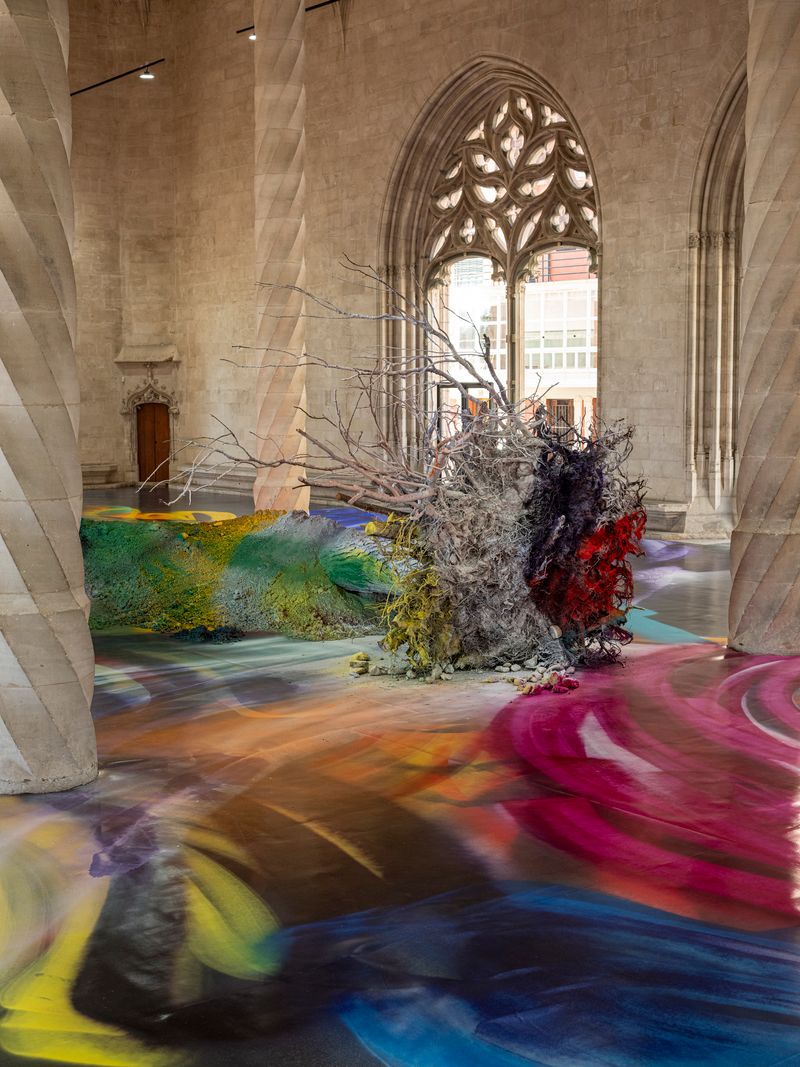
Katharina Grosse. Arrels, 2026. Courtesy of Es Baluard Museu. Photography: Bruno Daureo. © of the work, Katharina Grosse, VEGAP, Illes Balears, 2026
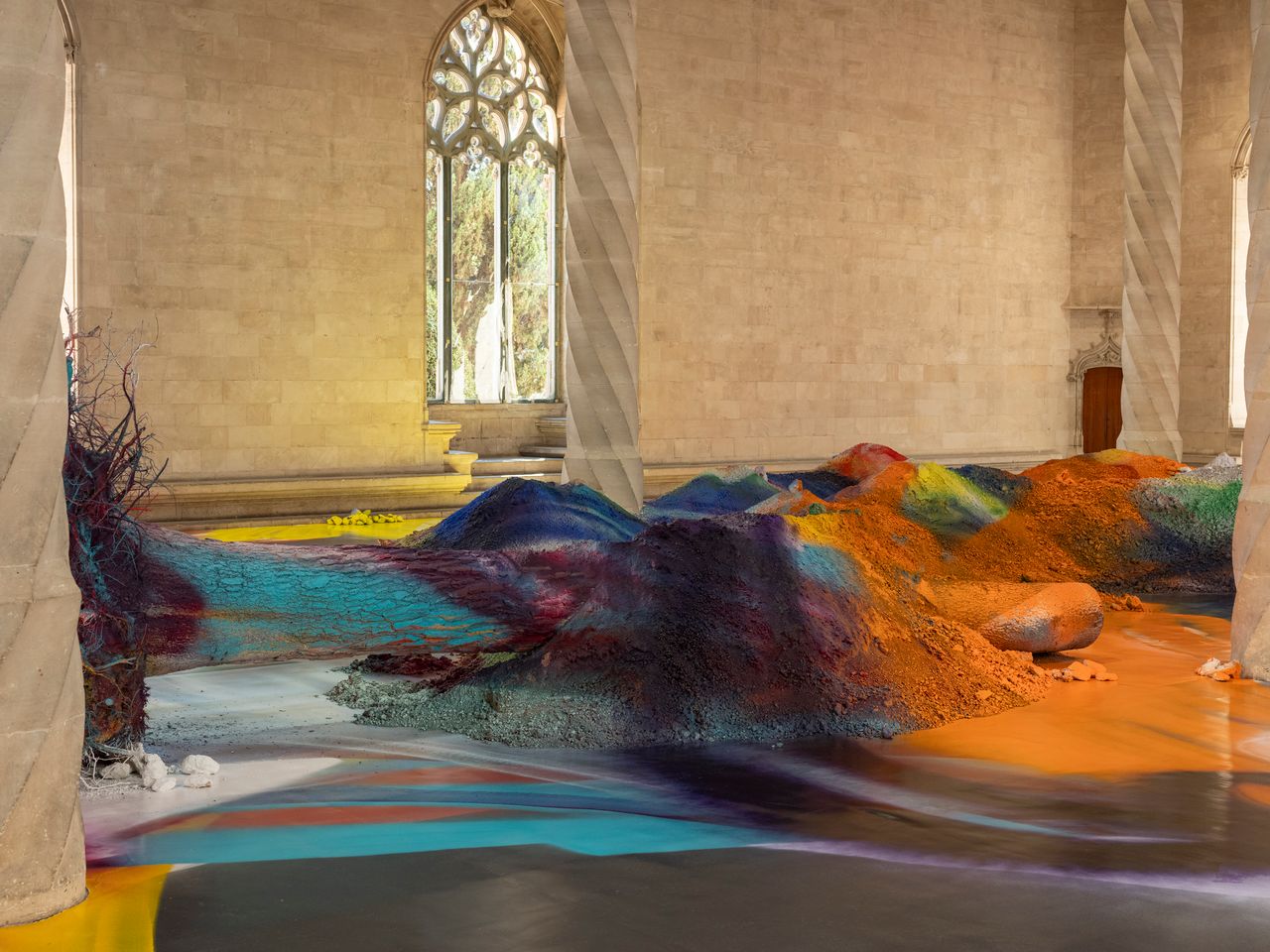
Katharina Grosse. Arrels2026. Courtesy of Es Baluard Museu. Photography: Bruno Daureo. © of the work, Katharina Grosse, VEGAP, Illes Balears, 2026
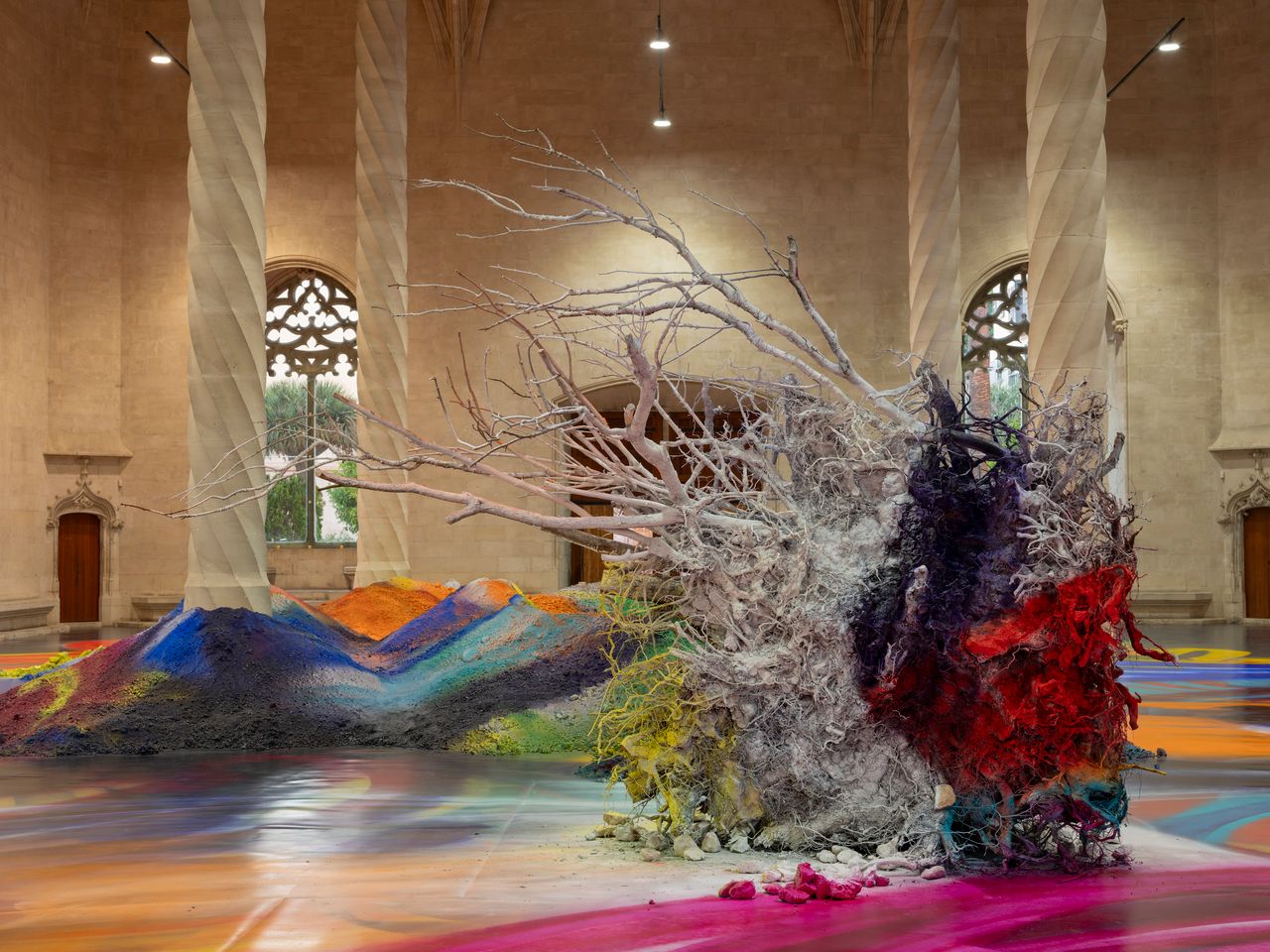
Katharina Grosse. Arrels2026. Courtesy of Es Baluard Museu. Photography: Bruno Daureo. © of the work, Katharina Grosse, VEGAP, Illes Balears, 2026
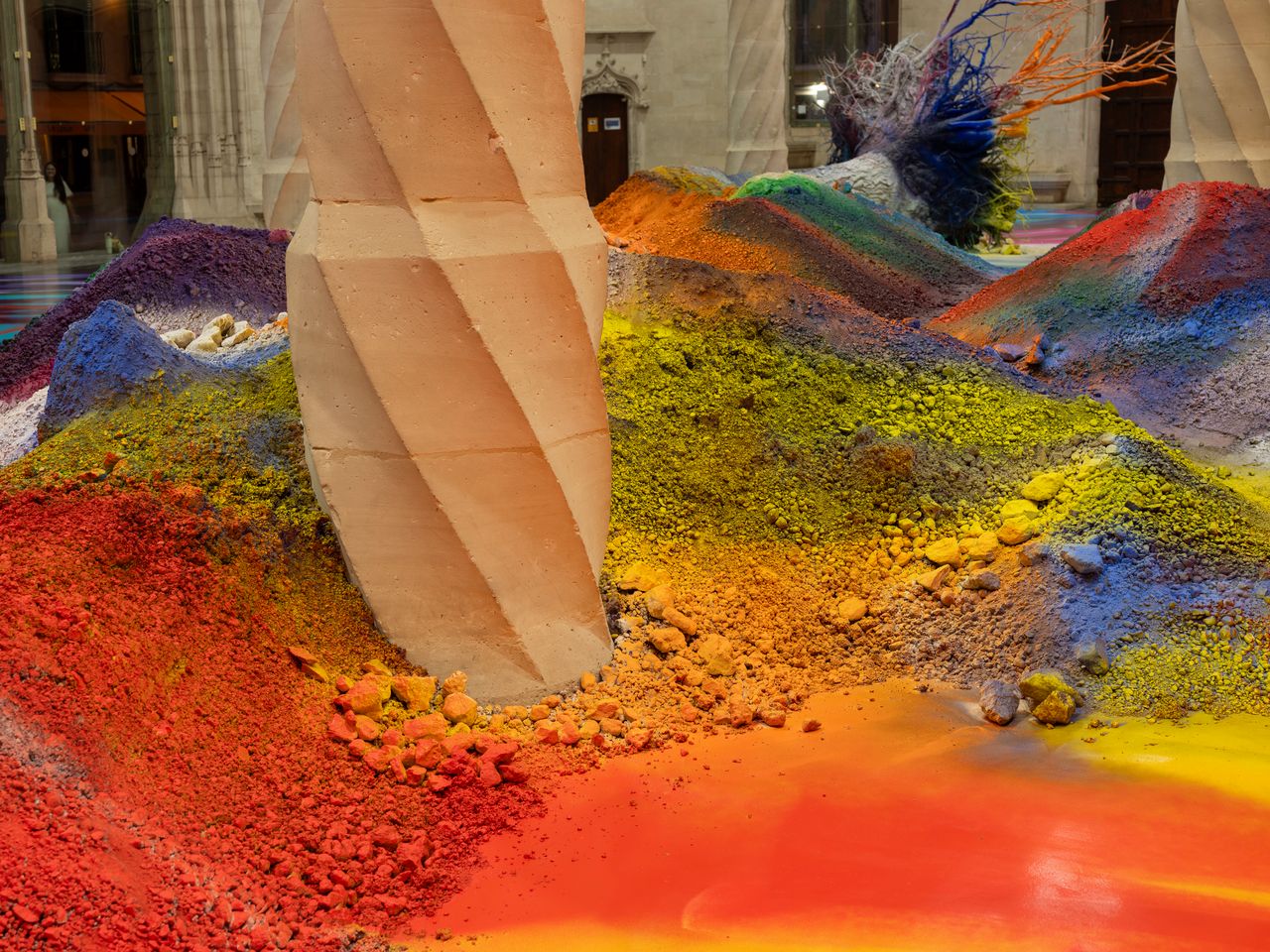
Katharina Grosse. Arrels2026. Courtesy of Es Baluard Museu. Photography: Bruno Daureo. © of the work, Katharina Grosse, VEGAP, Illes Balears, 2026
Katharina Grosse. «Arrels»
THE LLOTJA
Plaça de la Llotja, 5
Palm
From May 28, 2026 to January 31, 2027