New York,
He was born in Urbino as Raffaello di Giovanni Santi, in 1483, and soon left the Marches in search of patrons in Umbria and Tuscany. He was enshrined in the stronghold of Florence and, in the last decade of his short life, became the papacy’s favorite artist in Rome, where he was hailed as prince of painters. Very skilled at making his many virtues known to those who could claim them, Rafael did not work alone, but with well-organized teams of assistants and collaborators from whom an entire generation of no less than minor artists would emerge. For them, and for many later, he was a role model late in the 16th century.
On March 29, the Metropolitan Museum in New York will open to the public the first major exhibition in the United States that will review the meteoric career of this master, featuring drawings, paintings, engravings and tapestries that will attest to the creative audacity demonstrated by an author who did not reach the age of forty in the context of the vibrant Italian Cinquecento. Also about what is literary about his work: Rafael belonged to a family of poets and painters, he became a close friend of literary figures and ventured into composing sonnets; We must not forget that, at this time, painting and poetry were considered sister arts and intrinsically linked. The evident elegance of his compositions evokes for many the old aphorism, much debated in his time, that painting is silent poetry, and poetry is blind painting.
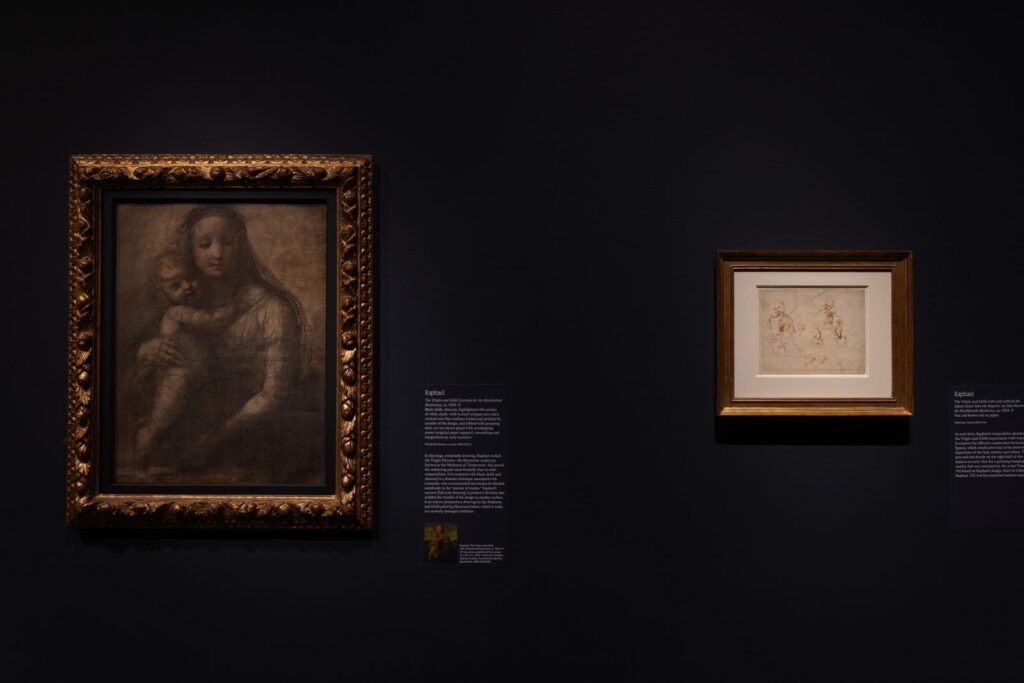
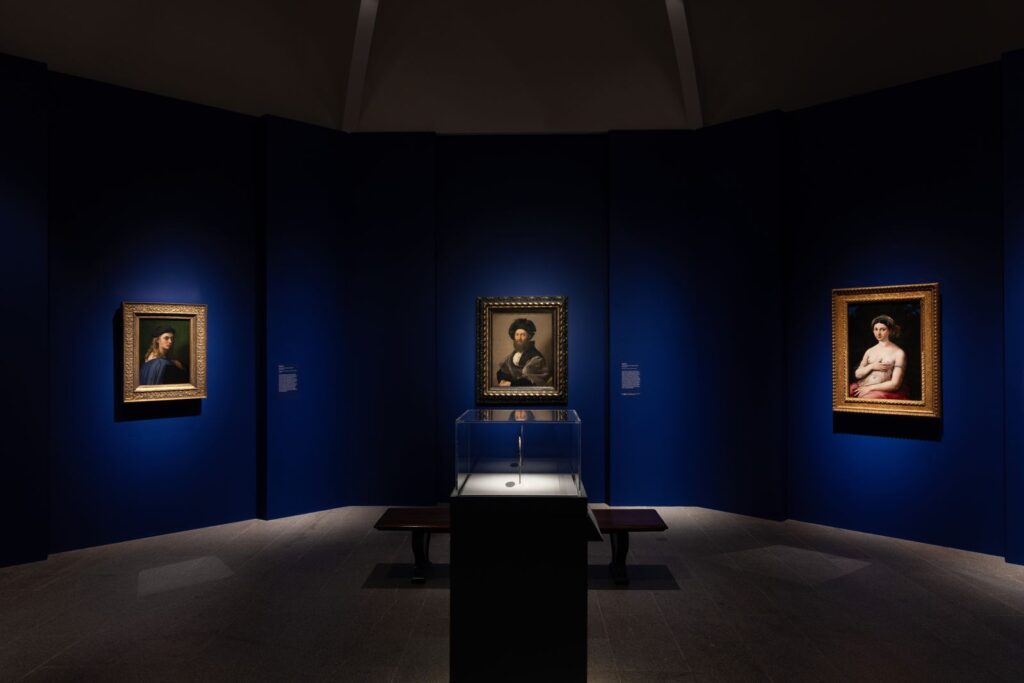
It will feature this exhibition, which the MET has spent the last seven years, with rarely collected loans, including that of the Madonna Albafrom the National Gallery in Washington and an emblem of classical harmony, which can be seen together with his preparatory sketches from Lille; or that of Portrait of Baldassarre Castiglione of the Louvre, perhaps one of the best of the High Renaissance. His paintings – he was also an architect – combined compositional ambition and lyricism, emotion and intellectual depth: a degree of complexity and beauty that has rarely occurred outside the courts of that time.
The exhibition will take place in chronological order, but will have thematic sections focused on the development of his ideas and images and will focus on recent scientific discoveries. By showing us drawings along with canvases and works in other media, he will also demonstrate the prodigious versatility of the man from Urbino in his creative processes.
A virtuoso narrator, he achieved a very high degree of finesse in the representation of women, both in his sacred and profane images, and in his vision of Venus and Virgins it is not daring to think that he could have received influences from the humanist court of his native town, born under the impulse of Federico III da Montefeltro, to whom his father, Giovanni Santi, dedicated a poem when the painter was a child.
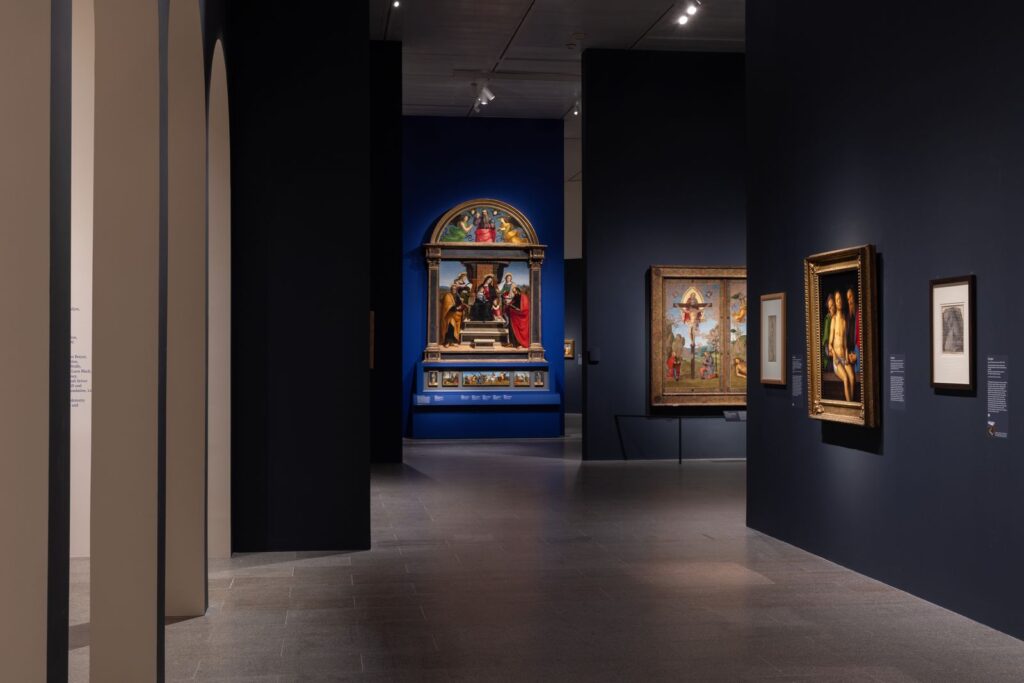
It was Santi who soon took his son to learn alongside Pietro Perugino, an artist whom he probably knew from local projects. His elegant figures, his impressive mastery of technique and his efficient methods for reproducing designs left an indelible mark on the young, studious and disciplined Raphael. In New York you can see projects that both carried out for brotherhoods, including what is considered the first painting made entirely by our author, after a recent restoration.
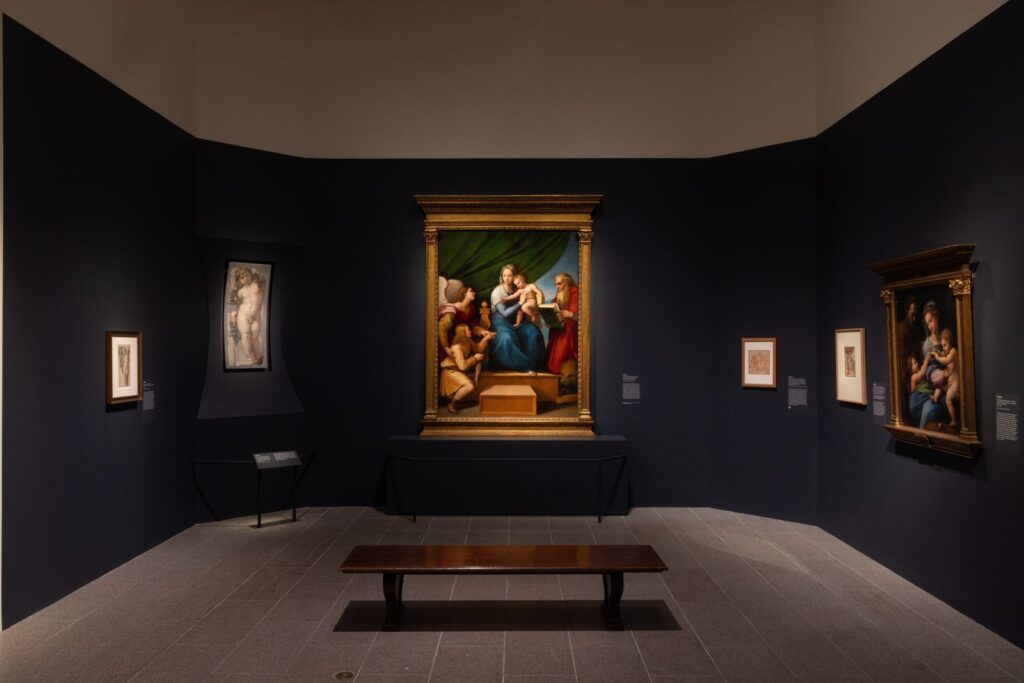
The exhibition will then analyze the period between 1500 and 1507, when the young Raphael strove to attract patrons by painting both monumental altarpieces and small-format devotional works. A notable example is the great Colonna altarpiece, for a congregation of nuns from Perugia. It meets here in its entirety for the first time since it was dismembered, around 1663.
We will also see full-scale drawings for an altarpiece in the Oddi family chapel, also in Perugia: they reveal the workshop practices that Raphael had absorbed during his training and collaboration with Perugino. He used black chalk, pen and ink, and a metal tip on paper.
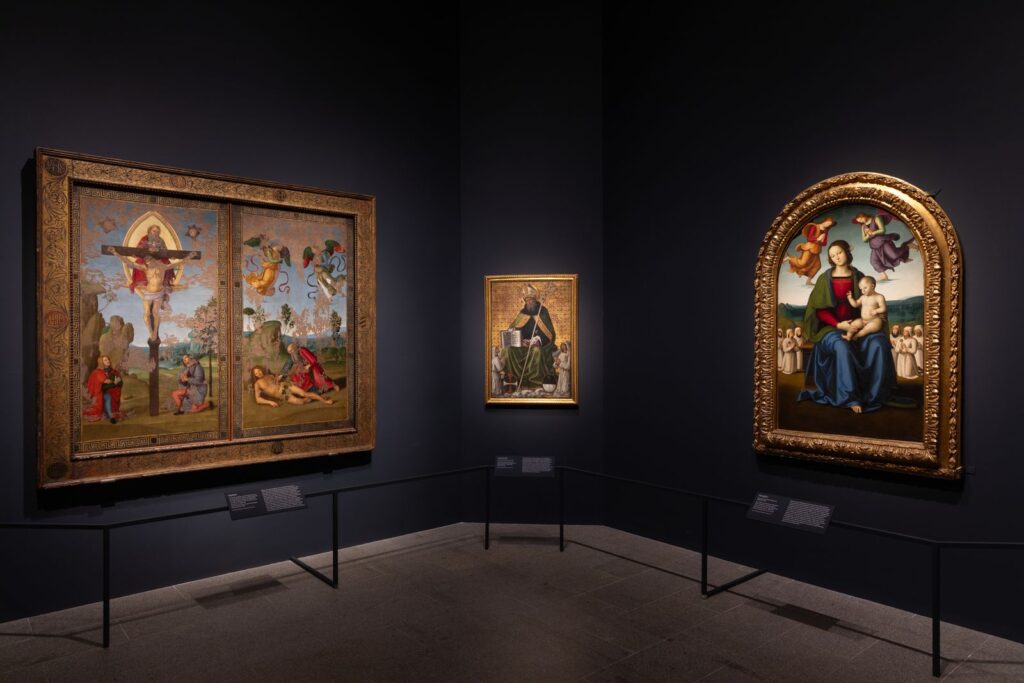
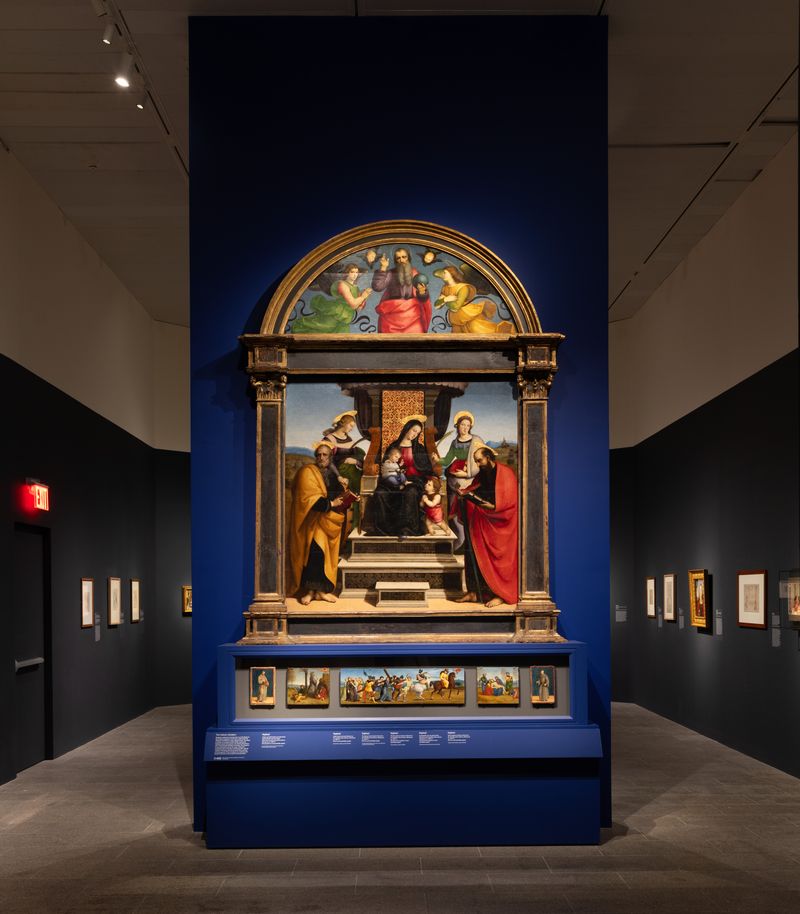
It is possible that Raphael was attracted to Florence after hearing other painters praise the full-scale drawings (sketches) of Leonardo and Michelangelo, which would be his competition. He studied the compositions of both and it was at that time that in his works he developed a treatment of space, a sculptural monumentality and an unparalleled expressive force, also the result of many hours of experimentation on paper and with clay or wax.
But he also managed to convey an innocent tenderness that was very difficult to replicate in his paintings of the Virgin and Child, maintaining a superior command of anatomical realism. These were years prone to the humanization of religious themes: the attractiveness of delicate Virgins with the Child as votive figures was favored.
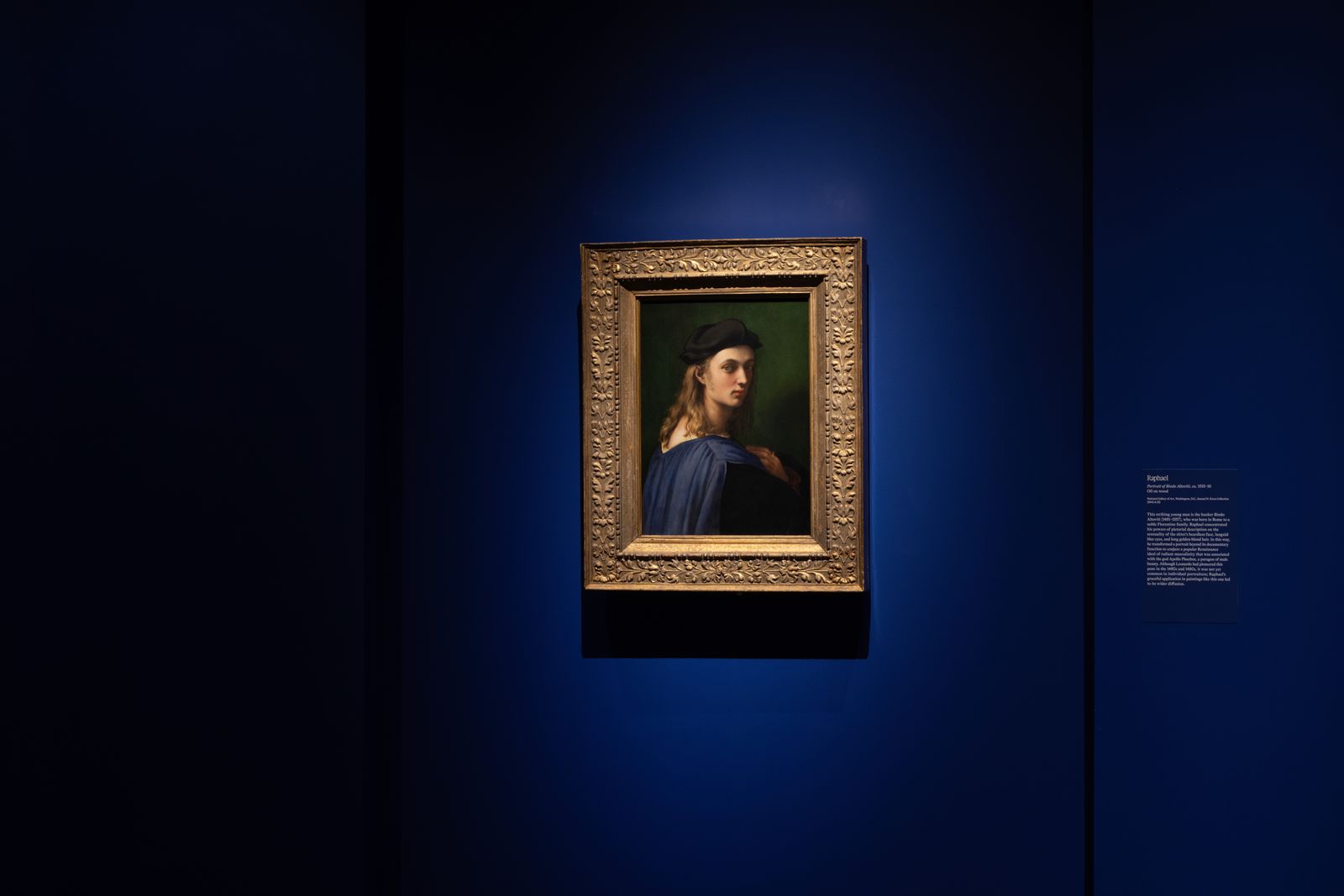
He was no stranger to the convention, praised by poets both inside and outside his circle, of presenting Mary as an elegant, aristocratic lady with soft facial features and blonde hair, but he also strove to achieve deep-rooted Christian ideals. He infused his performances with humanity and psychological presence through gestures and reactions, and acquired an astonishing mastery of light, color, space and geometry. His portraits communicate a deep empathy and reflect years of practice in drawing to achieve an intimate and attentive contemplation of the sitter.
The elegance of the poses of his models also suggests the purpose of capturing the refined manners of the Italian Renaissance courts and the ideals of beauty celebrated by poets. Raphael was a close friend of the aforementioned Baldassarre Castiglione, whose manual on elegant behavior at court promoted a model of conduct and grace that valued sprezzaturaa studied nonchalance or indifference.
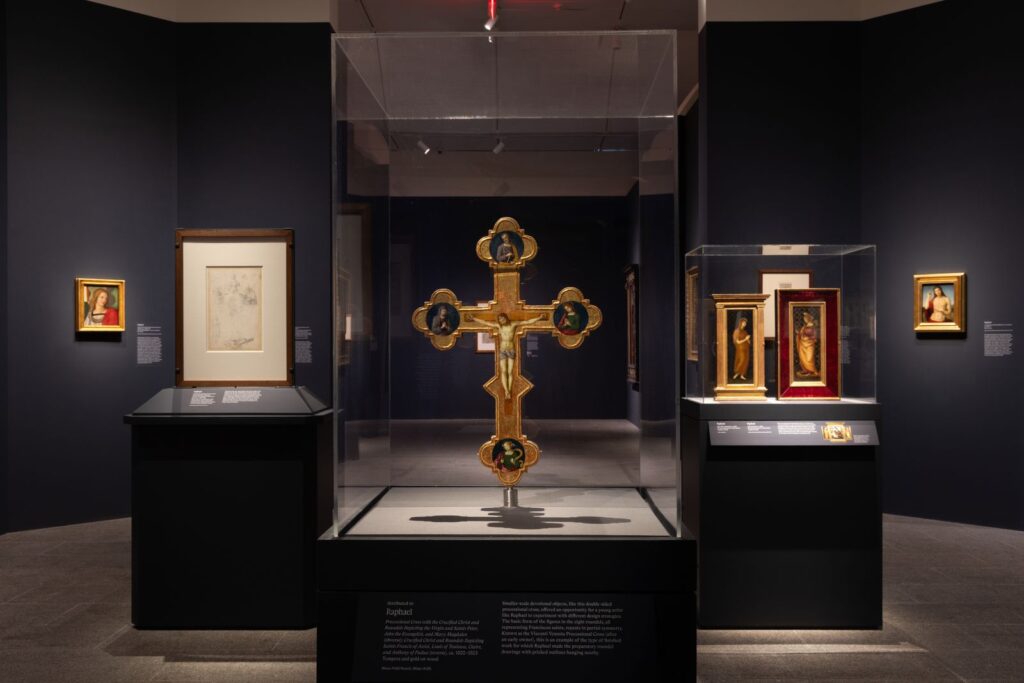
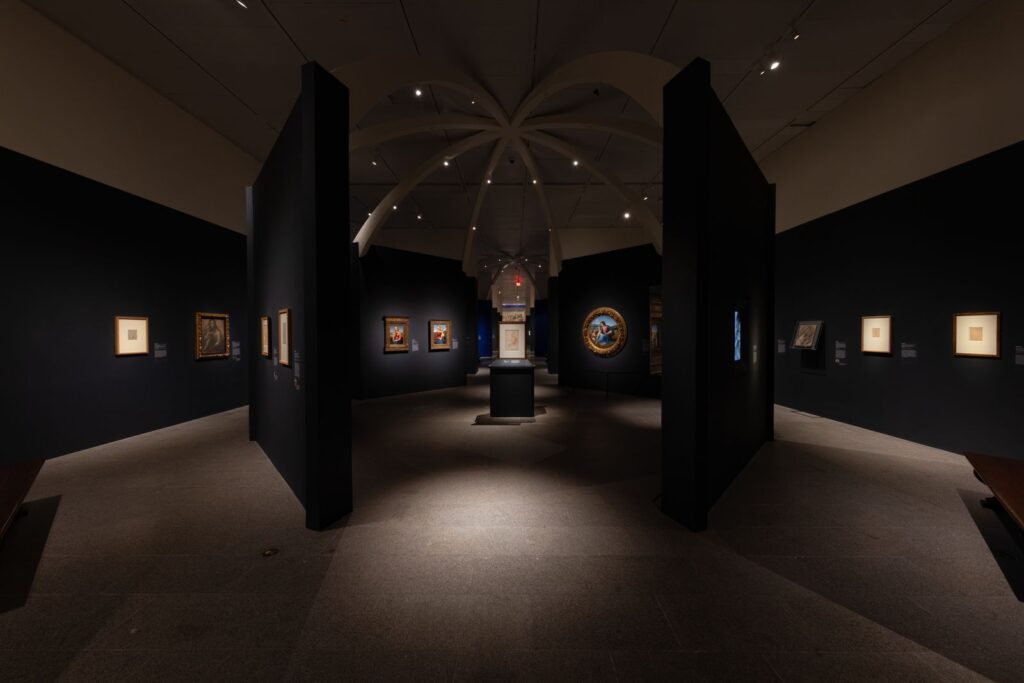
Already in 1508 he arrived in Rome, where he would become the favorite court artist of Popes Julius II and Leo
The exhibition will bring together his studies to The School of Athenswith its meeting of philosophers, and for the Quarrelwhich represents Catholic theology; These works show an artist in full command of the expressive potential of drawing techniques. Also rehearsals for his monumental works in the Eliodoro Room or the Constantine Room and eloquent final works, whose chiaroscuros refer to Leonardo and whose looks, poses and gestures, loaded with expressiveness, seem to communicate a sensation of imminent drama.
Rafael and his workshop completed an astonishing number of large-scale projects in his last six years. Such executive assistance allowed the artist to focus his creative energy on inventing new designs and exploring alternative forms. He rarely interrupted his projects for the popes to attend to other commissions, but he made an exception for Agostino Chigi, in works where he displayed contorted poses and powerful muscles, for many precursors of mannerism.
In 1517, Raphael purchased the Caprini Palace, depicted in two works here. There he lived his last years in Rome, almost being its king.
“Raphael: Sublime Poetry”
METROPOLITAN MUSEUM OF ART
1000 Fifth Avenue
New York
From March 29 to June 28, 2026