Madrid,
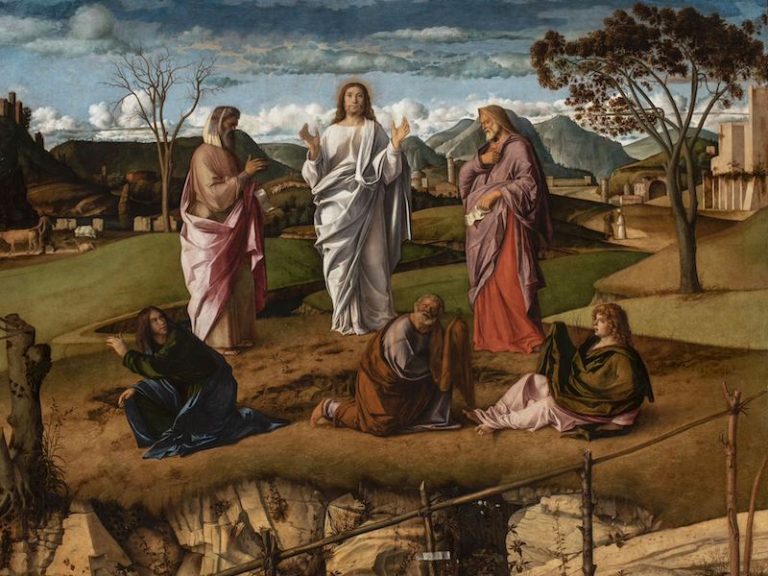
Meros decorated and scenarios until the last bars of the Middle Ages, was at the end of that period, and especially in the Renaissance, when the landscapes (and with them the gardens) began to reach prominence by themselves in the artistic representations, to a large extent following the consideration of nature as a divine work.
The domestication of that by the human hand, embodied in those vergeles, would gradually gain weight in the Baroque and the rococó and hatching in the romantic stage, where the characteristics of its vegetation (and of their heavens) would be related to the subjectivity of moods. They proliferated in the fabrics of the impressionists, who imbricated them in everyday activity, and at the forefront they were subjected to rupture with the realistic canons and were disfigured.
After 1945 they have not lived their moment of splendor as a creative theme, but they have not ceased to be present in the compositions of authors who claim our vital relationship with the natural environment and the need to preserve it, but also in those of those who find in the plants a source of formal inspiration of the first order, attracted by their purity or exuberance.
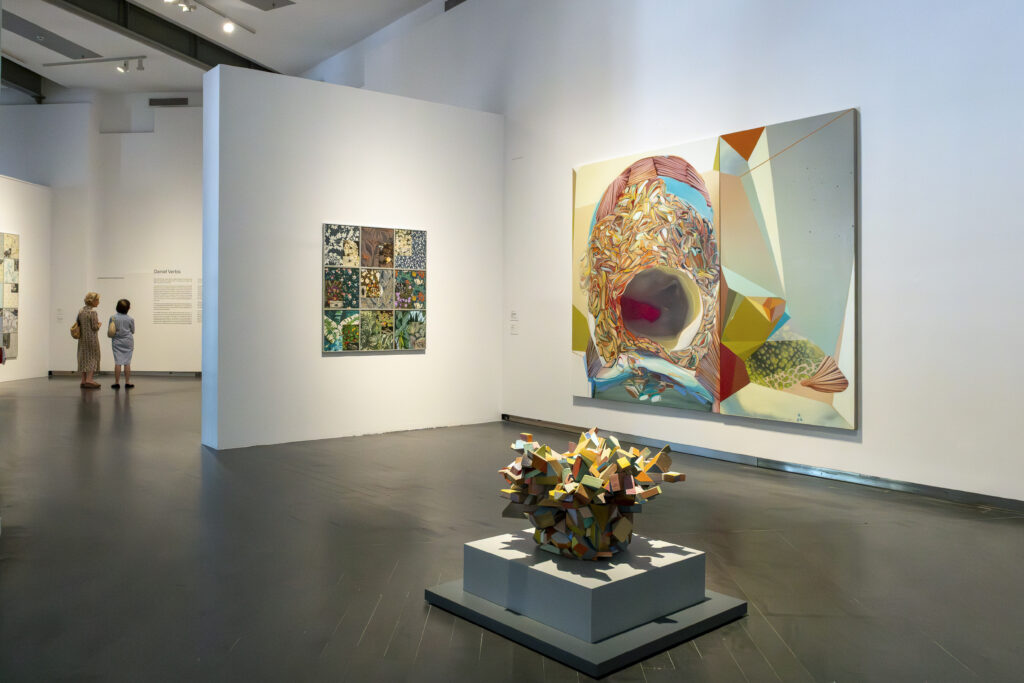
Three of them are part of one of the current collective samples in CentroCentro, under the commissioner of Lola Durán Úcar. “Eternal moment in the garden” gathers proposals in very diverse techniques (painting, sculpture, drawing, collage, video, facilities and poetry) by Cristina Almodóvar, Chus García-Francoile and Daniel Verbis; The three have set the gardens as spaces for contemplation and pleasure, protection or desire, and have been addressed according to their obviously sensory dimensions, but also symbolic. They have resorted to paused and intimate observation, but also to the technological approach to the earth.
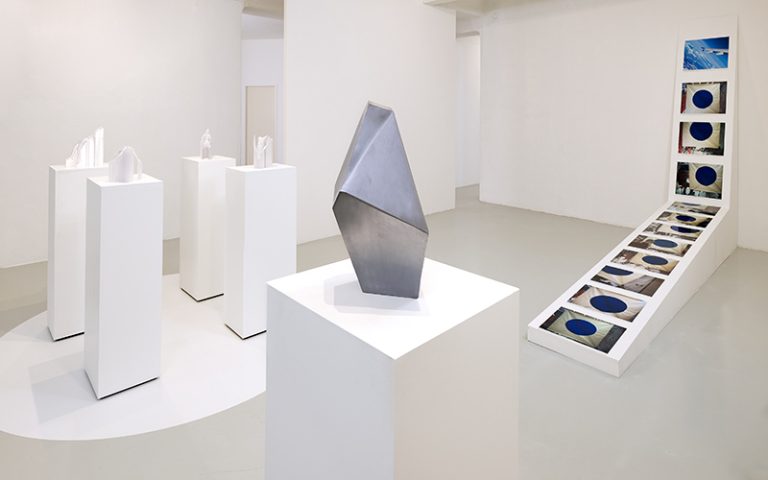
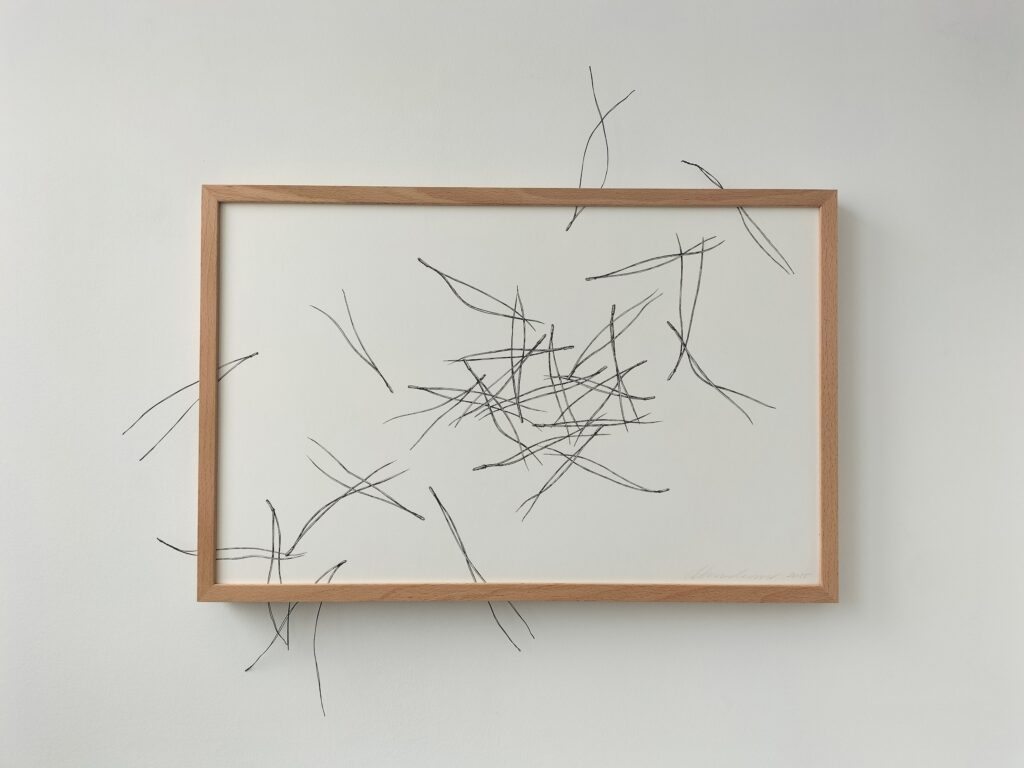
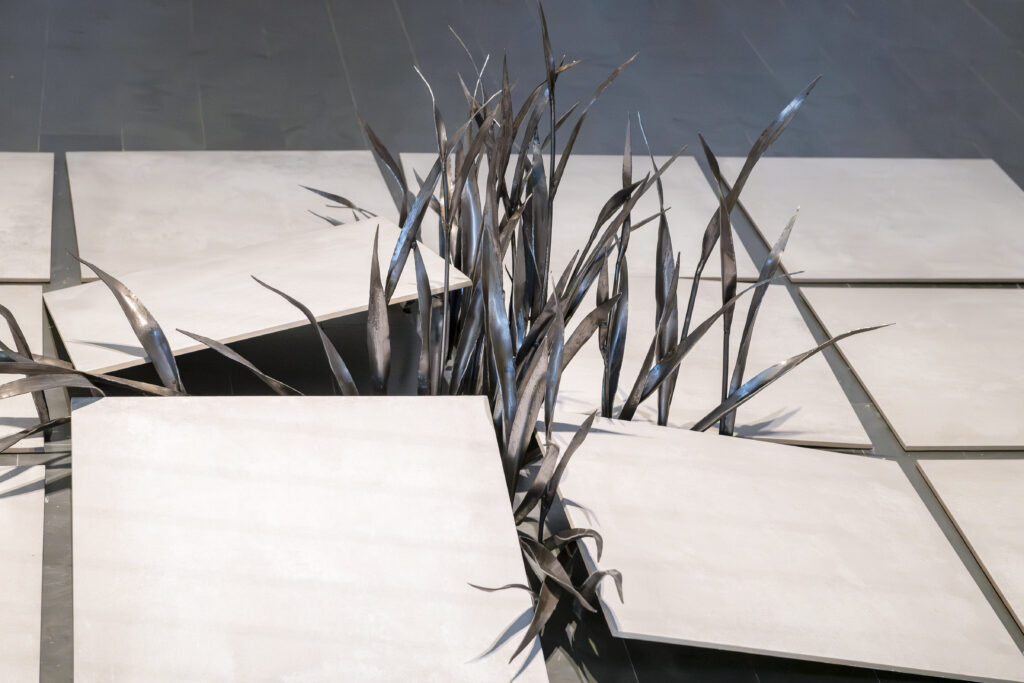
The production of Cristina Almodóvar has always had nature and vegetation as an axis, remaining attentive to its continuous changes: the movement of the leaves thanks to time or wind, the matter in the soil and its displacements.
Discover in that logic of the natural, in which form and function do not admit possible separation, a form of beauty linked to the maintenance of balance, and the latter is what tries to capture in multiple media: sculpture, expanded drawing, installation. It uses natural elements, such as sand, and some that are not (metal), and gives its pieces an organic and fluid appearance that necessarily invites contemplation without hurry.
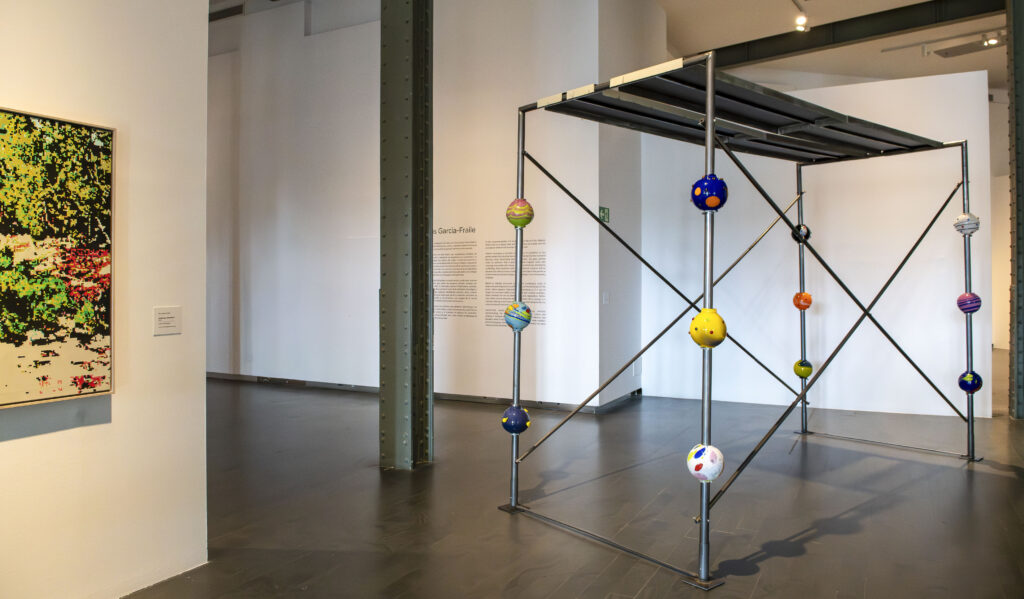
Chus García-Franco offers visual translations of the excesses of our consumerism and our concern to achieve the greatest well-being, so that in their work nature is associated and contrasted to the constructed, and technology, to the memory of the landscape. With one and another, it designs seemingly cold, but protective structures, and pictorial scenes in which the plant seems to refer to the reproducible.
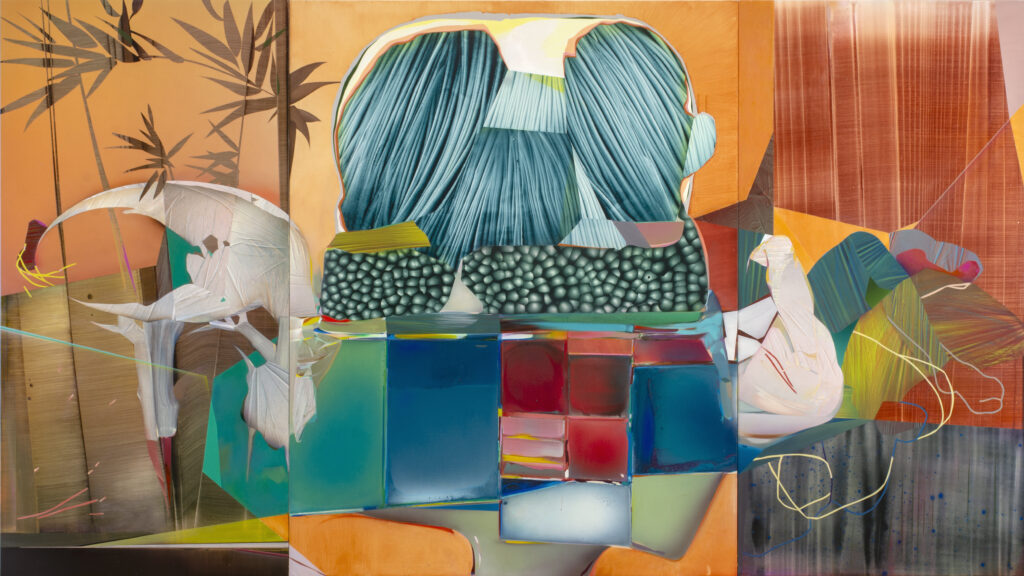
As for verbis, he exposes in Madrid paintings at an intimate and overwhelming time in which the botanist converges with the erotic. Its gardens are not born from the observation of the environment and the recreation of mental spaces, and host echoes, personal and contemporary, of the Delight garden of El Bosco.
For this Leonese author, Vergeles can be an ideal territory to express not already natural complexity, but the human and their drives; Maybe the only one where sullen makes sense.
From this month of September, both the artists and the curator will carry out guided tours.
“Eternal moment in the garden”
Centrocentro. CIBELES PALACE
CIBELES SQUARE, 1
Madrid
From July 10 to November 16, 2025