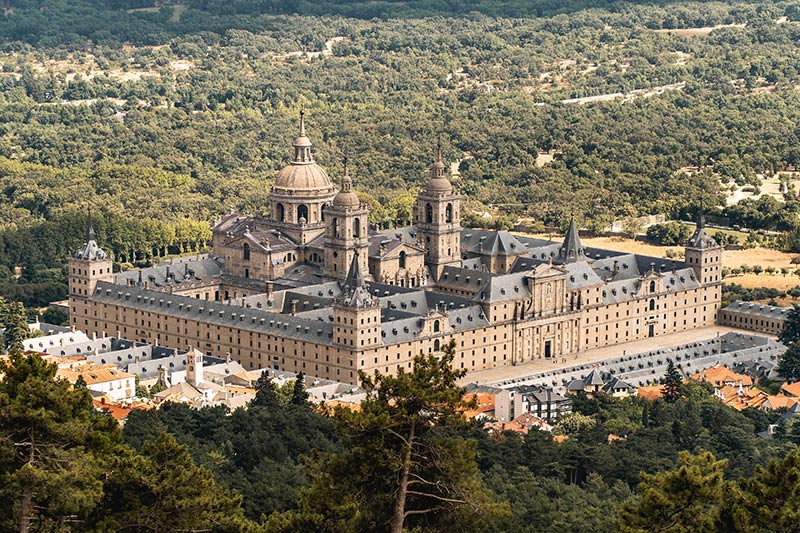
Closed to the public for ten years, the Painting and Architecture Museums of the royal monastery of San Lorenzo de El Escorial near Madrid have just reopened after a complete overhaul of their itinerary. Since Friday October 2, the public is expected to discover a completely reinvented journey punctuated with new works. To mark the event, entry is free until December 31, 2026.
More than 3 million euros have been invested in redesigning the route of the two museums, financed largely by European funds from the NextGenerationEU program, as part of the Spanish government’s Recovery, Transformation and Resilience Plan.
Built in 1963 in the main building of the monastery of the royal complex of the Escorial, built from 1563 under the reign of Philip II, the museum installations and their museography had become aging. In 2016, Patrimonio Nacional, a public body responsible for the management and conservation of Crown property – and therefore, the Escorial collections – decided to close them in order to design a new route articulated with a more relevant museum purpose. Several years were necessary to define the project, which were also used to restore a third of the works in the collection, before work began in 2025 only.
“Architecture and painting were a personal passion of Philip II throughout his life (….) they are essential to understanding the cultural and political importance of the king and the monastery itself”declared Ana de la Cueva, during the inauguration of the museums. The president of Patrimonio Nacional thus wanted to demonstrate the merits of the new museum proposal, conceived at the cost of a decade of closure. The Painting Museum takes the visitor from monarch to monarch through their respective collections and commissions. A way of exploring the evolution of pictorial trends over the centuries, in a rather unusual way, and of refocusing the museum’s purpose towards the history of its creation.
As for the Architecture Museum, its new route also returns to the origins of the royal complex, retracing the construction of the Escorial. Models, engravings, tools and audiovisual media reconstruct the history of this architectural project, one of the most ambitious of the modern era, designed by architects Juan Bautista de Toledo and Juan de Herrera and completed in around twenty years.
The Painting Museum presents a selection of paintings ranging from Philip II to Elizabeth II, bringing together the Italian, Flemish and Spanish schools represented by their greatest masters, such as Titian, Tintoretto, Veronese or Ribera. Highest point of the route, the monumental Calvary by Rogier van der Weyden, painted between 1457 and 1464 and offered by the artist to the charterhouse of Scheut, near Brussels, before entering the collections of Philip II. 21 works never exhibited before, including two paintings by Federico Zuccaro which had been created for the major altarpiece of the basilica and refused by King Philip II, also appear in the exhibition, made up of around a hundred paintings.