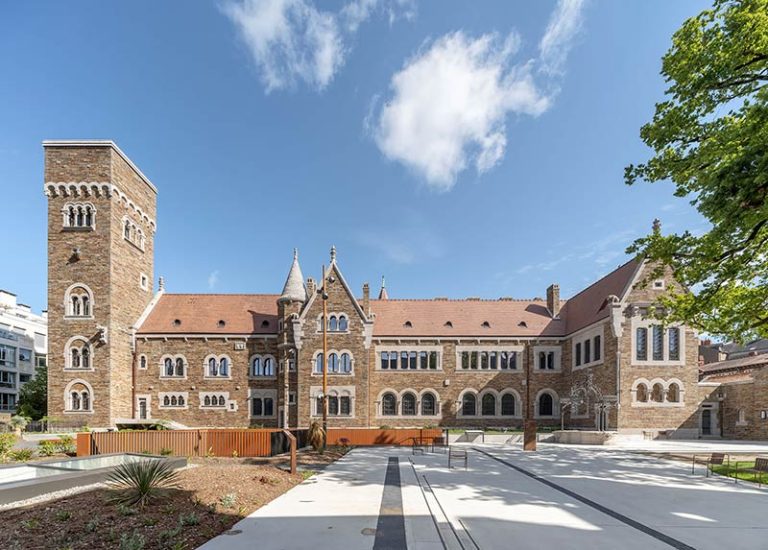
Nearly 190,000 visitors have passed through the doors of the Bonnat-Helleu Museum in Bayonne since its reopening on November 27, 2025, after fourteen years of closure. Announced a few days before its first anniversary, this result greatly exceeds the initial forecasts of 60,000 visitors in 2026 and 40,000 at cruising speed. It also represents more than seven times the attendance of 2010, (25,000) the last full year before closure.
With 190,000 entries for the 330,000 inhabitants of the Basque Country agglomeration community, the Bonnat-Helleu Museum displays a ratio of 0.58 entries per inhabitant. A level close to the Nantes Museum of Arts, which welcomed 402,000 visitors during the first twelve months following its reopening in 2017 (0.62), and the Musée des Confluences in Lyon (0.61). It remains slightly lower than that of the Goya Museum in Castres, reopened in 2023 (0.82), and the Musée de la Romanité in Nîmes, which received 222,000 visitors in 2019, its first full calendar year (0.85).
This ratio is well below the Louvre-Lens, with 900,000 visitors in the first year in 2013 (3.70 admissions per inhabitant), and the Center Pompidou-Metz, with 840,000 visitors in 2011 (3.76), but these two establishments benefited from the power of the international “brands” that are the Louvre and the Center Pompidou and from incomparable communications campaigns.
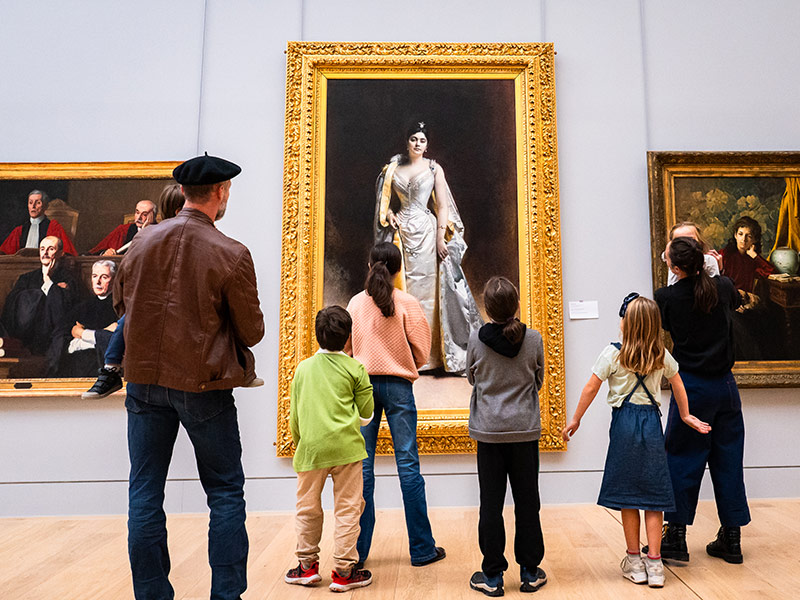
View of room 17 of the Bonnat-Helleu Museum.
© Alexandra Vaquero
The museum specifies that 29% of its visitors come from Bayonne, Anglet and Biarritz, and 8% from abroad. The “Mythologies” exhibition, organized in partnership with the Louvre and with the collaboration of the Musée du quai Branly, attracted nearly 70,000 people, after a reopening marked by the discovery of the new permanent route and its some 1,000 works.
It remains to measure the extent of the inevitable decline after the reopening effect. In Nantes, attendance fell by 8% between 2018 and 2019; at the Center Pompidou-Metz, by 13% between 2011 (the museum opened in May 2010) and 2012, as well as at the Confluences between 2015 and 2016. Other examples show more pronounced declines: the Musée de la Romanité welcomed 137,514 visitors in 2022, or 38% less than in 2019; that of the Beaux-Arts in Dijon received 262,654 in 2022, compared to 315,592 during the eight months alone following its reopening in 2019. These two comparisons remain affected by the Covid years. These projections place attendance in 2027 for the museum directed by Barthélemy Etchegoyen Glama, around 100,000 – 120,000 visitors as The Arts Journal suggested it.
Scheduling will be a determining factor. In spring 2027, the “Baigneuses” exhibition, labeled of national interest, will bring together three masterpieces by Ingres, including The Valpinçon Bather And The Turkish Bathexceptionally loaned by the Louvre. The centenary of the death of Paul Helleu will give rise, from October 20, 2027, to a retrospective organized with Les Franciscaines de Deauville.
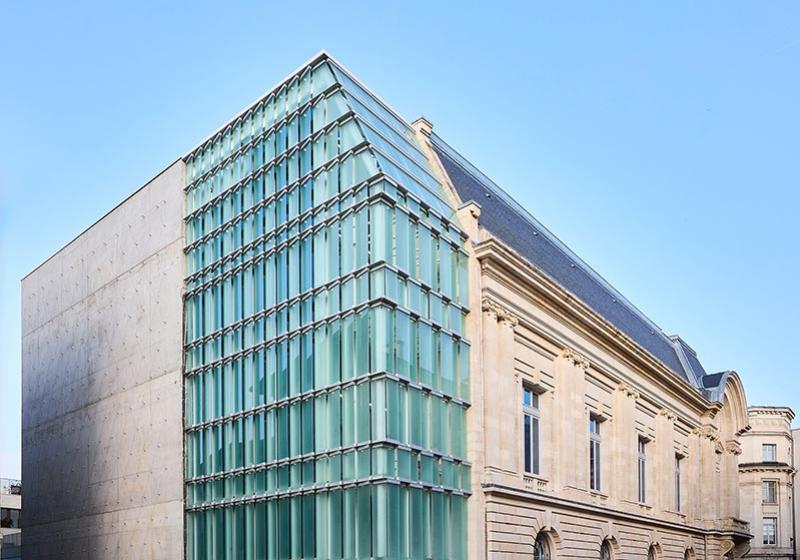
The new extension of the Bonnat-Helleu Museum in Bayonne.
© Bonnat-Helleu Museum / Alexandra Vaquero