Emblem
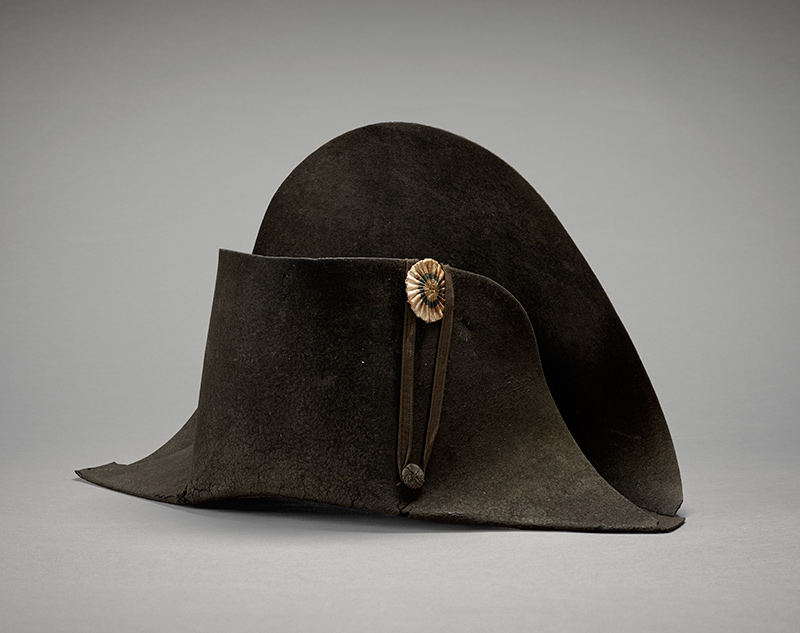
More than any other accessory, the bicorne is the supreme emblem of Napoleon I (1769-1821). Although this hat has been used by the military since the Revolution, it became the signature of the Emperor who completely changed the way it was worn, by positioning the horns on the sides. Napoleon I’s bicorns are provided by Maison Poupard. They are made of beaver felt, and have a small tricolor cockade, a black braid and a quilted silk taffeta lining.
Miracle
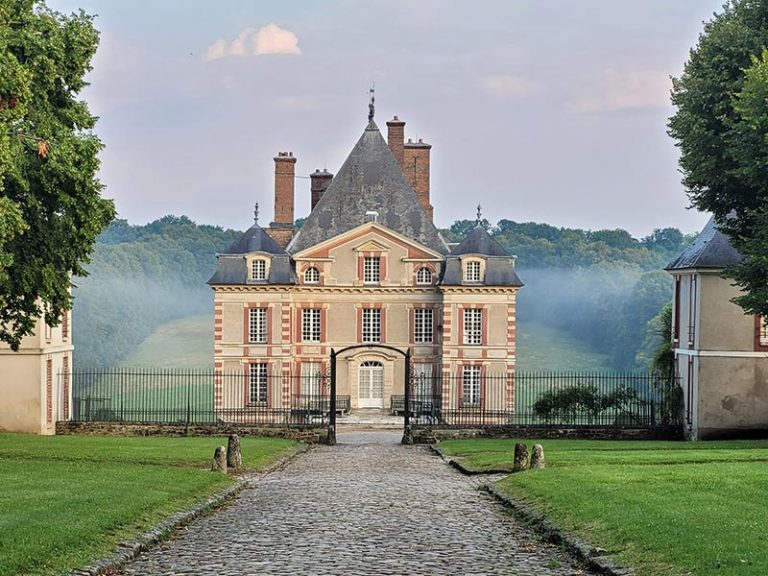
These material characteristics made it possible to confirm the authenticity of this extremely rare imperial relic. It is in fact one of the last headdresses worn by the Emperor during his exile. It was frequently worn in view of the traces of wear and perspiration that it retained. Never restored, published or studied, the hat has been miraculously preserved in its original state in the reserves of the Condé Museum at the Château de Chantilly since its entry into the collection in 1904 at the end of a long journey.
Will
This bicorne was part of the imperial wardrobe during the Hundred Days and then accompanied Napoleon I during his exile on the island of Saint Helena. Ill and feeling his end approaching, the fallen Emperor wrote his will. Aware of the memorial weight of such relics, he decided to give the majority of his uniforms and headgear to his only son, the King of Rome. He also designates the latter as the heir to imperial memory. However, these objects will never reach his son.
Succession
On the death of Napoleon I, Louis-Joseph Marchand, his faithful valet, undertook to return the relics to l’Aiglon, but the Austrian authorities prevented any contact with the prince. The premature death of the latter in 1832 reshuffled the cards and the cocked hat was integrated into the imperial succession. It was Napoleon’s sister, the former Queen of Naples, Caroline Murat (1782-1839) who ultimately inherited it. The hat is unveiled this summer in an exhibition dedicated to this key figure of the Empire.
Journey
Caroline Murat subsequently gave it to her former administrator, Louis-Frédéric Bourgeois de Mercey, and the hat was passed down in the latter’s family until one of her descendants offered it to the painter Jean-Léon Gérôme (1824-1904). The artist, aware of the historical value of this relic, included it in his legacy to the Institute, causing lively debates among the academicians. After a close vote, the object was accepted and joined the collections of the Musée Condé, but was never exhibited and relegated to reserve from 1904 to this day.