Paris,
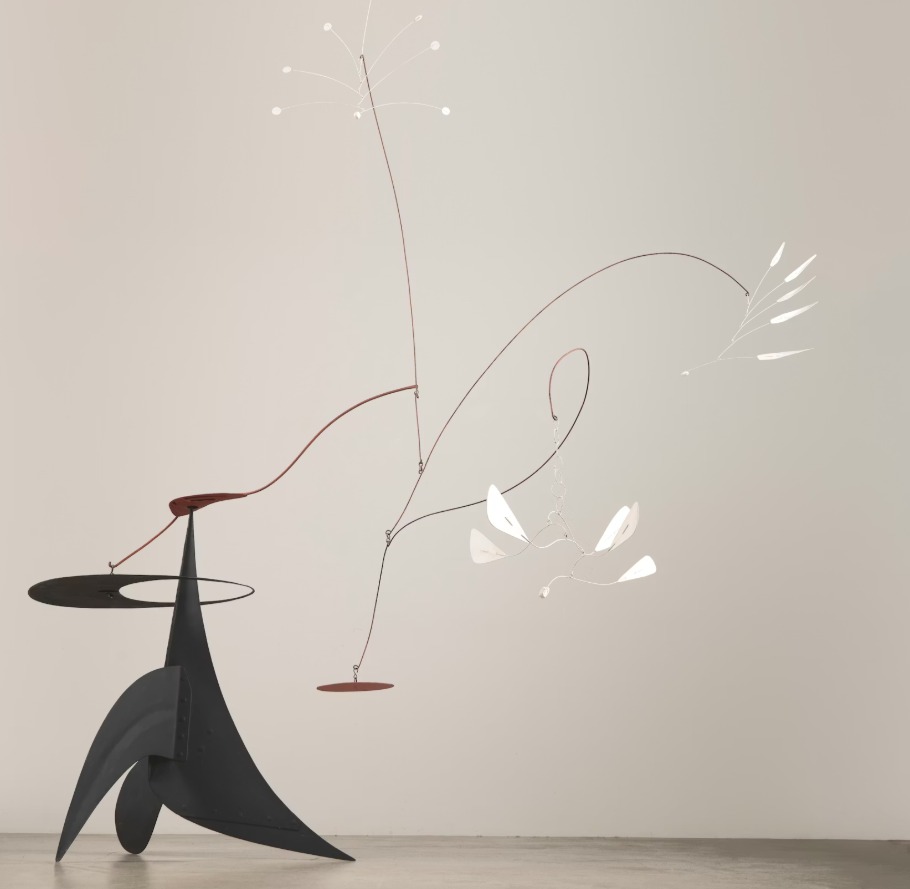
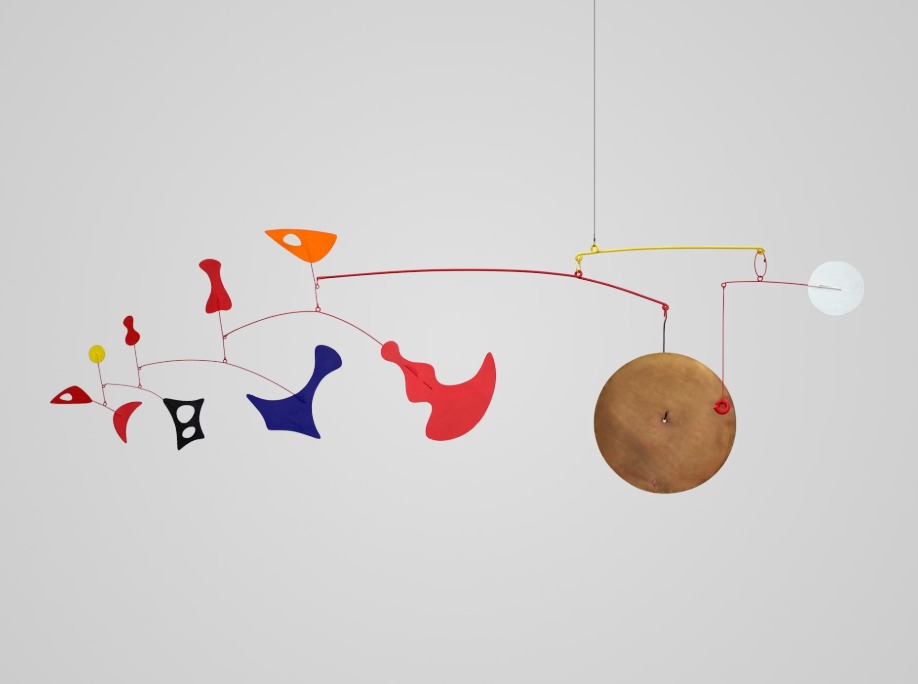
In the year that marks a century since his arrival in France and a half since his death, the Fondation Louis Vuitton in Paris wanted to pay tribute to Alexander Calder by programming a retrospective that explores all facets of his work. “Calder. Rêver en Equilibre” covers half a century in the examination of his production, from the end of that fruitful French decade of the twenties and the first staging of the shows of the Cirque Calderwhich captivated the Parisian avant-garde, to his monumental sculptures, which almost redefined public art, in the sixties and seventies. In the spaces of the building designed by Frank Gehry, this author’s mobiles, which seem to float, transform the exhibition into a choreographed dance and come to raise unexpected relationships between the volumes and planes of both creators.
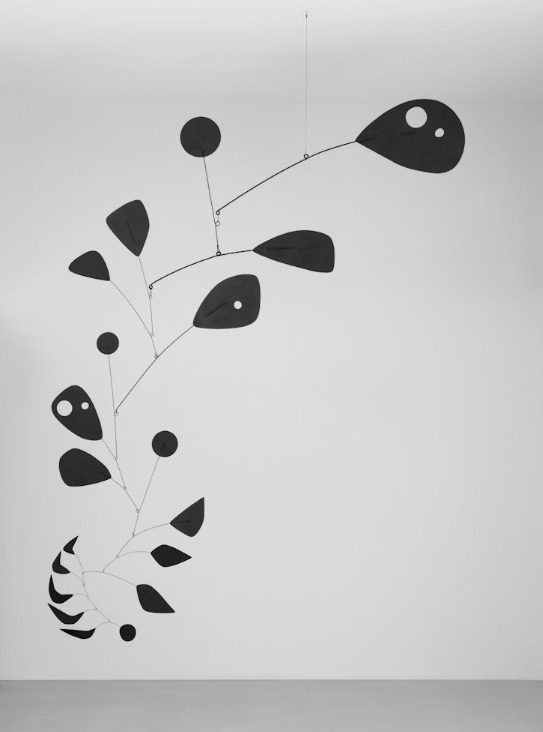
The works selected by curators Dieter Buchhart and Anna Karina Hofbauer come mainly from the Calder Foundation, but also from other international institutions and private collectors: there are three hundred pieces, including stable and mobiles —to use Calderian terminology that designates static and kinetic abstractions—and wire portraits, carved wooden figures, paintings, drawings and even jewelry, conceived as sculptures. Throughout a very extensive tour organized chronologically – the garden adjacent to the foundation has been incorporated into the exhibition, for the first time in an exhibition of this type -, this anthology focuses on the fundamental artistic concerns of the Philadelphian: the capture of movement above all, but also the management of light and its reflections, the use of simple materials, sound, ephemerality, gravity and performance or the interaction of positive and negative spaces (of the figure and the background).
Room by room, this retrospective is enriched with works by Jean Arp, Barbara Hepworth, Jean Hélion and Piet Mondrian, as well as Paul Klee and Pablo Picasso, in order to contextualize Calder’s radical inventiveness within contemporary isms. Furthermore, thirty photographs taken by some of the most important cameras of the last century—Henri Cartier-Bresson, André Kertész, Gordon Parks, Man Ray, Irving Penn and Agnès Varda, among others—will bring us closer to an author who wanted to walk, very early, the thin line between art and life.
In his mid-twenties, Alexander Calder, who was the son of a painter and grandson of a sculptor, decided to take up his family’s artistic legacy, first devoting himself to painting and drawing. After studying at the Art Students League in New York, he moved to Paris in 1926 and, in the Montparnasse neighborhood, then the epicenter of the international artistic sphere, he soon became part of a vibrant creative community. There he was able to exhibit innovative works—figurative, minimalist wire sculptures that garnered critical acclaim—and a miniature circus. Thanks to an exceptional loan from the Whitney Museum, the first for this project in fifteen years, that Calder Circus has returned to Paris, the city where it was created. At the heart of this performance art ensemble, Calder orchestrated miniature acrobats, clowns, and horsemen for an ever-growing audience; Fernand Léger, Hélion, Le Corbusier, Jean Arp, Joan Miró and Mondrian himself were among its first spectators.
Precisely a visit by Calder to the Dutchman’s studio, in 1930, would prove vital: he was deeply impressed by what he saw and marked a decisive turn towards abstraction, first in painting and then in sculpture. Another of his friends, Marcel Duchamp, was the one who suggested the name “mobile” to him in 1931, to refer to his kinetic abstract compositions, which the American presented for the first time in 1932, at the Galerie Vignon in Paris. Initially propelled mechanically and later set in motion by the slightest breeze, these works drew their life from the atmosphere itself, as Jean-Paul Sartre wrote in 1946. For his part, in response to Duchamp’s terminology, Arp proposed the term “stabile” for Calder’s static objects of the early 1930s.
Although he returned to the United States in 1933, Calder continued to travel to Europe and participated in the Pavilion of the Spanish Republic in 1937 alongside Miró and Picasso. In fact, he returned to France often after World War II and established a studio in the village of Saché, in the Loire Valley, in 1953; there Ugo Mulas portrayed him in action.
With one foot on each side of the ocean, he knew how to expand the definition of sculpture until his death in 1976. Through movement, without a doubt, but also through a dynamic vocabulary deployed at all scales—from delicate metal assemblies animated by any change of air to monumental constructions—he created non-figurative pieces that seemed to coexist, simultaneously, in the same space. Time became, in his hands, a fourth spatial dimension.
“Calder. Rêver in Equilibre”
LOUIS VUITTON FOUNDATION
8 Avenue du Mahatma Ghandi
Paris
From April 15 to August 16, 2026