Madrid,
Forty years ago, in 1985, the Juan Marcha Foundation welcomed what was Robert Rauschenberg’s first individual exhibition in Spain, of which they were part of the Texan artist’s fundamental works that will be difficult for them to travel to our country again, such as their Monogramarrived from the modern Stockholm museet.
Coinciding with his centenary, this same institution gives him another exhibition that had to contribute news regarding that retrospective: the purpose of this project, explained Manuel Fontán today, was to add and not duplicate. Since Rauschenberg was structurally a photographer, the commissioners – Fontán himself, Inés Vallejo and Lucía Montes – thought that examining the relevance of photography, and of the images in general, in the trajectory of this author could give them a long way of study and, in the preparation of this exhibition, the appearance of a text, until then not public, by the hand of Rauschenber’s own.
It has been reproduced at the foundation and prayed like this: My concern for photography initially (1949) was held in a personal conflict between shyness and curiosity. The camera worked as a social shield. In 1981, I consider the camera as my permission to enter each shadow or observe how the light changes. It is the need to be before what will never be the same again, a kind of archeology over time, which forces me to see what light or darkness touch. And to take care of it. My concern is to move at a speed that allows me to act. Photography is the most direct communication in non -violent contacts.
Organized with the collaboration of the Robert Rauschenberg Foundation, created in 2012 and with headquarters in New York and Florida, this exhibition nourishes texts like this, related to the stages in which the photographic medium gained an evident importance in Rauschenberg’s journey: he used and reusing own and alien photos to serve the general purpose of his creations, bring art and life closer. For the same reason, and from the desire to involve the viewer himself, he used mirrors or his own clothing.
The commissioners have referred to the American as an almost alive classic. It tends to be considered as a bridge between abstract expressionism and pop art, but they defend that we contemplate it as a creator halfway between the twentieth century (and its mechanics) and the XXI (and its digital drifts).
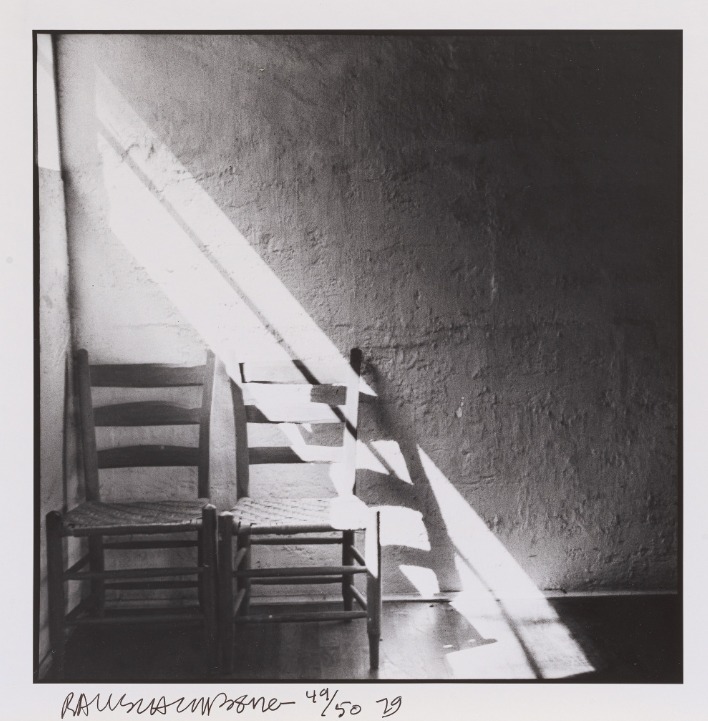
Six sections articulate the tour, starting with its first incursions with the camera when it was formed in the Black Mountain College. With Harry Callahan and Aaron Siskind as referents, he devised a project close to the conceptual and unrealizable: photographing his country Palmo to Palmo, “Inch By Inch.” Given the impossibility of taking it to term, he abandoned him, but the claim to approach with his photograph to diverse geographies would keep it in time.
He captured snapshots in North Carolina, New York, Italy, North Africa and China, with some impasse: in the mid -sixties his rolleicord was stolen and for a few years he stopped photographing; He resumed this activity at the end of the seventies, with a rolleiplex.
He defined Rauschenberg’s trajectory his experimental eagerness and his zero fear of making use of new techniques. As soon as in 1949, and together with Susan Weil, which was his partner, he developed cyanotypes by placing objects or bodies on photosensitive paper; Then their Combineshalfway pieces between painting and sculpture: three -dimensional collages to which he added images obtained from the press.
He was very interested in transfer procedures: the methods to bring those published photos to paper, through pressure and using solvents. To be able to reproduce more than once the same image resorted to lithography and screen printing: with the first technique he performed his Autobiographywhich can be seen on the ground floor of the March, five meters high and executed using a printer; In the second his inspiration figure was Warhol. In the Serigraphic paintings of the sixties would play widely with the scales.

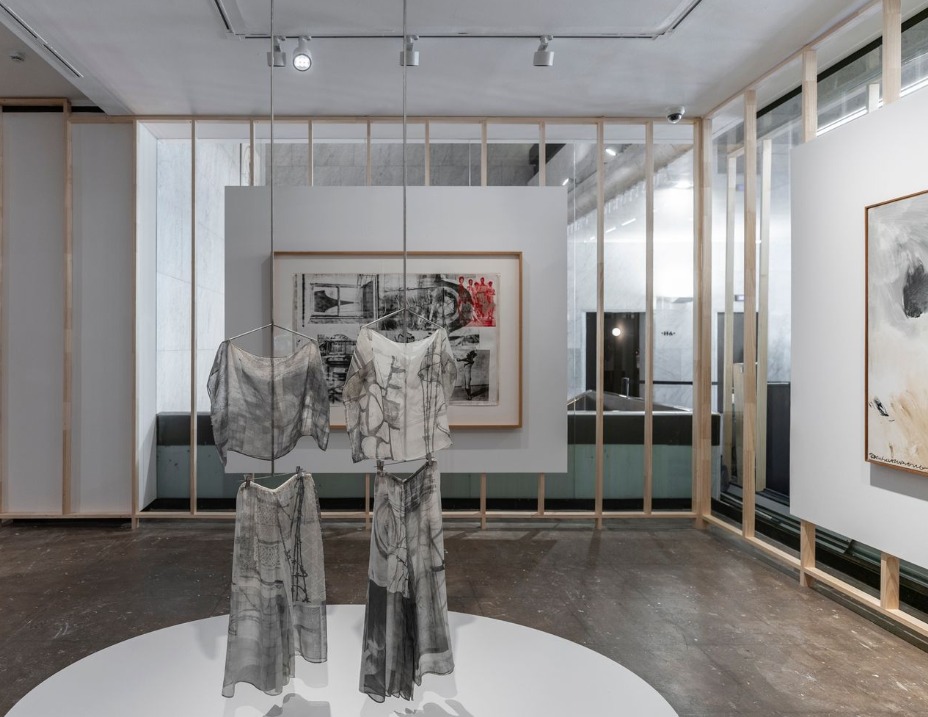
Another of his most fruitful collaborations was developed by Rauschenberg with the dancer and choreographer Trisha Brown. At first, in 1979, he participated in the scenography, costumes and piece of the piece Glacial Decoy (By then it had already been involved in proposals linked to Merce Cunningham’s dance, Paul Taylor and Judson Dance Theater). On four screens he projected images of the place where he lived in Florida, Fort Myers.
Four years later, to Set and resetserigraph his photos about a fine fabric with which the costumes were made. The remains of paint that, along the way, were impregnated in the thick fabric arranged under the thinnest would be the base of their series Salvage.
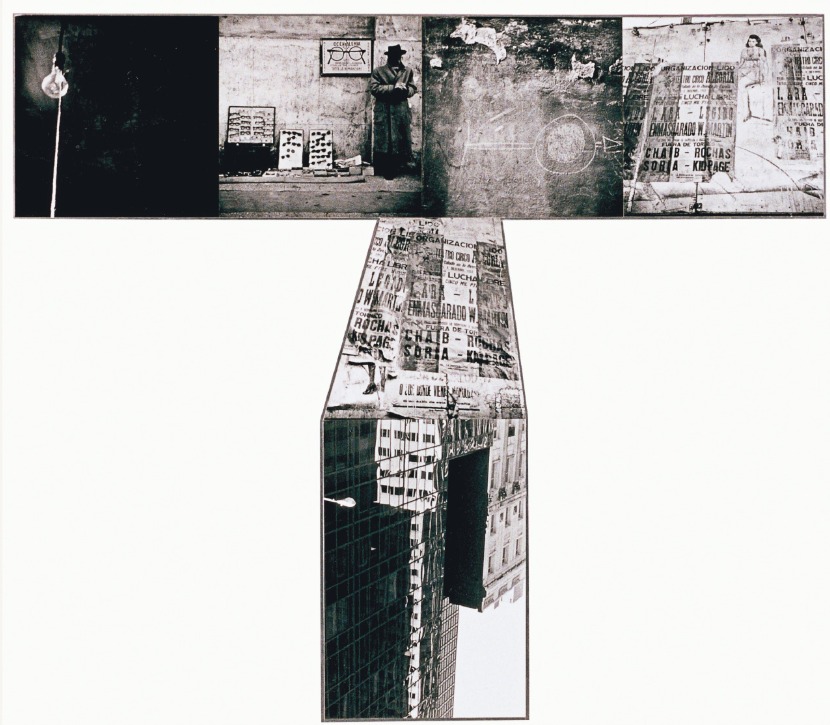
We said that Rauschenberg used photography (and art) to approach other geographies and the other. In 1984, shortly before exhibiting in Madrid, he presented at the UN Rauschenberg Overseas Cultural Interchange. ROCIa work with which he wanted to establish cultural relations with countries subject to dictatorships and with those with which the United States did not maintain diplomatic ties. He was clear when defining his ends: Demonstrate that artistic contact one by one with the peoples and the world will produce peace = understanding.
The countries in which this series deployed -which implied the realization of numerous photos -and in which he learned from local artists and artisans, were ten, and in each of them Rauschenberg organized an exhibition, financing himself the company (expensive). In the March Foundation we will see the compositions corresponding to Chile, Venezuela Cuba and … United States, which closed the team.
Outside and within the photographic field, Rauschenberg firmly believed in the possibility of “trusting” the materials and “collaborating” with them, knowing their properties and paddling in their favor: The new materials have associated physical properties and novel qualities that incorporate the possibility of forcing you or helping you do something else.
Thus, in their ClayWorks Recreational Japanese He used prefabricated ceramic panels as support, with images of fundamental works of art history, which intervened with enamels or incorporating his own photos, and in 1992, forty years after his first transfers, he began using incess injection printers for that purpose.
He acquired an Iris device, which freed him from the hard work of screening on canvas and commissioning the screening screens and, as we pointed out, enabled his games with scales and the printing with vegetable inks that could be transferred with water and not with chemical solvents (he was one of the first artists to worry about the environmental issue). It also developed with the wax to the fire, the transfusion of the images on plaster, and with those materials and processes that allowed him to connect with what was unknown, with the other and the other, and embrace the error as a virtue.
Rauschenberg was surely an apostle of the opening of sights that was advanced to the great visual mix that nurtured the visual culture of the twentieth century, and our current belief in the absence of hierarchies.
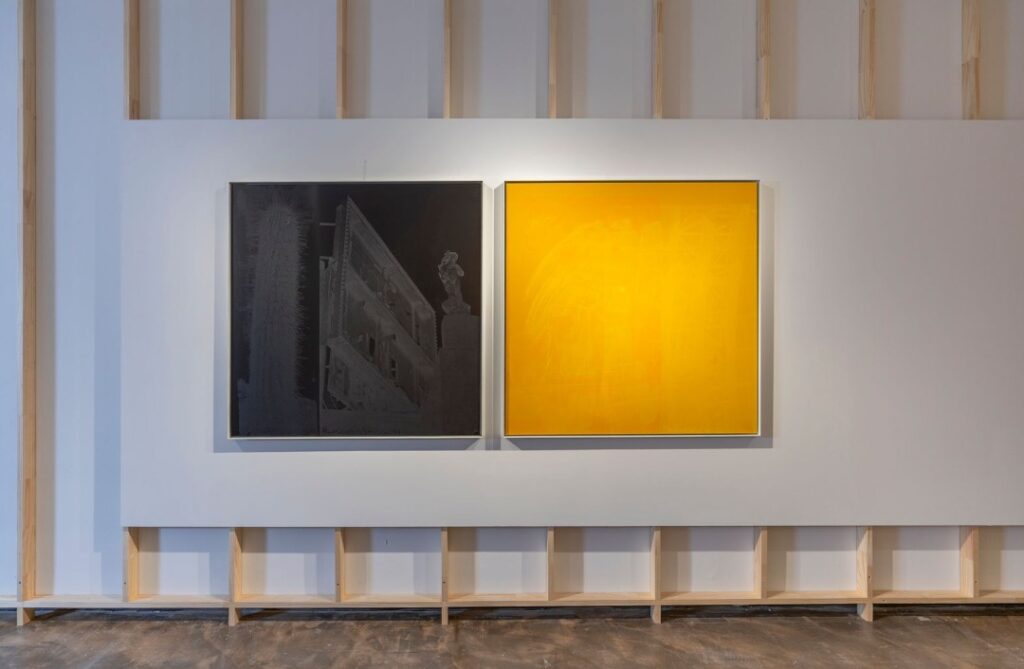
“Robert Rauschenberg: the use of images”
Juan March Foundation
C/ Castelló, 77
Madrid
From October 3, 2025 to January 18, 2026