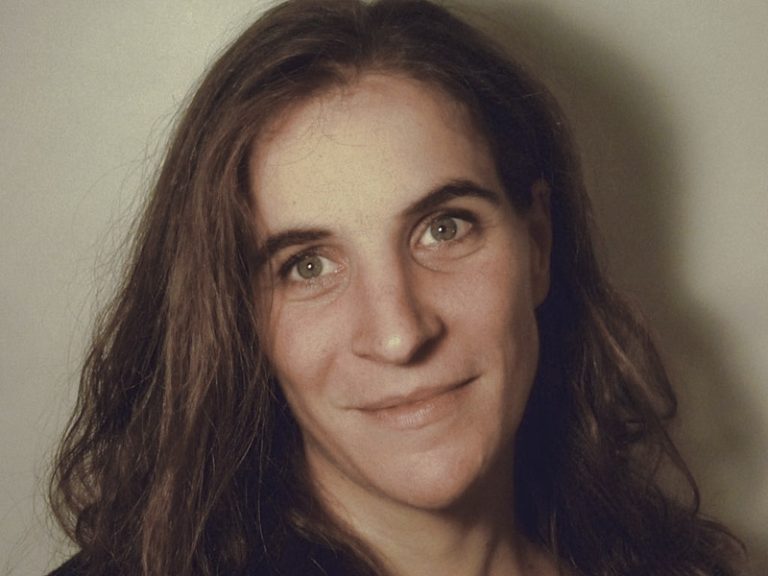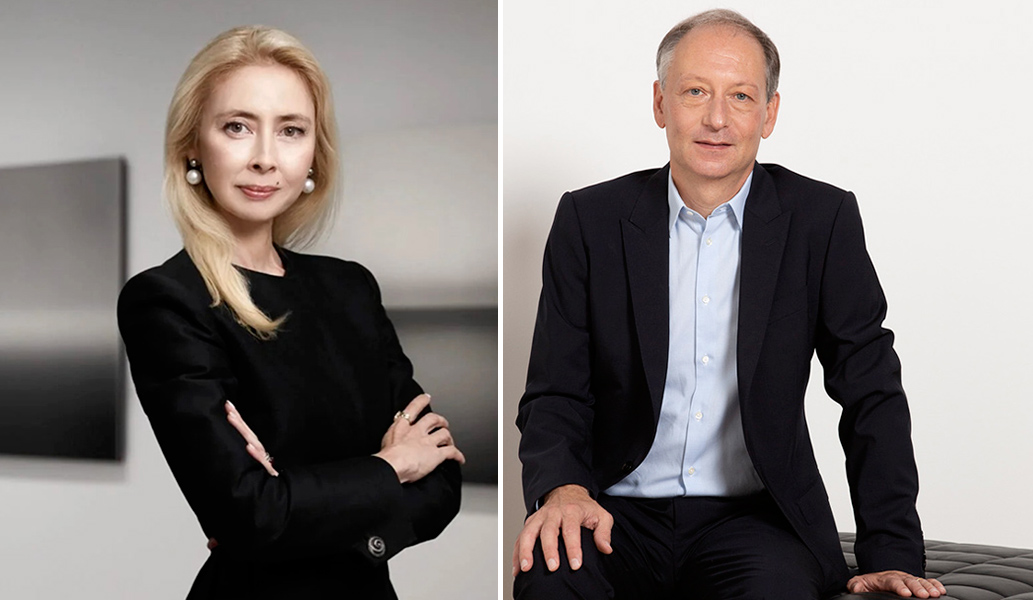
With the appointment of Massimiliano Gioni as head of the New Museum (New York), it is another cultural institution in the United States that appeals to a non-American profile. It is true that this Italian, trained at the University of Bologna, joined the New Museum almost 20 years ago as a curator. Gioni thus adds a green white red pawn on the map of American museums, already colorful with the colors of the flags of the world.
Large museums across the Atlantic are also calling on non-Americans: the Austrian Max Hollein replaced the Briton Thomas Campbell at the Met in 2018, Christophe Cherix represents Switzerland at the MoMA, the Australian Melissa Chiu will take over the directorship of the Guggenheim Museum in New York on September 1… The phenomenon is surprising, under a current administration which has made national preference its priority while in France where international creation is favored, access to the main responsibilities scientists in public museums remains more statutory and largely structured by the bodies of curators.
For András Szántó, consultant to arts organizations and member of the board of directors of the Brooklyn Museum, the first explanation is cultural: “Historically, the United States imports talent across all of its industries. It is quite usual for people from all over the world to work in prestigious national institutions”he recalled during an interview with Arts Journal. The specific case of the museum can, however, be linked, according to him, to its institutional history: “the museum model came from Europe and gradually established itself in the United States. It was therefore natural that the most qualified and experienced people in this field also came from Europe. ».
An observation shared by Massimiliano Gioni, who considers the attraction that could arouse “typically European humanist and generalist training” perceived as “a sort of “old-fashioned” tradition”. As for Quentin Bajac, director of the Jeu de Paume and former curator in the photography department of MoMA, interviewed by the JdAit also raises a “tendency to overvalue the European label, that of a continent whose cultures they (the United States) appreciate”.
However, the United States does not have to be ashamed of its initial training in the subject: its prestigious universities manage to include four in the top 10 of the QS World University ranking of 2026 ranking the best training in art history. The Massachusetts Institute of Technology (MIT) in Cambridge even rose to second place. But from Quentin Bajac’s point of view, Europeans can appear as “profiles that are a little more unexpected, less specialized, perhaps making more connections between periods, eras, mediums”.
Unlike France, which favors access to higher museum positions for graduates of the National Heritage Institute (INP), American cultural institutions are accessible via different routes. A flexibility that the experience of the director of the Jeu de Paume seems to confirm: “When MoMA approached me, my first remark was to tell them that I was not a specialist in US photography and that I did not have a doctorate (PhD). They told me it didn’t matter. What was decisive was not so much the academic training as the museum experience, at Orsay then at Pompidou”.
According to András Szántó, this more open system is another factor in the foreign presence in the museum hierarchy: “we do not have a professional path like that which exists in France, which is almost akin to an appointment to an ambassadorial position. There is no equivalent to this course in the United States ». And to evoke a more prosaic reason, but just as important according to him: “Salaries for senior positions in European museums are derisory, particularly in the United Kingdom. This is why there are some very competent English museum directors in the United States, because their salaries are several times higher there..
The phenomenon is not new. For more than 30 years, the Frenchman (turned American) Philippe de Montebello remained at the head of the Met, leaving a lasting mark on the New York museum until 2008. But the use of foreign directors characterizes large private institutions more than the Smithsonian museums, which remain mainly run by Americans. A few cases are exceptions, such as that of the Australian Melissa Chiu who until then was director of the Hirshhorn Museum and Sculpture Garden, or Gus Casely-Hayford, a Briton who had given way to the Canadian Ngaire Blankenberg at the National Museum of African Art. As for the Dutchwoman Kim Sajet, who resigned from the National Portrait Gallery following pressure from Donald Trump, her profile is more linked to the United States, where she studied. The senior management of the Smithsonian, however, remains in the colors of the Star-Spangled Banner.
Questioned by the JdAMassimiliano Gioni expresses a more nuanced vision: “I’m not sure that so many museums in the United States are run by foreigners. This is undoubtedly the case in New York, a cosmopolitan and multicultural city par excellence.. The new director of the New Museum links this phenomenon to the policy specific to each museum: “I always say that the New Museum is a museum with an accent, because we speak a multitude of languages, both among the artists and among the curators and patrons. Besides, we are located in the Lower East Side, a neighborhood where more than 50% of residents do not speak English as their primary language” (More precisely, 43.4% of residents aged over five speak a language other than English at home. Editor’s note)
Massimiliano Gioni also points out the contrast between the propensity of private and independent museums to appoint directors or curators of foreign nationality and politics “America First” defended by Trump: “We are witnessing a brutal crackdown on immigrants in the United States and, although I currently find myself in a very privileged situation, I am reminded every day that students and professionals who stay in the United States on a green card, like me, can literally disappear”. This climate of tension is perhaps one of the reasons why several directors and curators of foreign museums in the United States did not wish to speak with the editorial staff of the JdA.