France. The recent professionalization and structuring of patronage could suggest that traditional channels of philanthropy are now obsolete. However, this is not the case, the financing needs being so great that any help is welcome. The societies of friends, some of them centuries old, are still very much alive and proactive. The French Federation of Associations of Friends of Museums (FFSAM) brings together 300; which is a lot considering the 1,200 establishments labeled “Musée de France”.
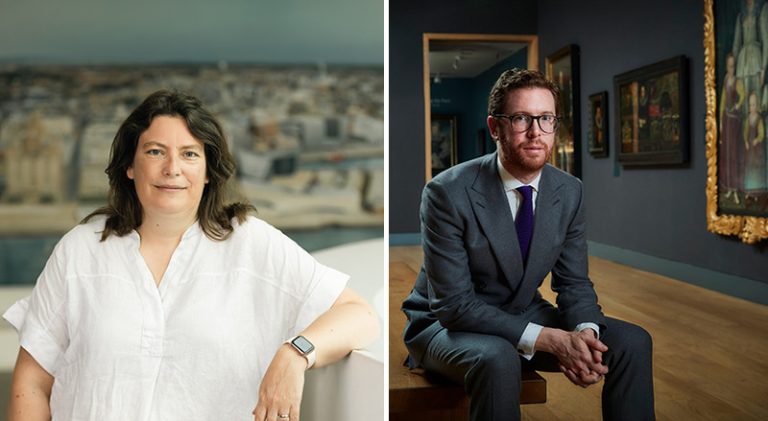
Essential for the functioning of small institutions, these associations also play an essential role in the life of public establishments. Large museums also have several societies of friends, each with its own assigned missions. The temple of impressionism thus benefits from the support of the Society of Friends of the Orsay and Orangerie Museums (Samo), but also that of American Friends (Afmo). “Since 1980, Samo has brought together a community of extremely loyal and valuable small and medium-sized donors whose action focuses on acquisitions, explains Guillaume Roux, director of development of the public establishment. While Afmo’s fields of activity are broader: they historically support Franco-American issues, as currently, (in Orsay), the “Mary Cassatt” and “Auguste Bartholdi” exhibitions. But also bilingual devices, contemporary art, and recently, (for works), a provenance research program. »
The restoration of the ceiling of Diane’s living room was made possible by the collaboration between two entities, the Friends of Versailles and American Friends of Versailles.
© Palace of Versailles / C. Fouin
Since 2020, a new entity has further enriched this philanthropic palette: the Friends Foundation for the influence of the Orsay and Orangerie museums. “It is housed by the Fondation de France and works on everything linked to cultural democratization, education and research. It was designed as a complementary pillar. » To support the wealth tax reform, several establishments have also set up sheltered foundations. Tax exemption from real estate wealth tax is in fact only possible for the benefit of public utility foundations and cannot benefit associations or public establishments.
Old Friends
Still in a fiscal logic, almost all major public establishments also have their American friends society. “It was our association that created the “American Friends of Versailles”in 1998 to benefit from an entity under American law serving the castleexplains Jérôme Plouseau, president of the Friends of Versailles. We are two sister companies; we try to collaborate on projects, this was recently the case on the restoration of the ceiling in Diane’s living room. » The interest in this model is explained by its more flexible operation, which is not based on long-term membership but on case-by-case support in exchange for significant tax credits. Or the opposite of French societies of friends which are distinguished by their loyalty. “We have members who have been with us for a long time and who have a very strong attachment to the place. This results each year in around twenty acquisitions and one or two restoration projects. This represents aid of 1.5 million euros per year. Which makes us the first long-term patron of the castle. »
Faithful, the Friends are also responsive in the event of an emergency. When museums need to raise funds very quickly, they sometimes call the Friends to raise the sum. in extremis. While some of these companies help in a very targeted way by concentrating their efforts on one register (most often acquisition or restoration), they are most often very flexible “Swiss army knives”. Particularly in the most modest establishments, where the Friends sometimes help to finance unforeseen expenses, such as the travel costs of a journalist. Dynamic and reactive, the Friends are far from the caricatured image that sticks to them. Anything but cheesy, they are even attracting more and more young professionals, and no longer just retirees who are passionate about culture, conferences and travel. “Among our 5,400 members, 450 are under 35,” welcomes Jérôme Plouseau. Same observation in Orsay and the Orangerie. “The rejuvenation of our patrons is indeed an axis of development, confirms Guillaume Roux. “Samo thus has a branch of young Friends, united in particular around contemporary art. »
At the table, Friends!
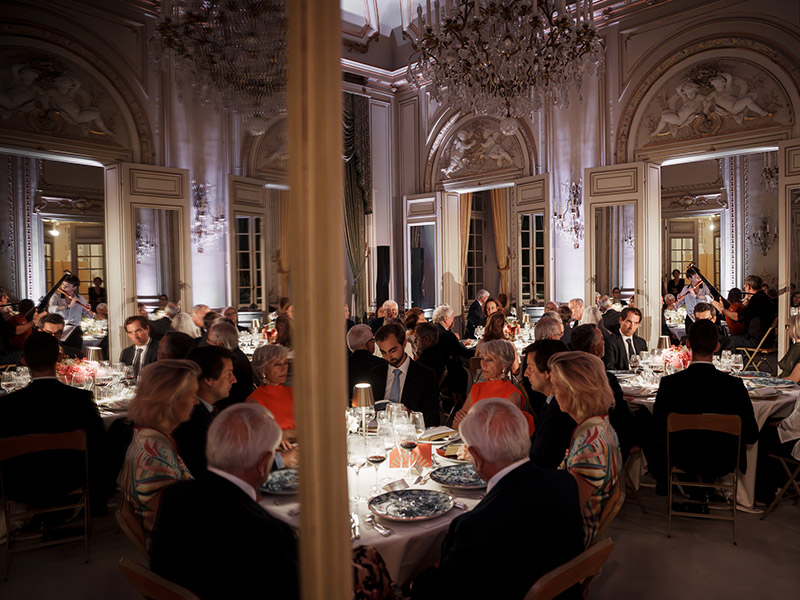
Gala dinners. There’s nothing like sharing a good meal with friends. This is the growing conviction of institutions which are giving in to the fashion for gala dinners. This Anglo-Saxon tradition is indeed gaining ground, and new museums and heritage establishments are embarking on this practice. The Vieilles Maisons Françaises association, which brings together the owners of historic monuments, has just organized its very first gala dinner. “The feedback was very positive and we collected 50,000 euros, which was our goal, advances the association. This new approach allows us to reconcile patronage and influence by getting closer to our patrons and future donors. » The Center des monuments nationaux, which inaugurated this formula last year, is doing it again this year. Christine Goguet, director of the sponsorship and partnerships mission, takes stock of the first edition: “This has undoubtedly made it possible to strengthen ties with our partners, but also to open up new perspectives with personalities and companies sensitive to the preservation of our heritage. This is the opportunity, for one evening, to bring them all together. » In large museums, this practice is now usual, as in Orsay. Samo and Afmo each organize an annual gala dinner to raise funds; as for the foundation, it is organizing a garden party. At the same time, the sponsorship service also offers “prestige” dinners with the president of the public establishment and even breakfasts with the exhibition curators on the sidelines of privileged visits.
Isabelle Manca-Kunert