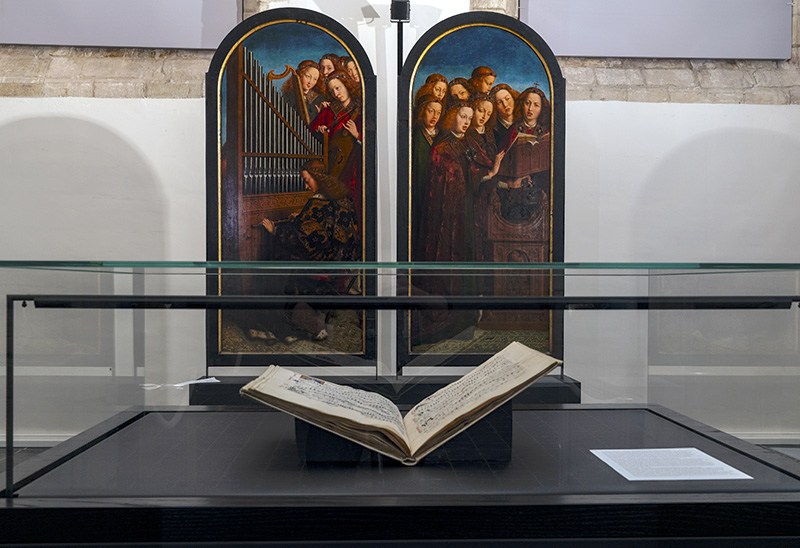
Brussels. In the 15th century, the library of the Dukes of Burgundy, created in Brussels by Philippe II, was one of the most supplied in Europe alongside that of the Kings of France, the Medici and the Pope. Numerous manuscripts it contained, today there are only 400 in the world, including 275 prisoners by the Royal Library of Belgium. In 2020, these precious illuminated works constituted the heart of KBR Museum. Closed in January 2024, the museum has just reopened in a spirit of transversality, by theming more particularly its journey around Franco-Flamands polyphonists, thus called because the southern Netherlands encompassed part of northern France at the time. Their music was then the cultural “product” that was best in Europe.
Among the artistic and musical treasures, visitors can discover the chansonnier of Austria of Austria, the antiphonary of Philippe Le Beau or the Chansonnier de Tournai who brings together, for the same songs, a collection by separate voice superius,, Altustenor and bassus.
Didactics and interactive, the exposure describes the steps and materials that enter into the composition of a manuscript. A line of time compares the main composers and painters who marked their fastening the 14th and 15th centuries. Polyphonists such as Josquin des Prés, Johannes Ockeghem, Adrien Willaert or Roland de Lassus radiated in the same way as Jan Van Eyck and Rogier van der Weyden or the miniaturists Jean Le Tavernier or Liévin Van Lathem. It is also possible to listen to certain works, including a written for Marguerite of Austria, presented voice by voice. The route adapts to the profile of visitors, thanks to interactive bracelets which give, in four languages, access to information and more or less detailed stories.
In the setting of the old chapel of Nassau, where daily polyphonic masses were given, resonates a selection of music played throughout Europe in this abundant era of transition between the Middle Ages and the Renaissance.