
Madrid,
Dalí was fond of historical buildings, in which he surely saw dreamlike places charged with the energy of the past. He acquired and restored the castle of Púbol, on the condition that only Gala inhabited it, and on the ruins of the old theater of Figueras he built his own Theater-Museum. That is why Rosa Perales Piqueres, curator of the presentation now offered by the Gaviria Palace in Madrid, has ventured today that the artist would probably have liked to contemplate his work in the restored building on Arenal Street where they say Isabel II enjoyed herself.
Sculptures, oil paintings, illustrations, engravings and drawings by this author from the Clot collection and, sometimes, little known to the general public can be seen there on a permanent basis; The project is called “Dalí infinite”, its pieces are expected to rotate over time and it has the support of the Gala-Dalí Foundation.
In its first assembly we can see fourteen sculptures conceived by Dalí between 1973 and 1980 and enlarged with his authorization, accompanied by those other works on paper that account for the almost enormous diversity of his fields of interest, from science to religion through literature and, of course, Gala. Also photographs: those of Jacques Leonard, who tried to capture the most intimate side of the Catalan in his images, confronting his constant tendency towards theater.
Sculpture was, in the context of Dalí’s production and career, one of his least frequent languages, but in which he also realized, in diverse formats, his visual obsessions. One of its starting points was The Angelus by Millet, for the volumetry of his figures; another, the so-called sleep-wake method, which would offer vivid images conducive to modeling.
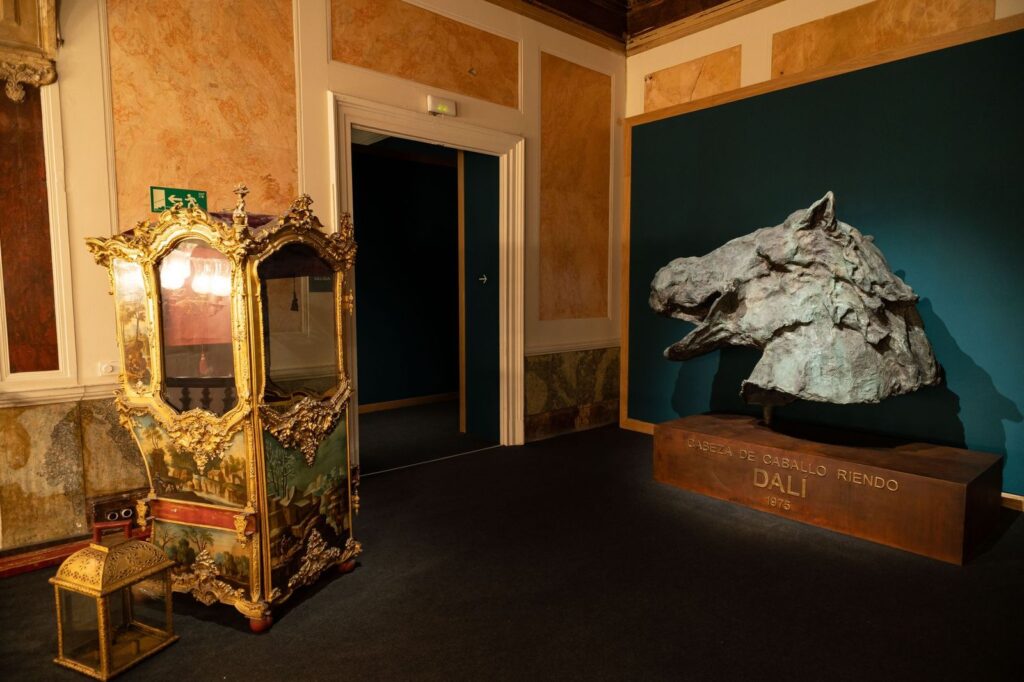
After his prophet Saint John the Baptist and his Icarus On the lower floor, on the upper floor, the head of a laughing hair opens the route, a motif that he never abandoned in his painting because it symbolizes strength and youth and the struggle between the sphere of the conscious and the unconscious in our psychology. Here Dalí seems to underline the fantastic potential of the horse that is part of Selene’s chariot in the Parthenon in Athens.
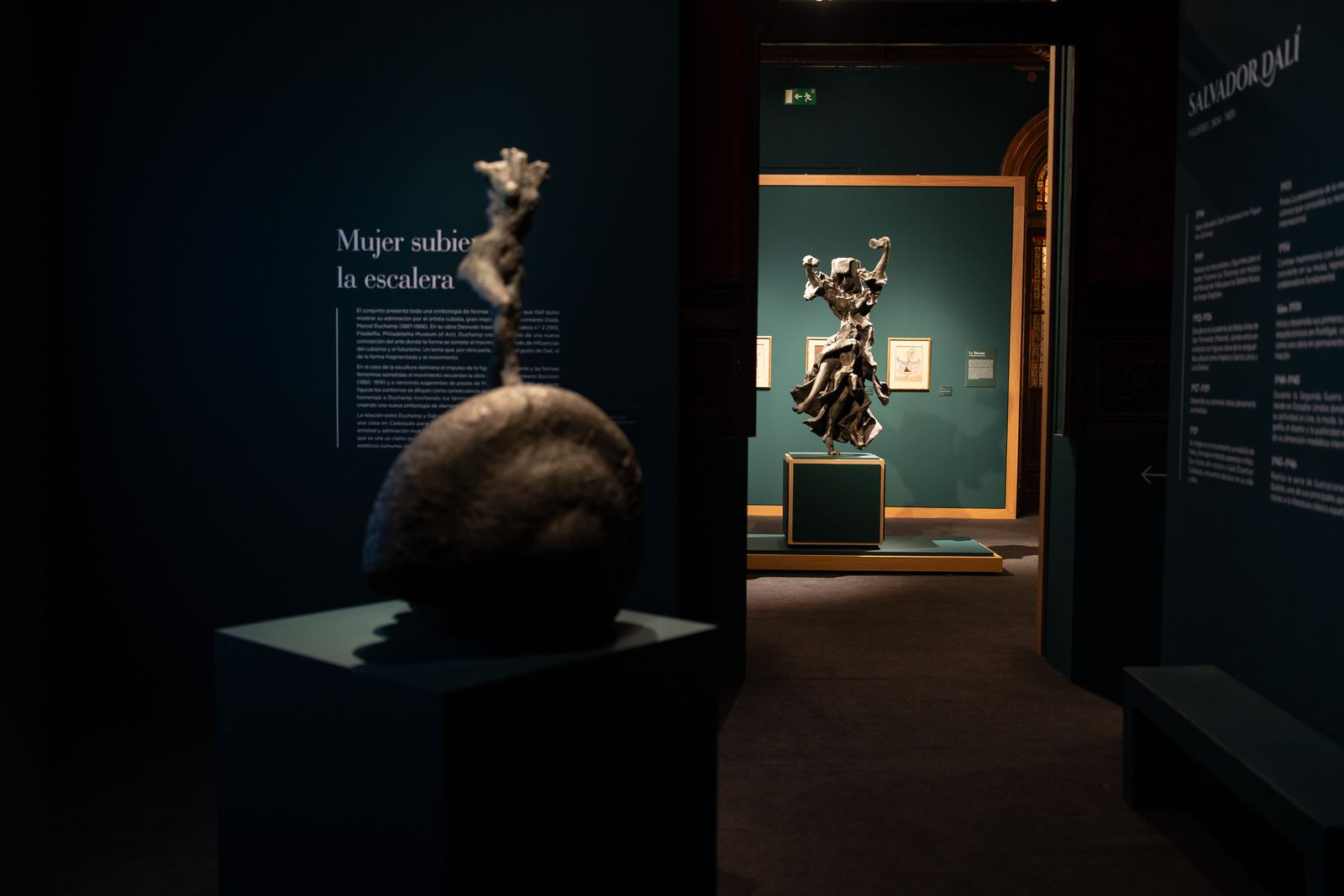
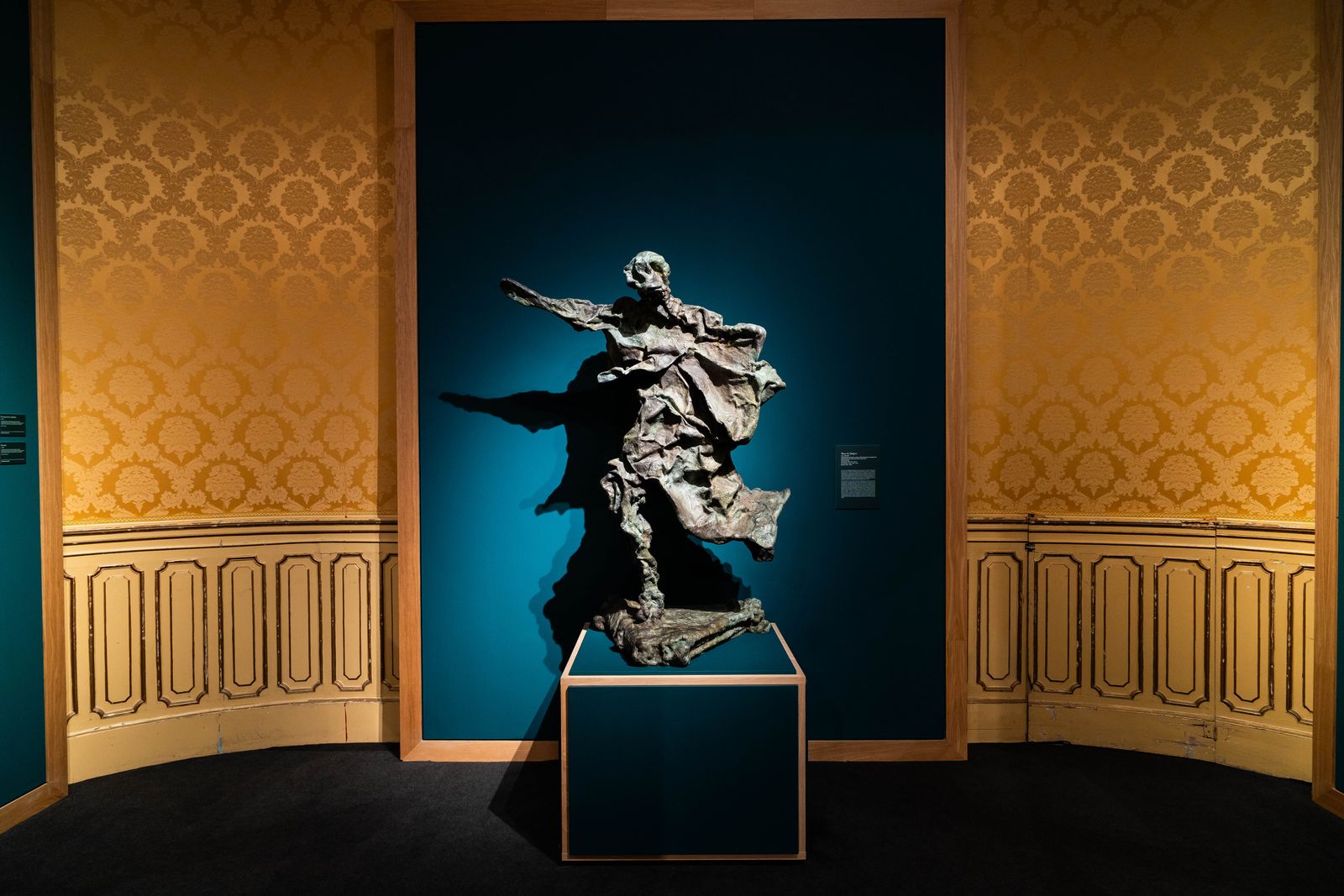
Another tribute, this one to Duchamp – with whom he coincided one summer in Cadaqués – is constituted by his expressive Woman climbing a ladderreversing the direction of his steps with respect to the Frenchman’s nude. Its dynamism, however, is more reminiscent of Boccioni or Max Ernst.
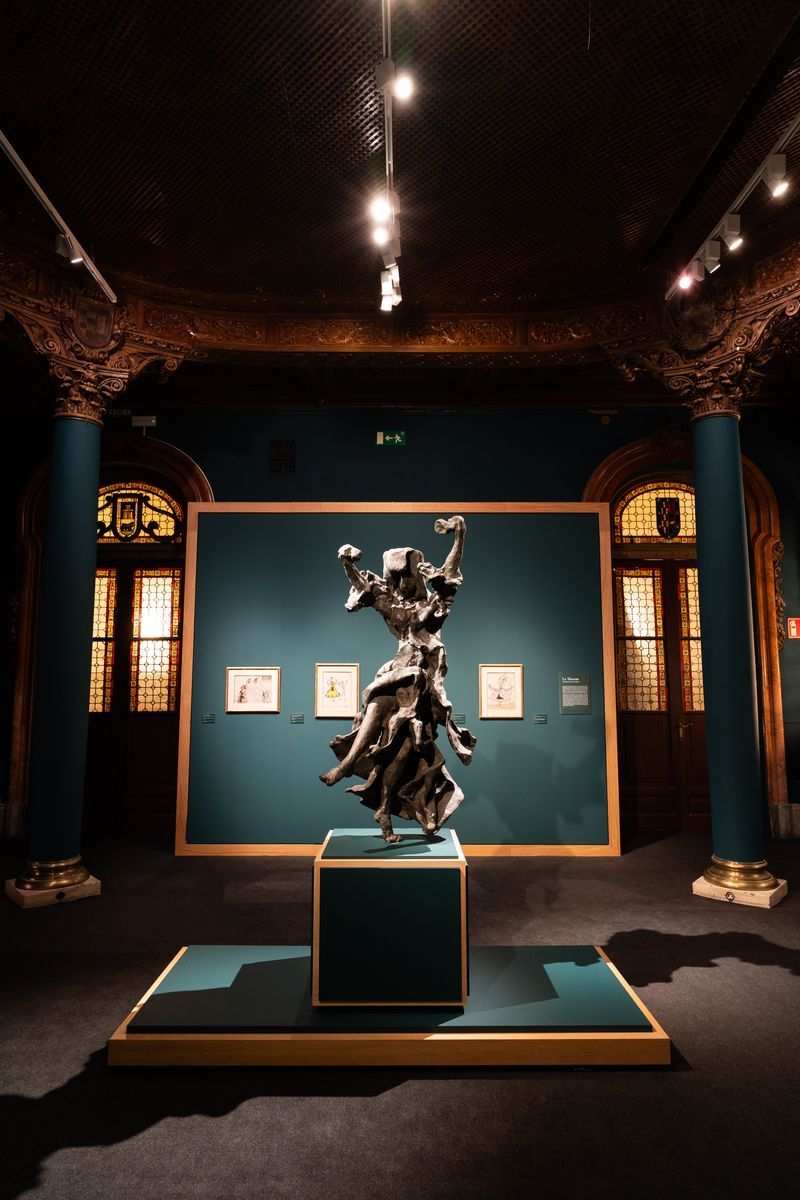
A very lively inspiration nourished, however, the piece The Crotaloswhich replicates the movements of a flamenco dancer nicknamed like this: Dalí was a lover of that genre and a friend of many of its creators; Lorca’s influence had something to do with it. Carmen’s dance, which was her name, has something ancestral, as does the festival.
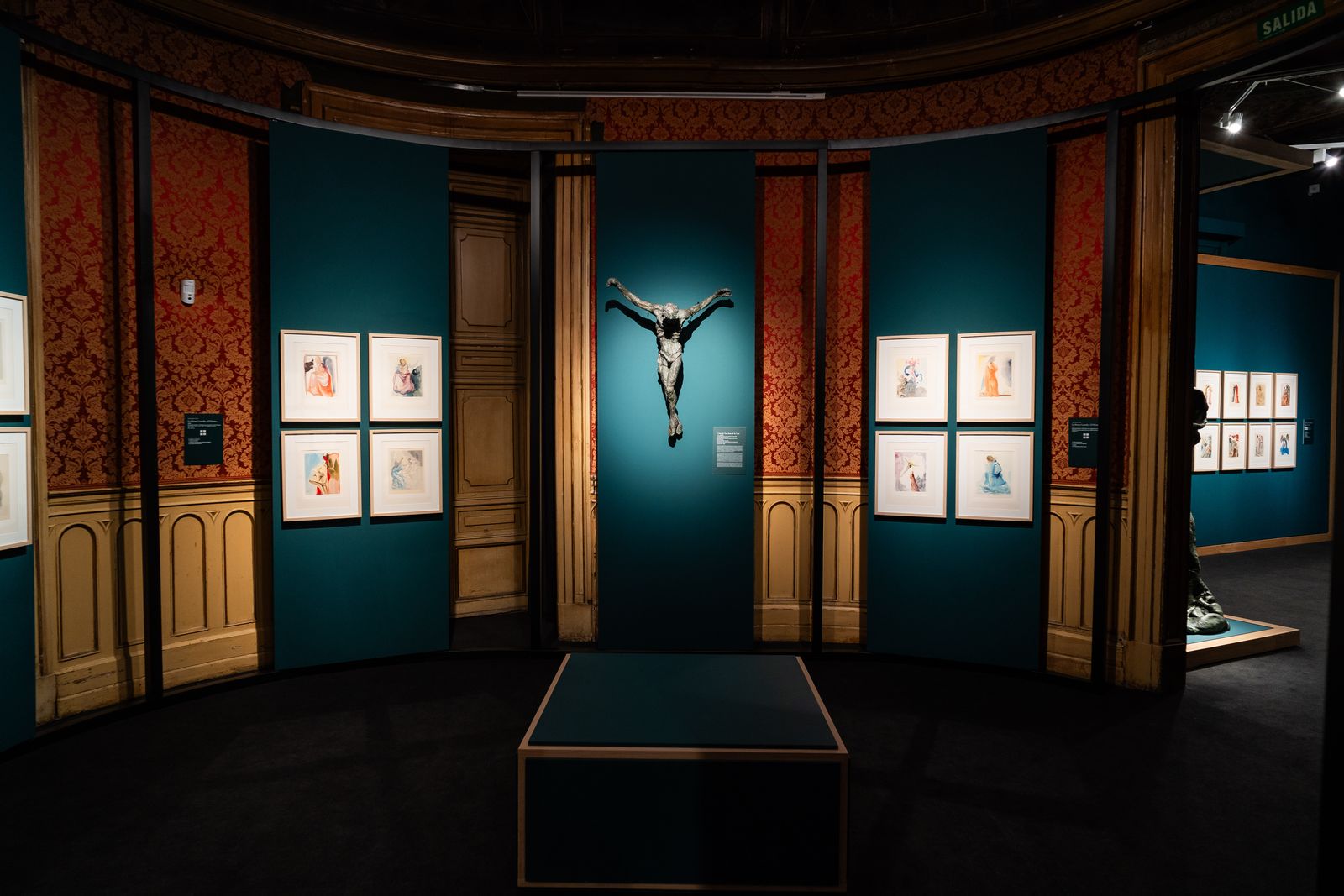
Some of the sculptures present replicate motifs that he had already painted: this is the case of his Christ of Saint John of the Crosswhose figure the Girona native said he considered to be the nucleus of the atom, that is, the cell of matter and the universal element. In any case, in both images the artist sought to achieve the greatest possible beauty.
Because it is located in one of the most representative rooms of this nineteenth-century palace and because of its light forms, one of the most outstanding works of the complex is its cosmic elephant. In this case, Dalí immersed himself in the study of the resistance of matter in outer space: he conceived one of the heaviest bodies as a mass suitable for weightlessness, in a kind of subtle experiment.
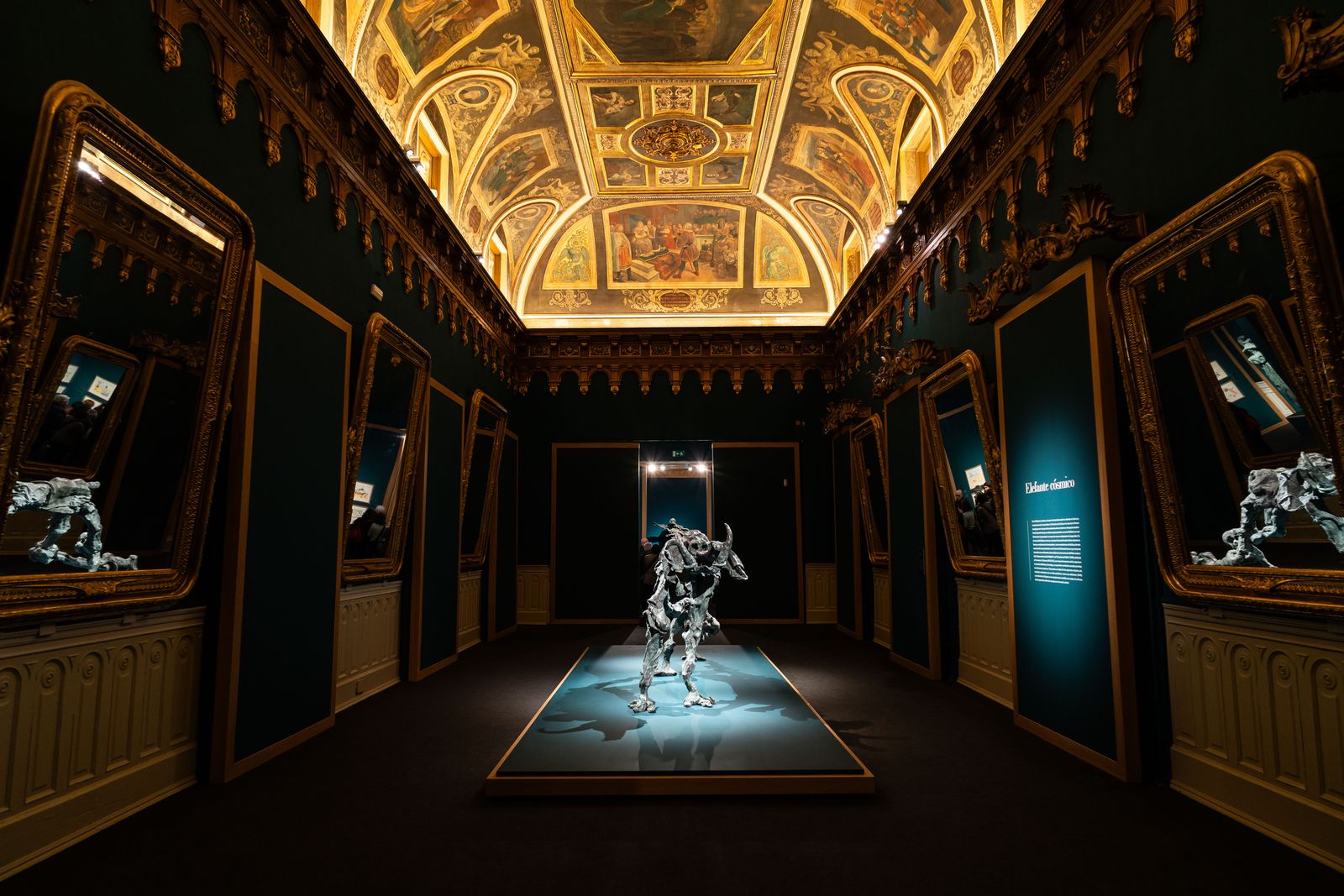
In the literary field, we will contemplate the images of Dulcinea and The soul of Don Quixote; It is very likely that he identified with the latter to some degree, due to his idealism and his tenacity in the face of adversity. Dulcinea, as can be intuited, can be read as an aesthetic metaphor for Gala, just as that refined Don Quixote appeals to the viscous border between reason and delirium, also in Dalí.
Finally, this author entered the field of illustration, the other major axis of this project, when he was very young, still a high school student, and gradually took his creations in this discipline to greater heights of spirituality and symbolism.
We can highlight the series of works on paper Tricornderived from his collaboration with Diaghilev’s Ballets Russes on the sets and costumes of Falla’s works, based on popular sources; and his compositions about purgatory and paradise according to Dante, the former greatly indebted to his paranoid-critical method. In that first section, moreover, guardian angels remember, in the face of the temptation of each sin, the possibility of redemption. A redemption that, in that other section of paradise, also applies to himself, becoming related to Aligheri through mysticism and continuing to promote the coexistence of the dreamlike and the atomic (Everything influences me, nothing changes me). It was the Italian government that commissioned Dalí to carry out these works to commemorate the Holy Year of 1950.
Illustrations he also created for Don Quixote, the most surreal of characters for André Breton. He paid attention to Velázquez and El Greco when it came to stylizing the figures, focusing on the distance between body and spirit, and distorting the landscapes. Their natures, like their own personalities, were always subject to controlled metamorphosis.
“Infinite Dalí”
GAVIRIA PALACE
C/ Arenal, 9
Madrid


