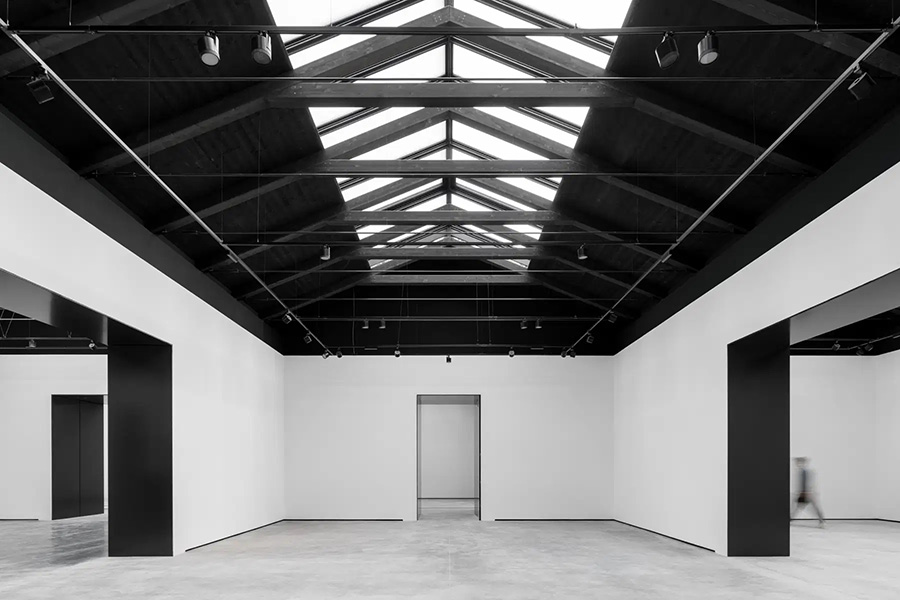
The Venice Biennale will open its 61st edition from May 9 to November 22 in a completely renovated Central Pavilion, a building less restored than reconfigured to meet new priorities. Sixteen months of work, completed in March 2026, transformed a building stratified by a century of interventions into a unified system. The project, attributed to the company Setten Genesio, brings the total surface area to 5,450 m², including 3,100 m² dedicated to the exhibition. The building is presented as a system where structure, light, energy and curatorial flexibility coincide.
The central pavilion of the Venice Biennale renovated.
© Mario Cappelletti / La Biennale
The operation, costing 31 million euros, is financed by the Italian State via the National Recovery and Resilience Plan (PNRR) and its complement (PNC), under the “Great Attractors of Cultural Heritage” program. It is part of a set of twenty-two interventions distributed between the Giardini, the Arsenale, the Lido, Forte Marghera and the Albanese park. Led by the Ministry of Culture, it targets the green transition, digital innovation, cultural tourism and carbon neutrality.
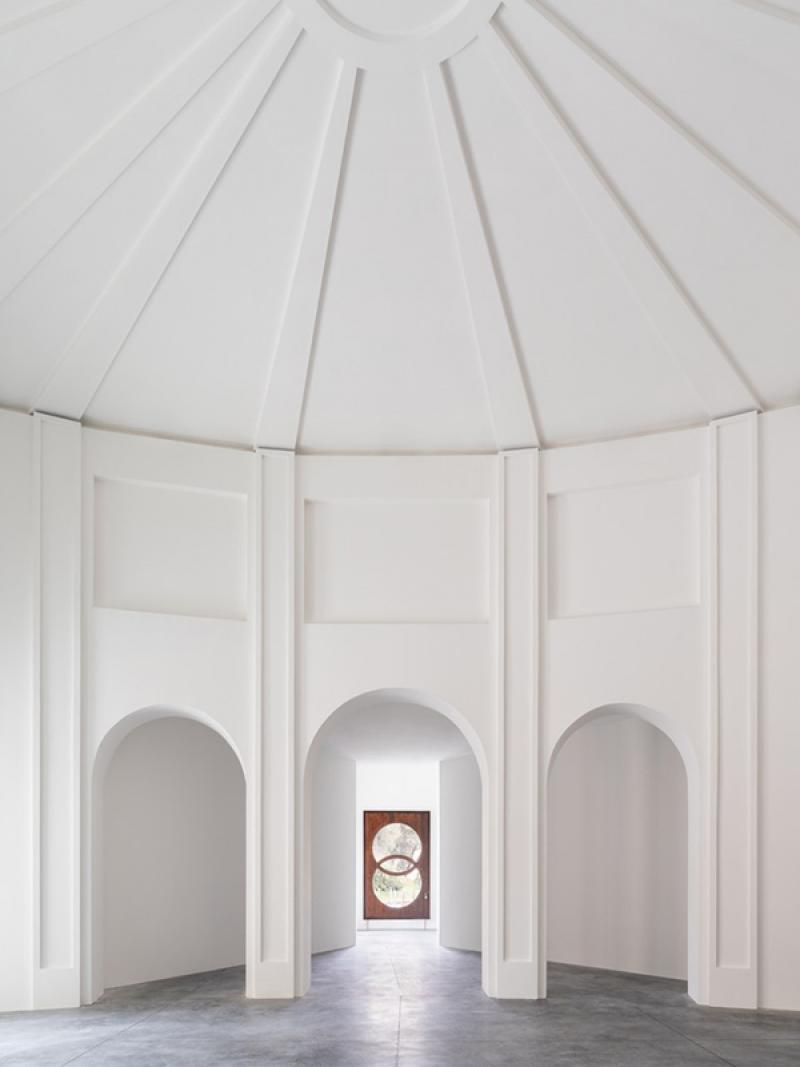
The central pavilion of the Venice Biennale renovated.
© Mario Cappelletti / La Biennale
Designed from 2020, the project maintains the volumes of 1894-1895, the dome painted by Galileo Chini, restored in the octagonal room, and the interventions of the architect Carlo Scarpa. He removed the partitions and later additions, restored the original longitudinal axes and proportions, and redone the terrazzo floors identically. The Brenno del Giudice room returns to its 1928 state.
The internal organization proceeds from this logic. An octagonal core, the Chini room, distributes a ring of reconfigurable rooms, while the technical networks are integrated into the envelope. Outside, two carbonized laminated wood terraces extend the spaces towards the gardens and reopen the views of the canal. Inside, a black and white contrast orders the circulation. The program distributes 865 m² of public services, 40 m² of offices, 160 m² of technical spaces and 162 m² dedicated to staff. A setting ready to welcome “In Minor Keys”, the exhibition designed by Koyo Kouoh and bringing together 111 artists.
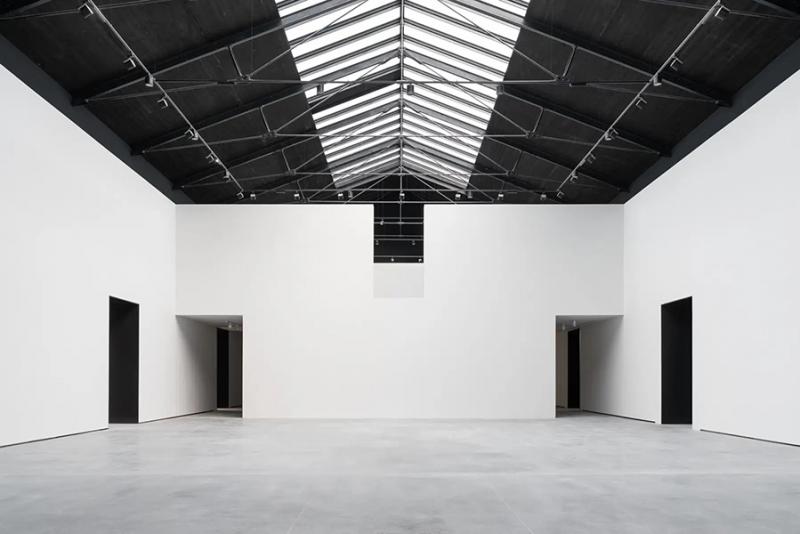
The central pavilion of the Venice Biennale renovated
© Mario Cappelletti / La Biennale