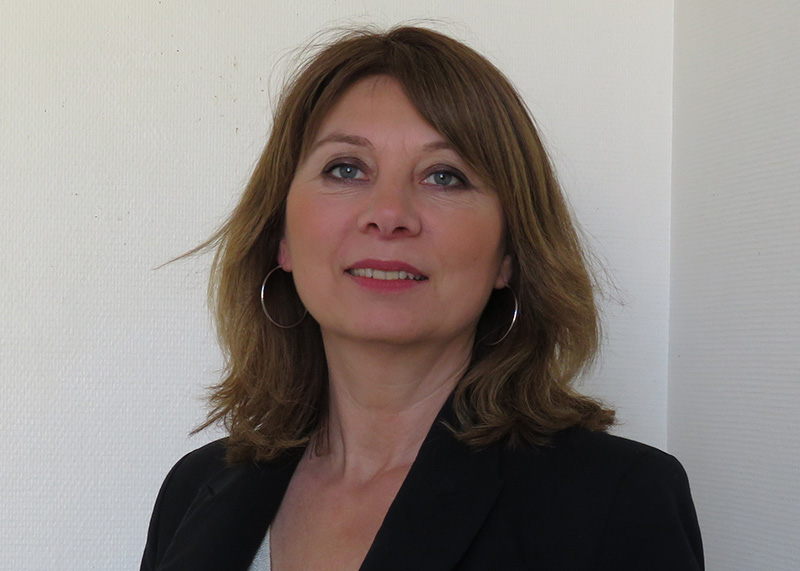
A lawyer by training, former journalist, Jeanne Roussel also departmental councilor of Aisne, has been the new councilor of Villers-Cotterêts since March 2026.
The Cité internationale de la langue française was supposed to be Emmanuel Macron’s weapon against the National Rally, but he almost won again. Does culture really protect a city from extremist voting?
Unfortunately not quite even if Villers-Cotterêts is the only town in France to have succeeded in dethroning the RN during the last elections. We must be nuanced, because before the installation of the International City, we were already a city of culture, that of the three Dumas (Alexandre Dumas was born and raised in Villers-Cotterêts, editor’s note) and of François I, but we still shifted towards the extreme. So no, culture does not protect. But she can help. The City necessarily played a role, even if locally it was not always well understood and was perceived as elitist, paying and inaccessible to Cotteréziens. Which is false, because there are free schemes. One of the challenges of this mandate will be to ensure that residents are no longer intimidated and dare to go there.
Relations between the City and the former mandate resembled a minefield. What do you advocate?
Today, dialogue has been restored and the first of our common projects will be complementarity. Let’s take the example of the Alexandre-Dumas media library which currently promotes themes similar to those mentioned by the “Des Mets et des Mots” Festival, supported by the City. A duplicate linked to the fact that there was no dialogue. So, at a minimum, we will work on a shared cultural agenda and coordination and then evolve towards common projects.
Aerial view of the International City of the French Language, Château de Villers-Cotterêts.
© Yann Monel / CMN
The City has attracted 501,000 visitors since its opening who… leave the same evening. Does it really benefit Cotteréziens and the region?
No, not enough. And it’s paradoxical. The economic benefits were greater during the work period. Workers and companies stayed on site for weeks and months and kept the restaurants running on a daily basis. Today, visitors pass by. The issue is tourist accommodation that is too modest. The creation of a hotel in the unused parts of the castle had been formalized, in 2021, by the Center of National Monuments. A press conference was planned to announce the project leader, but it was canceled the day before. Today, we remain waiting, because the real lever is to retain visitors longer while creating other cultural facilities that give them a reason to stay.
Exactly, no theater, a cinema and the small Alexandre-Dumas museum… It’s thin, isn’t it?
Indeed, this is the reason why appointing Cédric Saint-Sulpice, first deputy delegate for culture, heritage and francophonie is not a coincidence. It is a strong political act. Because basically, the toll is heavy. The cinema has not had heating for eight years and the projection equipment is obsolete. Today, we wonder. Renovate or rebuild? The media library is beautiful, but it has water leaks and no heating either. The Dumas Museum has the merit of existing, but it is too small and its building is deteriorating. As for programming, everything was kept to a minimum. The Street Arts Festival, once a thriving event in the castle grounds, today has a budget of 20,000 euros. And in terms of subsidies to cultural associations, they have not changed for twelve years, between 45,000 and 47,000 euros.
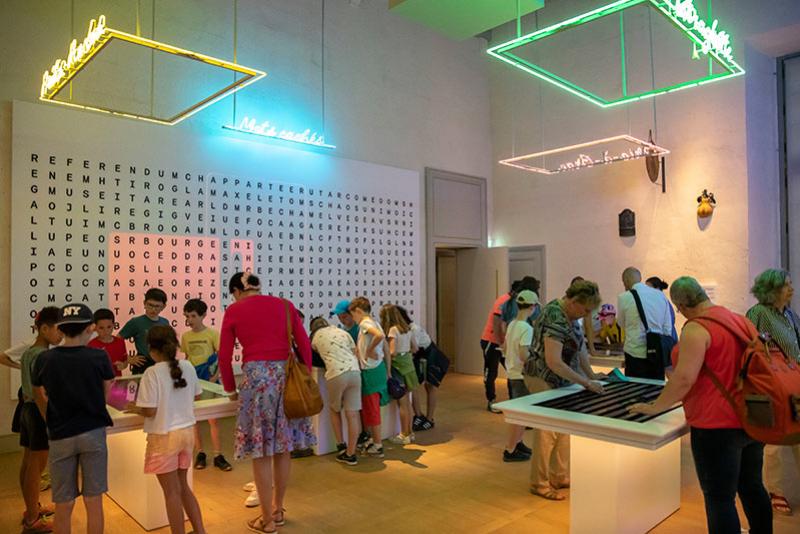
School group and visitors in the Word Games room of the Cité internationale de la langue française, located in the Château de Villers-Cotterêts.
© Yann Monel / CMN
And for the culture budget…
We are in the middle of an audit to vote on additional operating budgets, but the share allocated to culture was 6.84% in 2025, or around €820,000 out of €12 million. On the other hand, in terms of the financing budget, we are rather well off since according to the last administrative account, it amounted to €12 million, which can be explained by the fact that there is no investment in the City.
Finally… as the City belongs to the State, what cultural assets does Villers-Cotterêts have of its own?
That’s the right question. What we have is history and we must seize it. We put too much emphasis on the City and Dumas, and we forget François I. We must develop the thematic and historical walks that the tourist office already offers. We also have the Henri-II pavilion, a real gem in the city center open to visitors whose owners wish to develop historical tours linked to the kings of France.
And around the Dumas, do you have a project?
Yes, the idea is to create a Dumas space four times larger than the current museum. A real reference center on the three Dumas where you will find a bibliography, a filmography, a performance space for plays and swashbuckling shows, artist residencies and a research space. I am currently visiting places without knowing yet whether we will purchase an existing building or build a new one.
Significant funding in perspective…
Indeed. We will rely on the “Small towns of tomorrow” system, the State, the DRAC, the Department too… When the President of the Republic came in April, I spoke to him about the project and Erik Orsenna, present, told me that he wanted to be my intern… a luxury intern! The Haitian writer James Noël also offered to get involved. Dumas is a popular asset and the French love him. This is what we must capitalize on.
How can we bring culture together under your mandate without becoming a political marker?
Aisne has the sad record for the illiteracy rate in France, with a population that views culture in a suspicious manner because it is suspected of elitism. The whole challenge is to democratize, to create levels by already restoring the Dumas Museum free of charge for Cotterézian schools. Then, recruit a cultural mediator in primary schools based on the model of sports educators. And above all, create bridges between these facilities so that children can go to the museum, the media library and the City. We remain humble, because we narrowly won with a 24-vote difference. We know it’s fragile.