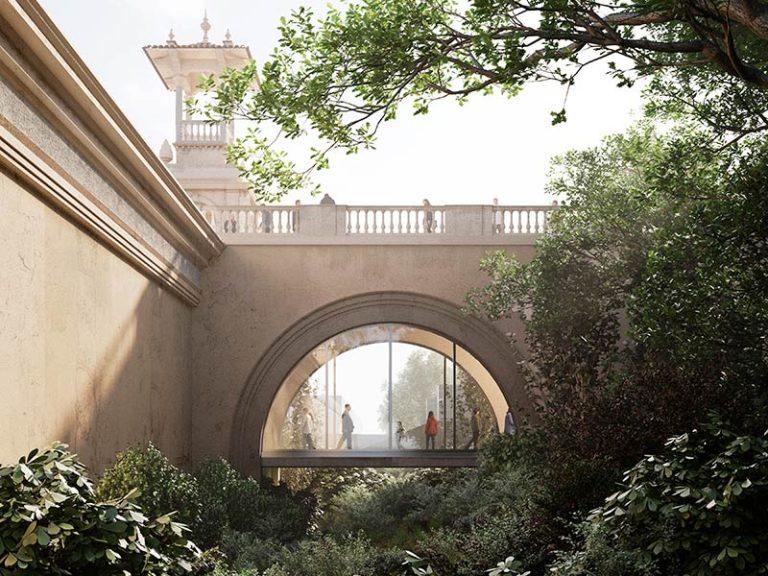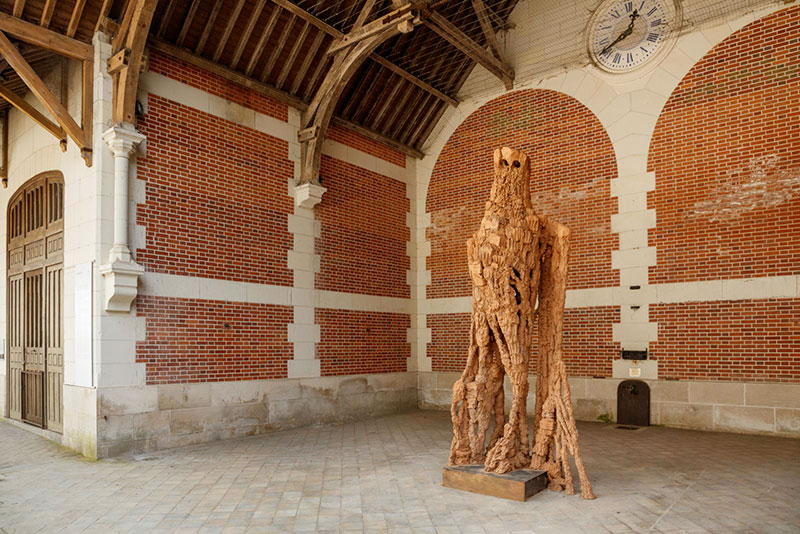
Chaumont-sur-Loire (Loir-et-Cher). It’s this year with a superb Night owl almost 7 tons and 2 meters high, in Soignies stone, signed Eugène Dodeigne (1923-2015), which Chantal Colleu-Dumond, the director of the Chaumont-sur-Loire estate and curator of the exhibitions, decided to welcome, at the entrance, in front of the footbath, the visitors of her 19th Art Season. More faithful than ever to her desire to create connections, bridges, and here in this case echoes between the works and the artists, she installed not far away, under the awning of the stables, another owl, very high (more than 4 m, see ill.) by Lionel Sabatté (born in 1975), which completes the work Crossed pathsalready designed by him for Chaumont in 2023.
Eugene Dodeigne, Night owl.
© Germain Hirselj
The two birds of prey introduce one of the strong themes of this edition, that of birds. It continues beautifully with the aptly named Astrid de La Forest (born in 1962) and her series “And the birds also dream”, produced on site in residence. With her paintings and drawings evoking, in addition to birds, trees, she introduces the second major theme of this edition, which Marc Desgrandchamps (1960), invited as a guest star to occupy the nine rooms of the upper galleries of the castle with more than thirty paintings, develops in a beautiful way. We obviously find its trunks with bluish tones, as if they had rubbed off the blue skies in the background; he also offers himself the mischievous pleasure of slipping, into this same background and using the same tones, the Château de Chaumont. But even more than Desgrandchamps, it is Evi Keller (born in 1968) who explodes this color with a series of paintings entitled “Matière-Lumière [Or Bleu, soleils ensevelis] » and hung in the Agnès-Varda gallery. These are true constellations of organic, animal and plant worlds, like a memory of the birth of the cosmos from which she would have captured a fossilized blue light.
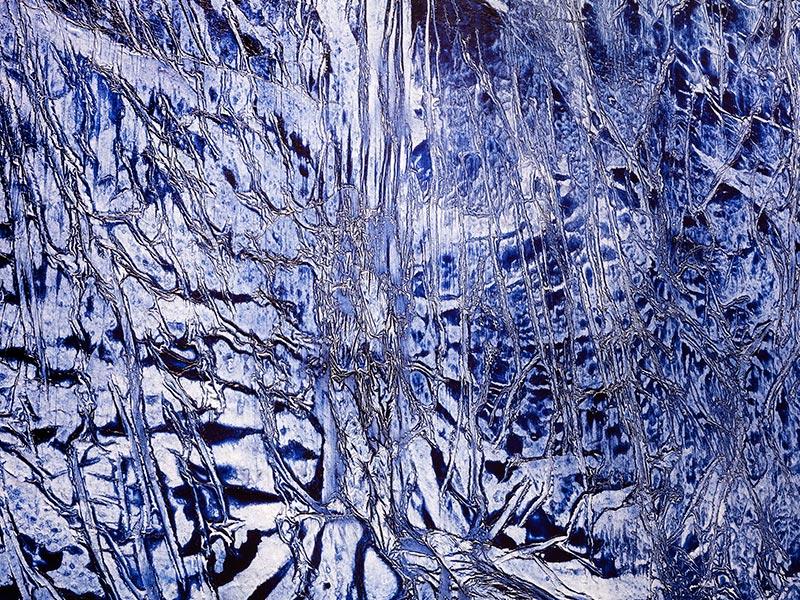
Evi Keller, Matter-Light, ML-V-26-0310 (detail), 2026, 280 x 170 cm.
© Evi Keller / Galerie Jeanne Bucher Jaeger
This magma is reminiscent of that suggested by the black and white porcelain concretions of Cracks created by Anaïs Lelièvre (born in 1982, the youngest in the selection) and installed on the ground, in the middle of the Asinerie, as well as her wall works Shells in black stoneware and enamel. They certainly echo the finesse and delicacy of the sculptures of Antonio Crespo Foix (1953), in steel, plant material and horse hair, a sort of nest of intertwined metal wires (copper, Alpaca, brass, etc.) and plant materials (bamboo, raffia, poplar pollen, kapok, egrets, etc.) and which give his sculptures a very airy and elusive appearance like dandelion flowers. golden.
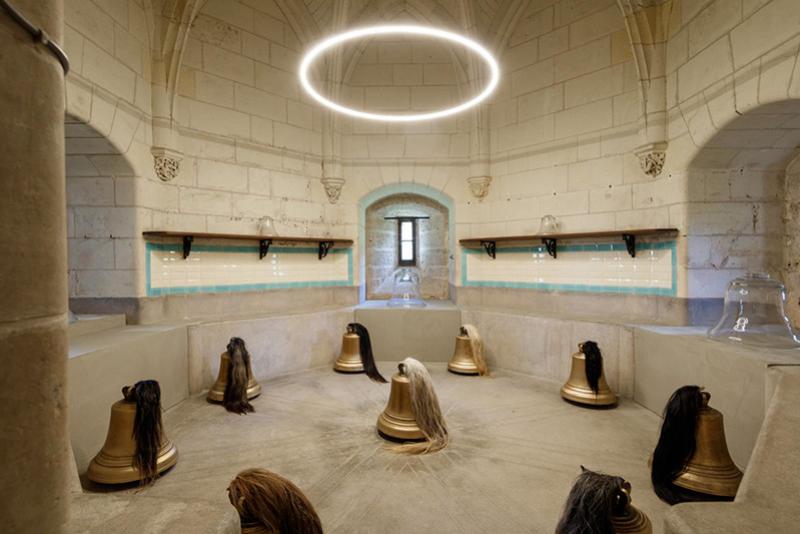
Pascal Convert, Fly, white-maned horse.
Courtesy Domaine de Chaumont-sur-Loire
Chantal Colleu-Dumond likes to construct her journey as a concatenation, one work calling for another which calls for another, etc. The example is again given with these large paintings by Claudio Parmiggiani (1943), presented in the lower gallery of the west wing of the castle and evoking the white shadows of book spines, like ectoplasms, echoing the crystallized books by Pascal Convert stored for several years in the library. This same Pascal Convert (1957), a regular at the places found in the basement of the Diana Tower, in the castle, with a series of eight polished bronze bells entitled Fly, white-maned horse… Wearing ponytails, they recall the hair of Diane de Poitiers and obviously echo the bells of Jannis Kounellis (1936-2017) present for more than ten years already in neighboring kitchens.
We find the floral dimension in around thirty charcoals by Eugène Dodeigne, chosen with his daughter and which had never been shown. They are combined with a splendid vigor, that of the sculptor, and tend to confuse flowers, notably amaryllis, with the bodies of dancers in movement. A perfect link with other sculptures also presented in the lower galleries of the castle. And if there are fewer works in the park this year, one of them, Rezilientia by Ghyslain Bertholon (1972), metaphorizes the general idea in a beautiful way: it is a blackened redwood stump, as if burned, in which an ax is planted whose wooden handle is blooming with gold leaves. Nice symbol reminding us that nature always takes back its rights.