Five years ago, the Guggenheim Museum Bilbao allowed us to delve deeper into the work of Alice Neel, in what was its first retrospective in Spain. That exhibition was significantly titled “People First” and highlighted his keen capacity for psychological observation and his attention to the suffering and pain of others, but also to the strength and resistance of those who overcome them.
Neel (1900-1984) is now the subject of another anthology at the Museu Serralves in Porto, “Beautifully imperfect”, which in this case emphasizes his representations of bodies that do not obey rigid canons of beauty, of asymmetrical faces and looks that, rather than shining, contain layers of maturity and experience.
Her career, which began in the twenties, was marked by some of the main events and social currents of the last century in the United States: the Great Depression, the Second World War, the postwar period, the civil rights movement, the fight for women’s rights and gay liberation. The history of his time is reflected in his compositions through those he portrayed and also the social conditions in which they lived; Throughout a life of various personal and professional difficulties, she refused to adapt her painting to market expectations, maintaining the human figure as the central axis of her work when abstraction was widely defended by critics, museums and galleries in her country.
For decades she worked with little institutional recognition, but her prestige grew from the late sixties and, in 1970, the appearance of her portrait of the famous feminist writer and activist Kate Millett on the cover of the magazine time He gave his canvases wide visibility; That same year, Neel portrayed Andy Warhol. In 1974, the Whitney Museum in New York hosted what was the artist’s first retrospective, when she was already seventy-four years old.
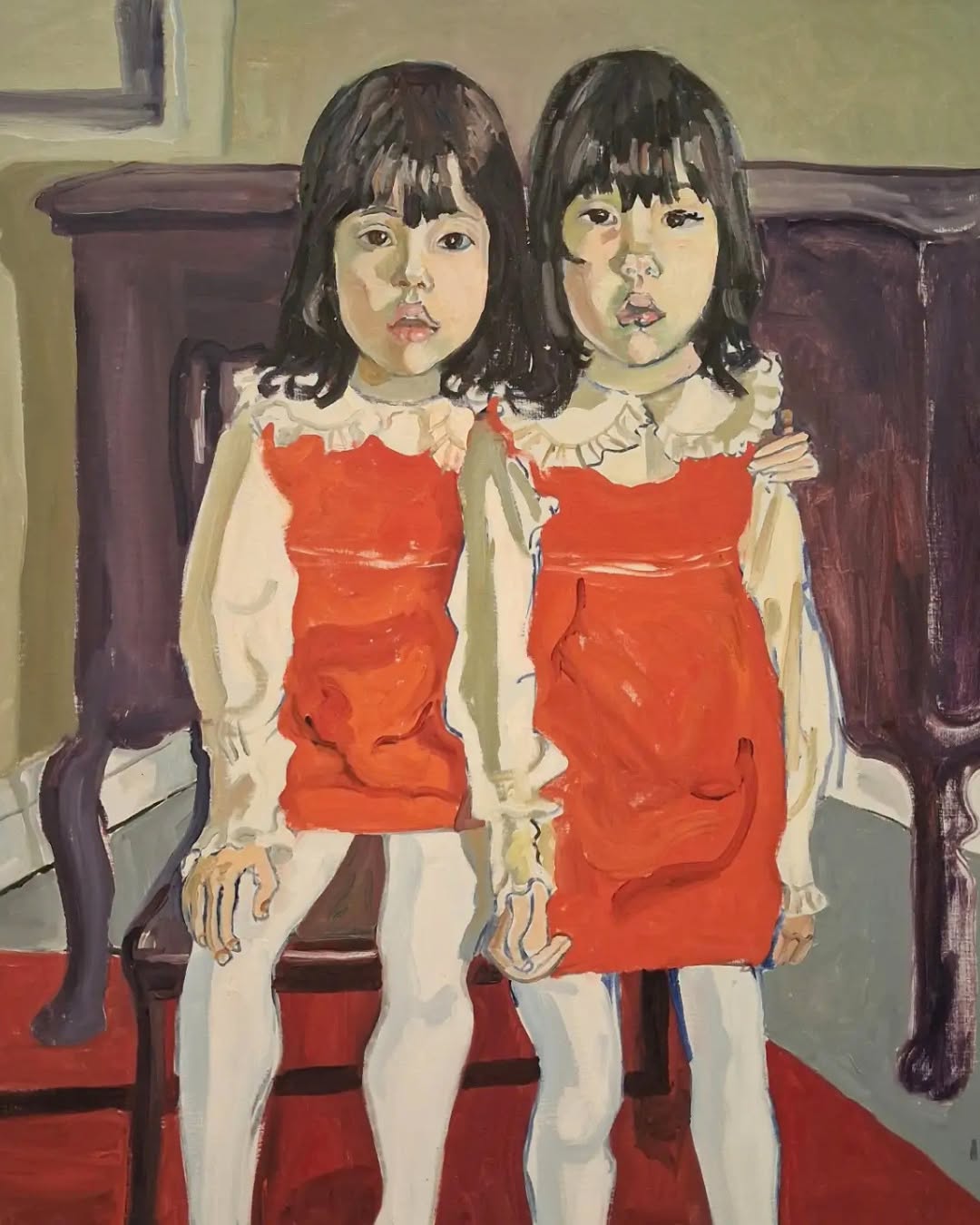
Alice Neel. The De Vegh Twins1975
For Neel, and hence the title of this Portuguese project, imperfection was part of existence itself. Determined and uncompromising, she rejected the artificiality of beauty ideals, preferring to show bodies, faces and the marks of time as they were. The expressiveness, the unadorned vulnerability and the uniqueness of those who posed for her prevailed over the anatomical precision and the sublimated image in her portraits; she called herself soul collectoran expression that reflects his dive into the character, fragility and psychological presence of each individual. In his works, the flaw It thus became a form of resistance.
And the radical force of his painting remains relevant today: the projection he gave to the black and Puerto Rican residents of Spanish Harlem – where he lived between 1938 and 1962 -, to queer artists and performers, or to non-theoretically attractive physicists still finds echo in current debates on diversity, gender, sexuality, inequality or representation. He granted the same preeminence in his creations to family members, neighbors, workers, immigrants, artists, writers, activists, politicians and public figures, regardless of their profession, origin or social status, as he sought to capture real people in their individual and social complexity, allowing power relations and often marginalized lives to become visible. Aging, illness and death also occupy a key place in his work: in the skin, in postures and in the unattenuated transformations of the body.
The principle of imperfect beauty actually extends to the formal features of his own painting, whose open contours, unpainted areas of the canvas, and patent brushstrokes reveal the process of image construction. The unfinished nature and the backgrounds treated with spots of color reveal the gesture and energy of the artist’s encounter with her model.
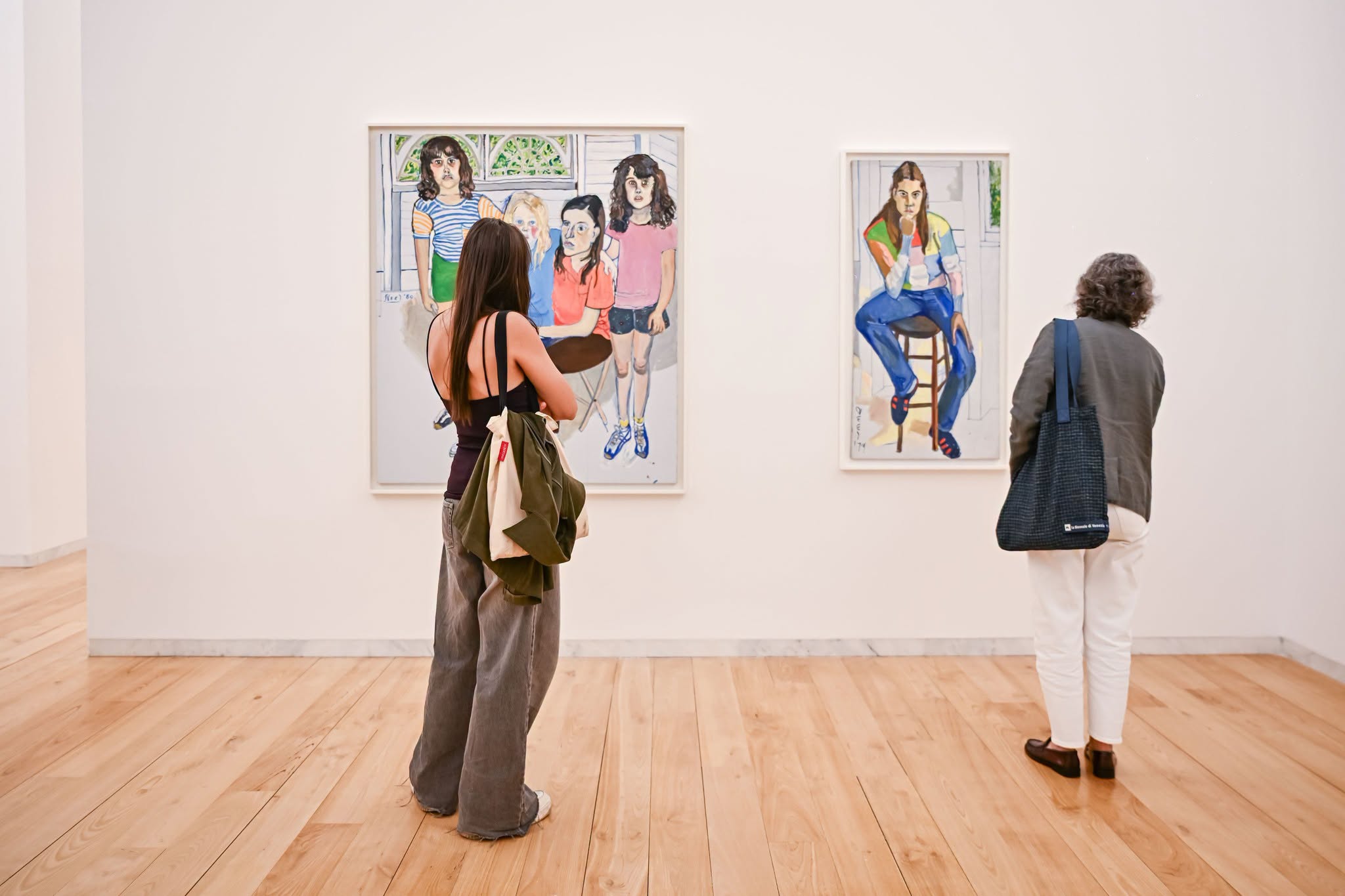
Alice Neel. Beautifully Imperfect. Serralves Museum. Porto, 2026
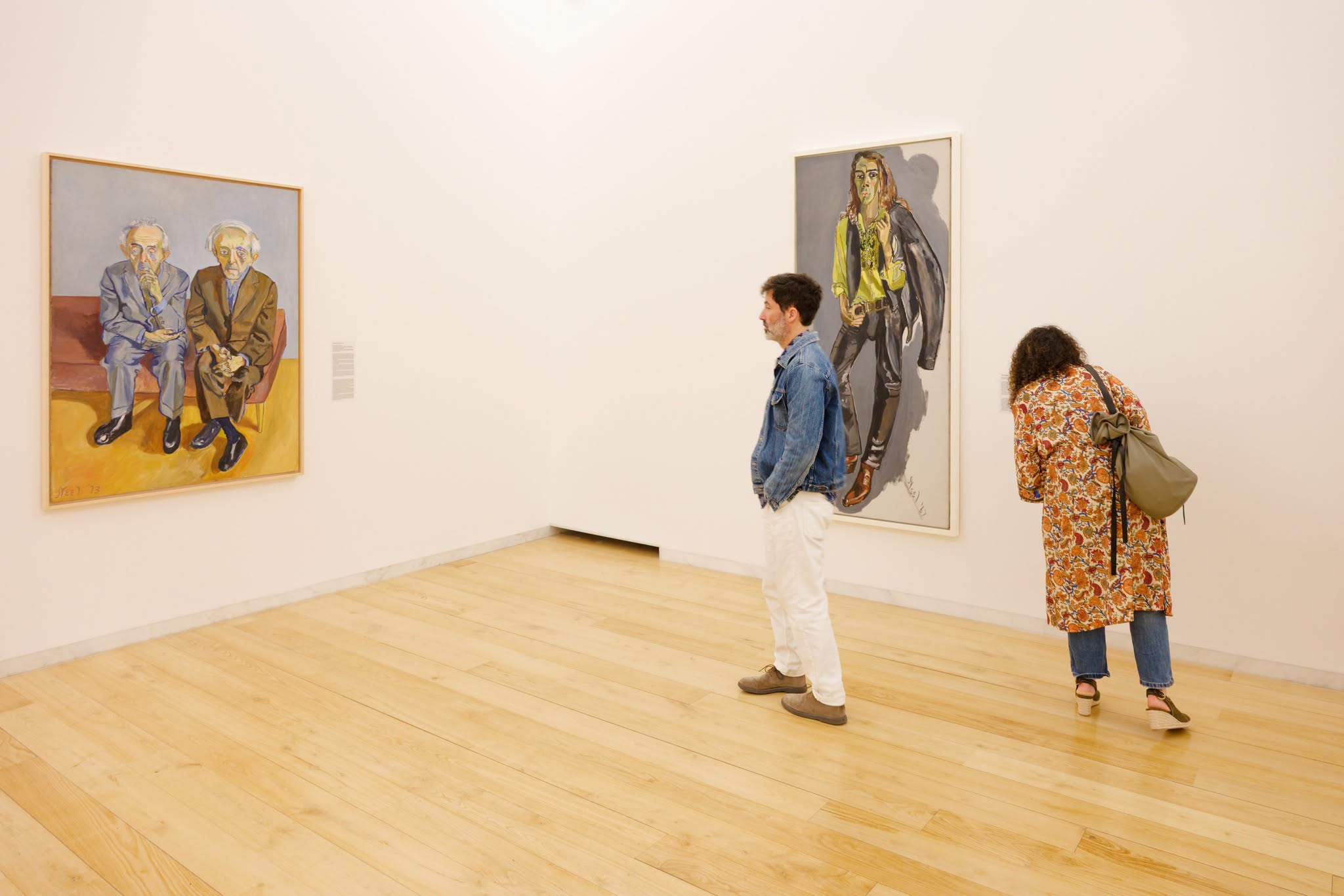
Alice Neel. Beautifully Imperfect. Serralves Museum. Porto, 2026
The Serralves exhibition is organized into small, non-chronological thematic groups. Taking advantage of the architecture of the museum’s new Álvaro Siza wing, the tour generates dialogues between works, phases and themes of his practice, based on an expanded interpretation of that concept of “beautifully imperfect.” The itinerary opens with a self-portrait of Alice Neel, painted in 1980, when she was eighty years old. Alone, naked and frontal, she appears without idealization or artifice, and without submitting to rules: it is a radical opening, almost a silent manifesto, that announces many central issues of the American woman’s journey and of this exhibition.
Around her, a set of letters addressed to her expands this first meeting, turning it into an intimate and collective chorus of voices, in tune with a work that was always attentive to the uniqueness of each person. The correspondence found in the family archive – missives of admiration and gratitude sent over the years – has given rise to a new set of epistles by artists, writers or musicians invited to write to Neel as if she were alive or to pay tribute to her. We can cite the contributions of Allora & Calzadilla, Annie Sprinkle, Carla Arocha & Stéphane Schraenen, Carminho, Celia Paul, Chantal Joffe, Dennis Morris, Dominique González-Foerster, Elmgreen & Dragset, Fernanda Fragateiro, Luisa Jacinto or Vasco Araújo.
Next, another thematic core brings together portraits related to family, emotional relationships, motherhood, childhood and loss. Their children, grandchildren and colleagues appear in them along with friends, neighbors and their children; Thus, the notion of an extended family arises, created by ties of kinship, friendship, affection and shared life. Neel often used to paint the same people, accompanying them at different ages and moments. In addition, the exhibition compiles pieces that highlight the social and political dimension of his canvases: his looks at those creators, intellectuals, activists, workers, politicians and other New Yorkers who make up a broad examination of the city and the environment in which he soaked.
Private existence and the public sphere coexist in his production: family and sentimental ties are part of the social and political problems of his time, while collective history takes shape in real people. Throughout the rooms, a selection of still lifes interrupts the succession of portraits and introduces pauses in the figuration, while incorporating issues such as the passage of time, life and death into the story of this proposal.
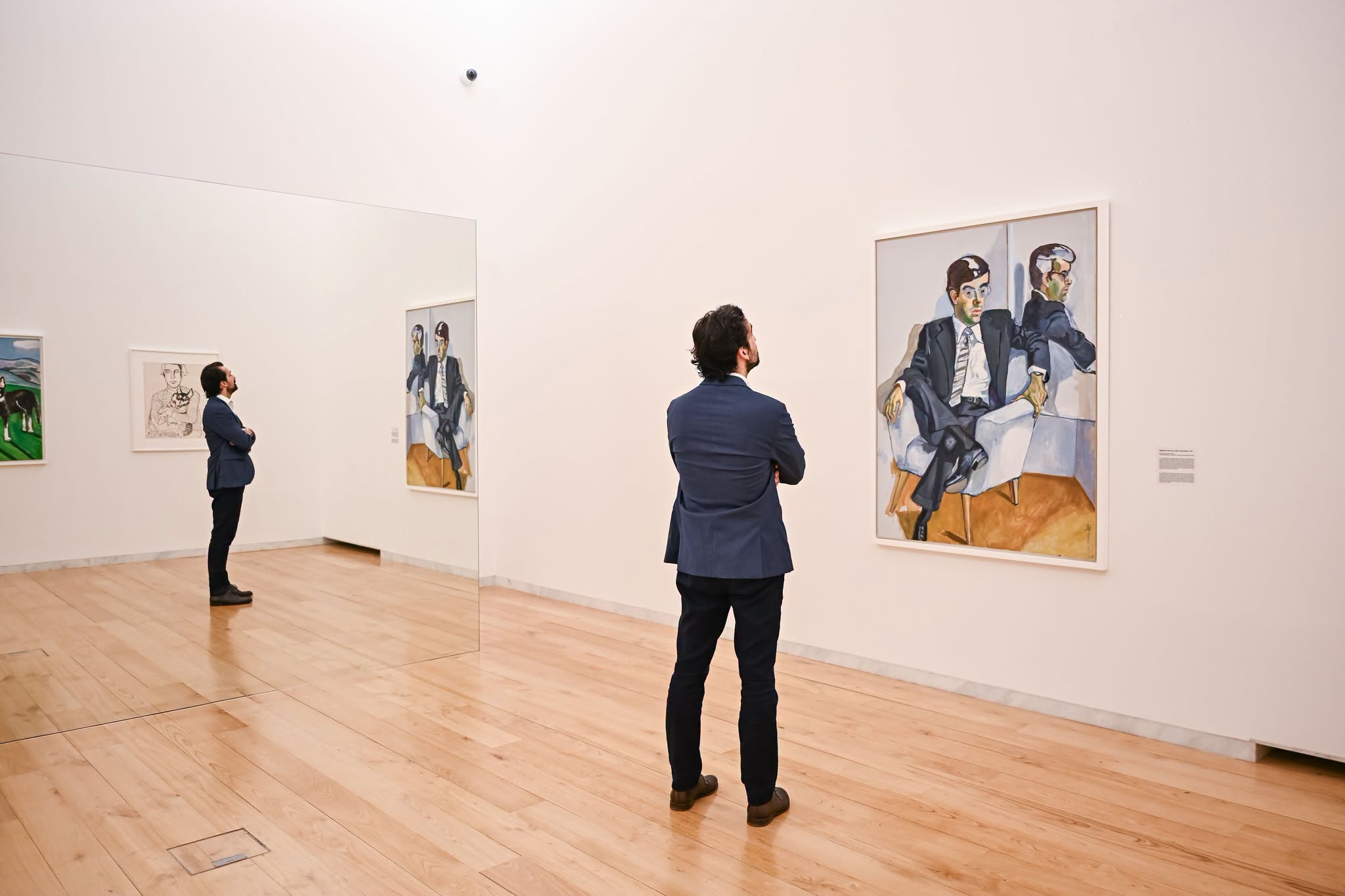
Alice Neel. Beautifully Imperfect. Serralves Museum. Porto, 2026
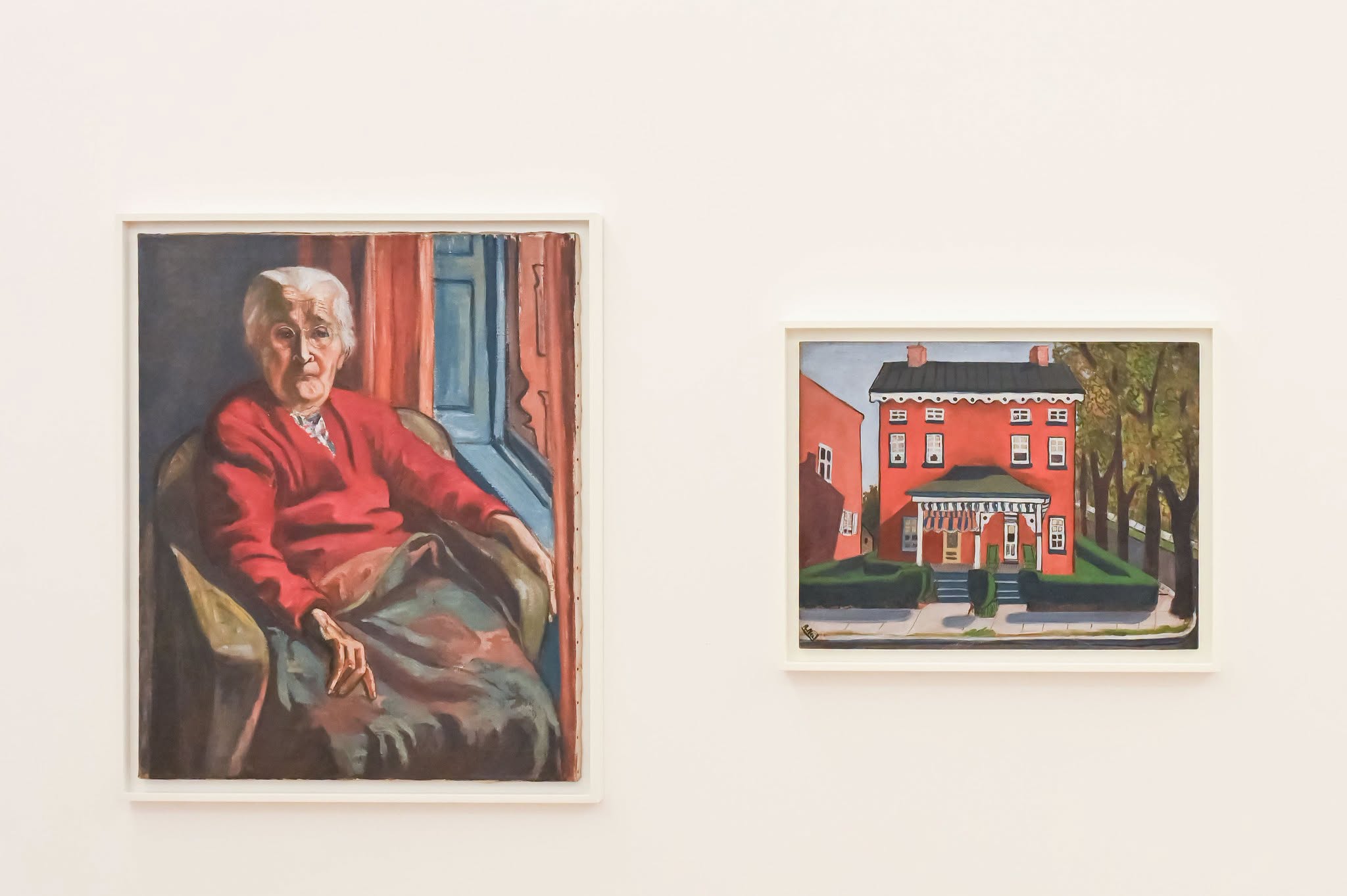
Alice Neel. Beautifully Imperfect. Serralves Museum. Porto, 2026
The exhibition also includes a selection of books from Alice Neel’s personal library, brought directly from the shelves of her New York apartment to Porto, to display a vision of some of her readings, references and interests, as well as sound spaces where she can listen to the music that was part of her life, from the tangos of Carlos Gardel to Mozart and Beethoven. And there is no shortage of a documentary made in 2007 by his grandson Andrew Neel, which intersperses family interviews with archival images.
On the poster of this exhibition we see the black recruit James Hunter, the protagonist of a work that was left unfinished and that was made in 1965, the year in which Lyndon B. Johnson decided to increase the US ground forces in South Vietnam. Hunter was scheduled to march there a week after he began being photographed and did not return for the second session.
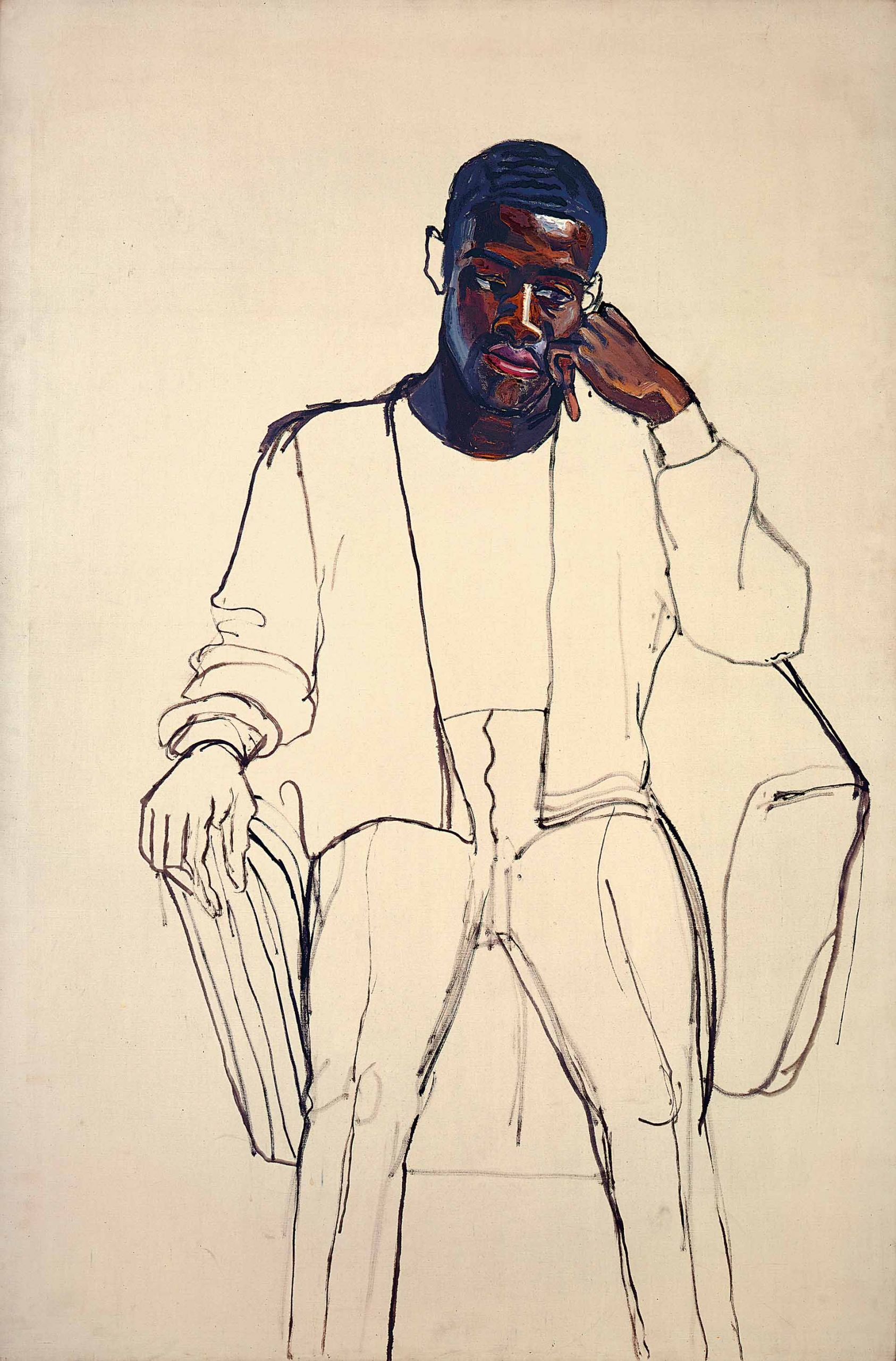
Alice Neel. Black Recruit (James Hunter)1965. Courtesy of The Estate of Alice Neel © The Estate of Alice Neel, Bilbao, 2021
Alice Neel. “Beautifully Imperfect”
SERRALVES MUSEUM
R. Dom João de Castro, 210
Port
From July 16, 2026 to January 31, 2027