Earth, fossils, human hair, leather, bronze… Solange Pessoa (Ferros, Brazil, 1961) works with materials of very diverse origin, with which she creates sculptures and installations that are difficult to classify, giving rise to an artistic universe that can be as attractive as it is disturbing. Nature, memory and spirituality go through a production that, since the eighties, has been developing a very personal language and that can now be discovered in the exhibition dedicated to it by the Botín Center.
“Del día o de la noche”, Pessoa’s first individual exhibition in Spain, is curated by Bárbara Rodríguez Muñoz and brings together a selection of works including key pieces in the artist’s career along with two large installations produced for this occasion. The title of the exhibition alludes to that coexistence of opposites so present in Pessoa’s universe, where light and darkness, the corporal and the spiritual or sleep and wakefulness intermingle and stop functioning as opposite categories. An ambiguity that runs through his entire production and that becomes palpable throughout the exhibition.
To understand his work it is necessary to talk about Minas Gerais, the Brazilian region where he was born and which continues to be a fundamental reference in his career. It is a territory of great natural wealth, with important deposits of gold, iron and precious stones, whose exploitation deeply marked its history and its landscape. It was also one of the great centers of Brazilian colonial baroque, especially in cities like Ouro Preto, where the wealth obtained from the mines made it possible to finance churches and architectural complexes of extraordinary exuberance. The so-called “Mining Baroque”, closely linked to the European baroque tradition, left an important mark on Pessoa. The artist finds in it a taste for excess, contorted forms, expressive intensity and a spirituality that manifests itself through matter. The work of the sculptor and architect Aleijadinho constitutes one of its most important references. However, Pessoa takes that heritage into a much more organic and visceral territory, where the shine of bronze can coexist with earth, hair, leather, wax or plant remains.
The reddish earth, rich in iron, that he uses in some of his works is not only a pigment. Its color and composition also speak of the history of Minas Gerais, its geology and centuries of mining exploitation. This relationship with the territory helps to understand the importance of the landscape in his work, as well as its connections with land art, although Pessoa is interested in both nature and the transformations that humans have exerted on it.
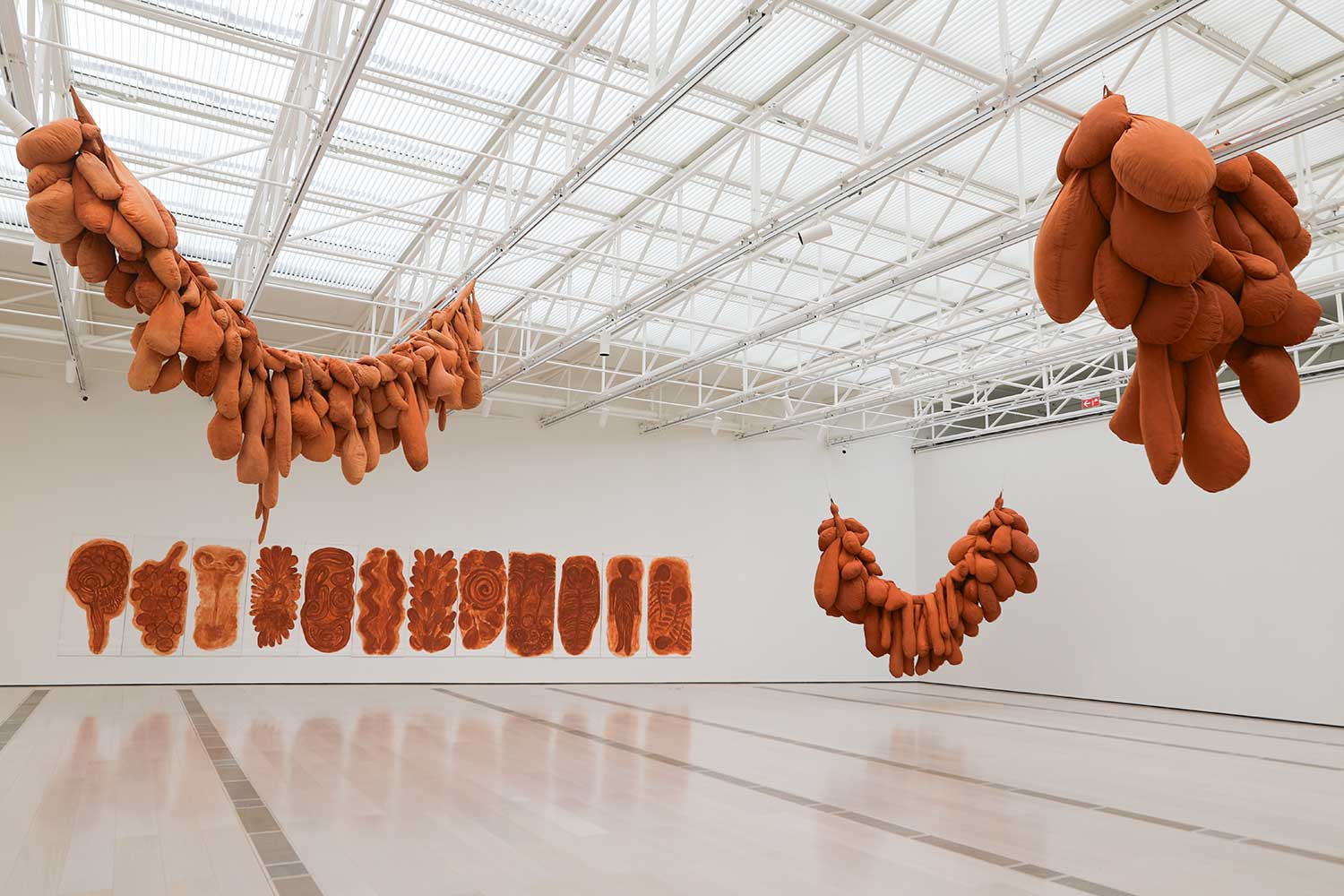
View of the exhibition at Centro Botín: Hammocks (1999-2003) and Untitled (2011-2012). Photo: Bethlehem of Benito
His universe also incorporates references to prehistoric cultures, indigenous and African cosmogonies, surrealism or arte povera, especially due to the use of humble, perishable materials subject to degradation. Affinities can also be found with Georgia O’Keeffe’s attention to natural forms and their bodily resonances. But Pessoa does not properly belong to any of these movements. His way of working, very intuitive, is closer to the idea of anthropophagy of Brazilian modernism, that willingness to devour cultural and artistic influences to transform them into one’s own language.
Archeology also occupies an important place in his imagination. Many of his pieces look like found objects, vestiges of a remote past or remains of extinct organisms. Others, however, suggest something that is yet to be born. In them there are references to the female body, fertility and gestation processes, within a conception of nature in which the human, the animal, the vegetable and the mineral maintain a continuous relationship.
This mix of references and sensations is perceived from the beginning of the exhibition. In Hammocks (1999-2026), fabrics impregnated with earth and natural materials hang from the ceiling forming irregular volumes that recall body wraps. In front of them, twelve paintings made with earth on cotton curtains show elongated figures and structures that evoke nervous systems or cave paintings. The set has a particular warmth, accentuated by the earthy tones and the presence of natural materials. Something similar happens with the ceramics gathered in a small room, whose shapes and surfaces recall insect or bird nests, shelters and protective structures. There is in them a more maternal dimension, of meditation, which coexists with that ambiguity characteristic of Pessoa.
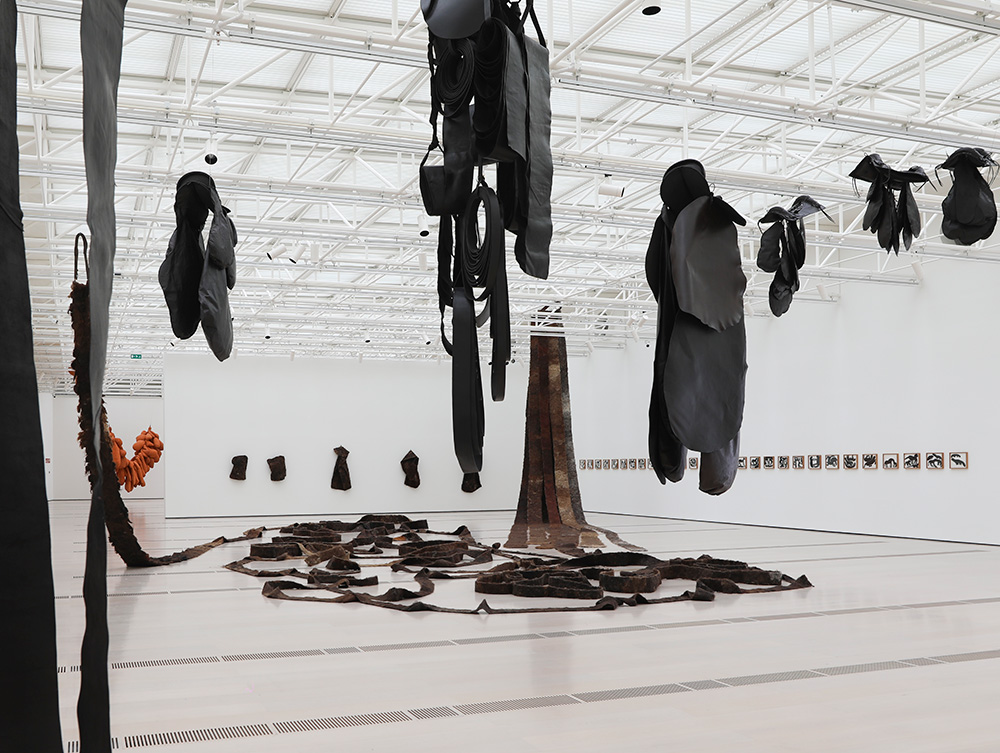
View of the exhibition at Centro Botín: Arreiosfirst and foremost Cathedral occupying the center of the room. Photo: Bethlehem of Benito
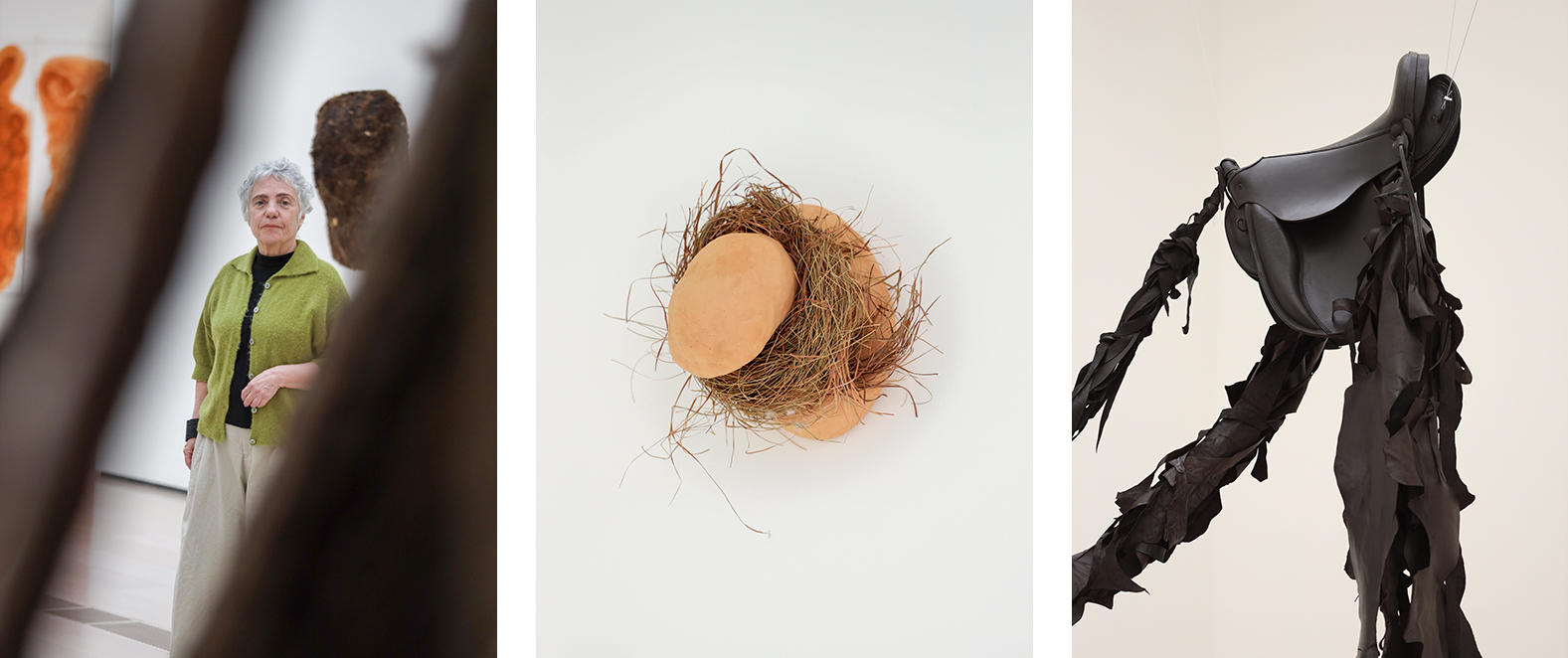
Portrait of Solange Pessoa. Metaflor-Metaflora (2005-2012) (detail) and Arreios (2026) (detail) Photos: Belén de Benito
The route then takes on a darker character. In Cathedral (1990-2003), an installation of more than one hundred meters of human hair, Pessoa brings together materials loaded with corporal and spiritual associations. The hair, collected for years between family, friends and hair salons, retains some of the presence of those who wore it. The artist also relates the curves of the installation to Oscar Niemeyer’s Brasilia Cathedral, while the equestrian accessories that support the structure introduce a reference to the horse, recurring in her work. Linked to this work is Corneliusa performance that is activated periodically during the exhibition. A hooded figure with human hair moves slowly through space, almost blindly, becoming a disturbing presence between the human and the animal.
That atmosphere that refers to the medieval reaches a special intensity in Arreios (2026), one of the two installations that the Botín Foundation has produced for the exhibition. Seventeen figures suspended from the skylight, made with old horse saddles and hand-sewn leather fragments, form a set of spectral, almost sinister appearance. They remember armor or absent bodies, but there are no riders or horses. Only their harness remains, converted into dark presences that seem to retain something of the brute, wild and passionate strength of these animals. Here Pessoa recovers research begun in the nineties and establishes a relationship with Iberian culture and its colonial legacy in America. The horse, used for transportation and war, was also a fundamental instrument of conquest and domination. The installation thus incorporates a historical dimension that contrasts with the more intimate and protective character of the first works.
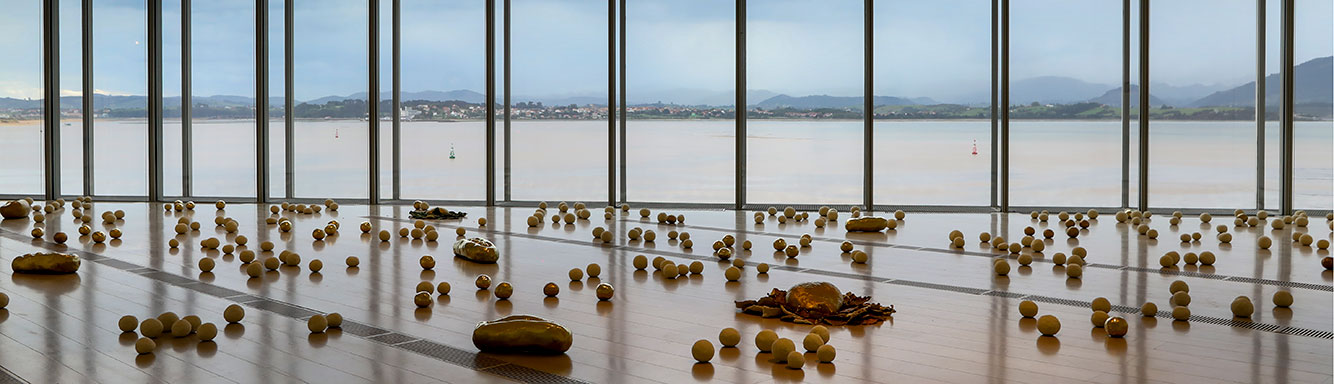
The exhibition ends with Origo (2010-2026), the second major installation produced for Santander, located in the room that opens onto the bay and bathed in natural light. It is one of the most beautiful spaces on the route. A multitude of clay and bronze sculptures are distributed throughout the room, with irregular shapes reminiscent of seeds, fossils, marine organisms or embryonic structures. Some look like remains of creatures that disappeared thousands of years ago; Others suggest forms of life that could be redeveloped. That ambiguity between what is ancestral and what is yet to be born takes on a special presence thanks to the changing light of the bay. The brilliance of the bronze contrasts with the opacity of the clay and recovers, in another way, the heritage of the Mining Baroque, with its material exuberance and its games of light and shadow.
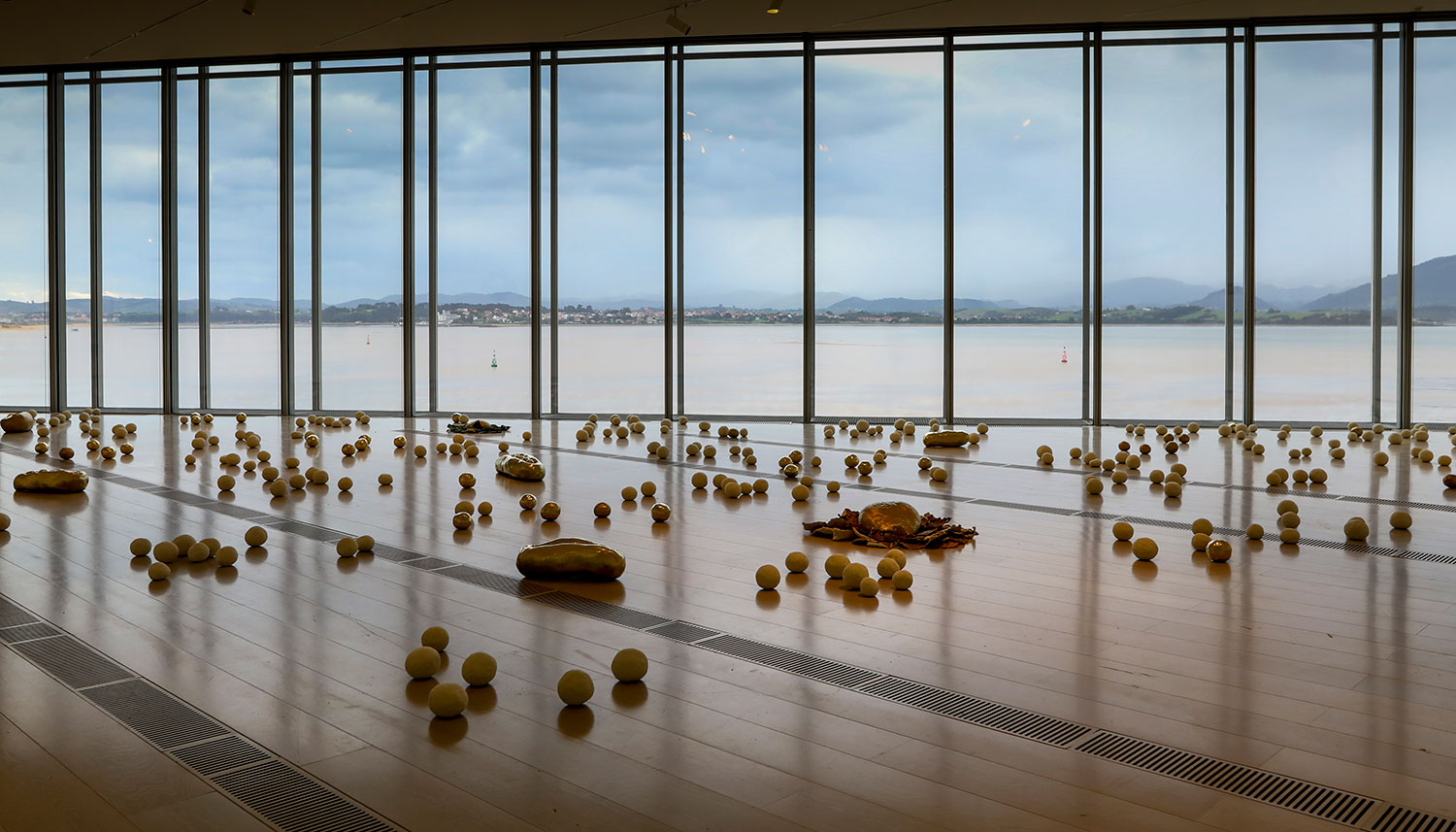
Solange Pessoa. Origo (2010-2026). Photo: Bethlehem of Benito
“Day or night”
LOOT CENTER
Pereda Gardens
Santander
From October 10, 2026 to March 28, 2027