Montbéliard (Doubs). Anyone who has ever walked the cobbled streets of the Franche-Comté city knows how the figure of the fish woman occupies a special place in local iconography: she dominates the city from the coat of arms which adorns the portal of the castle of the Dukes of Württemberg, and the bars which serve as her arms still adorn the city’s coat of arms. A real little summary of Montbéliard heraldry, the booklet for the exhibition at 19, Crac (Regional Center for Contemporary Art) returns to the origins of the figure – the “woman with fish arms” would have been represented for the first time in 1340 on the crest of the coat of arms of Henri de Montbéliard, and the two bars would correspond to visual puns referring to the county of Bar, from which the Counts of Montbéliard come. This figure served as a starting point for an artistic investigation around woman-fish hybridizations and more broadly chimeras in contemporary art.
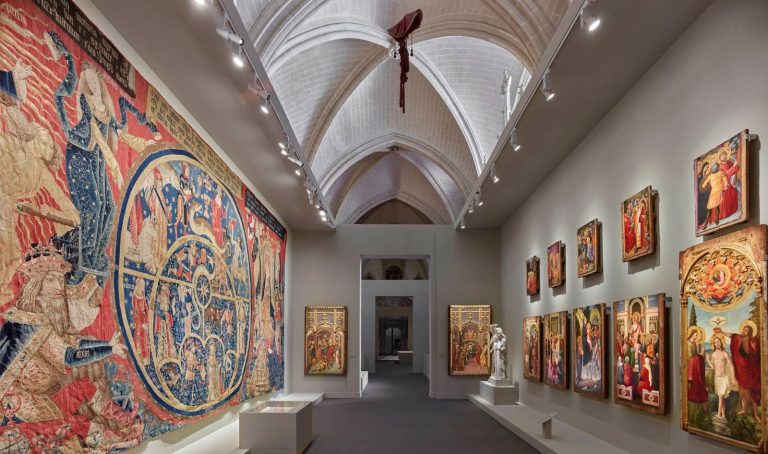
Adeline Lépine, director of 19, Crac and curator of the exhibition, never loses sight of her objective of territorial anchoring: the route, punctuated with historical pieces (handwritten and illustrated armorial, liturgical cups, etc.) from municipal archives and museums as well as the collections of the surrounding parishes, establishes a clear continuity between heritage and contemporary art. Certain works also directly echo the material and immaterial history of the Pays de Montbéliard.
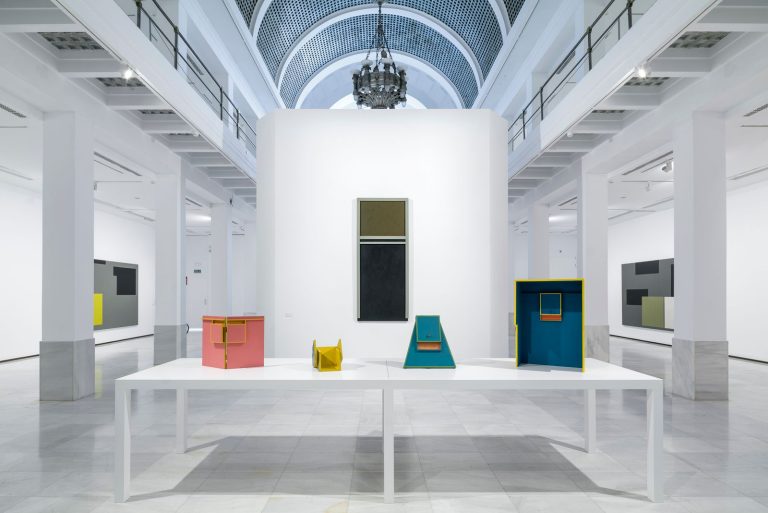
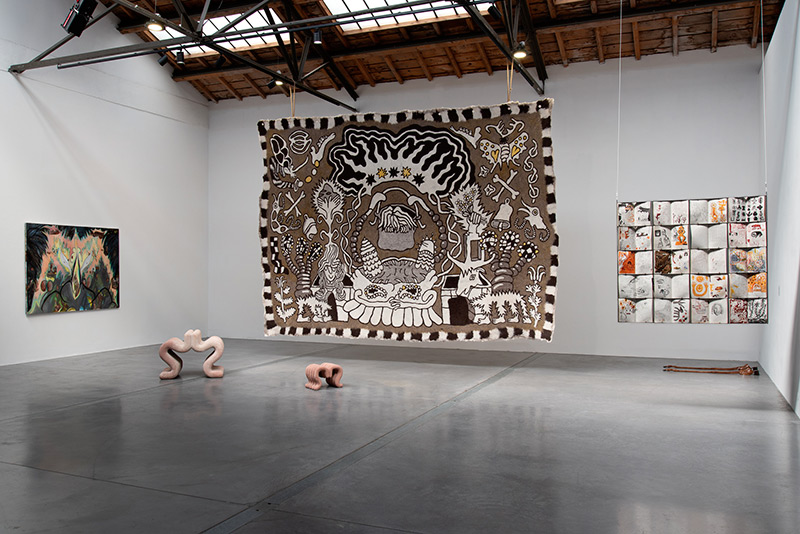
View of the exhibition “The woman with fish arms”.
© Angélique Pichon for 19, Crac
At the crossroads of art and craftsmanship
Proposals that weave a dialogue between the visual arts, crafts, design and publishing are highlighted here. The works reflect a beautiful diversity of know-how (tanning, felting, printing, stone cutting, etc.) usually rarely present in contemporary art exhibitions. The visitor can thus discover the fascinating work of Jenna Kaës: for 19, Crac, the designer produced four lamps with shapes as seductive as they are fanciful, the “Marginalia” (2026), combining metal frames and ornaments obtained by tanning the skin of different fish (catfish, rays, salmon, carp).
The spotlight is also given to talented young visual artists residing in the north-eastern quarter of France (Grand-Est and Bourgogne-Franche-Comté regions). Eva Pelzer, an artist based in Dijon, displays her three pairs of Long socks (2024-2026) in ceramics in the art center space. These shoes with their disproportionate and grotesque shapes (chicken feet, deer hooves, fish tails) are executed with great attention to detail. Among the curiosities of the exhibition, the ceramic bas-reliefs from the “Scylla” series (2026) by Joris Creuze, another Dijon visual artist, hybridize medieval iconography and working-class imagery to give rise to disconcerting sketches, halfway between the strike and the religious procession. The Strasbourg artist Rose-Mahé Cabel revisits the figure of the washerwoman with her soap and rope masks (Y’All Remember2026) which she activates in the context of performances in wash houses.
Demanding, playful and surprising, “The Woman with Fish Arms” is an ode to fantasy, eccentricity and reverie.