The objects he takes as raw material one day were ordinary and familiar, but, in his work, they take on new life by assuming unusual roles and acquiring an imposing presence.
The American Jessica Stockholder has a personal notion of painting that has expanded since the 2000s: she does not completely abandon the original illusionist space of that discipline, but she brings it closer, of course, to the physicality of sculpture, installation and architecture, so that her pieces acquire unrepeatable relationships with the place where they are exhibited and that they move halfway between the artifice in which the canvas usually surrounds us and the palpable material terrain. On the occasion of his first retrospective in Spain, which took place in 2012 at the Barrié Foundation in Coruña, David Barro explained that in his creations everything overflows, even the very margin, and the reality of the painting, as well as the painted reality, insist on the fragment as continuity to add another time, as imaginary as it is aporetic, as concrete as it is incommensurable.
This continuous handling of two and three dimensions was already forged in her formative stage, in British Columbia and at Yale, and has always accompanied her: her creations are nourished by traces found in everyday waste that, in her hands, open their own spaces and to which she applies, as we said, very vivid tones, breaking the framework but without losing it as a reference.
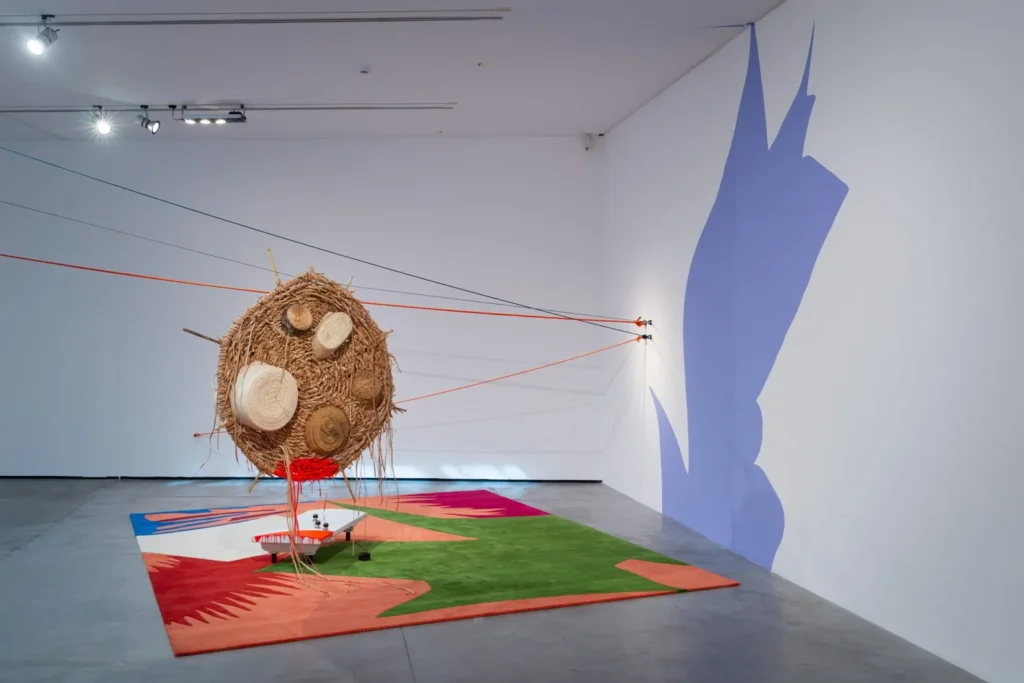
Jessica Stockholder. Cardinal Directions JS. 2025
Max Estrella, the gallery that represents her in Madrid, is dedicating the exhibition “Cardinal Points” to her until January, which summarizes recent works in which she attests to the good health of her inclination for accidents and chance finds, in addition to her lack of vocation towards the permanence of her pieces, a requirement for a commercialization towards which she does not show excessive interest either. Far from these conventions, said his generation colleague Stephen Westfall, one could experience an almost shocking feeling of freedom.
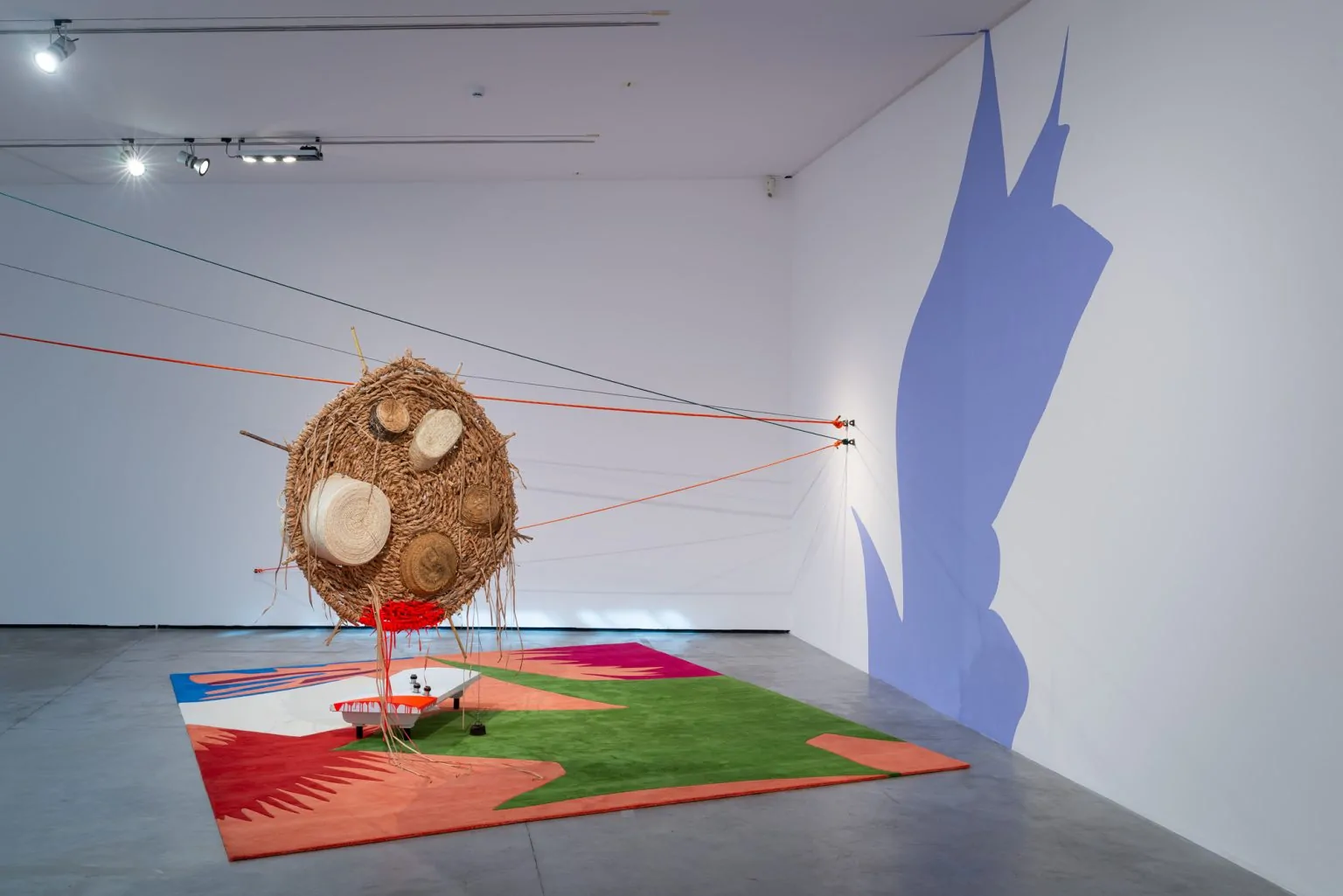
The center of the exhibition is the installation that gives it its title, made last year for another individual presentation by this author at Es Baluard Museu and the Valencian IVAM. It is made with wicker, sailor ropes, bova, esparto grass and cane, materials linked to Mediterranean culture and the continuous work of fishing communities who braid plant fibers to make nets. The artist collaborated in Spain with the Mallorcan artisans Pep Toni Ferrer and Magdalena Vidal, committed to the preservation of traditional techniques such as llatra, which consists of generating patterns with palm leaves and which was used in these areas to make baskets, carrycots and containers that were used, in addition to the sea, in agriculture. With its cooperation, Stockholder has generated a suspended structure articulated by baskets of diverse origin and other coastal fibers.
We can understand this piece as a short-lived construction that evokes the life of someone who lives off the land and the sea: the ropes that the salt hardens, the baskets where work utensils are kept. In this way, Stockholder summons seafaring knowledge through its material traces and the ways of doing things that have been transmitted for generations by certain forms of relationship between bodies, work tools and the aquatic horizon.
Deploy Cardinal points a cartography of volumes in which the baskets behave as such, as orientation clues, on an imaginary map, or as buoys in the water. Between taut ropes, knots and unstable balances, the Americana turns what were functional objects, the fruit of knowledge accumulated over centuries and collective efforts, into a framework from which new visual and spatial connections emerge.
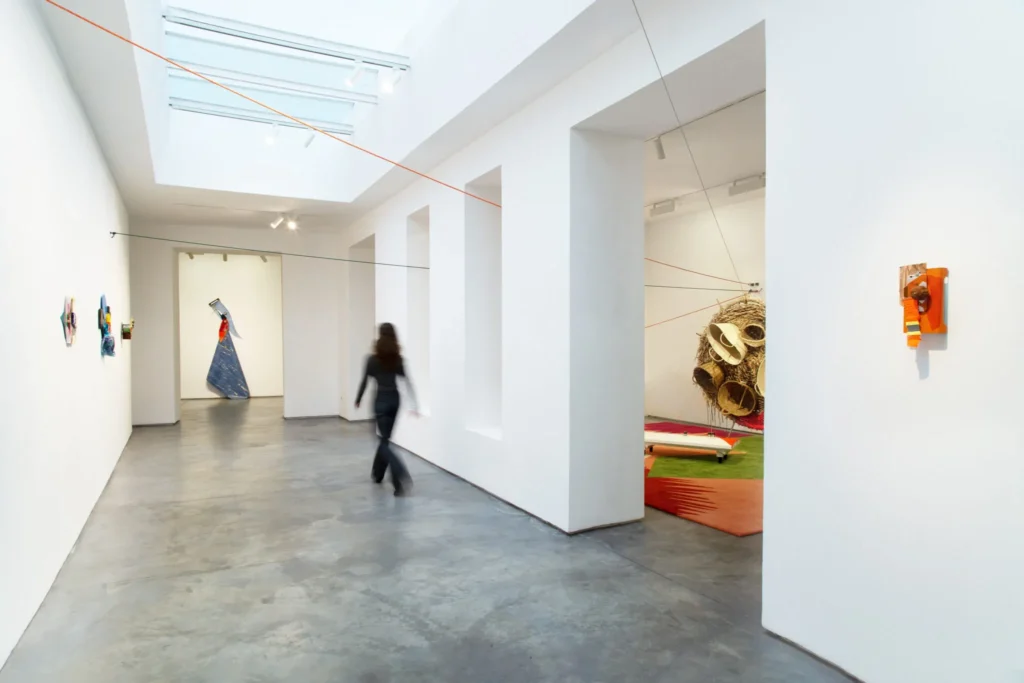
Jessica Stockholder. “Cardinal points”. Max Estrella Gallery
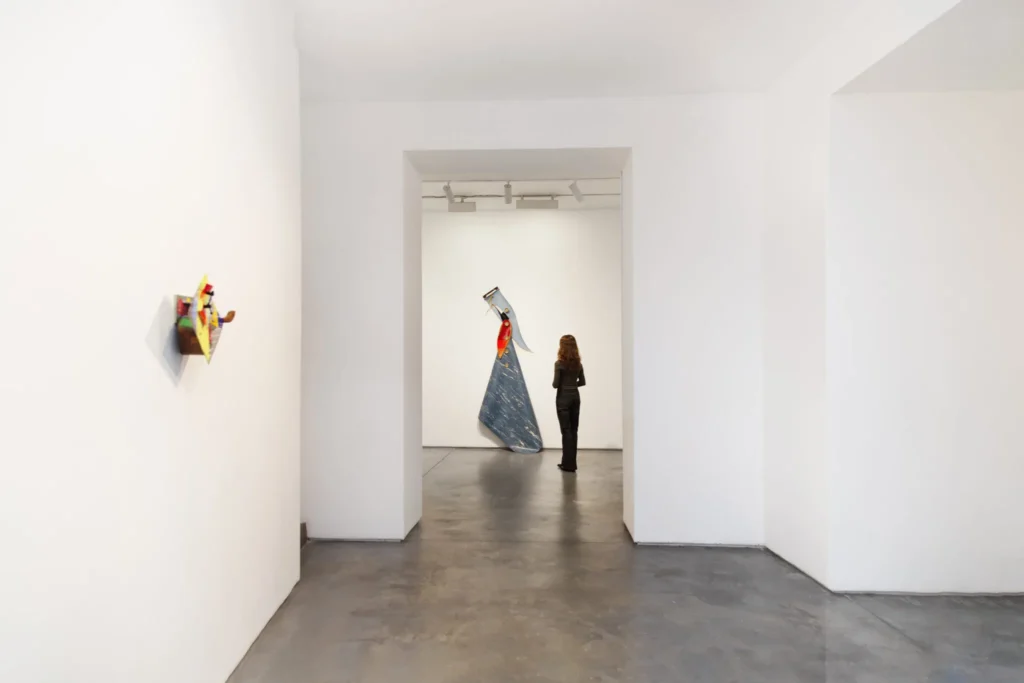
Jessica Stockholder. “Cardinal points”. Max Estrella Gallery
The rest of his works in Max Estrella also appropriate the space and maintain characteristic compositional mechanisms of painting -rhythm, figure and background-, although resorting to elements that are closer to everyone: from a shower curtain to socks, including a typewriter or a refrigerator. In these pieces, however, color wins over matter, in fact it is this that ensures that we can not consider the found objects as such and that we attribute to them the role of drawings, with their intentionally raised volumes and shadows.
We will contemplate small-format wall assemblages and large-scale compositions that we will have to explore; Thus, the Max Estrella rooms themselves will become another element of the proposals. Between the rooms of the gallery, sailor ropes draw lines in the air, as if it could also be intervened without forgetting the primitive drawing.
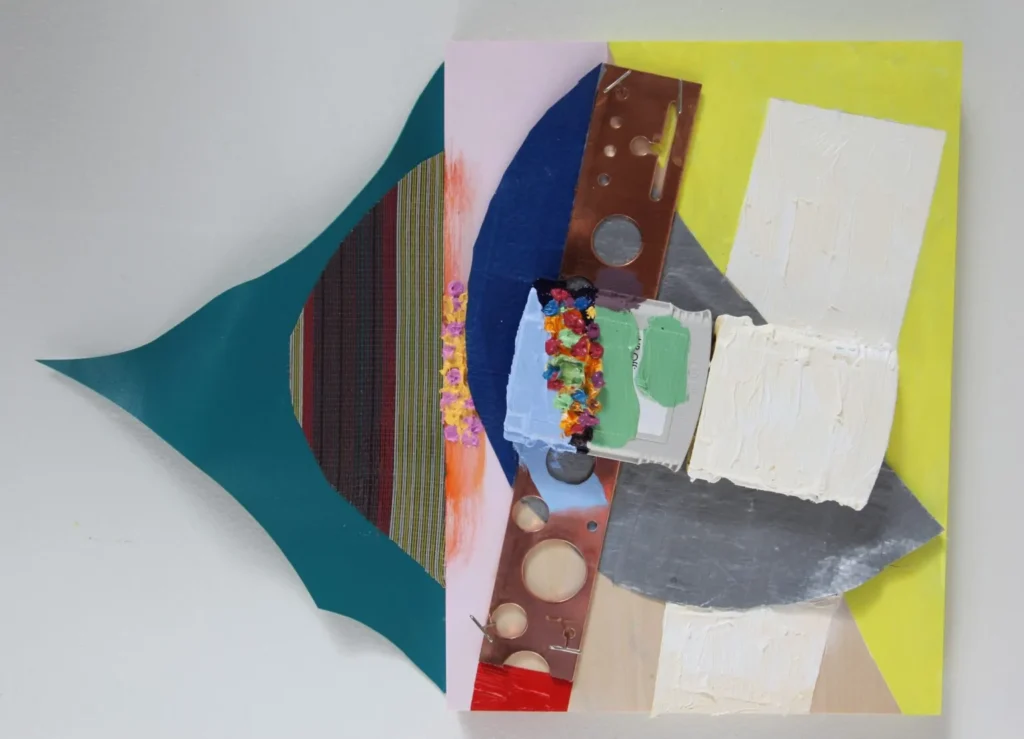
Jessica Stockholder. Specimens JS 8662021
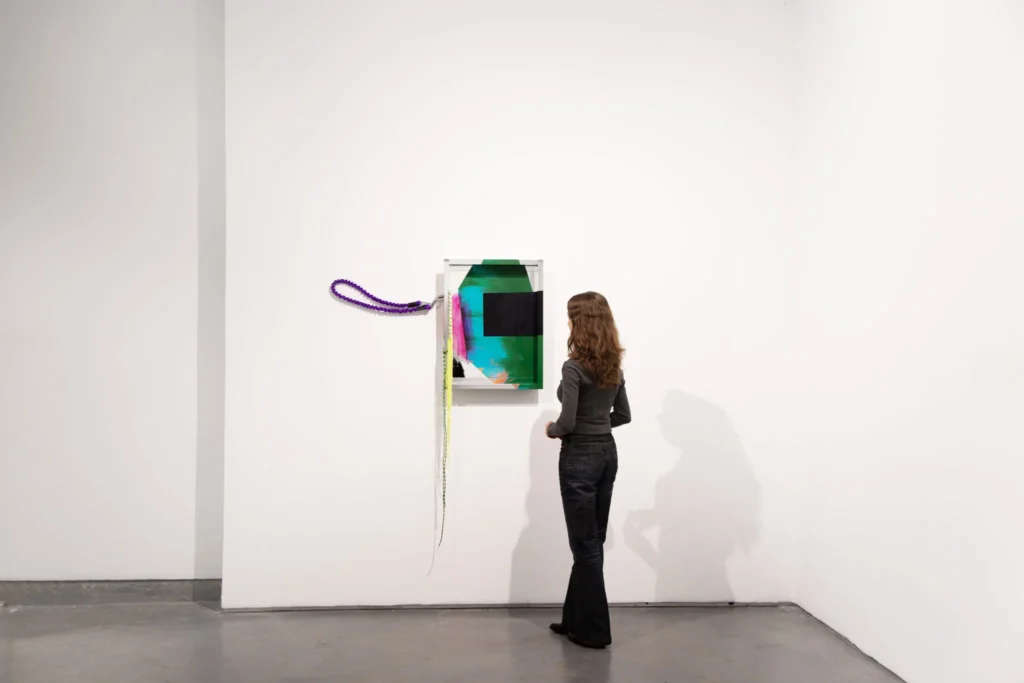
Jessica Stockholder. 861 Extensions #12021
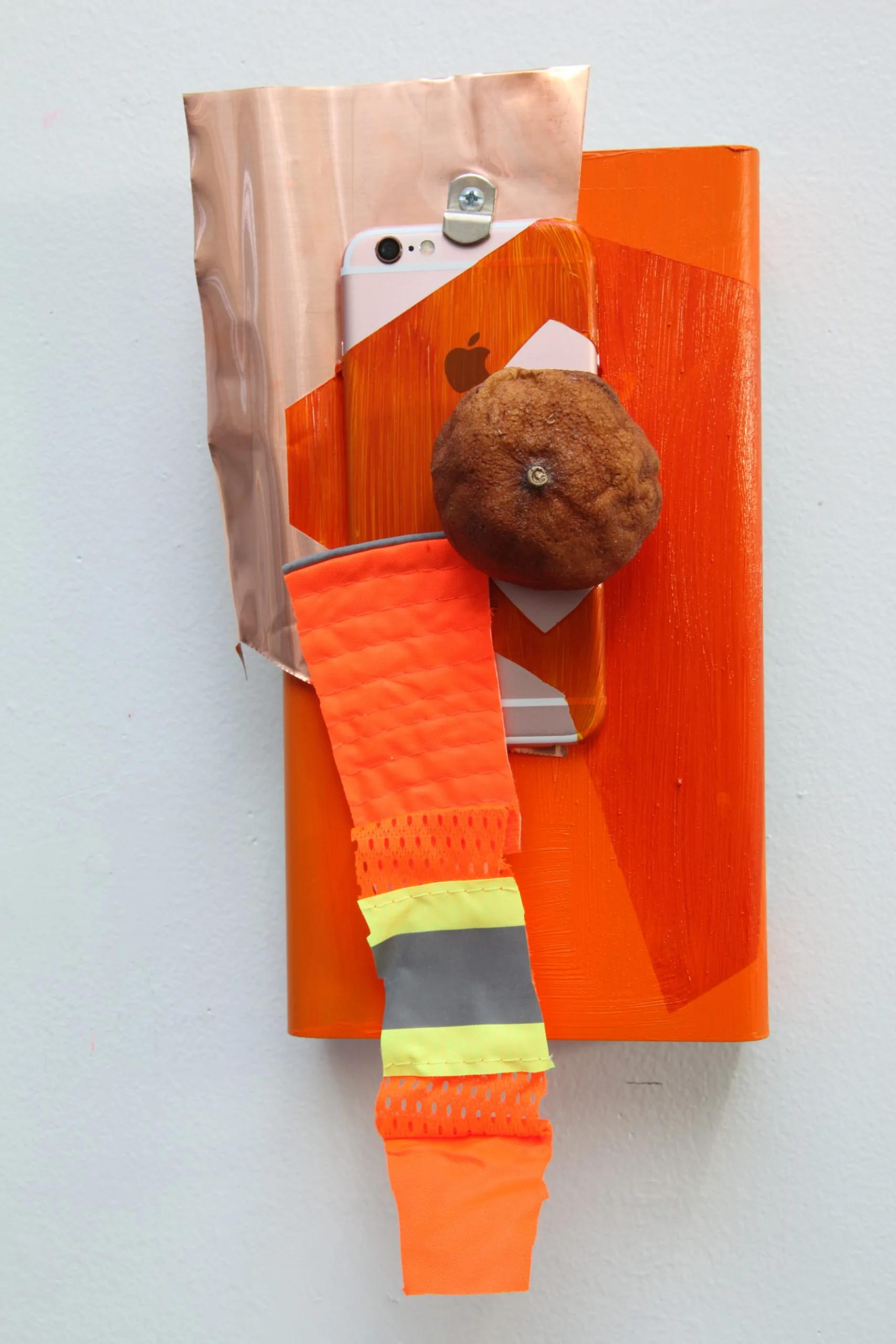
Jessica Stockholder. 749 Infrared2018
Jessica Stockholder. “Cardinal points”
MAX STAR GALLERY
C/ Santo Tomé 6, patio
Madrid
From November 12, 2026 to January 30, 2027