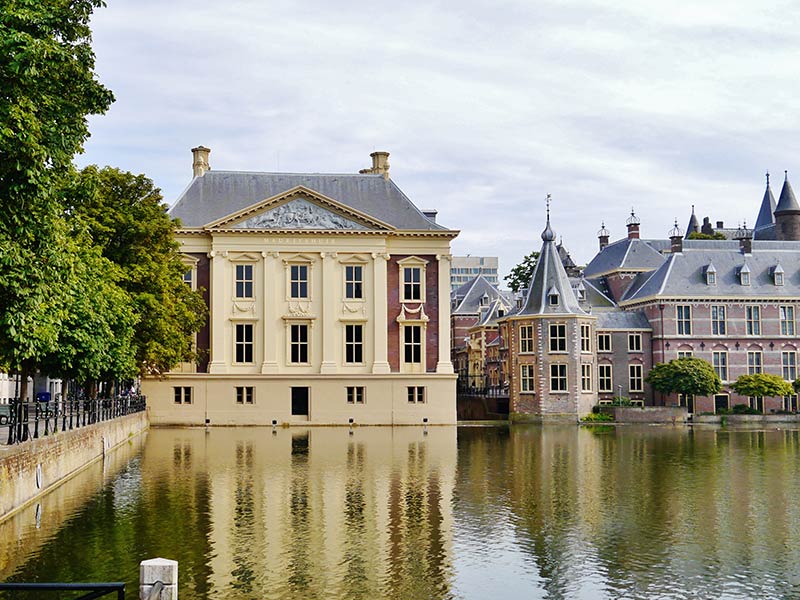
On Wednesday June 10, Dutch justice rendered a favorable decision to the Dutch State and the Mauritshuis in the dispute between them and the heirs of Joseph Kronig, sole heir of Abraham Bredius. The Hague court rejected their request to have the legacy of 25 paintings kept at the Mauritshuis declared obsolete. The State remains the owner of the works, which include several Rembrandts and works formerly attributed to the master.
At the origin of the dispute, the noted absence of several paintings from the donation in the rooms of the museum. In 2021, Otto and Sophia Kroning, the descendants of Joseph Kronig, sole heirs of Abraham Bredius, were surprised not to see more works from the legacy during their visit to the Mauritshuis. In their opinion, keeping the paintings in reserve constitutes a violation of the original conditions of the transfer. The heirs then sued the museum before the District Court of The Hague in September 2024, demanding the return of the works.
During the hearing in April 2026, the disagreement crystallized on an element of translation. The will of Abraham Bredius, written in French, specifies that the paintings bequeathed “must remain exhibited exclusively in the said museum”. A simple exclusivity clause for the defense, which sees it as a guarantee that the Mauritshuis must remain the sole holder of the legacy.
The plaintiffs have a completely different explanation. According to the Kronigs, the donation is subject to the condition that the works be made visible to the public on a permanent and uninterrupted basis. “From our point of view, the wording is clear and imposes the obligation that the works remain exhibited at the Mauritshuis”confirmed the plaintiffs’ lawyer Gert Jan van den Bergh to Arts Journal. The court, however, considered that the uncertainty of the wording should benefit the museum and, therefore, dismissed the heirs’ request.
Director of the Hague Museum for twenty years, collector and art historian, Abraham Bredius was a fine connoisseur of the artistic field and its functioning. This is the aspect that the judges retained, considering that the donor was certainly aware that the works could be placed in reserve. Their conclusion: if Bredius had wanted his legacy to follow exceptional conditions of lasting attachment, they would have been specified more explicitly in his will.
The heirs’ lawyer told the Arts Journal their intention to appeal. Not wishing to speculate on the outcome of the appeal, he nevertheless expressed his feeling that “the court did not give sufficient weight to the intention of the will-maker and gave too much importance to contemporary museum practices”a choice which, according to him, deserves careful reconsideration in the Court of Appeal. The historical context would be lacking in the interpretation of the court, whose decision could have been biased by “practical realities”.
Rembrandt, Two African men1661, oil on canvas, 77 x 64 cm.
© Mauritshuis
The legacy was recorded in a will written in 1944, two years before the donor’s death, while he was residing in Monaco. Among the works from the Bredius collection, some exceptional paintings by Rembrandt punctuate the exhibition route, such as Two African men (1661), Saul and David (1651-1658), Homer (1663). But An old woman’s study (17th century) according to the Dutch master has no place on the walls of the Mauritshuis. The painting is in storage, alongside great names from the Dutch Golden Age, including Peasants dancing in an inn by Jan Steen (1646-1648) or theEstuary with sailboats (1655) by Jan van Goyen. Bredius’ authority as an expert on Rembrandt was reassessed after the work of Horst Gerson, who applied much more restrictive attribution criteria in the late 1960s. An element which, according to a publication by the Rehs Gallery, had been presented as a justification for maintaining certain works in reserve by the Mauritshuis.
As for the fight led by the rights holders, their lawyer maintains that it is motivated less by the intention of obtaining ownership of the works than by that of paying homage to what they interpret as the will of Abraham Bredius. Gert Jan van den Bergh said Arts Journal that“in the event of restitution, the heirs intended to guarantee that the works remained accessible to the public and exhibited in accordance with Bredius’ wishes”.