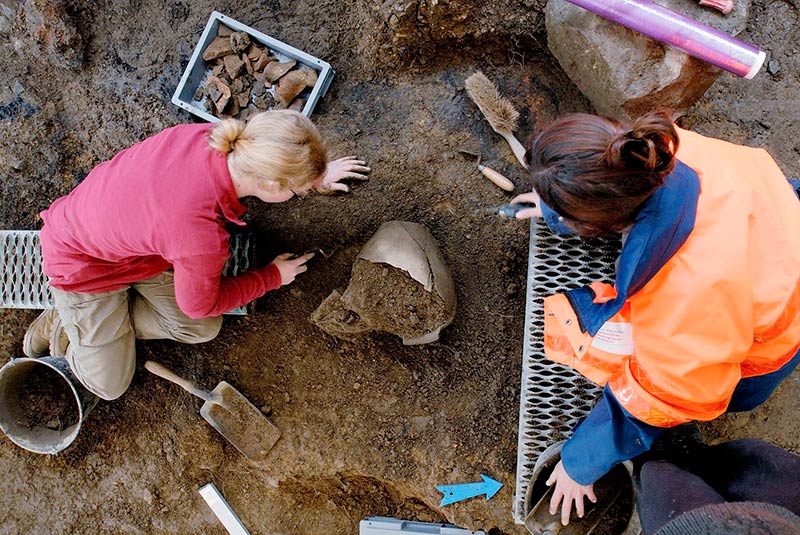
Thursday, June 12, more than 1,300 archaeologists were gathered to demonstrate. Among the reasons for their mobilization, the decline in budgets allocated to archaeological diagnoses, the precariousness of agents of the National Institute for Preventive Archaeological Research (INRAP) in short contracts, but also a small article of a few lines slipped into the bill of economic simplification, being examined in the National Assembly. The latter was finally deleted by the deputies during the session of Friday, June 13. The law was voted.
Article 15 bis C, introduced into the text of the government by the Special Commission responsible for examining the bill of the National Assembly, provided for a certain number of derogations granted to industrial projects “Major public interest”among which appeared the exemption from the obligation of preventive archaeological excavations. “This provision would amount to introducing a disturbing rupture in current legislation, creating a dangerous precedent”alerted a collective platform of archaeologists, published in Le Figaro At the end of April.
The text defended by the Horizons and independent group did not resist two amendments requiring its deletion, one deposited by rebellious France, the other per set for the Republic. “The text brings a fairly serious damage to the principle of preventive archeology, unlike the provisions (on preventive archeology) which were voted by this assembly”denounced in session the deputy Claire Lejeune (LFI). The deputies of the national rally present, for their part, all voted to maintain the text.
“We are happy, but it’s not completely finished”Note Séverine Hurard, secretary general of SGPA-CGT Culture. “The text will probably go into a joint joint committee to find a compromise between Senate and National Assembly, we cannot be sure of its final content. »» If the government supported the suppression of the text, it is because of a “Certain number of major legal difficulties, which risk bringing weaknesses for the projects concerned”as Véronique Louwagie, Minister responsible for trade explained.