Palma and Móstoles,
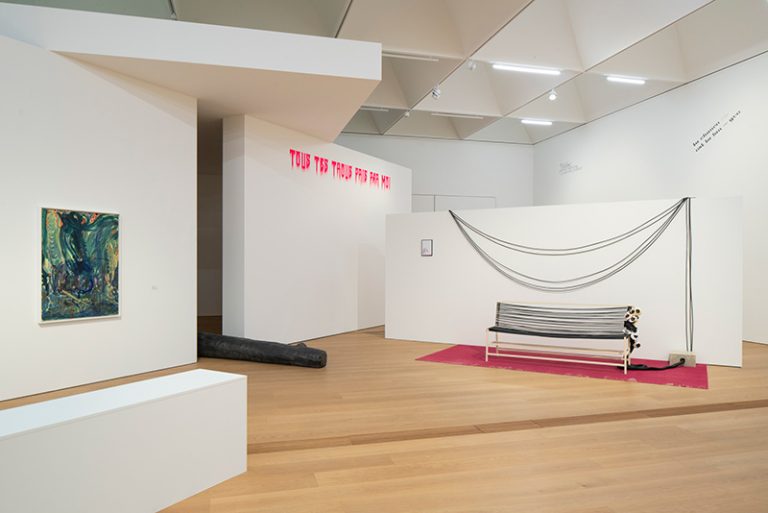
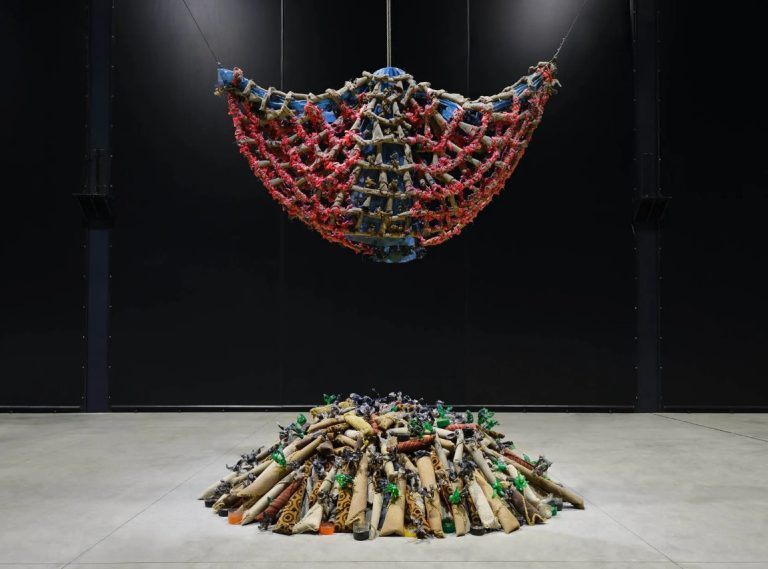
At the end of January it opened at Es Baluard Museu, and this February 13 it opens at the Dos de Mayo Art Center in Móstoles, an exhibition with a double venue by Ester Partegàs that comes to review all of her work since the nineties. It is called “Minor Architecture”, it has been curated by Bea Espejo and cannot be considered, strictly, as an anthology, since it does not study its trajectory linearly, but rather taking into account the relationships that can be established between its pieces from different stages and formats.
Partegàs is an artist who is not interested in advancing from given starting points, but rather in creating from swings, turns and jumps back, stopping at the possibilities of the small. Its raw material is trivial gestures, unexpected findings, actions that are not very articulated, so that its samples can take the form of archaeological parks between whose pieces tensions and ties are generated based on the different scales or origins of these works.
These links, problematic, pleasant or both, have always been the mortar of the production of this author, born in Barcelona in 1972 and living in New York since the late nineties, after passing through Berlin. The objects that are usually used when developing those parks They are those of our daily life and consumer society: humble utensils lacking sophistication, prone to discard, in which we find defining readings of our ways of life or the culture of our time.

Packaging and supermarket receipts appeal to the ephemeral nature of almost everything we consume, material and immaterial; Its caves, domes or large baskets of clothes to be cleaned allude to intimate spaces in which it is possible to experience protection, but also abandonment; and in any case the very variable character of the matter in his sculptures proposes a different approach to everything that surrounds us from the physical point of view. These sculptures constitute only a part of the proposals that we can see in Palma and Móstoles: he also makes drawings, paintings or installations.
Among the latter, it stands out To from at across to in from. The centerless feelingwhich has been around for a quarter of a century: it is a small-format piece in which he recreated an airport waiting room, an early example of his attraction to transit and impersonal places that could be understood as metaphors for our present and its instabilities.
In his drawings, meanwhile, he captures slices of bread in weak architectural balances and places children’s stickers on them – not even what is drawn escapes the possibility of falling, and is the meat of vulnerability. In comparison to them, those laundry baskets simulated true constructions: the home made of what we wear and that we dirty, rather than bricks.

Nothing in his creations is unrecognizable to us; It can remind us that what is close and easy to possess is not necessarily the most and best seen. The same thing happens outdoors: Partegàs gives relevance to our street movements and the act of walking, susceptible to being experienced with other attention that may illuminate new relationships.
For this artist, everything we see can be explored and re-explored and there are no definitive or static images on any issue: pizza boxes can constitute totems and bread, as we said, talaiots that may crumble. Nor do the plastic canvases that make up the translucent labyrinth contain anything solid or definitive. The passerbywhich we will access without knowing if we will be able to leave and which also suggests an unstable movement. The only safe thing is plastic.

The architectures minors of the Catalan are vernacular, reminiscent of those that arose spontaneously and out of necessity and do not connect with buildings with pedigree, but with everyday accumulations: those that populate houses, streets or even pockets, in the form of labels, barcodes, containers or press headlines.
They do not project, like animal nests, towards the outside, but rather towards the interior; their stones They are gestures and spoils not valued; They connect with the view of so many contemporary sculptors towards the soft and are not embedded in any tradition, other than that of the need or desire for shelter.


Ester Partegàs. “Minor architecture”
ES BALUARD MUSEUM
Plaça Porta Santa Catalina, 10
Palm
From January 30 to July 5, 2026
CA2M. DOS DE MAYO ART CENTER
Avenida Constitución, 23
Mostoles
From February 14 to June 14, 2026