Montpellier (Hérault). Photography is a medium whose techniques, practices and uses are constantly being renewed. A number of events scheduled as part of the Bicentenary of Photography retrace or will retrace over the coming months this evolution since The Fat’s Point of View by Nicéphore Niépce, first photographic image, at least the oldest preserved.
At the Pavillon populaire in Montpellier, the exhibition “First times / First photos”, designed by Luce Lebart, explores it from an original angle:“What is a prime image? A proof, a test, an exploit, a failure, an event, a memory, or even a trigger? » Vast and relevant question to which the new artistic director of the Popular Pavilion, in office since January, answers through a series of themes forming an instructive journey: the multitude of images and pioneering practices brings together scientific, artistic and documentary approaches, enriched by the clear stories and colorful anecdotes of the cartels.
Loans from all walks of life
For her first exhibition in these places, the historian of photography stands out for the content of her remarks, her concern for pedagogy and also for the diversity of lenders she was able to mobilize.
Wonders and astonishments follow one another. In the introduction, the “anthology of images of snowflakes” by the American Wilson Alwyn Bentley (1865-1931) attracts attention for the beauty and variety of their shapes and structures, as well as for the precision of the shooting. His images revealed for the first time, at the end of the 19th century, the complexity of snow crystals, thanks to the development of a technique he designed to photograph them under a microscope before they melted. Equally delicate are the prints of algae made between 1843 and 1853 by the botanist Anna Atkins and published in British Algae: Cyanotype Impressionsthe world’s first photography book.
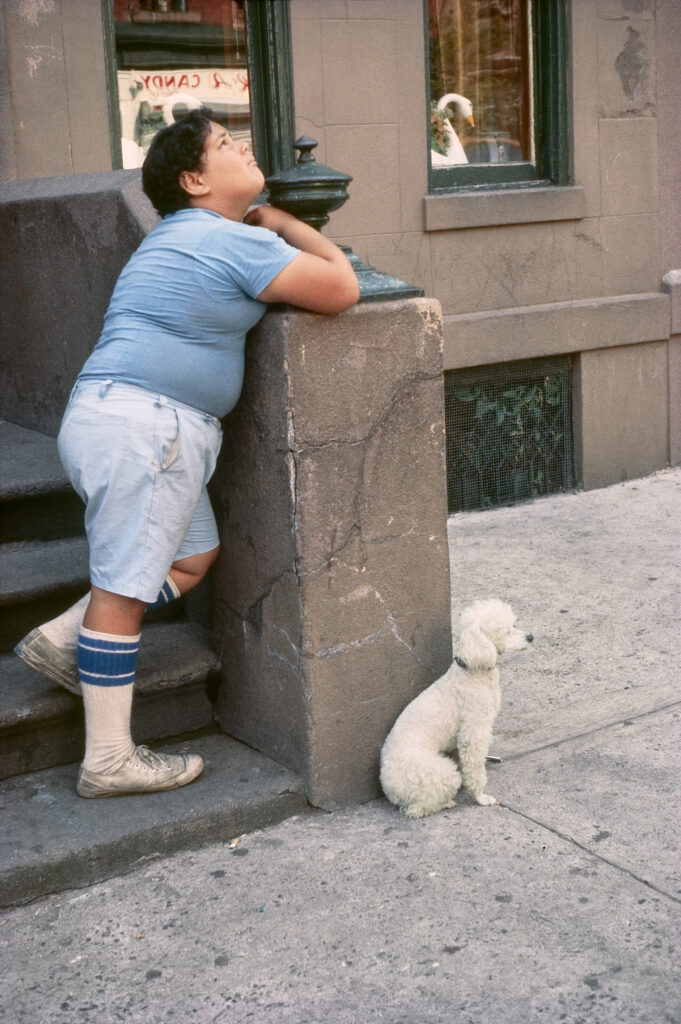
Janine Niépce (1921-2007), The first television, Burgundy (France)1963.
© Janine Niépce / Roger-Viollet
More unexpected, because never exhibited, is the selection of photographic patents and trademarks, from the archives of the National Institute of Industrial Property. “ Between 1839 and 1901, the INPI lists 4,022 deposits. They bear witness to the ingenuity of inventors from all walks of life. Their multitude of tests, technical improvements and sometimes unusual, even crazy ideas, testify to the excitement that has accompanied photography since its beginnings and the recurring obsessions: the simplification of the practice, the capture of movement and color, and towards the end of the 19the century the miniaturization of devices and stealth shots »underlines Luce Lebart. Some patents have passed down to posterity, such as those of Louis Ducos du Hauron, laying the foundations of modern trichromy in 1868, or of Eadweard Muybridge of chronophotography, breaking down the gallop of a horse ten years later. “The history of brands tells just as much the story of a booming industry marked by an overflowing imagination: “Le Soleil”, “L’Étoile”, “Le Merveilleux”, “L’Incroyable”…)”specifies Luce Lebart. Inventions in sealed envelopes, like that of Louis Lumière, however, keep their secrets.
From Nicéphore Niépce to Robert Demachy, via Louis Daguerre, Hippolyte Bayard, Alphonse Poitevin, Nadar, Gustave Le Gray and Étienne-Jules Marey, to name but a few, a constellation of technological, photographic and conservation innovations is told in images and objects. The pieces on display benefit – when they are not originals – from high-quality reproductions. Format and hanging ring true. Rare are the works that do not have developed cartels.
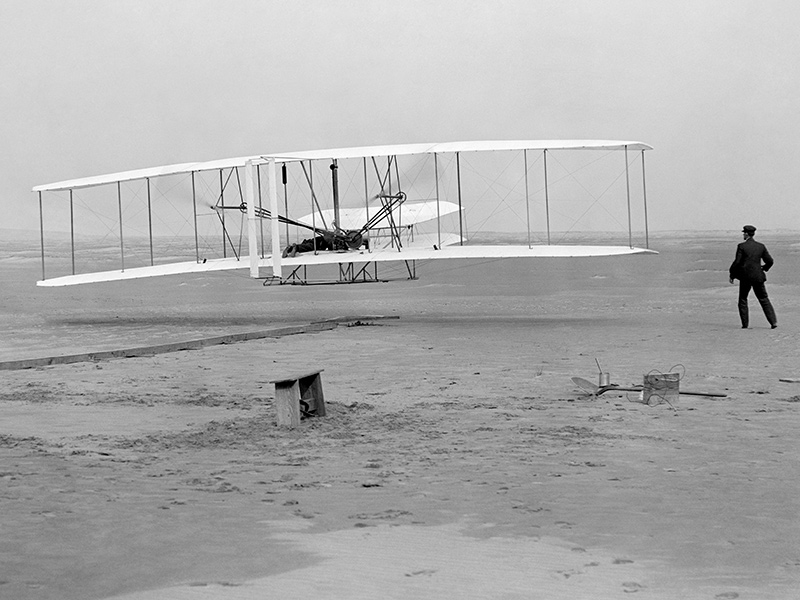
If the 19th and early 20th centuries dominate, the section devoted to the following decades relates the small and big “firsts” that photography makes it possible to document: from the first steps of a baby, a first powered flight, to the latest technological exploits of the first images of Mercury or star formations. The last quarter of the route takes up part of the “First photo” exhibition that Agnès B. organized in 1992: she asked 95 European photographers to send her what they considered to be their first photograph with a few explanatory lines. From Willy Ronis to Martin Parr and Cristina de Middel: everyone has their first photo!